BookBrief
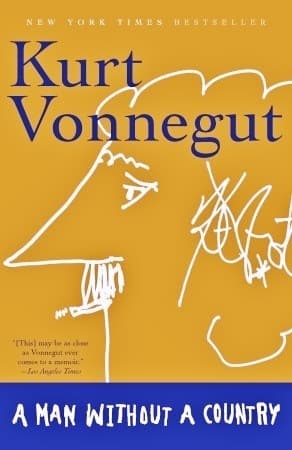
A Man Without a Country cover
Archivist's Choice

A Man Without a Country

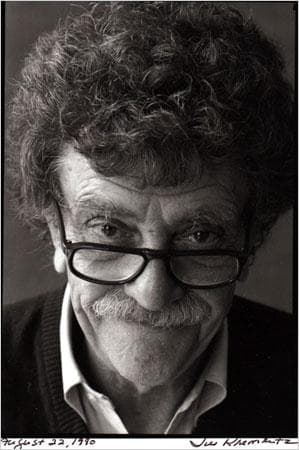
Kurt Vonnegut Jr. (2005)

Genre

Politics / Biography / Memoir / Philosophy

Reading Time

12 Minutes

Key Themes

See below

Track Your Reading

Sign in to track this book

Kurt Vonnegut hilariously and movingly examines the absurdities of modern life and the American mind, while also dealing with his own mortality and place in the world.

Core Idea

Kurt Vonnegut Jr.'s "A Man Without a Country" is a collection of essays, speeches, and meditations offering a deeply personal and often satirical look at American society, politics, and the human condition in the early 21st century. Vonnegut, in his characteristic style of dark humor and profound humanism, critiques war, environmental destruction, political hypocrisy, and the absurdities of modern life, all while championing common decency, love, and the power of art. It serves as a poignant farewell from one of America's most beloved literary figures, distilling his lifelong observations into a series of urgent and heartfelt pleas for sanity and compassion.
Difficulty
Easy

Core idea

The central argument and framework that powers the entire book.

Kurt Vonnegut Jr.'s "A Man Without a Country" is a collection of essays, speeches, and meditations offering a deeply personal and often satirical look at American society, politics, and the human condition in the early 21st century. Vonnegut, in his characteristic style of dark humor and profound humanism, critiques war, environmental destruction, political hypocrisy, and the absurdities of modern life, all while championing common decency, love, and the power of art. It serves as a poignant farewell from one of America's most beloved literary figures, distilling his lifelong observations into a series of urgent and heartfelt pleas for sanity and compassion.

At a glance

Difficulty

Easy

Key Takeaways

1

The Absurdity of Modern Warfare

Vonnegut's Dresden experience shaped his lifelong critique of war's senselessness and its dehumanizing effects.

Quote

I say that no art is possible without a vivid awareness of what a shit-storm the world is.

Vonnegut, a survivor of the World War II firebombing of Dresden, often returns to this traumatic event. He does so not out of a desire for revenge, but to show war's pure absurdity and horror. He emphasizes the widespread destruction and loss of innocent lives, arguing that such events strip people of their dignity and purpose. His experiences in Dresden shaped much of his cynical yet deeply empathetic view of the world. This influenced his writing on themes like fate, free will, and how humans can be both incredibly cruel and compass...

Supporting evidence

Vonnegut's direct recounting of his experiences as a POW during the firebombing of Dresden, a recurring theme in his works and explicitly detailed in this memoir.

Apply this

Reflect on how historical conflicts are framed and challenge narratives that glorify war or minimize civilian suffering. Seek out diverse perspectives on conflict to gain a more complete understanding of its human cost.

2

The Power and Peril of Storytelling

Stories are essential for making sense of life, but they can also be used to perpetuate harmful myths.

Quote

We are what we pretend to be, so we must be careful about what we pretend to be.

Vonnegut, a master storyteller, understood the human need for stories to make sense of the world. He believed artists and writers were important for offering new ideas and questioning common, often too simple, narratives. However, he also warned against believing stories without question, especially those from political and corporate groups trying to control public opinion. This idea that stories can both enlighten and manipulate is powerful. It urges readers to be careful consumers and creators of narratives. His whimsical illustrati...

Supporting evidence

Vonnegut's frequent allusions to his own writing process and the impact of literature, coupled with his critiques of media and political rhetoric.

Apply this

Critically analyze the stories presented in media, politics, and even personal interactions. Consider the underlying motives and potential biases of the storyteller, and actively seek out diverse narratives.

3

The Human Need for Community and Connection

Despite his cynicism, Vonnegut consistently emphasizes the importance of belonging and mutual support.

Quote

We are here on Earth to help others; what the others are here for, I don't know.

Throughout the memoir, Vonnegut often said he disliked people, but he also showed a deep belief in the need for human connection and community. He regretted the growing isolation in modern society and the loss of shared values. His personal stories, from his family life to his interactions with other writers, showed his belief that meaning comes from relationships and acts of kindness. This is one of the book's most touching insights. It shows that even someone who called himself 'a man without a country' still wanted to belong and ha...

Supporting evidence

His reflections on the importance of family, friendship, and the shared experience of being human, despite societal failings.

Apply this

Actively cultivate and nurture your relationships. Seek out opportunities to connect with others, contribute to your community, and practice empathy and mutual aid.

4

Critique of American Exceptionalism

Vonnegut challenges the notion of American moral superiority and its historical self-deceptions.

Quote

Americans are forever searching for love in all the wrong places. They are forever searching for smart bombs, and for other ways to kill people, and for ways to make money, and for ways to get ahead of other people. But they are not searching for love.

Vonnegut openly criticized American society, especially its tendency toward extreme patriotism, materialism, and forgetting parts of its own history. He questioned the idea that America is special, arguing that the nation, like any other, has moral failings and deceives itself. He pointed out issues like environmental damage, economic inequality, and hypocritical foreign policy. This criticism is not hateful; instead, it is mournful. It comes from a deep love for his country and a wish for it to live up to its stated ideals. His obser...

Supporting evidence

His direct criticisms of U.S. foreign policy, economic disparities, and the cultural obsession with consumerism.

Apply this

Question nationalistic narratives and engage in critical self-reflection about societal values. Advocate for policies that promote social justice, environmental sustainability, and ethical international relations.

5

The Importance of Humor and Laughter

Humor serves as a vital coping mechanism against life's inherent absurdities and tragedies.

Quote

Laughter and tears are both responses to frustration and exhaustion. I myself prefer to laugh, since there is less cleaning up to do afterward.

Despite the often grim topics he discussed, Vonnegut consistently used humor to cope and understand. His wit, often dark and satirical, allowed him to face the most painful parts of human existence—war, death, injustice—without falling into despair. He suggested that laughter is not avoiding reality but a way to acknowledge its absurdity and find moments of lightness in the darkness. This is the book's strongest insight, showing how humor can be a powerful form of resilience and a path to deeper truth. His own illustrations, often pla...

Supporting evidence

The pervasive use of irony, satire, and self-deprecating humor throughout his anecdotes and philosophical musings.

Apply this

Cultivate a sense of humor as a coping mechanism for stress and adversity. Seek out opportunities for laughter and use it to gain perspective on challenging situations.

6

The Simplicity of Happiness

True contentment lies not in material wealth or status, but in simple pleasures and human connection.

Quote

And I urge you to please notice when you are happy, and exclaim or murmur or think at some point, 'If this isn't nice, I don't know what is.'

Vonnegut offered a different view from the constant pursuit of material success and outside approval. He often reminded readers to value small, overlooked moments of joy: a good meal, beautiful music, the company of loved ones. This focus on simple pleasures directly challenges a consumer-driven society that often links happiness with buying things. His advice to 'notice when you are happy' is a deep call to mindfulness and gratitude. It encourages a shift in perspective from wanting more to appreciating what exists. This perspective ...

Supporting evidence

His recurring advice to consciously acknowledge moments of happiness and his critiques of materialism.

Apply this

Practice mindfulness and gratitude daily. Take time to appreciate simple pleasures, spend quality time with loved ones, and consciously reduce reliance on external factors for happiness.

7

The Enduring Value of Art and Creativity

Art provides solace, meaning, and a means to express the inexpressible in a chaotic world.

Quote

Practicing an art, no matter how well or badly, is a way to make your soul grow.

As an artist, Vonnegut consistently supported the power of creativity. He saw art—whether writing, painting, or music—not just as entertainment but as a basic human activity that enriches the soul and helps people deal with life's harsh realities. He encouraged everyone to engage in some form of artistic expression, regardless of their perceived talent. He emphasized the process more than the final product. This belief highlights his own dedication to writing and his whimsical illustrations throughout the book. It shows that creative ...

Supporting evidence

His personal reflections on his career as a writer and his encouragement for others to engage in creative pursuits.

Apply this

Engage in creative activities, regardless of skill level. Support artists and cultural institutions. Recognize the intrinsic value of art for personal well-being and societal enrichment.

8

Beware of 'Busywork' and Misplaced Priorities

Modern society often prioritizes meaningless tasks over genuine human needs and environmental stewardship.

Quote

The most important thing for you to do is to find out what you really want to do, and then do it. And don't let anybody tell you that what you want to do is silly or stupid.

Vonnegut often criticized the absurdity of modern life. He saw people trapped in cycles of 'busywork' that brought little real satisfaction or benefit. He lamented society's obsession with economic growth at the expense of environmental health and human well-being. He encouraged readers to question common paths and define their own purpose, rather than simply following societal expectations. This argument has limits because it does not offer a clear plan for escaping these societal traps. Instead, it is a powerful call for individual ...

Supporting evidence

His criticisms of corporate culture, environmental neglect, and the pursuit of wealth over intrinsic value.

Apply this

Evaluate your own priorities and activities. Identify and eliminate 'busywork' from your life, focusing instead on tasks and pursuits that align with your values and contribute to genuine well-being.

9

The Fragility and Preciousness of Life

Life is a brief, miraculous flicker against an indifferent universe, deserving of awe and care.

Quote

We are all children of the universe, with no less right to be here than the trees and the stars.

Beneath Vonnegut's cynical surface was a deep respect for life itself. He marveled at the improbable existence of humanity and the natural world, often reminding readers of our shared cosmic beginnings. His thoughts on death, though often stark, underlined the preciousness of our time. He advocated for deep humility and wonder when facing existence, urging us to treat each other and the planet with kindness and respect. This theme gives a philosophical anchor to his often-varied reflections, bringing his different observations togethe...

Supporting evidence

His cosmic perspective on humanity's place in the universe and his calls for environmental responsibility and interhuman kindness.

Apply this

Cultivate a sense of wonder and awe for life. Treat all living beings and the planet with respect and care, recognizing the interconnectedness of all existence.

10

Rejecting Dogma and Embracing Skepticism

Questioning authority and established beliefs is crucial for intellectual and moral integrity.

Quote

Don't be a jerk. Be kind. And question everything.

Vonnegut consistently promoted healthy skepticism, especially toward religious and political doctrines. He encouraged readers to think critically, question assumptions, and resist blindly following any ideology. His own declared agnosticism and his satirical jabs at organized religion were not meant to dismiss but to advocate for individual thought and moral independence. This is a powerful call to intellectual independence, urging people to form their own conclusions based on evidence and empathy, rather than inherited beliefs. His a...

Supporting evidence

His frequent critiques of religious fundamentalism, political rhetoric, and his personal declaration of being a 'freethinker'.

Apply this

Actively question information sources and authority figures. Engage in critical thinking, seek out diverse perspectives, and cultivate a nuanced understanding of complex issues.

Critical analysis

Notable Quotes

Quiz

Test Your Knowledge

Ready to see how well you understood this book? Take our interactive quiz with 10 questions.

10
Questions
~5
Minutes
?
Best Score

Key Questions (FAQ)

This book is a collection of essays and reflections by Kurt Vonnegut Jr. where he shares his thoughts on life, art, sex, politics, and his perspective on the state of America's soul. It's characterized by his signature wit, introspection, and humor.

About the author