BookBrief
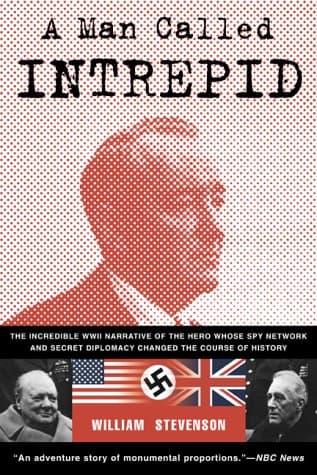
A Man Called Intrepid cover
Archivist's Choice

A Man Called Intrepid

William Stevenson (1976)

Genre

Politics / Biography / History

Reading Time

12-15 hours

Key Themes

See below

Track Your Reading

Sign in to track this book

Sir William Stephenson was a British spymaster who outsmarted the Axis powers with his secret network and inspired Ian Fleming's James Bond.

Core Idea

William Stephenson, known as 'Intrepid,' was the top spymaster who, through a hidden network of intelligence, propaganda, and covert operations, helped bring the United States into World War II and shaped the Allied victory. His secret work, often outside normal diplomatic and military channels, created the model for modern intelligence agencies. It showed how strategic, early covert action affects global conflicts. The book argues that Stephenson's personal drive and skill in espionage changed history by influencing public opinion, key political figures, and disrupting enemy operations before war was officially declared.
Reading time
12-15 hours
Difficulty
Medium
✓ Read this if...
You are fascinated by the hidden history of World War II, the origins of modern intelligence, and the true stories behind legendary spy figures. This book is for those who appreciate detailed historical accounts of covert operations and political manipulation that changed the world.
✗ Skip this if...
You prefer broad historical overviews to deep dives into specific intelligence operations, or if you are looking for a light, fictionalized spy thriller rather than a meticulously researched biography of a real-life spymaster.

Core idea

The central argument and framework that powers the entire book.

William Stephenson, known as 'Intrepid,' was the top spymaster who, through a hidden network of intelligence, propaganda, and covert operations, helped bring the United States into World War II and shaped the Allied victory. His secret work, often outside normal diplomatic and military channels, created the model for modern intelligence agencies. It showed how strategic, early covert action affects global conflicts. The book argues that Stephenson's personal drive and skill in espionage changed history by influencing public opinion, key political figures, and disrupting enemy operations before war was officially declared.

At a glance

Reading time

12-15 hours

Difficulty

Medium

Read this if...

You are fascinated by the hidden history of World War II, the origins of modern intelligence, and the true stories behind legendary spy figures. This book is for those who appreciate detailed historical accounts of covert operations and political manipulation that changed the world.

Skip this if...

You prefer broad historical overviews to deep dives into specific intelligence operations, or if you are looking for a light, fictionalized spy thriller rather than a meticulously researched biography of a real-life spymaster.

Key Takeaways

1

The Invisible War Before the Visible One

How intelligence operations shaped the pre-WWII landscape and laid the groundwork for Allied victory.

Quote

The secret war, fought in the shadows, began long before the first shot was fired in Poland, and its outcome often dictated the shape of the battles to come.

Stevenson shows that World War II was not just a conventional conflict that started in 1939. Instead, a complex, high-stakes 'invisible war' of intelligence, propaganda, and sabotage had been happening for years before. William Stephenson, known as Intrepid, was central to this secret struggle. He built networks, gathered information, and subtly influenced global events to prepare the Allies, especially the United States, for the coming fight with Nazi Germany. This pre-war intelligence work was important because it allowed the Allies...

Supporting evidence

The book details Stephenson's early efforts to warn Winston Churchill about German rearmament and expansionist ambitions, even when much of the British establishment favored appeasement. His network's infiltration of German industrial and political circles provided early warnings of Hitler's true intentions.

Apply this

Leaders and policymakers should recognize the profound importance of proactive intelligence gathering and analysis, investing in these capabilities long before overt conflicts emerge. Understanding geopolitical undercurrents and ideological shifts can prevent larger crises.


pre-war-intelligenceclandestine-operationsgeopolitical-strategy
2

The Art of Covert Influence

Mastering propaganda and psychological warfare to shape public opinion and international alliances.

Quote

Influence, when wielded with precision and discretion, can be a more potent weapon than any bomb.

One of Intrepid's most important contributions was his understanding and use of covert influence and psychological warfare. Stevenson explains how Stephenson did not just gather facts; he actively shaped perceptions. Working from the British Security Coordination (BSC) in New York, Stephenson led a large campaign to counter Nazi propaganda in the neutral United States, expose German spies, and subtly move American public and political opinion toward intervention. This included spreading information, planting stories, and even using 'b...

Supporting evidence

The book recounts the BSC's extensive efforts to expose German agents and sympathizers within the U.S., including the 'America First' movement, and their role in leaking information about German atrocities to galvanize American public opinion.

Apply this

In an era of information overload and 'fake news,' understanding the mechanisms of influence and propaganda is crucial for critical thinking and discerning truth. Governments and organizations must develop robust strategies to counter misinformation and protect democratic discourse.

psychological-warfarepropagandapublic-opinionblack-propaganda
3

The Unsung Architect of U.S. Entry

How one man's covert diplomacy and intelligence work was instrumental in bringing America into WWII.

Quote

Stephenson's greatest triumph was not merely gathering intelligence, but in laying the groundwork for the most critical alliance of the war.

Stevenson argues that William Stephenson played an essential, though largely unrecognized, role in helping America enter World War II. With a special directive from Churchill, Stephenson built strong relationships within the U.S. government, especially with President Roosevelt and his key advisors. He provided clear intelligence, disproved isolationist ideas, and helped create the important intelligence-sharing relationship between the U.S. and Britain. His efforts helped overcome strong American resistance to intervention, proving th...

Supporting evidence

The detailed accounts of Stephenson's direct access to FDR, his role in establishing the Office of Strategic Services (OSS) with 'Wild Bill' Donovan, and the intelligence agreements he brokered between the U.S. and Britain are central to this claim.

Apply this

Recognize that pivotal historical moments are often shaped by the unseen actions of individuals operating outside conventional diplomatic channels. Value the power of trusted intermediaries in bridging political divides and fostering international cooperation.

us-entry-wwiicovert-diplomacyfdross
4

The Birth of Modern Intelligence

Stephenson's pioneering methods laid the foundation for post-war espionage agencies.

Quote

The techniques of intelligence, once the domain of whispers and shadows, were being forged into a disciplined, professional science.

The book presents Stephenson as a pioneer in modern intelligence. He moved past traditional, often amateur, spycraft to create a systematic, professional way to gather intelligence, analyze it, and conduct covert operations. His innovations included using scientific methods, advanced communication technologies (like the 'Ultra' secret), and strict agent training. The BSC, under his leadership, was a model for future intelligence agencies, notably influencing the creation and structure of the CIA. His focus on cooperation between agenc...

Supporting evidence

Stevenson details the establishment of Camp X (L.M.S.), a secret training school in Canada for Allied special agents, where modern espionage techniques were taught. The book also highlights Stephenson's role in the development and protection of the Ultra secret.

Apply this

Study the evolution of intelligence methodologies to understand contemporary challenges in national security. Professionals in any field can learn from the emphasis on systematic training, technological integration, and inter-departmental collaboration.

modern-espionagecia-originscamp-xultra-secret
5

The Personal Cost of a Secret Life

The immense psychological and social toll exacted by operating in the shadows.

Quote

To live a secret life, one must become a secret, even to oneself.

While "A Man Called Intrepid" celebrates Stephenson's successes, it also hints at the personal cost of his constant, secret work. Operating under great pressure, maintaining multiple identities, and always being aware of life-or-death situations took a toll. The book suggests the isolation and emotional distance that come with such a life, where trust is rare and true intimacy is a risk. This aspect makes the heroic story more human, reminding readers that behind big strategic moves are individuals making huge personal sacrifices, oft...

Supporting evidence

Though not explicitly dwelling on Stephenson's personal feelings, the narrative's focus on his constant movement, lack of a conventional home life, and the extreme secrecy surrounding his activities paint a picture of relentless personal sacrifice. The book touches on the difficulty of maintaining a normal public persona while orchestrating global clandestine operations.

Apply this

Reflect on the ethical implications and personal sacrifices demanded by certain professions. Recognize the mental health challenges faced by those in high-stress, secretive roles and advocate for support systems.

personal-sacrificesecret-identitypsychological-tollespionage-ethics
6

The Power of Individual Initiative

How a single, determined individual can alter the course of history.

Quote

History is often shaped not by the masses, but by the relentless will and vision of a few.

Stevenson's biography of Stephenson shows how much one very driven person can affect world events. Intrepid worked with great independence and initiative, often bypassing bureaucracy and normal diplomatic rules to reach his goals. His ability to connect different networks, gain trust at the highest levels, and carry out complex operations against great odds shows the power of individual action. This story challenges the idea that history is only shaped by impersonal forces, highlighting the important role of visionary leadership and p...

Supporting evidence

The book details Stephenson's direct line to Churchill and Roosevelt, allowing him to bypass traditional chains of command. His ability to establish the BSC and Camp X with minimal initial resources, driven purely by his conviction, illustrates his initiative.

Apply this

Empower individuals within organizations to take initiative and pursue innovative solutions, even if they challenge established norms. Cultivate leadership that fosters autonomy and trusts the judgment of capable individuals.

individual-agencyleadershiphistorical-impactvisionary-leadership
7

The Fragility of Neutrality

How global conflicts inevitably draw in even the most determinedly neutral nations.

Quote

In a world aflame, the illusion of neutrality is often the first casualty.

The book clearly shows the immense pressure on the United States to stay neutral in the early years of World War II, and how Stephenson's operations worked to change that stance. It emphasizes how easily neutrality can break when faced with a global ideological conflict and aggressive expansion. While the U.S. initially tried to avoid involvement, the constant propaganda and spying by Axis powers, combined with Stephenson's counter-efforts, made true isolation impossible. This point highlights an important lesson: in a connected world...

Supporting evidence

The extensive detailing of German U-boat attacks on Allied shipping, the Zimmermann Telegram-style plots uncovered by the BSC, and the relentless German propaganda within the U.S. all chipped away at American neutrality. Stephenson’s efforts to expose these threats were key.

Apply this

Understand the interconnectedness of global politics and economics. Recognize that national security decisions must consider international implications, as isolationism can be a dangerous fallacy in an integrated world.

neutrality-challengesisolationismgeopolitical-interconnectednesswwii-us-neutrality
8

The Bond Connection: Fact vs. Fiction

Exploring the real-life inspirations behind Ian Fleming's iconic spy.

Quote

James Bond was not born of pure imagination, but from the shadow of a man far more formidable than any fictional agent.

One of the most interesting parts of "A Man Called Intrepid" is its revelation that William Stephenson was the main real-life inspiration for Ian Fleming's James Bond. Stevenson carefully draws comparisons between Stephenson's actions and Bond's adventures, showing the mix of sophistication, ruthlessness, and strong patriotism that defined both men. From Stephenson's polished manner and global network to his skill with technology and covert action, the book shows how the exciting world of 007 was based on the very real, high-stakes es...

Supporting evidence

The book directly addresses Fleming's relationship with Stephenson during WWII, their shared work in intelligence, and Fleming's acknowledgment of Stephenson's influence on the Bond character. Details of Stephenson's gadgets, global travel, and strategic thinking are presented as direct inspirations.

Apply this

Appreciate the historical context and real-world inspirations behind popular culture phenomena. Encourage a deeper look into the lives of historical figures who shaped the narrative of their times.

james-bond-inspirationian-flemingreal-life-spiesfiction-vs-reality
9

The Ethics of Covert Operations

Navigating the moral ambiguities inherent in the fight against existential threats.

Quote

When facing an absolute evil, the lines between right and wrong often blur, and necessary evils become the tools of survival.

Stevenson implicitly raises important ethical questions about covert operations. In the fight against Nazism, Stephenson and his agents engaged in activities that, in peacetime, would be considered illegal or morally questionable: propaganda, disinformation, sabotage, and manipulating sovereign nations. The book makes readers think about the moral compromises made when facing a major threat. It suggests that against absolute evil, traditional ethical rules might not be enough, and a more practical, even ruthless, approach might be nec...

Supporting evidence

The book details the BSC's 'black propaganda' efforts, the deliberate cultivation of false rumors to sow discord, and the various covert actions taken to undermine Axis operations, which sometimes involved deception and manipulation of public figures.

Apply this

Engage in critical discussions about the ethics of national security and intelligence. Understand that difficult moral choices are often made in times of crisis, and reflect on the long-term consequences of such decisions.

espionage-ethicsmoral-dilemmasdirty-hands-problemnational-security-ethics
10

The Enduring Legacy of Secrecy

Why some of the greatest heroes remain hidden from public view.

Quote

The true heroes of the secret war often carried their triumphs and their burdens into unmarked graves, their names unknown to the history books they helped to write.

"A Man Called Intrepid" not only tells Stephenson's story but also explains the broader truth of intelligence work: that many of its greatest successes and most influential figures remain secret forever. Stephenson himself worked in deep secrecy, and his full story only became known decades later. This point emphasizes that while we celebrate visible heroes, many individuals work effectively, often heroically, without public recognition, sometimes by necessity. Their anonymity shows their professionalism and is a reminder that history...

Supporting evidence

The very existence of the book, published decades after the war and based on declassified documents, serves as evidence of the long-held secrecy surrounding Stephenson's operations. The book highlights how many agents under Stephenson's command also remained anonymous.

Apply this

Cultivate an appreciation for the unseen contributions of individuals in all fields. Understand that public recognition is not the sole measure of impact or heroism, and some of the most vital work is done out of the spotlight.

unseen-heroeslegacy-of-secrecyunwritten-historyintelligence-anonymity

Critical analysis

Notable Quotes

The greatest weapon against a foreign foe is the satisfied and united nation.

Discussing the importance of national morale and unity during wartime.

He was a man who understood that the future is not something we enter, but something we create.

Describing William Stephenson's proactive approach to intelligence and strategy.

Truth is the first casualty of war, but sometimes strategic untruth is its most powerful weapon.

Reflecting on the role of deception and propaganda in wartime intelligence.

The price of liberty is eternal vigilance, but the price of effective vigilance is often secrecy.

Examining the paradox between open societies and the need for covert intelligence operations.

Intrepid's strength lay not just in what he knew, but in his ability to make others believe in the unseen threat.

Highlighting Stephenson's skill in communicating the urgency of the Nazi threat to American leaders.

The most dangerous spies are not those who steal secrets, but those who plant them.

Discussing the effectiveness of disinformation and counter-intelligence.

He operated in the shadows, but his actions illuminated the path for the free world.

Summarizing Stephenson's covert but impactful role in World War II.

Intelligence is not merely information; it is the timely and accurate interpretation of that information.

Defining the true essence of effective intelligence work.

The greatest battles are often fought not with guns, but with words and ideas.

Emphasizing the importance of psychological warfare and propaganda.

He understood that neutrality, in the face of tyranny, was a form of complicity.

Referring to Stephenson's efforts to sway American opinion against isolationism before Pearl Harbor.

The greatest trick the devil ever pulled was convincing the world he didn't exist, but the greatest trick Intrepid pulled was convincing the enemy he was everywhere.

A playful but insightful comparison of deception tactics.

History is not just about what happened, but about who made it happen and why.

Reflecting on the motivations and actions of key figures in historical events.

His legacy was not built on public accolades, but on the silent victories that preserved freedom.

Concluding on the nature of William Stephenson's impact and the unsung heroes of intelligence.

The art of intelligence is to know what is happening before it becomes obvious to everyone else.

Describing the foresight and predictive nature required in intelligence gathering.

Quiz

Test Your Knowledge

Ready to see how well you understood this book? Take our interactive quiz with 10 questions.

10
Questions
~5
Minutes
?
Best Score

Key Questions (FAQ)

The real 'Intrepid' was Sir William Stephenson, a Canadian-born British intelligence officer and businessman who served as the senior British Secret Intelligence Service representative in the Western Hemisphere during World War II. He played a pivotal role in coordinating intelligence efforts between the UK and the US.

About the author