BookBrief
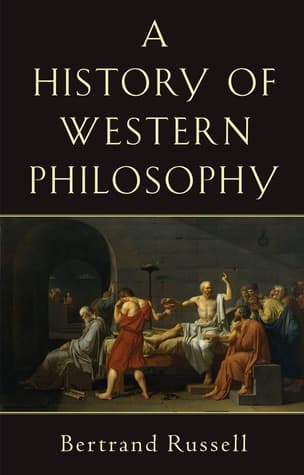
A History of Western Philosophy cover
Archivist's Choice

A History of Western Philosophy

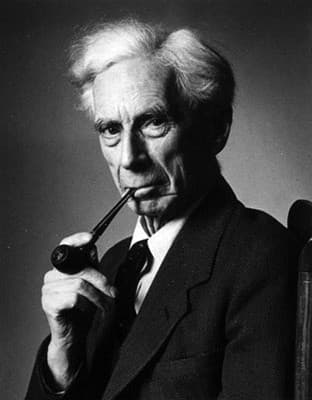
Bertrand Russell (1945)

Genre

Politics / Reference / History / Science / Philosophy

Reading Time

1500 min

Key Themes

See below

Track Your Reading

Sign in to track this book

Bertrand Russell's single volume traces Western philosophy from ancient Greece to logical analysis, showing the interconnected journey of ideas with clarity and wit.

Core Idea

Bertrand Russell's "A History of Western Philosophy" surveys Western thought from the Pre-Socratics to the early 20th century, examining each philosopher's ideas within their socio-political and historical context. Russell argues that philosophy is deeply intertwined with the scientific, religious, and political currents of its time, often acting as a justification or a revolutionary force against existing power structures. He illustrates how each major thinker built upon, reacted against, or departed from their predecessors, shaping later intellectual developments.
Reading time
1500 min
Difficulty
Hard
✓ Read this if...
You want a comprehensive, opinionated, and highly readable overview of major Western philosophical movements and thinkers, contextualized within their historical and social milieus.
✗ Skip this if...
You are looking for a neutral, purely descriptive account of philosophy, or prefer to delve deeply into primary texts without Russell's critical interpretations and historical digressions.

Core idea

The central argument and framework that powers the entire book.

Bertrand Russell's "A History of Western Philosophy" surveys Western thought from the Pre-Socratics to the early 20th century, examining each philosopher's ideas within their socio-political and historical context. Russell argues that philosophy is deeply intertwined with the scientific, religious, and political currents of its time, often acting as a justification or a revolutionary force against existing power structures. He illustrates how each major thinker built upon, reacted against, or departed from their predecessors, shaping later intellectual developments.

At a glance

Reading time

1500 min

Difficulty

Hard

Read this if...

You want a comprehensive, opinionated, and highly readable overview of major Western philosophical movements and thinkers, contextualized within their historical and social milieus.

Skip this if...

You are looking for a neutral, purely descriptive account of philosophy, or prefer to delve deeply into primary texts without Russell's critical interpretations and historical digressions.

Key Takeaways

1

The Pre-Socratic Quest for Arche

Early Greek thinkers sought the fundamental stuff of the universe, laying philosophy's materialist and abstract foundations.

Quote

The Milesian school, beginning with Thales, marks the birth of philosophy by seeking a natural, rather than mythological, explanation for the cosmos.

Before Socrates, Greek philosophers explored the 'arche' – the origin or fundamental substance of reality. Thales thought it was water, Anaximander the 'apeiron' (the boundless), and Heraclitus fire and change. Parmenides, in contrast, argued for an unchanging, indivisible One, questioning change and multiplicity. This period established two lasting philosophical paths: the materialist search for ultimate parts and the metaphysical inquiry into what it means to exist. Their different ideas about the cosmos, though often speculative, i...

Supporting evidence

Russell details the Milesian school (Thales, Anaximander, Anaximenes) and their proposals for the fundamental element, contrasting them with Heraclitus's doctrine of perpetual change and Parmenides's radical monism.

Apply this

When encountering a complex problem, consider what its fundamental, irreducible components are, as the Pre-Socratics did for the cosmos. This 'first principles' thinking can simplify and clarify.

pre-socraticarchemilesian-schoolheraclitusparmenides
2

Socrates and the Moral Turn

Socrates shifted philosophy's focus from cosmology to ethics and self-knowledge through relentless questioning.

Quote

Socrates introduced into philosophy the idea of defining terms and seeking knowledge through dialectic, making ethics central to intellectual inquiry.

Socrates changed philosophy's focus from the external world to the human condition. His method, the Socratic method or elenchus, involved constant questioning to find contradictions in beliefs and help people understand more deeply, often showing their ignorance. He believed that 'the unexamined life is not worth living' and that virtue was knowledge – meaning wrongdoing came from ignorance. This ethical shift, mainly seen in Plato's dialogues, made self-knowledge and moral clarity important, influencing all later Western ethics and e...

Supporting evidence

Russell discusses Socrates's trial and death, his emphasis on defining concepts like justice and virtue, and his method of questioning (elenchus) as depicted in Plato's early dialogues.

Apply this

Adopt a 'Socratic' approach to your own beliefs and those of others: constantly question assumptions, define your terms precisely, and be open to admitting ignorance as a path to true understanding.

socratessocratic-methodelenchusvirtue-as-knowledgeethics
3

Plato's World of Forms

Plato's theory of Forms posits an eternal, perfect reality beyond sensory experience, shaping metaphysics and epistemology.

Quote

Plato’s theory of Ideas or Forms is perhaps the most influential single doctrine in the history of Western philosophy.

Plato, influenced by Socrates and Parmenides, developed the theory of Forms (or Ideas). He argued for a transcendent realm of perfect, unchanging essences that exist apart from the material world. Our sensory experiences are only imperfect copies of these eternal Forms. The 'Form of the Good' is the highest Form, lighting up all others. This dualistic view of reality—a world of changing things versus a world of unchanging universals—has big effects on knowledge (epistemology), stating that true knowledge is of the Forms, reached throu...

Supporting evidence

Russell elaborates on Plato's Allegory of the Cave, the concept of the Form of the Good, and the distinction between knowledge (of Forms) and opinion (of particulars).

Apply this

When evaluating ideas or concepts, consider whether you're focusing on superficial manifestations or trying to grasp the underlying, ideal essence. Seek the universal principles behind specific instances.

platotheory-of-formsallegory-of-the-cavedualismepistemology
4

Aristotle's Empirical Synthesis

Aristotle systematized knowledge, emphasizing observation and logic, balancing Platonic idealism with empirical realism.

Quote

Aristotle, though Plato's pupil, rebelled against the theory of Forms and brought philosophy back to earth, emphasizing observation and classification.

Aristotle, Plato's most famous student, differed by rejecting the separate existence of Forms. For Aristotle, Forms (or 'essences') are in particular things, not separate. He started systematic empirical observation in many fields—biology, physics, politics, ethics, and poetics. His work in logic, especially the syllogism, provided the basic tools for deductive reasoning for centuries. Aristotle wanted to understand the world through its causes (material, formal, efficient, final) and purposes (teleology). His ethics focused on 'eudai...

Supporting evidence

Russell details Aristotle's four causes, his development of syllogistic logic, his empirical biological studies, and his ethical doctrine of the golden mean.

Apply this

When analyzing a phenomenon, break it down into its constituent causes and purposes (Aristotle's four causes). Apply systematic observation and logical reasoning before drawing conclusions.

aristotleempiricismlogicsyllogismteleologygolden-mean
5

The Rise of Christian Philosophy

Christianity integrated Greek philosophy with theological doctrine, shaping medieval thought and the concept of faith and reason.

Quote

The synthesis of Greek philosophy, especially Platonism, with Christian doctrine was the dominant intellectual task of the early and medieval Church.

As classical paganism declined, Christian thinkers took Greek philosophical traditions, mainly Platonism and later Aristotelianism, to explain and defend their theological beliefs. Figures like Augustine combined Platonic ideas of an eternal, perfect realm with Christian ideas of God and the soul, stressing faith as primary but reason as its helper. Later, Aquinas skillfully put Aristotelian philosophy into Christian theology, creating scholasticism, which tried to bring together faith and reason through careful logical arguments. Thi...

Supporting evidence

Russell examines Augustine's use of Neoplatonism to understand evil and God, and Aquinas's monumental effort to reconcile Aristotle with Christian dogma in the Summa Theologica.

Apply this

Recognize how foundational narratives or belief systems often incorporate and reinterpret existing philosophical or intellectual frameworks to gain coherence and legitimacy. Analyze the interplay of faith and reason in contemporary debates.

christian-philosophyaugustineaquinasscholasticismfaith-and-reasonmedieval-philosophy
6

The Enlightenment's Rationalist Foundations

Descartes, Spinoza, and Leibniz emphasized reason, innate ideas, and deductive logic as the path to certain knowledge.

Quote

The 17th-century rationalists sought to build philosophy on the model of mathematics, deriving truths from self-evident axioms.

The Enlightenment brought a new focus on rationalism, especially with Descartes, Spinoza, and Leibniz, who wanted to base philosophy on the certainty of mathematical deduction. Descartes famously doubted everything except his own existence ('Cogito, ergo sum'), then built a system based on clear ideas, proposing innate knowledge and a dualism of mind and body. Spinoza created a monistic system where God and Nature are the same, deriving ethical rules from geometric axioms. Leibniz suggested a universe of 'monads,' indivisible spiritua...

Supporting evidence

Russell details Descartes's method of doubt and 'Cogito, ergo sum,' Spinoza's Ethics 'more geometrico,' and Leibniz's theory of monads and pre-established harmony.

Apply this

When faced with uncertainty, emulate Descartes's methodical doubt: question all assumptions until you reach an undeniable truth, then build your understanding systematically from there.

rationalismdescartesspinozaleibnizenlightenmentinnate-ideasdeductive-reasoning
7

British Empiricism's Sensory Turn

Locke, Berkeley, and Hume argued that all knowledge originates from sensory experience, challenging rationalist innate ideas.

Quote

British empiricism, in contrast to Continental rationalism, maintained that all knowledge ultimately derives from experience, fundamentally shaping modern epistemology.

Against Continental rationalism, British empiricism stated that all knowledge comes from sensory experience. Locke famously argued the mind is a 'tabula rasa' (blank slate) at birth, filled by experience. He distinguished between primary (objective) and secondary (subjective) qualities. Berkeley took empiricism further, arguing 'esse est percipi' (to be is to be perceived), denying a material world existing outside of mind, leading to idealism. Hume pushed empiricism to its skeptical limits, questioning cause and effect, induction, an...

Supporting evidence

Russell explains Locke's tabula rasa and primary/secondary qualities, Berkeley's idealism and 'esse est percipi,' and Hume's skepticism regarding causality and induction.

Apply this

Before accepting a claim, ask yourself: what empirical evidence supports this? Trace ideas back to their sensory origins, and be wary of assumptions not grounded in experience.

empiricismlockeberkeleyhumetabula-rasaskepticismepistemology
8

Kant's Copernican Revolution

Kant synthesized rationalism and empiricism, arguing that the mind actively structures experience, resolving Hume's skepticism.

Quote

Kant's 'Copernican Revolution' in philosophy was to suggest that objects conform to our knowledge, rather than our knowledge conforming to objects.

Immanuel Kant worked to combine rationalism and empiricism, trying to save philosophy from Hume's skepticism. His 'Copernican Revolution' suggested that our minds do not passively receive sensory data but actively shape experience through innate categories of understanding (e.g., cause, space, time). We can only know the 'phenomenal' world (appearances), not the 'noumenal' world (things-in-themselves). This reconciled the certainty of rational thought with the need for experience. In ethics, he introduced the Categorical Imperative, f...

Supporting evidence

Russell details Kant's distinction between phenomena and noumena, his twelve categories of understanding, and the Categorical Imperative as a foundation for moral philosophy.

Apply this

When analyzing a situation, consider how your own cognitive frameworks and assumptions might be shaping your perception, rather than simply believing you're seeing objective reality. Act according to universalizable principles.

kantcategorical-imperativecopernican-revolutionphenomenanoumenagerman-idealism
9

The Age of Ideologies and Will

Post-Kantian philosophy explored historical progress, the irrational, and the will, leading to influential political and existential movements.

Quote

From Hegel's historical dialectic to Nietzsche's will to power, 19th-century philosophy wrestled with grand narratives and the primal forces of human existence.

The 19th century saw a move towards large historical narratives and a focus on non-rational parts of human existence. Hegel developed a complex system of historical dialectic, where ideas (Spirit) grow through conflict towards absolute knowledge, greatly influencing Marx's historical materialism. Schopenhauer, influenced by Eastern thought, proposed a blind, irrational 'Will' as the ultimate reality, leading to a pessimistic view. Nietzsche, reacting against traditional morality and metaphysics, declared 'God is dead,' advocating for ...

Supporting evidence

Russell discusses Hegel's dialectic and Absolute Spirit, Schopenhauer's Will as 'thing-in-itself,' and Nietzsche's critiques of morality and concept of the Übermensch.

Apply this

Recognize that historical and social forces (Hegel/Marx) and underlying psychological drives (Schopenhauer/Nietzsche) often shape human thought and action more than pure reason. Critically examine the 'will' behind prevailing ideas.

hegelmarxschopenhauernietzschewill-to-powerexistentialismdialectics
10

Logical Analysis and the Linguistic Turn

The 20th century, culminating with Russell himself, focused on language, logic, and scientific method to clarify philosophical problems.

Quote

Modern philosophy, in its most significant developments, has become increasingly concerned with the analysis of language and the foundations of logic and mathematics.

The early 20th century saw a big change, especially in the Anglo-American tradition, towards logical analysis and the 'linguistic turn.' Philosophers like Frege, Russell, and Whitehead aimed to clarify philosophical problems by analyzing the structure of language and logic, often using advances in mathematics. Russell, with Whitehead, wrote 'Principia Mathematica,' trying to get all mathematics from logic. This movement sought precision, clarity, and empirical exactness, often dismissing traditional metaphysical questions as unclear o...

Supporting evidence

Russell describes his collaboration with Whitehead on 'Principia Mathematica' and the influence of Frege's work on logic, emphasizing the shift towards analyzing propositions and language.

Apply this

When faced with a philosophical or conceptual problem, first clarify the language being used. Define terms precisely, identify logical inconsistencies, and aim for statements that are empirically verifiable or logically sound.

logical-analysislinguistic-turnanalytic-philosophybertram-russellfregeprincipia-mathematica

Critical analysis

Notable Quotes

The whole problem with the world is that fools and fanatics are always so certain of themselves, and wiser people so full of doubts.

Russell's commentary on human nature and intellectual humility.

To teach how to live without certainty, and yet without being paralyzed by hesitation, is perhaps the chief thing that philosophy, in our age, can still do for those who study it.

On the purpose of philosophy in modern life.

The fact that an opinion has been widely held is no evidence whatever that it is not utterly absurd.

Critique of popular beliefs and tradition.

Science is what you know, philosophy is what you don't know.

Distinguishing the domains of science and philosophy.

The search for something permanent is one of the deepest of the instincts leading men to philosophy.

Discussing metaphysical motivations in philosophy.

Aristotle's metaphysics, roughly speaking, may be described as Plato diluted by common sense.

Comparing Aristotle to Plato in historical analysis.

The conception of the good life has varied from age to age, and from man to man.

On the relativity of ethical ideals throughout history.

Machiavelli's political philosophy is scientific and empirical, based upon his own experience of affairs, concerned to set forth the means to assigned ends, regardless of the question whether the ends are to be considered good or bad.

Analysis of Machiavelli's approach in political thought.

The philosophy of Locke is the philosophy of common sense, but of common sense in an uncommon degree.

Praising Locke's accessible yet profound contributions.

Hegel's philosophy is very difficult—he is, I should say, the hardest to understand of all the great philosophers.

Commenting on the complexity of Hegel's work.

The rise of science has profoundly affected our philosophy, our beliefs, and our way of life.

Reflecting on the impact of scientific progress.

The medieval outlook, as contrasted with the modern, was characterized by dogmatism and authority.

Comparing medieval and modern intellectual climates.

Spinoza's ethics is based upon a metaphysical system which is logically impeccable, but which few people have been able to accept in its entirety.

Evaluating Spinoza's ethical and metaphysical framework.

The philosophy of the Enlightenment was essentially optimistic, believing in progress through reason and education.

Summarizing the Enlightenment era's core beliefs.

Quiz

Test Your Knowledge

Ready to see how well you understood this book? Take our interactive quiz with 10 questions.

10
Questions
~5
Minutes
?
Best Score

Key Questions (FAQ)

Bertrand Russell's 'A History of Western Philosophy' is a comprehensive one-volume survey tracing philosophy from ancient Greek civilization to 20th-century logical analysis. It covers major philosophers, movements, and ideas across Western thought with clarity, erudition, and wit.

About the author

Bertrand Russell

Bertrand Russell was a Nobel Prize-winning philosopher, logician, and social critic. A prolific writer, his works spanned logic, epistemology, metaphysics, ethics, and political philosophy. Notable books include 'The Problems of Philosophy,' 'A History of Western Philosophy,' and 'The Conquest of Happiness.' His contributions significantly influenced analytic philosophy and mathematics.