BookBrief
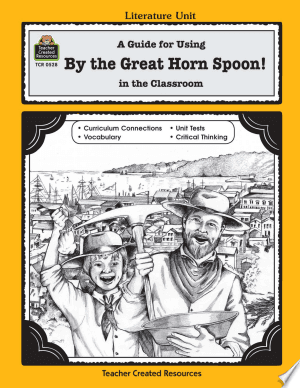
A Guide for Using by the Great Horn Spoon! in the Classroom cover
Archivist's Choice

A Guide for Using by the Great Horn Spoon! in the Classroom

Michael H. Levin (1994)

Genre

General

Reading Time

90 min

Key Themes

See below

Track Your Reading

Sign in to track this book

This guide gives teachers lesson plans, activities, and assessments to make Sid Fleischman's 'By the Great Horn Spoon!' an engaging classroom experience.

Core Idea

This guide helps teachers use Sid Fleischman's "By the Great Horn Spoon!" in a complete classroom curriculum. It goes beyond simple plot summaries, suggesting a varied approach that increases student engagement through scaffolding, strong vocabulary building, and looking at the author's historical and literary background. The main idea is that using one rich story allows teachers to improve reading comprehension, teach independent research skills, and build an appreciation for literature. This helps students become more analytical and enjoy reading more.
Reading time
90 min
Difficulty
Easy
✓ Read this if...
You are an elementary or middle school teacher looking for a detailed, ready-to-implement curriculum guide to teach "By the Great Horn Spoon!" with an emphasis on interdisciplinary learning, critical thinking, and literacy skill development.
✗ Skip this if...
You are not planning to teach "By the Great Horn Spoon!" or are seeking a general guide on literature integration without specific book examples.

Core idea

The central argument and framework that powers the entire book.

This guide helps teachers use Sid Fleischman's "By the Great Horn Spoon!" in a complete classroom curriculum. It goes beyond simple plot summaries, suggesting a varied approach that increases student engagement through scaffolding, strong vocabulary building, and looking at the author's historical and literary background. The main idea is that using one rich story allows teachers to improve reading comprehension, teach independent research skills, and build an appreciation for literature. This helps students become more analytical and enjoy reading more.

At a glance

Reading time

90 min

Difficulty

Easy

Read this if...

You are an elementary or middle school teacher looking for a detailed, ready-to-implement curriculum guide to teach "By the Great Horn Spoon!" with an emphasis on interdisciplinary learning, critical thinking, and literacy skill development.

Skip this if...

You are not planning to teach "By the Great Horn Spoon!" or are seeking a general guide on literature integration without specific book examples.

Key Takeaways

1

Integrating Literature for Holistic Learning

Beyond reading comprehension, a literature unit can foster interdisciplinary skills.

Quote

The literature unit provides a framework for integrating various academic disciplines, moving beyond mere reading comprehension to encompass critical thinking, creative expression, and historical understanding.

Levin's guide shows that a literature unit built around a novel like 'By the Great Horn Spoon!' is a strong center for interdisciplinary education. It involves more than just understanding the plot or characters; it uses the story to explore history, geography, vocabulary, and economic ideas related to the California Gold Rush. This approach makes the classroom a dynamic place where students connect different subjects, seeing how they relate in real-world situations and historical events. The unit's structure builds learning from basi...

Supporting evidence

The guide's inclusion of 'pre- and post-reading activities,' 'vocabulary lists,' 'chapter study guides with quizzes and projects,' and 'book report and research ideas' all point to a multi-faceted approach to literature instruction.

Apply this

Educators should design literature units that explicitly link the novel's themes and setting to other curriculum areas, such as creating historical timelines, mapping character journeys, or researching the scientific principles behind 19th-century technology.

interdisciplinary-learningcurriculum-integrationholistic-education
2

Scaffolding for Deeper Engagement

Structured activities before, during, and after reading enhance comprehension and critical analysis.

Quote

Effective preparation and follow-up are crucial. The pre-reading activities set the stage, while post-reading tasks consolidate learning and encourage deeper critical engagement.

Levin's guide strongly supports a scaffolded approach to reading a novel, dividing the learning into distinct phases: pre-reading, during-reading, and post-reading. This method ensures students are ready before starting the text, with necessary background knowledge and vocabulary. During reading, chapter study guides and quizzes keep students engaged and check understanding. After reading, activities like book reports and research projects let students combine what they learned, analyze themes, and express their ideas creatively. This...

Supporting evidence

The guide explicitly lists 'pre- and post-reading activities' alongside 'chapter study guides with quizzes' as core components, demonstrating a clear sequential learning design.

Apply this

Before starting a new novel, introduce historical context, key vocabulary, and author background. During reading, use guided questions and short checks. After completion, facilitate discussions, debates, and creative projects.

scaffolding-learningreading-comprehensionliterary-analysis
3

Vocabulary as a Foundation

Targeted vocabulary instruction is essential for accessing and appreciating complex texts.

Quote

A strong vocabulary is the bedrock of comprehension. By front-loading and continually reinforcing key terms, students gain the necessary tools to navigate the narrative with confidence.

Levin's focus on specific vocabulary lists highlights a basic truth in literacy: unfamiliar words make comprehension difficult. For historical fiction like 'By the Great Horn Spoon!', which likely contains old or less common words, teaching vocabulary beforehand is essential. By providing lists and suggesting ways to review words, the guide helps students understand the language of the text, reducing frustration and letting them focus on the story, characters, and themes. This systematic approach to vocabulary builds a stronger langua...

Supporting evidence

The inclusion of 'vocabulary lists' as a distinct section within the unit plan highlights its importance in Levin's instructional design.

Apply this

Before each chapter or section, introduce and discuss 5-7 key vocabulary words. Use context clues, etymology, and visual aids. Integrate these words into writing assignments and class discussions.

vocabulary-acquisitionreading-fluencylexical-knowledge
4

The Author's Context Matters

Understanding the author's background enriches the reading experience and informs interpretation.

Quote

A biographical sketch of the author provides invaluable context, offering insights into the inspirations, perspectives, and historical lens through which the story was crafted.

Levin's inclusion of an author's biography is a subtle but effective teaching choice. Knowing about the author's life, experiences, and historical period can greatly affect how students interpret a text. For example, understanding a historical fiction author's research methods or personal connection to the subject can clarify story choices, main themes, and even subtle biases. This background information helps students move past a surface reading, encouraging them to consider the author's purpose, the cultural setting of the writing, ...

Supporting evidence

The guide explicitly states it includes a 'biographical sketch of the author,' indicating its importance in the unit's comprehensive approach.

Apply this

Before reading, research and discuss the author's life, other works, and the historical period in which they wrote. Ask students how this information might influence their reading.

author-studyliterary-criticismhistorical-context
5

Assessment for Learning, Not Just Of Learning

Quizzes and projects serve as tools for ongoing learning and skill development.

Quote

Quizzes and projects are not merely evaluative; they are integral learning experiences that reinforce concepts and allow students to apply their understanding in diverse ways.

Levin's guide includes 'quizzes and projects' directly within 'chapter study guides,' suggesting that assessment is part of the learning process, not a separate, final event. This matches the idea of 'assessment for learning,' where ongoing feedback helps both students and teachers, guiding instruction and finding areas for improvement. Projects, in particular, offer chances for varied instruction and let students show understanding in different ways — writing, art, presentations, research. This complete view of assessment ensures stu...

Supporting evidence

The unit includes 'chapter study guides with quizzes and projects,' and 'options for unit tests,' demonstrating a range of assessment types.

Apply this

Use short, low-stakes quizzes after each chapter for immediate feedback. Assign creative projects (e.g., character diaries, alternative endings, historical advertisements) that require students to apply their understanding of the book.

formative-assessmentproject-based-learningdifferentiated-instruction
6

Empowering Independent Research

Literature units can be springboards for developing essential research and critical thinking skills.

Quote

The narrative itself often contains a wealth of historical and cultural details, providing fertile ground for students to delve deeper through independent research.

A main strength of Levin's framework is its focus on 'book report and research ideas.' This goes beyond passive reading, actively encouraging students to become investigators. For a book like 'By the Great Horn Spoon!', set during the Gold Rush, there are many opportunities for historical, geographical, or even scientific inquiry. By assigning research projects, teachers help students develop important 21st-century skills: finding reliable sources, combining information, forming arguments, and presenting findings. This builds intellec...

Supporting evidence

The inclusion of 'book report and research ideas' specifically targets the development of independent inquiry skills.

Apply this

Provide students with a list of research topics related to the book (e.g., Gold Rush technology, daily life of a miner, types of transportation). Guide them through the research process, from source evaluation to presentation.

research-skillscritical-thinkinginformation-literacy
7

Beyond the Summary: Deepening Comprehension

A comprehensive unit moves beyond plot recall to foster analytical and interpretive skills.

Quote

The book summary serves as a foundational reference, but true comprehension emerges from exploring the nuances of character, theme, and authorial intent through detailed study.

While Levin's guide includes a 'book summary,' its true value lies in the extensive 'chapter study guides' and 'projects.' This difference is important: a summary gives a basic understanding of the plot, but the deeper parts of the unit push students to analyze, interpret, and evaluate the text. They are asked to consider character motivations, theme development, literary devices, and the historical context that shapes the story. This approach develops higher-order thinking skills, moving students past simple recall to engage in real ...

Supporting evidence

The guide's components, including 'chapter study guides with quizzes and projects,' extend far beyond the simple 'book summary,' indicating a focus on deeper comprehension.

Apply this

After reading a chapter, ask students 'why' and 'how' questions instead of just 'what' questions. Encourage debates on character decisions or the author's message.

higher-order-thinkingliterary-interpretationtextual-analysis
8

Flexibility for Diverse Classrooms

The unit's structure allows for adaptation to various teaching styles and student needs.

Quote

A well-designed unit offers a menu of options, allowing educators to tailor activities and assessments to best suit their specific classroom environment and student demographics.

Levin's inclusion of 'sample lesson plans' and 'options for unit tests' shows the guide's flexibility. No two classrooms are the same, and good teaching requires adaptability. The unit is not a strict script but a complete toolkit from which teachers can choose, change, or expand activities to fit their students' learning styles, academic levels, and available resources. This adaptability is key for maximizing engagement and ensuring inclusivity. It allows teachers to make informed teaching choices, making the guide a dynamic resource...

Supporting evidence

The phrase 'options for unit tests' and the concept of 'sample lesson plans' suggest that the guide is a flexible resource rather than a prescriptive mandate.

Apply this

Review the provided activities and adapt them to suit your students. For example, turn a written report into a presentation for visual learners, or offer choice boards for projects.

differentiated-instructionpedagogical-flexibilityclassroom-management
9

Cultivating Appreciation for Genre

A dedicated unit helps students understand the conventions and impact of historical fiction.

Quote

By immersing students in a well-crafted example of historical fiction, the unit helps them recognize the unique blend of fact and imagination that defines the genre.

While not directly stated as a 'takeaway' in the guide, building a comprehensive unit around 'By the Great Horn Spoon!' naturally develops an appreciation for historical fiction. Students learn how authors use real historical events and people as a background for fictional stories, exploring the balance between accuracy and storytelling. This understanding helps them tell the difference between fact and fiction, analyze an author's research and creative freedom, and appreciate how historical fiction can make the past accessible and en...

Supporting evidence

The choice of 'By the Great Horn Spoon!' (a historical fiction novel) as the subject, combined with activities that would naturally touch upon historical context and accuracy, implies this goal.

Apply this

Discuss with students the elements that make 'By the Great Horn Spoon!' historical fiction. Have them identify historical facts and fictional additions. Compare it to other historical accounts or even other genres.

historical-fictiongenre-studyliterary-analysis
10

The Power of a Narrative Arc

Following a compelling story provides a natural structure for learning and skill development.

Quote

A strong narrative provides a natural and engaging framework within which academic skills can be developed and reinforced without feeling didactic.

The entire structure of Levin's guide, built around one novel, uses the power of a compelling story as a way to organize education. Instead of separate lessons, students go on a continuous journey with characters and plot, which naturally increases engagement and continuity. This story-driven approach makes learning feel less disconnected and more purposeful. The 'chapter study guides' follow the story's progress, ensuring that vocabulary, comprehension, and analytical tasks are always tied to the unfolding plot. This smooth integrati...

Supporting evidence

The entire guide is structured chapter-by-chapter around the narrative of 'By the Great Horn Spoon!', using the story's progression as the backbone for all activities.

Apply this

When introducing new concepts, try to connect them back to the story's plot or character developments. Use narrative elements (e.g., rising action, conflict) to structure discussions and assignments.

narrative-pedagogystorytelling-in-educationengagement-strategies

Critical analysis

Notable Quotes

The problem with the world is that everyone is a few drinks behind.

A humorous observation about human behavior and the need for more levity.

Education is not the filling of a pail, but the lighting of a fire.

A profound statement on the true purpose of education, emphasizing inspiration over rote learning.

The greatest glory in living lies not in never falling, but in rising every time we fall.

A motivational quote about resilience and perseverance in the face of challenges.

The mind is everything. What you think you become.

A concise summary of the power of thought and its impact on personal reality.

The only way to do great work is to love what you do.

A piece of advice for finding fulfillment and excellence in one's chosen endeavors.

To be yourself in a world that is constantly trying to make you something else is the greatest accomplishment.

A celebration of individuality and the courage to resist conformity.

It is during our darkest moments that we must focus to see the light.

A reminder to maintain hope and perspective even in times of despair.

The best way to predict the future is to create it.

An empowering statement about taking proactive steps to shape one's destiny.

Innovation distinguishes between a leader and a follower.

A key insight into the qualities that set apart those who drive progress.

Logic will get you from A to B. Imagination will take you everywhere.

An appreciation for the boundless potential of creative thought.

The journey of a thousand miles begins with a single step.

An encouragement to start on any large undertaking, emphasizing the importance of initial action.

Believe you can and you're halfway there.

A simple yet powerful affirmation about the role of self-belief in achieving goals.

What we achieve inwardly will change outer reality.

A statement highlighting the connection between internal growth and external outcomes.

The only true wisdom is in knowing you know nothing.

A humble perspective on knowledge, advocating for continuous learning and intellectual humility.

Quiz

Test Your Knowledge

Ready to see how well you understood this book? Take our interactive quiz with 10 questions.

10
Questions
~5
Minutes
?
Best Score

Key Questions (FAQ)

This guide is a comprehensive literature unit designed to help educators teach the novel 'By the Great Horn Spoon!' by Sid Fleischman. It provides a structured framework with lesson plans, activities, and assessments to enhance student engagement and understanding of the book.

About the author