BookBrief
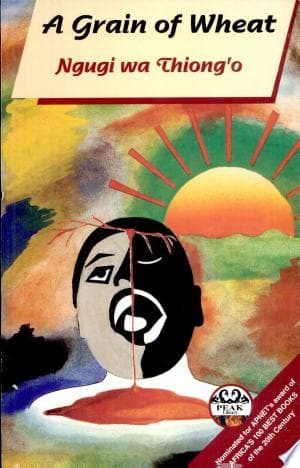
A Grain of Wheat cover
Archivist's Choice

A Grain of Wheat

Ngugi wa Thiongo, Ngũgĩ wa Thiong'o (1971)

Genre

General

Reading Time

12 Minutes

Key Themes

See below

Track Your Reading

Sign in to track this book

In the crucible of Kenya's fight for independence, a disillusioned villager grapples with betrayal, sacrifice, and the agonizing cost of freedom.

Core Idea

Ngugi wa Thiong'o's "A Grain of Wheat" explores the complex and often contradictory nature of Kenya's struggle for independence from British colonial rule, focusing on the Mau Mau Uprising and its aftermath. The novel delves into the personal and collective trauma of colonialism, the moral ambiguities of resistance, and the challenges of forging a new national identity. It meticulously dissects the psychological impact of betrayal, heroism, and the reinterpretation of history, revealing how individual lives are irrevocably shaped by political upheaval and the difficult choices made during revolutionary times. The narrative questions the true meaning of freedom and the sacrifices made to achieve it, suggesting that liberation is a multifaceted process that extends beyond the mere cessation of colonial power.
Difficulty
Medium

Core idea

The central argument and framework that powers the entire book.

Ngugi wa Thiong'o's "A Grain of Wheat" explores the complex and often contradictory nature of Kenya's struggle for independence from British colonial rule, focusing on the Mau Mau Uprising and its aftermath. The novel delves into the personal and collective trauma of colonialism, the moral ambiguities of resistance, and the challenges of forging a new national identity. It meticulously dissects the psychological impact of betrayal, heroism, and the reinterpretation of history, revealing how individual lives are irrevocably shaped by political upheaval and the difficult choices made during revolutionary times. The narrative questions the true meaning of freedom and the sacrifices made to achieve it, suggesting that liberation is a multifaceted process that extends beyond the mere cessation of colonial power.

At a glance

Difficulty

Medium

Key Takeaways

1

The Elusiveness of Heroism

Ngugi masterfully deconstructs the conventional notion of a singular, untainted hero in the struggle for independence.

Quote

Every hero in the book, from Mugo to Gikonyo, carries a burden of past compromise, betrayal, or personal failing.

Ngugi challenges the romanticized image of freedom fighters, showing the complex, often contradictory motivations behind their actions. Mugo, initially seen as a hero for his stoic silence during detention, is ultimately exposed as Kihika's betrayer. Gikonyo, a respected elder and former detainee, is haunted by his collaboration with colonial authorities to secure his release, and by his infidelity. Even Kihika, the charismatic leader, is remembered through fragmented stories, his legend partly created after his death. This portrayal ...

Supporting evidence

Mugo's internal monologue revealing his betrayal of Kihika, Gikonyo's confession of taking the oath to be released from detention.

Apply this

When evaluating historical figures or contemporary leaders, look beyond surface-level narratives to understand the full spectrum of their actions and motivations, acknowledging the inherent complexities of human character in times of crisis.
2

The Weight of Betrayal

Betrayal, both personal and political, forms the corrosive core of the novel, impacting individuals and the nascent nation alike.

Quote

The past was a string of events that had formed his present, and the future would be a string of consequences.

The novel explores betrayal: Mugo's betrayal of Kihika, Gikonyo's betrayal of Mumbi, and the broader societal betrayals from colonial collaboration. Mugo's act, born from fear and a twisted sense of self-preservation, affects the entire community, tainting the Uhuru celebrations. Gikonyo's infidelity, a more personal wrongdoing, reflects the larger divisions within the community and the broken promises of a liberated future. Ngugi suggests that these acts of betrayal are not isolated but connected to the psychological scars of colonia...

Supporting evidence

Mugo's confession of betraying Kihika to save himself, Gikonyo's affair with another woman while Mumbi was in detention.

Apply this

Recognize that historical injustices and betrayals have long-lasting consequences, shaping societal trust and individual relationships for generations. Healing requires confronting these difficult truths.

3

Memory as a Contested Terrain

The novel demonstrates how collective and individual memories are selectively constructed, manipulated, and often clash, shaping perceptions of history and identity.

Quote

History was being rewritten, not by those who lived it, but by those who survived it.

Ngugi shows that history is not a static record but a dynamic story, constantly reshaped by those who tell it. The memory of Kihika, for instance, is a unifying force, yet it is also adaptable, used to inspire and to justify. Mugo's initial reputation as a resistant hero is built on a false memory, a collective delusion that serves the community's need for a figurehead. The different recollections of the 'Emergency' by various characters, from colonial officers to villagers, show the subjectivity of historical experience. This is espe...

Supporting evidence

The villagers' idealized memory of Mugo versus the truth of his betrayal, the different accounts of Kihika's actions and motivations.

Apply this

Be critical of single-source historical narratives; seek out multiple perspectives and acknowledge the inherent biases in how history is recorded and remembered, especially in times of political transition.

4

The Personal is Political

The intimate relationships and domestic struggles of the characters are inextricably linked to the grander political drama of Kenya's independence.

Quote

Every man and woman was a nation.

Ngugi blurs the lines between the personal and the political. Mumbi's fidelity and her relationship with Karanja are not just domestic matters; they become metaphors for the nation's struggle with loyalty, compromise, and the search for identity in a new era. Gikonyo's disappointment with Mumbi after his release from detention reflects the broader disappointment with the results of independence. The private anxieties, desires, and betrayals of the characters reflect the larger societal upheavals and moral ambiguities of the anti-colon...

Supporting evidence

Mumbi's personal choices and suffering mirroring the nation's struggles, Gikonyo's marital issues reflecting broader post-independence disillusionment.

Apply this

Understand that societal changes are not abstract concepts but deeply affect individual lives and relationships. Engage with the personal stories behind political movements to grasp their full human impact.

5

The Illusion of Uhuru

The novel critiques the immediate aftermath of independence, suggesting that political freedom does not automatically equate to true liberation or justice.

Quote

Uhuru came, but the faces were the same, only the names had changed.

The anticipation of Uhuru (freedom) fills the narrative, yet its arrival brings deep disillusionment and unresolved trauma. The celebration itself is colored by lingering shadows of past betrayals and the realization that the new African leaders might not be so different from their colonial predecessors. The promise of land and prosperity for ordinary people remains largely unfulfilled. Ngugi implies that simply replacing white rulers with black ones does not dismantle oppressive structures or address deep-seated inequalities. This cr...

Supporting evidence

The lingering poverty and land disputes after independence, the character of General R. and his post-Uhuru actions, the unresolved mystery of Kihika's betrayer.

Apply this

Approach political transitions with a critical eye, recognizing that true liberation requires systemic change beyond a mere change of leadership. Advocate for justice and equity even after initial political victories.

6

The Burden of Choice and Inaction

Every character is defined by the choices they make—or fail to make—under the immense pressure of colonial rule and the struggle for freedom.

Quote

To be neutral was to choose the side of the oppressor.

Ngugi explores the moral dilemmas faced by individuals caught in historical currents. Karanja's choice to collaborate with colonial authorities, driven by a desire for power and Mumbi, makes him an antagonist, yet his motivations are complex, rooted in insecurity and opportunism. Mugo's inaction and eventual betrayal come from deep fear. Gikonyo's choice to confess and be released, while pragmatic, carries a heavy moral cost. Even those who appear passive are making a choice, as the book argues that neutrality is a form of complicity....

Supporting evidence

Karanja's decision to become a chief for the colonial government, Mugo's internal struggle leading to his betrayal, Gikonyo's choice to take the oath for freedom.

Apply this

Reflect on the ethical implications of your choices, especially during times of social or political upheaval. Understand that inaction can have as significant consequences as deliberate action.

7

The Power and Peril of Storytelling

The novel itself is an intricate tapestry of stories, demonstrating how narratives shape reality, influence perceptions, and can be used for both liberation and deception.

Quote

A people without history is like a tree without roots.

Ngugi uses a non-linear narrative, weaving together flashbacks, multiple perspectives, and oral traditions to build the story of Thabai and Kenya's independence. The stories told by villagers about Kihika, Mugo, and the 'Emergency' are not just historical accounts but active forces that shape their present reality and future hopes. The myth-making around Kihika's heroism inspires resistance, while the false story of Mugo's bravery provides a temporary, though ultimately destructive, sense of collective pride. This commentary on storyt...

Supporting evidence

The multiple, often conflicting, accounts of Kihika's actions and death; the initial veneration of Mugo based on a false story; the role of Gikonyo's wood carvings in preserving memory.

Apply this

Be aware of the power of narratives in shaping public opinion and personal beliefs. Actively seek diverse stories and question dominant narratives to gain a more complete understanding of events.

8

Land as a Symbol of Identity and Conflict

The struggle for land ownership and control is central to both the colonial conflict and the post-independence disappointments.

Quote

The earth, the land, was the very blood of the people.

Land is not merely a resource in 'A Grain of Wheat'; it is deeply connected to the identity, spirituality, and economic survival of the Gikuyu people. Colonial appropriation of land is a main cause for the Mau Mau uprising, symbolizing the theft of not just physical territory but also cultural heritage and dignity. After independence, lingering disputes over land, and the failure to distribute it fairly, become a source of deep disillusionment. Gikonyo's dream of acquiring more land for his family remains a central motivation, showing...

Supporting evidence

The historical context of colonial land seizures, the characters' discussions about the importance of land, the unfulfilled promises of land redistribution after Uhuru.

Apply this

Understand how land ownership and control are often at the heart of historical conflicts and contemporary inequalities. Advocate for policies that promote equitable land distribution and respect indigenous land rights.

9

The Psychological Scars of Colonialism

The novel vividly portrays the deep and lasting psychological damage inflicted by colonial rule, even on those who fought against it.

Quote

The past was not dead; it was not even past.

Beyond physical violence, Ngugi explores the mental and emotional scars left by detention, torture, and constant dehumanization under colonial rule. Characters like Gikonyo and Mugo carry the trauma of their experiences in detention camps, showing up in their relationships, self-perception, and ability to trust. The atmosphere of fear and suspicion created by the colonial regime continues to affect the community even after independence, making genuine reconciliation difficult. The struggle leaves individuals fragmented, grappling with...

Supporting evidence

Gikonyo's recurring nightmares and emotional distance after detention, Mugo's internalized fear and self-loathing, the pervasive distrust within the community.

Apply this

Recognize the long-term psychological impact of oppression and trauma on individuals and communities. Support initiatives that address mental health and historical reconciliation in post-conflict societies.

10

The Enduring Hope for True Freedom

Despite the disillusionment and betrayals, the novel concludes with a subtle, albeit fragile, glimmer of hope for a more just future.

Quote

The future was not yet written, and it would be written by them.

While the novel exposes the flaws and failures of the independence movement, it does not become completely despairing. The final scene, with the community gathered and the truth about Mugo revealed, suggests a painful but necessary step towards genuine healing. Mumbi and Gikonyo's tentative reconciliation, however fragile, hints at the possibility of rebuilding trust and relationships. The act of telling the complex, unvarnished truth about their past is presented as a foundational step towards building a more honest and fair future. ...

Supporting evidence

The public revelation of Mugo's betrayal, the tentative steps towards reconciliation between Mumbi and Gikonyo, the community's collective contemplation of their future.

Apply this

Even in the face of setbacks and disillusionment, maintain hope for positive change. Understand that building a just society is an ongoing, iterative process that requires persistent effort and confronting uncomfortable truths.

Critical analysis

Notable Quotes

Quiz

Test Your Knowledge

Ready to see how well you understood this book? Take our interactive quiz with 10 questions.

10
Questions
~5
Minutes
?
Best Score

Key Questions (FAQ)

The main theme of A Grain of Wheat is the complex and often disillusioning aftermath of Kenya's struggle for independence. It explores themes of betrayal, sacrifice, the corrupting influence of power, and the enduring spirit of the common people.

About the authors

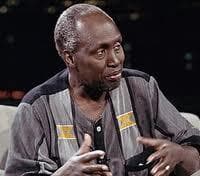
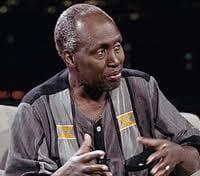
Ngugi wa Thiongo

Ngũgĩ wa Thiong'o is a Kenyan author and academic who writes primarily in Gikuyu and who formerly wrote in English. He has been described as having been "considered East Africa's leading novelist". His work includes novels, plays, short stories, and essays, ranging from literary and social criticism to children's literature. He is the founder and editor of the Gikuyu-language journal Mũtĩiri. His short story The Upright Revolution: Or Why Humans Walk Upright, is translated into 100 languages from around the world.