“The problem with a life lived in fear is that you don't really live it at all.”
— Jasper Dean reflecting on his father's cautious and paranoid existence.

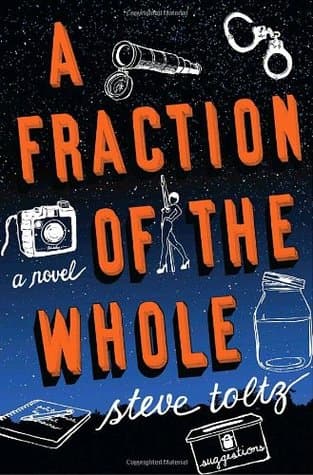
Steve Toltz (2008)
Genre
Literary Fiction / Philosophy
Reading Time
1200 min
Key Themes
See below
Sign in to track this book
A son reflects on his recently deceased, paranoid father, uncovering a global, generations-spanning story of philosophical ideas, criminal acts, and the lasting, if difficult, legacy of a family always at odds with the world.
The story starts with Jasper Dean, now an adult, thinking about his recently deceased father, Martin Dean. Jasper describes his childhood in a remote Australian house, where Martin, an extreme recluse and philosopher, raised him in isolation. Martin gives Jasper a strict, unusual education, filled with his own cynical ideas about humanity, society, and the universe. He constantly warns Jasper about the outside world, making him deeply paranoid. Martin's life is largely defined by his obsession with his famous brother, Terry Dean, a legendary criminal whose actions Martin both condemns and envies. This early period sets up Jasper's complex relationship with his father and the philosophical way he sees the world.
A large part of Jasper's childhood is spent under the shadow of his uncle, Terry Dean. Martin tells Terry's life story, from his early criminal tendencies to his prison escapes and his eventual change into a celebrated folk hero. Terry's adventures, full of daring heists and philosophical thoughts, fascinate young Jasper, despite Martin's attempts to portray his brother as a moral failure. Martin's story shows his deep jealousy and admiration for Terry's ability to live authentically and make a mark on the world, something Martin desperately wants but fears. Terry's legend is a constant point of comparison and conflict between father and son.
Jasper's mother is a vague figure, mostly absent from his early life. Martin gives unclear and often conflicting reasons for her disappearance, fueling Jasper's curiosity. As Jasper gets older, he starts to put together bits of information, suggesting his mother was European and her departure was mysterious. This search for his mother's identity becomes a quiet side story, hinting at a more complex and perhaps tragic past for Martin than he admits. The truth about his mother's story begins to unravel some of Martin's carefully constructed narratives about his own life and motives.
Driven by a strong desire to leave a lasting mark on the world, Martin Dean creates many strange plans throughout Jasper's life. These include trying to write the ultimate philosophical book, building a unique maze for tourists, and even attempting to start a new, ideal society. Each effort fails, often comically, further increasing Martin's cynicism and paranoia. Jasper is a reluctant participant in many of these plans, watching his father's relentless pursuit of importance and the deep disappointment that follows each collapse. These failures show Martin's internal struggle between his intellectual goals and his practical inability.
As a young man, Jasper eventually breaks free from his father's isolated world. He travels, trying to understand the world Martin so strongly condemned. During this time, Jasper experiences his first significant love affair, a relationship that offers him a glimpse of normalcy and connection. However, his father's philosophical training has left him with a unique, often cynical, view that makes true integration difficult. This period is marked by both the excitement of new freedom and the lasting influence of Martin's worldview, showing the deep impact of his unusual upbringing on his ability to form relationships and navigate society.
Despite trying to be independent, Jasper finds himself drawn back to his father. Their reunion is marked by a familiar pattern of intellectual debate, mutual frustration, and an undeniable bond. Martin, always the philosopher, continues to challenge Jasper's views of the world, while Jasper struggles to reconcile his own experiences with his father's fixed beliefs. This period deepens their complex relationship, revealing layers of codependency and a shared, though often difficult, intellectual journey. Their interactions highlight the lasting legacy of Martin's influence and Jasper's ongoing struggle for self-definition.
The story of Terry Dean reaches its dramatic end, affecting both Martin and Jasper deeply. Terry's final, bold actions and eventual death confirm his status as a folk hero, a sharp contrast to Martin's perceived failures. This event forces Martin to confront his lifelong obsession with his brother, leading to a period of self-reflection and renewed efforts to achieve his own kind of recognition. For Jasper, Terry's story powerfully shows living life on one's own terms, further shaping his understanding of freedom, ambition, and legacy. Terry's life and death become a key turning point in the father-son dynamic.
As Martin ages, his health begins to decline, bringing him closer to death. This period sees an increase in his philosophical talks, as he tries to sum up his life's wisdom and deal with his approaching end. Jasper becomes his main caregiver and listener, absorbing his father's final, often contradictory, insights into life, death, and meaning. Martin's vulnerability makes him more human in Jasper's eyes, forcing Jasper to face his own feelings about his father and the unavoidable loss. Their conversations during this time are touching, revealing the depth of their intellectual and emotional connection, despite their lifelong conflicts.
Martin Dean eventually dies, leaving Jasper to navigate the world alone. His father's death is not a simple end but a trigger for Jasper's full reflection on their shared life. Free from Martin's immediate influence, Jasper can objectively analyze his father's philosophies, his quirks, and the deep impact he had. This period is marked by a mix of grief, liberation, and a deep understanding of the complex man who raised him. Martin's death provides the narrative frame for the entire book, allowing Jasper to recount their story with the clarity and perspective only hindsight can offer.
After his father's death, Jasper Dean finds his own purpose: to document the lives of Martin and Terry Dean. By writing their story, Jasper not only processes his past but also tries to achieve the very legacy his father so desperately sought. He becomes the keeper of their stories, ensuring their unique philosophies and adventures are not forgotten. This act of storytelling is Jasper's way of making sense of his complex heritage and contributing his own 'fraction of the whole' to the world. It shows his acceptance of his lineage and his unique place within it, turning his past into a meaningful future.
The Protagonist
Jasper evolves from a captive observer to an independent thinker who ultimately embraces his role as the chronicler of his family's legacy, finding his own voice through storytelling.
The Protagonist/Antagonist (to Jasper's freedom)
Martin remains largely unchanged in his core beliefs but achieves a form of posthumous legacy through Jasper's narrative, realizing his desire for his story to be told.
The Supporting/Legendary Figure
Terry's arc is largely told retrospectively, solidifying his legend and serving as a catalyst for Martin's existential crisis and Jasper's understanding of different forms of greatness.
The Mentioned/Supporting
Her arc is revealed through Jasper's investigation, uncovering her tragic past and explaining some of Martin's motivations and secrets.
Both Martin and Terry Dean are obsessed with leaving a lasting mark on the world, though in very different ways. Martin seeks intellectual immortality through his philosophical writings and grand plans, always frustrated by his lack of recognition. Terry, however, achieves a kind of folk hero immortality through his bold criminal acts and charismatic personality. Jasper, by telling their stories, ultimately finds his own way to contribute to their legacies, suggesting that true immortality can be found in the stories we tell and the lives we affect. The book explores how futile and profound this human desire can be.
““I'm writing our story to make sense of it, to put some fraction of the whole into words, before it all slips away.””
The novel deeply explores the mixed blessing of intense intellectualism and philosophical inquiry. Martin Dean's life is defined by his constant need to analyze, theorize, and find meaning in everything, but this also leads to his deep paranoia, isolation, and inability to act effectively in the world. His philosophies, while insightful, often hinder him. Jasper, raised under this intellectual flood, struggles with the burden of overthinking and the isolation it causes. The book questions whether an overly analytical mind can truly experience life or if it only observes it from a detached, often cynical, distance.
““My father believed that the more you knew, the less you could do. Knowledge was a kind of paralysis.””
At its heart, the novel explores the complex, often difficult, but ultimately strong bond between a father and son. Martin's eccentric parenting and philosophical teaching deeply shape Jasper's identity, worldview, and struggles. Jasper simultaneously loves, resents, and is deeply affected by his father. Their relationship is marked by constant intellectual debate, codependency, and a shared, though often conflicting, search for meaning. The story shows how parental legacies, both good and bad, are passed down and how individuals deal with inherited traits and beliefs.
““You can spend your whole life trying to escape your father, but in the end, you realize you're just running in circles inside his head.””
The theme of freedom versus confinement is central to the story. Martin lives in self-imposed confinement, both physically in his remote house and mentally within his own paranoid philosophies. He tries to confine Jasper, intellectually and physically, to protect him from the 'dangers' of the world. In contrast, Terry Dean embodies absolute freedom, constantly escaping prisons and societal expectations. The characters' struggles highlight different interpretations of freedom: is it physical liberty, intellectual independence, or the ability to live authentically? The novel suggests that true freedom might mean accepting one's unique place in the 'whole' rather than trying to escape it.
““The greatest prison is a mind without a map.””
Jasper recounts his life with his father after Martin's death.
The entire novel is narrated by Jasper Dean, reflecting on his life with his father, Martin, after Martin's death. This allows Jasper to offer a retrospective, analytical, and often darkly humorous perspective on the events, free from his father's immediate influence. The posthumous narration provides a sense of closure and allows for a comprehensive, philosophical assessment of Martin's life and impact, giving Jasper the necessary distance to dissect their complex relationship and the lessons learned.
Jasper's perspective is filtered through his unique upbringing and inherent biases.
While Jasper aims for honesty, his narration is inherently colored by his unusual childhood and his father's profound influence. His interpretations of events, particularly those involving Martin and Terry, are shaped by his own emotional landscape and philosophical conditioning. This unreliability adds depth, forcing the reader to question perspectives and consider the subjective nature of truth, especially when recounting family history. It also highlights how deeply ingrained Martin's teachings are within Jasper's own thought processes.
Martin's lengthy philosophical speeches and theories are integrated into the narrative.
Martin Dean's character is defined by his extensive, often cynical, philosophical monologues and theories about life, humanity, and society. These are not merely dialogue but often lengthy expositions integrated into Jasper's narrative. This device serves to convey the core philosophical themes of the book, illustrate Martin's intellectual prowess and paranoia, and demonstrate the profound impact of his teachings on Jasper. They are both a source of humor and deep insight, forming the intellectual backbone of the story.
The unknown fate of Jasper's mother creates narrative suspense and reveals Martin's hidden depths.
The mystery surrounding Jasper's European mother and her disappearance serves as a subtle but persistent plot device. It creates curiosity and propels Jasper's own internal quest for identity and understanding. The gradual revelation of her story unveils a more vulnerable and complex side to Martin, exposing the emotional wounds beneath his intellectual armor. This device adds a layer of personal tragedy and motivation, enriching the character backstories and explaining some of Martin's protective and isolating behaviors.
“The problem with a life lived in fear is that you don't really live it at all.”
— Jasper Dean reflecting on his father's cautious and paranoid existence.
“My father always said that the only way to avoid disappointment was to expect nothing.”
— Jasper quoting his father, Martin, on managing expectations.
“We are all just a fraction of the whole, desperately trying to make sense of the other fractions.”
— A central theme of the book, reflecting on individual identity and connection.
“To be truly free, you must first be free of yourself.”
— A philosophical musing on self-limitation and liberation.
“The greatest prison is not one of stone and iron, but of the mind.”
— Jasper contemplating the psychological constraints people impose on themselves.
“Every man is a mystery, even to himself.”
— A reflection on the inherent unknowability of human beings.
“Happiness is not a destination, but a method of travel.”
— Martin Dean's perspective on the nature of happiness.
“The world is full of people who are trying to find themselves, when they should be trying to create themselves.”
— A commentary on self-discovery versus self-creation.
“Life is a tragedy for those who feel, and a comedy for those who think.”
— A classic philosophical dichotomy applied to life's experiences.
“Memory is a beautiful thing, but it's also a terrible liar.”
— Jasper considering the unreliable nature of memory.
“To truly live, you must risk everything.”
— A reflection on the necessity of taking chances for a full life.
“The only thing worse than being alone is being with someone who makes you feel alone.”
— A poignant observation on the quality of relationships.
“Humor is the only way to deal with the absurdity of existence.”
— A coping mechanism for the often-nonsensical nature of life.
“We spend our lives trying to outrun our pasts, only to find them waiting for us at the finish line.”
— Jasper contemplating the inescapable influence of one's history.
Ready to see how well you understood this book? Take our interactive quiz with 10 questions.

Biography coming soon.