BookBrief
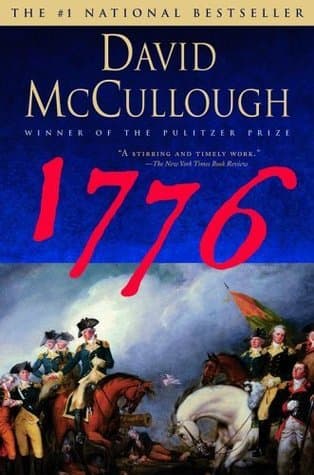
1776 cover
Archivist's Choice

1776

David McCullough (2005)

Genre

Politics / History

Reading Time

10-12 hours

Key Themes

See below

Track Your Reading

Sign in to track this book

In 1776, an untested George Washington and his Continental Army fought against the British Empire to turn the words of independence into a real nation.

Core Idea

David McCullough's "1776" reconstructs a key year of the American Revolutionary War. He argues that the new nation survived because of George Washington's unexpected leadership, the resolve of ordinary Americans, and several British mistakes. The book shows the human cost of the conflict and how the Continental Army, though outmatched, used strategic retreats, intelligence, and endurance to keep the rebellion from failing. This set the stage for independence against great odds.
Reading time
10-12 hours
Difficulty
Easy
✓ Read this if...
You want a highly engaging, character-driven narrative of the most critical year of the American Revolution, focusing on military strategy, leadership, and the personal experiences of those involved.
✗ Skip this if...
You prefer a deep academic analysis of socio-economic causes of the revolution or a critical re-evaluation of historical figures rather than a traditional, accessible narrative history.

Core idea

The central argument and framework that powers the entire book.

David McCullough's "1776" reconstructs a key year of the American Revolutionary War. He argues that the new nation survived because of George Washington's unexpected leadership, the resolve of ordinary Americans, and several British mistakes. The book shows the human cost of the conflict and how the Continental Army, though outmatched, used strategic retreats, intelligence, and endurance to keep the rebellion from failing. This set the stage for independence against great odds.

At a glance

Reading time

10-12 hours

Difficulty

Easy

Read this if...

You want a highly engaging, character-driven narrative of the most critical year of the American Revolution, focusing on military strategy, leadership, and the personal experiences of those involved.

Skip this if...

You prefer a deep academic analysis of socio-economic causes of the revolution or a critical re-evaluation of historical figures rather than a traditional, accessible narrative history.

Key Takeaways

1

The Perilous Birth of a Nation

America's independence hung by a thread, driven by the sheer will of a few.

Quote

The year 1776 was the year of the Declaration of Independence, a time when the whole American cause was riding on their success, without which all hope for independence would have been dashed.

McCullough clearly shows that the American Revolution was not a guaranteed win. The year 1776, in particular, was a time when the new nation was close to collapse. The Continental Army, largely untrained and poorly equipped, faced the world's strongest military. The story highlights the immense pressure on George Washington and his officers; every decision and skirmish could either secure or end the dream of independence. It was a period of constant retreat, near-fatal mistakes, and a desperate fight to keep an army together. The exis...

Supporting evidence

The repeated defeats in New York, the retreat across New Jersey, and the constant threat of desertion and expiring enlistments demonstrate the precariousness of the American position throughout 1776.

Apply this

When facing overwhelming odds, remember that perseverance and strategic adaptation, even in retreat, can lay the groundwork for eventual success. Don't underestimate the power of morale and leadership in dire circumstances.


american-revolutiongeorge-washingtoncontinental-armyindependence
2

Washington's Unlikely Leadership

An untested commander's resilience and capacity for growth defined the early war.

Quote

Washington, who had never before led an army in battle, stood foremost.

McCullough shows George Washington not as a myth, but as a man in an impossible role, learning and adapting under great pressure. He took command with limited battle experience, inheriting a disorganized militia. His leadership in 1776 involved remarkable resilience in the face of repeated failures, a firm commitment to the cause, and a surprising ability for strategic thinking, especially before Trenton and Princeton. The book highlights his moments of doubt and frustration, making his later successes more human and inspiring. Keepin...

Supporting evidence

Washington's decision to cross the Delaware and attack Trenton, a high-stakes gamble after a string of demoralizing losses, exemplifies his evolving leadership and willingness to take risks when the cause demanded it.

Apply this

Leadership is often forged in adversity. Embrace new challenges, even when feeling unprepared, and prioritize learning and adaptability. True leaders inspire by their unwavering commitment and their ability to rally others, even when the path is unclear.

george-washingtonleadership-developmentmilitary-strategyresilience
3

The Human Cost of War

Beyond grand strategy, the suffering of the common soldier shaped the conflict.

Quote

It is the story of Americans in the ranks, men of every shape, size, and color, farmers, schoolteachers, shoemakers, no-accounts, and mere boys turned soldiers.

McCullough excels at bringing to life the experiences of the ordinary American soldier, painting a clear picture of their suffering and sacrifice. The book details the harsh realities of campaigning: poor clothing, not enough food, widespread disease, and the constant threat of death or capture. These were not professional soldiers but citizens, often young and inexperienced, thrown into a brutal war. Their courage, resilience, and often their desperation, are central to the story. Understanding their struggles makes the survival of t...

Supporting evidence

Descriptions of the soldiers' tattered uniforms, lack of shoes in freezing temperatures, and the widespread illnesses like dysentery and smallpox that decimated the ranks, often more effectively than British bullets.

Apply this

Never lose sight of the human element in any grand endeavor. Acknowledge and address the basic needs and well-being of those on the front lines, as their morale and physical state directly impact the success of the mission.

military-historysoldier-experiencewar-hardshipamerican-revolution
4

British Arrogance and Missed Opportunities

Overconfidence and strategic errors plagued the superior British forces.

Quote

And it is the story of the King's men, the British commander, William Howe, and his highly disciplined redcoats who looked on their rebel foes with contempt and fought with a valor too little known.

McCullough shows the strength and discipline of the British army, but also points out the mistakes and overconfidence that kept them from crushing the rebellion in 1776. General William Howe, while a capable commander, often moved slowly and seemed unwilling to strike a decisive blow when the Americans were weakest. Their scorn for the 'rebel rabble' led to underestimation and a failure to fully use their superior numbers and training. This story shows that even the most powerful forces can be weakened by pride and a lack of decisive ...

Supporting evidence

Howe's failure to aggressively pursue Washington's retreating army after the Battle of Long Island, allowing them to escape across the East River, is a prime example of a missed opportunity that could have ended the war.

Apply this

Never underestimate your opponent, regardless of their perceived weakness. Overconfidence can lead to complacency and strategic errors. Act decisively when opportunities arise, rather than assuming victory is inevitable.

british-armymilitary-tacticsstrategic-blunderswilliam-howe
5

The Indispensable Role of Key Individuals

Beyond Washington, unsung heroes and vital figures made critical contributions.

Quote

At the center of the drama, with Washington, are two young American patriots, who, at first, knew no more of war than what they had read in books - Nathaniel Green, a Quaker who was made a general at thirty-three, and Henry Knox, a twenty-five-year-old bookseller.

While Washington is central, McCullough sheds light on the roles played by other, less famous figures. Nathaniel Greene, a self-taught military strategist, and Henry Knox, the bookseller turned artillery expert, are given their due. Knox's bold act of moving cannons from Fort Ticonderoga to Boston was a logistical marvel that directly led to the British leaving. Greene's steadiness and tactical skill, especially in the New York campaigns, were vital in preventing total collapse. These individuals, often learning as they went, showed e...

Supporting evidence

Henry Knox's epic winter expedition to bring artillery from Fort Ticonderoga to Boston, which forced the British evacuation, demonstrates the critical impact of individual ingenuity and determination.

Apply this

Recognize and empower talent at all levels. Encourage initiative and resourcefulness, as unexpected heroes often emerge in times of crisis. A strong leader surrounds themselves with capable and dedicated individuals.

nathaniel-greenehenry-knoxamerican-patriotsteamwork
6

The Power of Information and Intelligence

Espionage and communication, though rudimentary, were critical to survival.

Quote

The Americans, often facing superior numbers, relied heavily on their ability to gather intelligence and communicate effectively, despite primitive means.

McCullough subtly highlights the importance of gathering intelligence and communication, even in an earlier era. Washington and his officers constantly sought information about British movements, often using local civilians, scouts, and even captured documents. The ability to receive and send orders, however slowly, was crucial. The book shows how even imperfect or delayed intelligence could be the difference between survival and disaster, as seen in the retreats from Long Island and Manhattan. This shows that understanding your enemy...

Supporting evidence

The American use of local knowledge and scouts to monitor British movements in New York and New Jersey, and the critical role of dispatch riders in conveying Washington's orders across vast distances.

Apply this

Prioritize robust intelligence gathering and clear communication in any competitive environment. Understand that information, even in its rawest form, is a powerful strategic asset. Invest in systems that allow for timely and accurate information flow.

military-intelligencecommunication-strategyespionagewarfare
7

The Psychological Warfare of Hope and Despair

Maintaining morale was as crucial as winning battles in a war of attrition.

Quote

The whole American cause was riding on their success, without which all hope for independence would have been dashed.

McCullough clearly conveys the constant struggle for morale within the Continental Army and among civilians. The year 1776 was a roller coaster of hope and despair. The initial excitement after the British left Boston quickly turned into crushing defeats in New York. Washington's genius was not just in his military tactics, but in his ability to inspire and keep the loyalty of his troops, even when prospects looked grim. The victories at Trenton and Princeton, though small tactically, were huge in their psychological impact, reviving ...

Supporting evidence

The widespread desertions and expiring enlistments in late 1776, contrasted with the renewed spirit and recruitment after the Trenton victory, clearly demonstrate the impact of morale on the army's viability.

Apply this

In any long-term project or struggle, prioritize maintaining morale and hope. Celebrate small victories, communicate a clear vision, and offer tangible reasons for continued effort. A dispirited team is a defeated team, regardless of resources.

moralepsychological-warfareleadership-inspirationresilience
8

The Unexpected Geography of War

Terrain, weather, and logistics profoundly shaped the course of conflict.

Quote

Knox had the preposterous idea of hauling the guns of Fort Ticonderoga overland to Boston in the dead of Winter.

McCullough points out how America's landscape and climate played a critical, often harsh, role in the war. The dense forests, dangerous rivers, and extreme weather—from the heat of summer campaigns to the freezing cold of winter marches—were strong adversaries themselves. Logistics, especially moving troops, supplies, and artillery, became a constant, huge challenge for both sides. The book clearly describes how these environmental factors influenced strategic decisions, hindered movements, and greatly added to the soldiers' suffering...

Supporting evidence

The detailed accounts of the difficult river crossings, the impact of blizzards on troop movements, and the challenges of supplying armies across vast, undeveloped territories, particularly during the winter campaigns.

Apply this

When planning any large-scale operation, thoroughly assess and account for environmental factors and logistical challenges. Do not underestimate the impact of geography and weather on execution and resource allocation.

military-logisticsterrain-impactweather-warfaregeography
9

The British Misunderstanding of American Resolve

The Crown consistently underestimated the depth of the colonists' commitment to freedom.

Quote

The British looked on their rebel foes with contempt.

McCullough effectively shows that a basic flaw in British strategy was their failure to understand the deep ideological commitment driving the American rebellion. They saw the conflict as punishment for disloyal subjects, expecting a quick suppression. This led to several mistakes: underestimating the resilience of the Continental Army, failing to see the widespread popular support for independence, and consistently believing that a few decisive victories would break American will. Their scorn for the 'rebel rabble' blinded them to th...

Supporting evidence

The British expectation that the mere presence of their superior army would cause the rebels to disperse, and their surprise at the continued resistance even after major defeats like Long Island.

Apply this

Always seek to understand the underlying motivations and values of your opponents or stakeholders. Dismissing their convictions as mere 'contempt' can lead to critical misjudgments and prolong conflict. Empathy, even in opposition, is a strategic asset.

british-perspectivecolonial-resolveideological-conflictmisjudgment
10

The Power of Narrative and Public Opinion

Words and perception were as vital as bullets in sustaining the revolutionary cause.

Quote

The noble ideals of the Declaration would have amounted to little more than words on paper.

McCullough, though mainly focusing on military events, implicitly highlights the great importance of narrative and public opinion. The Declaration of Independence itself, while stating ideals, served as a powerful call to action, giving purpose to the immense suffering. The perception of victory or defeat, often exaggerated or downplayed by reports and rumors, directly affected recruitment and civilian support. Washington understood the need to maintain appearances and project an image of steadfastness, even in retreat. The book impli...

Supporting evidence

The immediate impact of the Declaration of Independence on morale and the subsequent need for victories like Trenton to reinforce its promise, preventing the 'words on paper' from becoming meaningless.

Apply this

In any significant undertaking, craft and maintain a compelling narrative. Understand that public perception and internal belief are powerful forces that can sustain efforts through difficult times. Words can inspire action and maintain hope.

public-opiniondeclaration-of-independencepropagandanarrative-power

Critical analysis

Notable Quotes

No people can be great who have ceased to be virtuous.

Attributed to Patrick Henry, reflecting on the moral character needed for the new republic.

The fate of unborn millions will now depend, under God, on the courage and conduct of this army.

George Washington's general orders to his troops on August 23, 1776, before the Battle of Long Island.

These are the times that try men's souls.

Opening line of Thomas Paine's 'The American Crisis' pamphlet, published in December 1776.

I am well convinced that almost every man in the army is upon the point of starving.

A letter from a Continental Army officer, describing the dire supply situation in late 1776.

The cause of America is in a great measure the cause of all mankind.

From Thomas Paine's 'Common Sense,' reflecting the broader implications of the American struggle.

The event, I think, will be honorable to our arms.

George Washington's confident assessment to Congress after the victory at Trenton.

We have too many generals and too few privates.

A common complaint within the Continental Army, highlighting issues of command structure and manpower.

The greatest danger we have is from ourselves.

A sentiment expressed by various figures, concerned about internal divisions and lack of unity.

It is not the business of a soldier to reason why, but to do and die.

A reflection on military discipline and the expectations placed upon soldiers.

Posterity! You will never know how much it cost us to preserve your freedom.

A letter from John Adams to his wife Abigail, reflecting on the sacrifices made for independence.

There are times when the best thing to do is nothing.

A strategic thought, sometimes attributed to Washington, in moments of extreme uncertainty or waiting for opportune conditions.

The only way to preserve our liberty is to fight for it.

A prevailing sentiment among patriots, justifying the armed struggle against British rule.

To be prepared for war is one of the most effective means of preserving peace.

A quote from George Washington, underscoring the importance of military readiness.

We must all hang together, or assuredly we shall all hang separately.

Attributed to Benjamin Franklin at the signing of the Declaration of Independence, emphasizing the need for unity.

Quiz

Test Your Knowledge

Ready to see how well you understood this book? Take our interactive quiz with 10 questions.

10
Questions
~5
Minutes
?
Best Score

Key Questions (FAQ)

'1776' primarily focuses on the pivotal year of the American Revolution, detailing the struggles and triumphs of George Washington and his Continental Army from the Declaration of Independence through the end of that challenging year. It emphasizes the human element of the conflict for both American patriots and British forces.

About the author

David McCullough

David McCullough was a two-time Pulitzer Prize winner and a recipient of the Presidential Medal of Freedom, celebrated for his vivid historical narratives. His notable works, including "1776," "John Adams," and "Truman," brought American history to life for millions of readers. McCullough's masterful storytelling and meticulous research made him one of the nation's most beloved and respected historians.