BookBrief
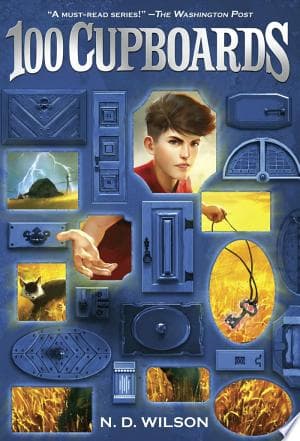
100 Cupboards (100 Cupboards Book 1) cover
Archivist's Choice

100 Cupboards (100 Cupboards Book 1)

N. D. Wilson (2007)

Genre

General

Reading Time

12 Minutes

Key Themes

See below

Track Your Reading

Sign in to track this book

When mysterious doors appear in his bedroom wall, a reluctant boy must follow his adventurous cousin into other worlds to stop the evil lurking behind them from escaping into his own.

Core Idea

When a young boy named Henry discovers a hidden wall with 100 small, mysterious cupboards in his eccentric grandparents' old house, he inadvertently unlocks a magical portal to a multitude of other worlds. The novel explores themes of discovery, belonging, and the hidden dangers that lie just beyond the veil of ordinary life, as Henry learns about his own lineage and the powerful, ancient magic tied to these portals and the family that guards them. It's a journey into a fantastical realm where every cupboard holds a different secret, and some secrets are best left undisturbed.
Difficulty
Easy

Core idea

The central argument and framework that powers the entire book.

When a young boy named Henry discovers a hidden wall with 100 small, mysterious cupboards in his eccentric grandparents' old house, he inadvertently unlocks a magical portal to a multitude of other worlds. The novel explores themes of discovery, belonging, and the hidden dangers that lie just beyond the veil of ordinary life, as Henry learns about his own lineage and the powerful, ancient magic tied to these portals and the family that guards them. It's a journey into a fantastical realm where every cupboard holds a different secret, and some secrets are best left undisturbed.

At a glance

Difficulty

Easy

Key Takeaways

1

The Allure of the Hidden

Unseen possibilities often hold the greatest power and peril.

Quote

He scrapes off the plaster and discovers mysterious doors—cupboards of all different shapes and sizes.

The book's main idea is the discovery of a hidden wall with many cupboards, each a door to a different world. This immediately establishes a core theme: the appeal of the unknown and the chance for amazing experiences beyond everyday life. Wilson builds suspense around these hidden doors, making the reader, like Henry, feel drawn to explore what is behind each one. This reflects a basic human curiosity, the urge to uncover secrets and go into new places, even when danger is present. It is a strong comparison to the hidden parts of our...

Supporting evidence

Henry's discovery of the plastered-over wall in his bedroom, revealing dozens of unique cupboard doors, each with a distinct appearance suggesting different worlds.

Apply this

Consider what 'hidden cupboards' might exist in your own life—unexplored talents, overlooked opportunities, or suppressed curiosities. What would happen if you dared to 'scrape off the plaster' and peek inside?

2

Ordinary Boy, Extraordinary Circumstances

Reluctant heroes are often forged not by innate bravery, but by necessity.

Quote

Henry isn’t brave, but when he hears a thumping and scratching on the other side of his bedroom wall, he can’t ignore it.

Henry, the main character, is called 'not brave.' This connects the fantasy elements to a real human experience. His journey is not about a naturally fearless person, but a normal boy in unusual situations. His first reason is not heroism, but curiosity and a growing sense of duty, especially when his cousin Henrietta goes into the unknown. This makes Henry's later acts of courage more powerful and believable, showing that bravery can be learned when facing challenges, not just something you are born with. This is an important idea, e...

Supporting evidence

The narrative explicitly states Henry's lack of bravery, contrasting it with his inability to ignore the sounds from the wall and his subsequent pursuit of Henrietta.

Apply this

Reflect on situations where you've felt unprepared or afraid, yet found the courage to act. How did necessity or care for others influence your actions?

3

The Balance of Light and Shadow

For every wonder, there exists a corresponding darkness.

Quote

Through one he sees a glowing room and a man strolling back and forth. Through another he sees only darkness and feels the cold sense that something isn’t right.

Wilson quickly shows two sides to the cupboard worlds: some are inviting and wonderful, while others are clearly threatening. This is not a world of pure escape; it is a complex place where beauty and danger exist together. The 'cold sense that something isn't right' from one cupboard hints at the evil that becomes the main problem. This balance of good and bad is important for a good story, making sure the stakes are real and that the fantasy is not just silly. It teaches the reader that even in the most magical places, good and evil...

Supporting evidence

Henry's initial glimpses through the cupboards: one showing a pleasant, glowing room and another revealing only darkness and a sense of dread.

Apply this

When encountering new opportunities or experiences, consider both their potential benefits and inherent risks. How can you discern between true wonder and disguised danger?

4

Consequences of Opening Doors

Actions, even accidental ones, have far-reaching and often irreversible repercussions.

Quote

Now that he’s opened the doors, can he keep the evil inside from coming through?

This is perhaps the book's strongest idea: opening the cupboards is not a neutral act; it releases forces that require a response. Henry's first curiosity quickly turns into a heavy responsibility. The story highlights that once Pandora's box is open, it is hard to close. This theme shows the importance of thinking ahead and understanding that every choice has consequences. It changes the story from simple exploration to a mission for control and protection, greatly increasing the stakes. This idea is especially strong, teaching young...

Supporting evidence

The direct question posed by the book's summary: 'Now that he’s opened the doors, can he keep the evil inside from coming through?' This highlights the immediate consequence of his actions.

Apply this

Before making significant decisions, especially those that involve 'opening new doors' in your life, consider the potential long-term consequences and your capacity to manage them.

5

The Call to Adventure

Sometimes, adventure finds you, demanding a response whether you're ready or not.

Quote

When his cousin Henrietta boldly travels into the worlds beyond the cupboards, it’s up to Henry to follow her.

Henry does not look for adventure; it comes to him. The thumping from the wall, Henrietta's bold actions, and the later need to protect her and his world push him into the role of an adventurer. This is a common fantasy element, but Wilson uses it well by making Henry's hesitation clear. It is not a romantic 'call to adventure' but a desperate one, driven by loyalty and survival. This part can connect with readers who might feel overwhelmed by unexpected challenges, showing that courage can be found in reacting to situations rather th...

Supporting evidence

Henrietta's impulsive decision to enter the cupboard worlds, forcing Henry to follow her out of concern and loyalty, not a desire for adventure.

Apply this

Consider times when you've been unexpectedly called upon to step outside your comfort zone. How did you respond, and what did you learn about your own capacity?

6

The Power of Family Bonds

Family, even new or estranged, provides a crucial anchor in chaotic circumstances.

Quote

When his cousin Henrietta boldly travels into the worlds beyond the cupboards, it’s up to Henry to follow her.

The relationship between Henry and Henrietta, his cousin, is a strong driving force. Their relationship, which likely starts as typical cousins, quickly grows deeper under the pressure of the cupboard worlds. Henry's choice to follow Henrietta, despite his fear, comes from a new sense of family duty and care. This shows how shared extraordinary experiences can create very strong bonds. For a book for younger readers, this focus on family, even if it is not a traditional family unit, is a powerful message about support, loyalty, and fi...

Supporting evidence

Henry's immediate decision to follow Henrietta into the dangerous cupboard worlds, demonstrating his growing loyalty and concern for his cousin.

Apply this

Reflect on how your family or close relationships have provided support during challenging times. How do these bonds empower you to face difficulties?

7

The Mundane as a Gateway

Extraordinary worlds often lie hidden within the most ordinary settings.

Quote

He scrapes off the plaster and discovers mysterious doors—cupboards of all different shapes and sizes.

The discovery of the cupboards in a seemingly ordinary bedroom wall is a classic fantasy element that Wilson uses very well. It connects the fantasy to the familiar, making the jump into other worlds more surprising and accessible. This suggests that magic is not only in faraway lands or old prophecies, but can be found just under the surface of everyday life. This view encourages readers to look beyond the obvious, to question what might be hidden in plain sight, and to appreciate that wonder can appear from the most unexpected place...

Supporting evidence

The initial setting of Henry's discovery: an ordinary bedroom in an ordinary house, where a hidden wall contains portals to other worlds.

Apply this

Practice looking at your everyday surroundings with fresh eyes. What hidden details, patterns, or potentials might you be overlooking?

8

The Nature of Evil

Evil isn't always overt; sometimes it's a creeping, cold presence.

Quote

Through another he sees only darkness and feels the cold sense that something isn’t right.

The book hints at a complex portrayal of evil. It is not just a monster but a 'cold sense' of wrongness, a lurking darkness. This subtle introduction of evil creates a stronger sense of fear than a simple scare. It suggests that evil can be sneaky, a widespread atmosphere rather than just a physical threat. This approach allows for a deeper look at its impact and how it corrupts or threatens entire worlds. For a middle-grade novel, this is a sophisticated way to introduce the idea of evil forces, teaching that threats can be intangibl...

Supporting evidence

Henry's immediate, visceral reaction to one of the cupboard doors, feeling only darkness and a 'cold sense that something isn’t right' even before seeing a specific monster.

Apply this

Consider how subtle cues or atmospheres can indicate underlying problems or dangers in real-world situations, rather than relying solely on overt threats.

Critical analysis

Notable Quotes

Quiz

Test Your Knowledge

Ready to see how well you understood this book? Take our interactive quiz with 10 questions.

10
Questions
~5
Minutes
?
Best Score

Key Questions (FAQ)

"100 Cupboards" is the first book in a fantasy adventure series by N. D. Wilson. It follows a young boy named Henry who discovers mysterious cupboards behind his bedroom wall, which serve as portals to other worlds. When his cousin Henrietta enters one of these worlds, Henry must overcome his fear to follow her and protect their own world from the dangers that might come through the cupboards.

About the author