BookBrief
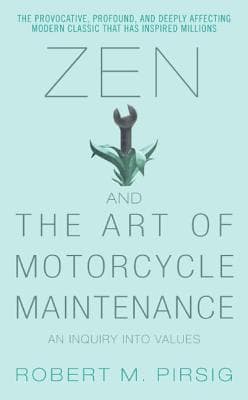
Zen and the Art of Motorcycle Maintenance: An Inquiry Into Values cover
Archivist's Choice

Zen and the Art of Motorcycle Maintenance: An Inquiry Into Values

Robert M. Pirsig (1974)

Genre

Psychology / Lifestyle / Spirituality / Philosophy

Reading Time

18 hours

Key Themes

See below

Track Your Reading

Sign in to track this book

A father and son's motorcycle journey across the American Northwest becomes a philosophical quest, exploring quality, reason, and a meaningful life.

Core Idea

Pirsig's "Zen and the Art of Motorcycle Maintenance" is an autobiographical philosophical novel about 'Quality' as the basic, original element of all experience. During a cross-country motorcycle trip with his son, the narrator struggles with how modern thought is split, especially between classical and romantic views. He tries to connect objective scientific understanding with subjective artistic appreciation. The book says 'Quality' is not just a personal preference or an objective feature, but an awareness that comes before thought, guiding how we see and act. By focusing on motorcycle maintenance, Pirsig shows how direct, careful interaction with the world can link these different ways of thinking, leading to a unified understanding of self and reality. The main idea is that society has a deep division between rational, analytical thought (classical) and intuitive, aesthetic experience (romantic). This division keeps us from fully appreciating the world and living genuinely. Pirsig presents 'Quality' as the missing link, a principle that, when recognized, can lead to a more complete and meaningful life. He uses motorcycle maintenance as a comparison for pursuing Quality, showing how attention to detail, purpose, and understanding of principles can turn everyday tasks into philosophical inquiries, leading to personal growth and a deeper understanding of values.
Reading time
18 hours
Difficulty
Hard
✓ Read this if...
You are interested in deeply exploring the nature of values, reality, and the human experience, and enjoy philosophical inquiry presented through a narrative lens. Ideal for those who appreciate blending personal reflection with abstract thought.
✗ Skip this if...
You prefer straightforward narratives, avoid philosophical introspection, or are looking for a practical guide to motorcycle maintenance (it's a metaphor!).

Core idea

The central argument and framework that powers the entire book.

Pirsig's "Zen and the Art of Motorcycle Maintenance" is an autobiographical philosophical novel about 'Quality' as the basic, original element of all experience. During a cross-country motorcycle trip with his son, the narrator struggles with how modern thought is split, especially between classical and romantic views. He tries to connect objective scientific understanding with subjective artistic appreciation. The book says 'Quality' is not just a personal preference or an objective feature, but an awareness that comes before thought, guiding how we see and act. By focusing on motorcycle maintenance, Pirsig shows how direct, careful interaction with the world can link these different ways of thinking, leading to a unified understanding of self and reality.

The main idea is that society has a deep division between rational, analytical thought (classical) and intuitive, aesthetic experience (romantic). This division keeps us from fully appreciating the world and living genuinely. Pirsig presents 'Quality' as the missing link, a principle that, when recognized, can lead to a more complete and meaningful life. He uses motorcycle maintenance as a comparison for pursuing Quality, showing how attention to detail, purpose, and understanding of principles can turn everyday tasks into philosophical inquiries, leading to personal growth and a deeper understanding of values.

At a glance

Reading time

18 hours

Difficulty

Hard

Read this if...

You are interested in deeply exploring the nature of values, reality, and the human experience, and enjoy philosophical inquiry presented through a narrative lens. Ideal for those who appreciate blending personal reflection with abstract thought.

Skip this if...

You prefer straightforward narratives, avoid philosophical introspection, or are looking for a practical guide to motorcycle maintenance (it's a metaphor!).

Key Takeaways

1

The Metaphysics of Quality

Quality is the fundamental reality, preceding both mind and matter.

Quote

Quality… you know what it is, yet you don’t know what it is. But that’s self-contradictory. But some things are better than others, that is, they have more quality.

Pirsig's main philosophical idea, the Metaphysics of Quality (MOQ), says Quality is not a subjective preference or an objective property. Instead, it is the original reality from which both subjects and objects come. It is the 'knife-edge' of the present, the moment before thought sorts out experience. This 'pre-intellectual' understanding of value guides our actions and perceptions, often without us knowing it. By making Quality a metaphysical principle, Pirsig questions the traditional subject-object division in Western thought, sug...

Supporting evidence

Pirsig's extensive exploration of 'Phaedrus's' intellectual journey, particularly his struggle to define Quality during his teaching tenure, and the subsequent breakdown that resulted from trying to force an intellectual definition onto a pre-intellectual concept.

Apply this

Cultivate a heightened awareness of 'goodness' or 'rightness' in your immediate experience, before intellectual analysis. When making decisions, trust your intuitive sense of what 'feels right' or 'has quality' alongside logical reasoning. This means paying attention to the craftsmanship, the flow, the inherent value in tasks and interactions, rather than solely their utility or objective metrics.

metaphysics-of-qualitysubject-object-dichotomypre-intellectual-experience
2

Bridging the Chasm: Classical vs. Romantic

Integrate rational analysis with intuitive appreciation for a richer life.

Quote

The way to solve the conflict between the romantic and classical modes of understanding is to see that they are not in conflict at all but are two different ways of looking at the same whole.

Pirsig identifies two main ways of understanding the world: classical (rational, analytical, scientific, objective) and romantic (intuitive, aesthetic, emotional, subjective). He says that modern society, especially in the West, values the classical too much, which leads to a disconnect and a feeling of being separate. The romantic view appreciates immediate appearance, while the classical looks for underlying form and function. The motorcycle is a good example of this tension: its mechanics need classical understanding, while the ope...

Supporting evidence

The recurring motif of the motorcycle itself: the detailed explanations of its maintenance (classical) contrasted with the sensory experience of riding through the landscape (romantic). The character of John Sutherland, who enjoys riding but avoids understanding the mechanics, represents the extreme romantic, leading to frustration when problems arise.

Apply this

When approaching a task or problem, consciously engage both analytical thought (breaking it down, understanding its parts) and intuitive appreciation (how it feels, its aesthetic). For example, when repairing something, appreciate the elegance of its design while methodically following technical steps. Seek out activities that demand both, like cooking, gardening, or playing a musical instrument.

classical-moderomantic-moderationality-intuition
3

The Virtue of 'Gumption'

Sustained enthusiasm and focus are crucial for overcoming intellectual and practical blocks.

Quote

Gumption is the source of energy for the investigation of things. It is the primitive quality from which all intellectual growth begins.

Pirsig introduces 'gumption' as an important internal resource, like enthusiasm or inner drive, that is needed for solving problems and learning. He describes 'gumption traps' — external ones (like not having tools) and internal ones (like anxiety or ego) — that reduce this energy. Recognizing and handling these traps is important for staying focused and persistent. Gumption is not just about starting; it is about continuing effort through frustration and setbacks, seeing challenges as chances for deeper understanding rather than prob...

Supporting evidence

Pirsig's detailed descriptions of motorcycle maintenance, where problems (e.g., a loose tappet adjustment or a stripped screw) create 'gumption traps.' His internal monologue about overcoming these frustrations through patience, observation, and a renewed sense of purpose exemplifies the application of gumption.

Apply this

When encountering a difficult task, pause to identify potential 'gumption traps' (e.g., feeling overwhelmed, lack of resources, fear of failure). Break down the problem into smaller, manageable steps. Cultivate a mindset of curiosity and persistence, viewing setbacks as valuable feedback. Take breaks to replenish your mental energy, and return with a fresh perspective, actively seeking to restore your internal drive.

gumption-trapspersistenceproblem-solving
4

The Art of Motorcycle Maintenance as Philosophy

Hands-on engagement with mechanics reveals profound philosophical truths about reality and value.

Quote

The real cycle you're working on is a cycle called yourself.

Motorcycle maintenance, instead of being a simple task, becomes a comparison for understanding the world and oneself. Pirsig says that dealing with the physical reality of the machine — finding problems, understanding its systems, and doing repairs — makes one face reality directly, combine classical and romantic ways of thinking, and develop Quality. It requires precision, observation, and a deep understanding of cause and effect. This practical involvement removes abstract thoughts, showing the value and connections of things. The l...

Supporting evidence

The numerous detailed descriptions of motorcycle repairs (e.g., adjusting tappets, cleaning carburetors, diagnosing engine noises) are interspersed with deep philosophical reflections on the nature of Quality, the scientific method, and the relationship between man and technology.

Apply this

Engage deeply with a practical skill or hobby that requires both analytical thought and hands-on application (e.g., woodworking, coding, cooking, playing an instrument). Pay attention not just to the outcome, but to the process itself, the challenges, and the insights gained about the material, the tools, and your own capabilities. See these activities as a path to self-discovery and a deeper understanding of Quality.

practical-philosophyhands-on-learningself-discovery
5

The Dangers of Intellectual Abstraction

Over-reliance on abstract frameworks can disconnect us from direct experience and value.

Quote

The greatest enemy of Quality is the abstraction that separates man from his work.

Pirsig criticizes how modern education and society often favor abstract, theoretical knowledge over practical experience and direct involvement. This can lead to a separation where people understand concepts but cannot apply them or appreciate their inherent Quality. Phaedrus's early struggles as a teacher show this: students, taught to repeat facts, had trouble defining 'Quality' in their writing because they were too removed from the immediate, intuitive experience of it. This over-abstraction can create a sterile, meaningless life,...

Supporting evidence

Phaedrus's experience teaching rhetoric, where students could not define 'Quality' in an essay despite recognizing it implicitly. His frustration with their inability to move beyond rote memorization to a genuine understanding of value in their own work.

Apply this

Actively seek to ground abstract knowledge in concrete experience. If you're learning a theory, try to find real-world examples or apply it in a practical setting. When working, focus on the immediate task and its inherent value, rather than solely on its abstract purpose or external reward. Question frameworks that seem to distance you from direct engagement with reality.

abstractionalienationdirect-experience
6

The Dynamic Nature of Quality

Quality is not static; it's the ever-evolving 'cutting edge' of reality.

Quote

Dynamic Quality is the pre-intellectual cutting edge of reality, the leading edge of the present, which is always going into the past.

Pirsig distinguishes between 'Dynamic Quality' and 'Static Quality.' Dynamic Quality is the immediate, ever-changing experience of value that has not been analyzed — the 'leading edge of the present.' It is the moment of pure awareness before things are categorized. Static Quality, on the other hand, refers to the patterns, habits, and structures that come from Dynamic Quality and become fixed (for example, social norms, scientific laws, personal habits). While Static Quality provides stability, relying on it too much can stop growth ...

Supporting evidence

The recurring theme of 'Phaedrus's' intellectual quest constantly challenging established philosophical and scientific paradigms, pushing beyond static definitions to grasp a more fundamental, dynamic reality. His own mental breakdown can be seen as a violent struggle between dynamic personal insight and static societal expectations.

Apply this

Embrace novelty and be open to challenging your established beliefs and routines. Regularly seek out new experiences, ideas, and perspectives that push you beyond your comfort zone. While appreciating the stability of your current knowledge and habits (Static Quality), remain curious and receptive to the 'newness' that can disrupt and enrich them (Dynamic Quality). Don't be afraid to question what you think you know.

dynamic-qualitystatic-qualitypersonal-growth
7

The Integration of Self: Phaedrus and the Narrator

Healing and wholeness come from reconciling fragmented aspects of the self.

Quote

What he was trying to say was that the motorcycle doesn't have a soul, but it's a machine and a machine is a part of man, and man has a soul.

The story structure itself reflects the philosophical journey: the narrator is on a motorcycle trip with his son, while also telling about the intellectual and psychological breakdown of his past self, Phaedrus. Phaedrus is the extreme classical intellect, driven to understand Quality at any cost, which leads to madness. The narrator, after electroshock therapy, initially suppressed Phaedrus. The book tries to combine these two selves — the rational, introspective philosopher and the present, loving father — into one whole. This combi...

Supporting evidence

The dual narrative threads: the present-day motorcycle journey with Chris, and the detailed flashbacks and philosophical digressions concerning Phaedrus's life, his theories, and his eventual mental collapse. The climax of the book involves the narrator's emotional confrontation with his past self.

Apply this

Reflect on past experiences or aspects of your personality that you might have suppressed or rejected. Consider how these 'fragmented selves' might still influence your present. Engage in journaling, therapy, or introspective practices to understand and integrate these parts, aiming for a more complete and authentic self. Recognize that true strength often comes from acknowledging and reconciling your complexities.

self-integrationfragmented-selfpersonal-narrative
8

The Student-Teacher Relationship

True teaching inspires independent thought and a personal quest for Quality.

Quote

The student has to be free to find his own Quality. The teacher's job is to give him tools, not answers.

Pirsig, through Phaedrus's teaching experiences, criticizes traditional educational methods that value memorization and conformity over real inquiry. He argues that a teacher's true role is not to give facts or answers, but to inspire students to find Quality for themselves. This means creating an environment of intellectual freedom, providing tools for critical thinking, and encouraging direct engagement with the subject matter. When students can pursue their own 'Quality,' they become active in their learning, leading to deeper unde...

Supporting evidence

Phaedrus's unconventional teaching methods, such as assigning students to define 'Quality' in a single paragraph or to simply 'just write' without specific instructions. This approach, while initially frustrating for students, aimed to break them out of passive learning and into active, personal engagement.

Apply this

If you are a teacher or mentor, focus on guiding inquiry rather than dictating solutions. Provide resources and frameworks, but encourage independent exploration and critical thinking. If you are a learner, actively seek to understand 'why' and 'how,' rather than just 'what.' Don't be afraid to question assumptions and pursue your own lines of inquiry, even if they deviate from the prescribed path.

pedagogycritical-thinkingindependent-learning
9

Technology as a Path to Understanding

Engaging with technology can reveal its inherent Quality and our relationship to it.

Quote

Technology is not an enemy. It is a tool. And like any tool, it can be used for good or ill.

Pirsig is not against technology; he uses the motorcycle to explore how technology can be a way to understand Quality. He argues that many people fear or dislike technology because they interact with it only romantically, ignoring its classical foundations. By understanding how a machine works, by looking 'under the hood,' one can appreciate its design, its elegance, and the Quality in its creation. This engagement creates a sense of control and makes the technological world less mysterious, turning it from an alien force into an exte...

Supporting evidence

The detailed, almost reverent descriptions of motorcycle mechanics and repairs throughout the book. Pirsig's patient explanation of how to diagnose and fix problems, showcasing the beauty and logic within the machine's design, directly counters the romantic's aversion to technical details.

Apply this

Instead of passively consuming technology, seek to understand its inner workings, even at a basic level. Learn about the principles behind your tools, devices, or software. This doesn't mean becoming an expert, but cultivating a classical appreciation for their design and function. This deeper engagement can transform frustration into understanding and reveal the 'Quality' embedded within human innovation.

technology-philosophyhuman-machine-interactiondesign-thinking
10

The Journey as the Destination

Focus on the process and present moment, not just the end goal.

Quote

The real purpose of the motorcycle trip is not to arrive at a destination, but to learn how to see.

The physical journey across the American Northwest is a comparison for life's philosophical and psychological quests. Pirsig stresses that real value is not found only in reaching a set endpoint, but in the experiences, observations, and internal changes that happen along the way. The roadside repairs, the conversations, the changing scenery, and the internal thoughts all help with the 'seeing' that is the real goal. This focus on the process rather than the outcome, on the present moment rather than future satisfaction, is central to...

Supporting evidence

The entire narrative structure of the book, which details the day-to-day experiences of the motorcycle trip—the weather, the stops, the mechanical issues, the interactions with Chris—all serving as backdrops for profound philosophical inquiry, rather than just a means to an end.

Apply this

When undertaking any project or goal, consciously shift your focus from solely the outcome to the richness of the process. Pay attention to the small details, the learning opportunities, and the present interactions. Practice mindfulness to fully engage with each step of your journey, recognizing that growth and insight are often found in the midst of the effort, not just at its conclusion.

mindfulnessprocess-orientationexistentialism

Critical analysis

Notable Quotes

The place to improve the world is first in one's own heart and head and hands, and then work outward from there.

Reflecting on where true change begins, emphasizing personal responsibility.

What is good, Phaedrus, And what is not good—Need we ask anyone to tell us these things?

Introducing the central philosophical question of the book, challenging external authority on values.

The real purpose of the scientific method is to make sure nature hasn't misled you into thinking you know something you don't actually know.

Explaining the rigor and humility required in scientific inquiry.

The way you see a problem is part of the problem.

Highlighting how one's perspective can either hinder or help in problem-solving.

When you're not in a hurry you see all sorts of things you ordinarily wouldn't see.

Observations during the motorcycle trip, emphasizing mindfulness and appreciation for detail.

The test of the machine is the satisfaction it gives you. There isn't any other test. If the machine produces tranquility it's right. If it disturbs you it's wrong.

Discussing the subjective experience and utility of technology, linking it to inner peace.

We take a handful of sand from the endless landscape of awareness around us and call that handful of sand the world.

Metaphorically describing the limitations of human perception and the vastness of reality.

To surrender to the will of the machine, to become one with it, is to be at peace.

Describing the ideal state of harmony between a craftsman and their tool, particularly a motorcycle.

The greatest fraud of the century is the idea that you can get rich by working hard.

A critical look at societal myths about success and effort.

The more you try to force them to see things your way, the more they will resist.

A lesson on the futility of coercion in intellectual or personal arguments.

Quality… you know what it is, yet you don’t know what it is. But that’s only because you think there’s something to know.

Delving into the elusive nature of 'Quality' as a fundamental, pre-intellectual reality.

Peace of mind isn't at all superficial, since it's the basis of all other good things.

Emphasizing the foundational importance of inner tranquility for a fulfilling life.

The motorcycle is primarily a mental phenomenon.

Beyond its physical form, the motorcycle is a vehicle for thought, experience, and self-discovery.

If you want to build a ship, don't drum up people to collect wood and don't assign them tasks and work, but rather teach them to long for the endless immensity of the sea.

A metaphorical quote about inspiring passion and purpose rather than simply managing tasks.

Quiz

Test Your Knowledge

Ready to see how well you understood this book? Take our interactive quiz with 10 questions.

10
Questions
~5
Minutes
?
Best Score

Key Questions (FAQ)

The book explores the concept of 'Quality' and how it relates to our understanding of the world, our work, and our personal values. It's a philosophical journey disguised as a road trip, delving into the division between classical and romantic ways of understanding reality.

About the author