“I am a wintergirl, and wintergirls are always cold.”
— Lia's self-perception early in the book, embodying her anorexia.


Laurie Halse Anderson (2009)
Genre
Psychology / Young Adult
Reading Time
240 min
Key Themes
See below
Sign in to track this book
Haunted by the ghost of her best friend and fellow 'wintergirl,' Lia must confront her own skeletal obsession with thinness before it consumes her entirely.
The novel opens with Lia Overbrook getting a phone call late at night. She learns her former best friend, Cassie, has died. Lia immediately feels guilty because Cassie had called her 33 times that night, and Lia ignored all the calls. Lia and Cassie had a pact, a competition to be the thinnest. Lia thinks Cassie died alone, possibly from bulimia or anorexia. Lia's parents, divorced and often distant, react with worry and helplessness. Lia, who already has severe anorexia and self-harms, feels her need to starve herself grow stronger as Cassie's death becomes a constant, haunting presence in her mind, feeding her existing problems.
Lia becomes focused on how Cassie died, learning she was alone in a motel room. Lia visits the motel, finds a key, and enters the room. She feels Cassie's presence strongly there. This starts Lia being actively haunted by Cassie's ghost, who appears to her, taunting her and telling her to keep starving herself. Cassie's ghost shows Lia's huge guilt and her own self-destructive urges. Lia's self-harm also gets worse, as she carves words into her skin, showing her internal pain and the control she feels she lacks in other parts of her life.
Lia's family life is broken. Her mother, a successful professor, is often emotionally distant and focused on her career, though she tries to help. Her father, a doctor, is also overwhelmed and struggles to connect with Lia. Lia's stepmother, Jennifer, makes the most consistent and often desperate tries to reach Lia, preparing meals and trying to talk to her. Lia, however, resents Jennifer's efforts and often pushes her away, seeing her attempts as threats to her control. The family's inability to talk effectively and help shows how isolating Lia's illness is.
During her struggles, Lia meets Elijah, a new student who genuinely likes her. Their new connection offers a small hope, but Lia's anorexia and self-harm make it hard for her to form healthy relationships. She constantly worries about her looks and calorie intake, often making excuses to avoid social situations with food. High school social dynamics, especially cruel comments from other girls and the pressure to be thin, worsen Lia's body image issues and strengthen her belief that her worth depends on her weight. She often stays alone, preferring Cassie's ghost to real human connection.
Lia goes to a party where she tries on 'skinny jeans' that are too big for her. This causes a severe panic attack and a new resolve to starve herself. Her physical condition quickly gets worse, and she eventually collapses. This incident forces her parents to act more seriously, and Lia is admitted to a residential treatment facility for severe anorexia. The hospitalization is a harsh reality check for Lia. She sees other girls with similar illnesses, but she still resists treatment, holding on to her control over food and her body.
Throughout the story, Lia has fragmented memories that show the toxic history of her friendship with Cassie. These memories reveal how their shared body image struggles became a dangerous competition, a 'pact' to become 'wintergirls' — thin, cold, and in control. They would weigh themselves often, compare calorie counts, and encourage each other's self-destructive behaviors, believing that thinness would solve all their problems. These memories show how deep their codependency was and how their illness became part of who they were, making it very hard for Lia to separate herself from Cassie's influence even after her death.
Unable to handle the structured environment and the loss of control at the treatment center, Lia escapes and returns to her father's house. Her short time in treatment does little to change her mind; instead, her resolve to starve herself grows stronger. She continues to see Cassie's ghost, who becomes more insistent, urging Lia to join her in death. Lia's self-harm also gets worse, becoming more frequent and severe, as she continues to carve words and images into her skin to express her pain and control her body, further isolating herself from her worried family.
Through her continued obsession and Cassie's haunting presence, Lia eventually understands the truth about Cassie's last moments. She learns that Cassie died not from starvation, but from internal bleeding caused by a ruptured esophagus, likely from severe bulimia. This discovery shatters Lia's previous ideas and adds another layer to her guilt and sadness. The truth is a brutal reminder of the physical dangers of their shared illness and the tragic, lonely end Cassie met, which Lia feels she could have prevented if she had answered the phone.
Driven by guilt and Cassie's constant presence, Lia returns to the motel room where Cassie died. In a dramatic and difficult scene, Lia confronts Cassie's ghost, who keeps tempting her towards death. Lia, at her most vulnerable and malnourished, gives in to a powerful urge to self-harm. She uses a piece of glass to carve the word 'FAT' into her stomach, a desperate act of self-punishment and an attempt to fully control her perceived flaws. This act is a turning point, pushing her to the edge of physical and psychological collapse.
After the extreme self-harm at the motel, Lia is found by her stepmother, Jennifer, who has been searching for her. Lia is rushed to the hospital, where her physical condition is critical. During her recovery, something inside her begins to change. Cassie's vivid, chilling ghost starts to fade as Lia slowly begins to accept her own desire to live. She starts to accept the help from her family and medical staff. The novel ends with Lia still on a difficult path to recovery, but with a new, fragile hope and a promise to choose life over the destructive pull of her eating disorder, showing a tentative embrace of her own future.
The Protagonist
Lia's arc is one of descent into near-fatal illness, followed by a slow, difficult, and hopeful journey towards accepting help and choosing recovery.
The Supporting/Antagonist (as a ghost)
Cassie's arc is seen through Lia's memories, revealing her tragic descent into illness and death, serving as a cautionary figure.
The Supporting
He begins as a somewhat detached parent and slowly becomes more actively involved and desperate to help Lia, recognizing the severity of her condition.
The Supporting
Jennifer remains consistently supportive throughout, her persistence eventually breaking through Lia's defenses.
The Supporting
Her arc involves a gradual realization of the severity of Lia's condition and a slow, difficult attempt to re-engage emotionally.
The Supporting
Elijah's presence is consistent, offering a steady, non-judgmental connection that helps Lia glimpse a life beyond her illness.
The Mentioned
Not applicable, as she is a minor, mentioned character.
The Supporting
Her brief appearance shows the shared struggle of eating disorders, providing context for Lia's own battle.
The novel deeply explores how Lia's identity becomes tied to her eating disorder. She defines herself by her weight, calorie count, and control over her body, seeing thinness as a way to power and acceptance. Cassie's ghost constantly strengthens this distorted identity, pushing Lia further into self-destruction. Lia's self-harm, carving words into her skin, also shows this theme. She literally writes her pain and self-hatred onto her body, trying to control her physical form as part of her psychological distress. Getting better means Lia must break down this harmful self-image and build a new, healthier identity.
“I am that girl. I am the space between my thighs, daylight shining through. I am the bones they want, wired on a porcelain frame.”
Lia's story is deeply shaped by her huge guilt and unresolved sadness over Cassie's death. She thinks she could have saved Cassie if she had answered the phone, leading to a strong feeling of responsibility. Cassie's ghost constantly reminds Lia of this guilt, tormenting her and stopping her from moving on. This sadness is made more complex by the toxic nature of their friendship, where their shared illness created a destructive bond. Lia's self-destructive behaviors can be seen as self-punishment for her perceived failure to save Cassie. Her journey involves learning to process this complex grief without letting it destroy her.
“Thirty-three calls. I didn't answer one. What could I have done? What should I have done?”
For Lia, her eating disorder is mainly about control. In a life where she feels her parents are distant and her emotions are overwhelming, controlling her food intake and weight becomes her only source of perceived power. This theme is clear in her careful calorie counting, her strict eating rules, and her resistance to any family attempts to help. However, the novel shows that this 'control' is an illusion; Lia is actually controlled by her illness, which dictates her every thought and action, leading her deeper into a dangerous and isolating spiral. Her path to healing involves giving up this false sense of control.
“I am stronger than my body. I am stronger than hunger. I am stronger than the fear of being fat.”
The novel shows how family problems and poor communication affect Lia's mental health. Her parents' divorce, their emotional distance, and their inability to effectively deal with Lia's illness all add to her isolation and the worsening of her anorexia. While they care for her, their individual struggles and lack of united action leave Lia feeling unheard and alone. Jennifer, Lia's stepmother, makes the most consistent efforts, but Lia's illness creates a barrier. The family's journey involves learning to talk more openly and to work together to support Lia, suggesting that healing requires a group effort.
“My father calls me 'skin and bones,' a medical term. My mother calls me 'fragile,' a porcelain doll. No one calls me Lia.”
Wintergirls clearly shows the harsh physical and psychological realities of anorexia and bulimia. Lia's internal thoughts are a constant stream of calorie counts, body checks, and self-hatred, showing the psychological pain. Physically, the novel describes her very thin state, constant cold, hair loss, and the ever-present danger of organ failure. Cassie's death, from a ruptured esophagus, is a stark and tragic reminder of the ultimate physical results. The book does not make the illness seem romantic but exposes its devastating impact on the body and mind, emphasizing that it is a life-threatening disease, not a choice.
“My body is a map of scars, each one a story. A story I don't want to tell.”
Provides direct access to Lia's distorted thoughts, calorie counts, and internal struggles.
The story is told entirely from Lia's first-person perspective, often employing a stream-of-consciousness style. This allows the reader to directly experience Lia's obsessive thoughts about food, weight, and self-harm, as well as her internal dialogue with Cassie's ghost. The fragmented, repetitive, and often non-linear nature of her thoughts mirrors the disordered thinking patterns of someone with anorexia. This device immerses the reader in Lia's psychological state, making her struggles visceral and immediate, rather than simply observed from an external viewpoint.
A manifestation of Lia's guilt, self-destructive urges, and the internalized voice of her eating disorder.
Cassie's ghost is a central supernatural element that functions as a powerful psychological device. She is not a literal ghost but rather a projection of Lia's guilt, grief, and the insidious voice of her eating disorder. Cassie appears to Lia, taunts her, and encourages her to continue starving herself, representing the internalized pressure and destructive 'pact' they shared. As Lia begins to heal, Cassie's presence fades, symbolizing Lia's gradual release from the hold of her past and her illness. This device externalizes Lia's internal conflict, making her struggle more concrete and dramatic.
Reveals the toxic history of Lia and Cassie's friendship and their shared eating disorder pact.
The narrative uses non-chronological flashbacks and fragmented memories to slowly reveal the history of Lia and Cassie's friendship, their competitive 'pact' to be thin, and the events leading up to Cassie's death. These glimpses into the past are often triggered by current events or Lia's emotional state, mirroring how traumatic memories can intrude on the present. This device builds suspense and allows the reader to understand the roots of Lia's current struggles without disrupting the immediate narrative flow, gradually piecing together the full, tragic picture of their intertwined lives.
Symbolizes the cold, emaciated, and lifeless state Lia and Cassie aspire to achieve through starvation.
The term 'wintergirls' is a powerful metaphor used by Lia and Cassie to describe their desired state of being: thin, cold, untouchable, and ultimately lifeless, like figures sculpted from ice. It encapsulates their shared delusion that extreme thinness grants them control and a unique, almost ethereal beauty. The metaphor highlights the destructive nature of their goal, as 'winter' implies dormancy, death, and a lack of warmth and life. As Lia begins to recover, she slowly sheds the identity of a 'wintergirl,' moving towards warmth, life, and genuine connection, signifying her embrace of recovery and vitality.
A physical manifestation of Lia's internal pain, need for control, and self-punishment.
Lia's self-harm, specifically carving words and images into her skin, serves as a significant plot device. It is a coping mechanism she uses to externalize her emotional pain, exert control over her body when she feels she has none elsewhere, and punish herself for her perceived failures, particularly regarding Cassie's death. The scars become a physical record of her suffering and her battle. This device starkly illustrates the depth of her psychological distress and the destructive lengths she goes to manage her overwhelming emotions, making her internal world visible on her body.
“I am a wintergirl, and wintergirls are always cold.”
— Lia's self-perception early in the book, embodying her anorexia.
“I am a ghost with a beating heart.”
— Lia describing her feeling of being present but not truly alive.
“Tell me I'm a good person. I'm a good person, right?”
— Lia seeking validation, highlighting her insecurity and need for external approval.
“I can feel the bones of my wings.”
— Lia's distorted perception of her emaciated body, seeing it as fragile and almost angelic.
“There is a beast in my gut, and it is hungry. It is always hungry.”
— Lia personifying her eating disorder as an insatiable internal force.
“I am a good liar. I am a great liar. I am a professional liar.”
— Lia reflecting on her skill at deceiving those around her about her eating habits.
“Grief is a house where the rooms are always changing.”
— Lia contemplating the nature of grief after the death of her best friend, Cassie.
“The scale is a liar.”
— Lia's realization that the number on the scale doesn't reflect her true health or self-worth.
“I don't have a soul. I'm just a collection of cells and chemical reactions.”
— Lia's nihilistic view of herself, reflecting her deep depression and detachment.
“I am not strong enough to be weak.”
— Lia's paradoxical struggle; she feels she must maintain control to avoid falling apart completely.
“I want to be clean. I want to be healthy. I want to be alive.”
— Lia's internal desire for recovery, a glimmer of hope amidst her struggle.
“The trick is to live your life so that you don't have to be afraid of death.”
— A thought Lia has about living fully, contrasting with her own self-destructive path.
“I don't want to die. I want to live.”
— Lia's ultimate realization and turning point towards seeking help and recovery.
Ready to see how well you understood this book? Take our interactive quiz with 10 questions.

Biography coming soon.

Rhonda Byrne
4.3

Menno Henselmans
4.3
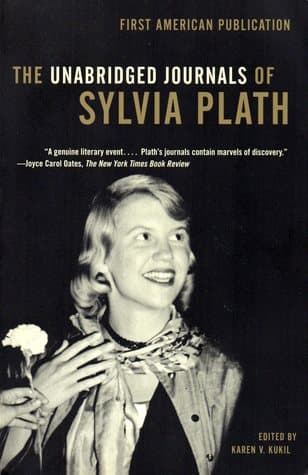
Sylvia Plath
4.3
Elliot Aronson
4.3
Joseph Campbell
4.3

Erich Fromm
4.3
Irvin D. Yalom
4.2

Lucy Strange
4.2