BookBrief
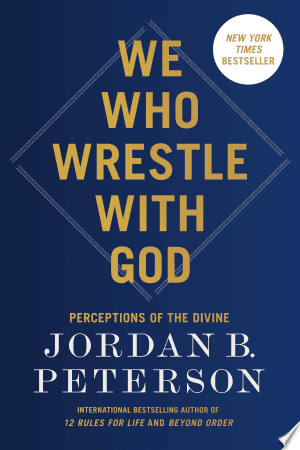
We Who Wrestle with God cover
Archivist's Choice

We Who Wrestle with God

Jordan B. Peterson (2024)

Genre

Psychology / Spirituality / Self-Help

Reading Time

Varies significantly by reader due to density; likely 10+ hours for a thorough engagement.

Key Themes

See below

Track Your Reading

Sign in to track this book

Peterson examines foundational biblical stories to reveal the psychological makeup of human experience, societal order, and the individual's ongoing struggle with chaos and meaning.

Core Idea

Jordan Peterson's 'We Who Wrestle with God' argues that Old Testament stories are not just historical or religious texts, but psychological guides for dealing with life's suffering and disorder. The book suggests these stories show a universal human effort to face the unknown, handle self-awareness, and aim for a meaningful, ethical life. Peterson believes that engaging with these ancient patterns, through personal responsibility and seeking truth, is necessary for individual psychological health and to prevent society from falling into extreme ideologies or a lack of purpose.
Reading time
Varies significantly by reader due to density; likely 10+ hours for a thorough engagement.
Difficulty
Hard
✓ Read this if...
You are familiar with Jordan Peterson's previous work (e.g., '12 Rules for Life'), appreciate deep dives into biblical narratives through a psychological and philosophical lens, and are willing to grapple with complex ideas about meaning, responsibility, and the human condition.
✗ Skip this if...
You are looking for a light self-help book, are averse to extensive philosophical and psychological interpretations of religious texts, or prefer a straightforward, secular approach to personal development without dense intellectual exploration.

Core idea

The central argument and framework that powers the entire book.

Jordan Peterson's 'We Who Wrestle with God' argues that Old Testament stories are not just historical or religious texts, but psychological guides for dealing with life's suffering and disorder. The book suggests these stories show a universal human effort to face the unknown, handle self-awareness, and aim for a meaningful, ethical life. Peterson believes that engaging with these ancient patterns, through personal responsibility and seeking truth, is necessary for individual psychological health and to prevent society from falling into extreme ideologies or a lack of purpose.

At a glance

Reading time

Varies significantly by reader due to density; likely 10+ hours for a thorough engagement.

Difficulty

Hard

Read this if...

You are familiar with Jordan Peterson's previous work (e.g., '12 Rules for Life'), appreciate deep dives into biblical narratives through a psychological and philosophical lens, and are willing to grapple with complex ideas about meaning, responsibility, and the human condition.

Skip this if...

You are looking for a light self-help book, are averse to extensive philosophical and psychological interpretations of religious texts, or prefer a straightforward, secular approach to personal development without dense intellectual exploration.

Key Takeaways

1

The Conscious Encounter with Chaos

Meaning emerges from voluntary engagement with the unknown and the terrifying.

Quote

The individual's confrontation with the unknown, symbolized by God or the abyss, is the crucible where meaning is forged and character refined.

Peterson argues that the main stories of Western civilization, especially in the Bible, are not just historical accounts but psychological guides for human life. These stories, like Adam and Eve leaving Eden or Noah's flood, show how humanity repeatedly faces chaos and must actively engage with it. Meaning comes not from comfort or certainty, but from deliberately choosing to confront the 'dragon of chaos' — the unpredictable, overwhelming, and terrifying parts of reality. This active struggle, rather than avoidance, changes individua...

Supporting evidence

The story of Noah's Ark, where Noah, guided by a divine imperative, confronts the cataclysmic flood (chaos) and preserves life, demonstrating the act of conscious preservation and recreation of order in the face of overwhelming destruction.

Apply this

Identify a significant source of anxiety or uncertainty in your life (a 'chaos'). Instead of avoiding it, develop a concrete plan to voluntarily engage with and address it, breaking it down into manageable steps. This could be a difficult conversation, a career change, or a personal flaw.

chaos-and-ordermeaning-creationvoluntary-suffering
2

The Burden of Self-Consciousness

Awareness of good and evil brings the weight of responsibility and the potential for malevolence.

Quote

With the knowledge of good and evil comes the terrible awareness of our capacity for both, and the inescapable burden of choice.

Peterson reinterprets the story of Adam and Eve's fall from Eden, where they eat from the Tree of Knowledge, as the start of human self-awareness. This is not just about sin, but about the development of our unique ability for abstract thought, foresight, and, importantly, the awareness of our own death and suffering, as well as the ability to cause it. This knowledge gives us great power but also a huge burden of responsibility. We can choose to act kindly or unkindly, to build or to destroy. The 'fall' means entering a state where i...

Supporting evidence

The expulsion from Eden, where Adam and Eve gain knowledge of their nakedness and mortality, symbolizing the transition from an unconscious, instinctual existence to a self-aware, morally responsible one.

Apply this

Reflect on a recent decision where you had a clear choice between an easy, potentially harmful path and a difficult, more ethical one. Analyze the internal struggle and the consequences of your choice, aiming to understand your own capacity for both good and 'evil'.

self-consciousnessmoral-responsibilityoriginal-sin-psychology
3

Resentment as the Path to Hell

Unaddressed resentment festers into destructive envy and the desire for others' downfall.

Quote

Cain's sin was not merely murder, but the festering resentment that preceded it, a refusal to accept the reality of his own being and the blessings of others.

Peterson looks at the story of Cain and Abel to show the destructive power of unaddressed resentment. Cain's offering is rejected, while Abel's is accepted, leading to Cain's deep envy and eventually to him killing his brother. This story is not just about a divine preference but about the psychological state of resentment — a bitter anger at perceived unfairness, often combined with a refusal to admit one's own faults or the deserved success of others. When resentment is allowed to grow, it can distort a person's view, leading to a d...

Supporting evidence

The narrative of Cain and Abel, where Cain's 'countenance fell' after his offering was rejected, leading to his murder of Abel, is presented as a paradigm of how unaddressed resentment and envy can lead to destructive behavior.

Apply this

Identify a situation where you feel resentment towards someone. Instead of dwelling on their perceived advantages, honestly examine your own actions and efforts in that domain. Focus on improving your own 'offering' rather than wishing for their downfall.

resentmentenvymalevolencecain-and-abel
4

The Tower of Babel and Ideological Hubris

Attempts to construct perfect, top-down societal structures without transcendent truth lead to catastrophe.

Quote

The Tower of Babel is the eternal warning against the hubris of human reason, attempting to scale the heavens and dictate reality without acknowledging the transcendent source of order.

The Tower of Babel story is seen as a strong criticism of ideological pride and the dangers of idealistic social planning. Humanity's attempt to build a tower 'to the heavens' represents the ambition to create a perfect, human-made order that overrides or ignores any higher, divine, or natural law. This top-down, rational imposition of order inevitably leads to confusion and breakdown because it does not account for the complexity of individual people and the subtle, bottom-up ways in which meaning and stable societies are truly built...

Supporting evidence

The biblical account of the Tower of Babel, where humanity's attempt to build a monolithic structure 'to the heavens' is thwarted by a confusion of languages, leading to their dispersion, is used to illustrate the breakdown of communication and social cohesion when transcendent principles are ignored.

Apply this

Be wary of any single ideology or 'grand plan' that promises to solve all societal problems or simplify complex human nature. Instead, focus on fostering local, voluntary cooperation and individual responsibility, acknowledging the inherent complexity of human interaction.

ideological-hubrisutopianism-critiquesocial-engineeringbabel-syndrome
5

Abraham's Terrible Adventure: Faith and Sacrifice

True faith involves confronting the most terrifying sacrifices for a higher, uncertain good.

Quote

Abraham's willingness to sacrifice Isaac is not a call to literal child sacrifice, but a terrifying parable about the willingness to surrender your most cherished possession – your certainty, your future, your dearest hope – to the unknown.

Peterson examines Abraham's near-sacrifice of Isaac as the ultimate test of faith and the willingness to face the unknown. This story should not be understood literally but psychologically: it represents the terrifying need to be willing to give up what one holds most dear — one's most cherished beliefs, one's carefully planned future, even one's identity — for a higher, though often unclear, purpose. True faith is not blind obedience but a radical openness to stepping into the unknown, trusting that something greater will emerge. It ...

Supporting evidence

The story of Abraham being commanded to sacrifice his son Isaac, his willingness to comply, and the divine intervention that provides a ram instead, serves as a powerful metaphor for the ultimate test of faith and the willingness to sacrifice what is most precious.

Apply this

Identify a deeply held belief, a long-term goal, or a cherished possession that you are unwilling to question or let go of. Mentally (or actually, if appropriate) explore what it would mean to 'sacrifice' it for a higher principle or an unknown, better future. This is an exercise in radical openness.

faith-psychologysacrifice-meaninguncertainty-principleabrahamic-test
6

Moses and the Law: The Structure of the Soul and Society

Ethical principles are discovered, not invented, and form the necessary backbone of individual and collective flourishing.

Quote

The Ten Commandments are not arbitrary rules; they are the distilled wisdom of millennia, revealing the deep structural necessities for both individual psychological integrity and viable social order.

The story of Moses and the giving of the Law on Mount Sinai is presented as the discovery of the basic ethical and psychological rules needed for human well-being. These 'laws' are not just random divine commands but represent the refined wisdom of human experience, showing the underlying structure of the soul and society. They are boundaries that, when respected, allow for freedom and order; when broken, they lead to chaos and suffering. Peterson argues that these principles (like 'do not lie,' 'do not steal') are not culturally rela...

Supporting evidence

The narrative of Moses receiving the Ten Commandments on Mount Sinai, and their subsequent role in establishing the moral and legal framework for the Israelite nation, is presented as the foundational act of discovering and implementing the necessary structure for both individual and societal well-being.

Apply this

Review the Ten Commandments or other fundamental ethical principles. Reflect on how adhering to or violating each principle has manifested in your own life or in observable societal outcomes. Strive to consciously align your actions with these principles.

ethical-frameworknatural-lawsocietal-structuremoses-law
7

Elijah and the Still, Small Voice

Divine guidance is often found in the quiet dictates of conscience, not in grand spectacle.

Quote

God's voice, the voice of truth and conscience, is rarely found in the earthquake, wind, or fire of external events, but in the still, small voice within.

Peterson uses the story of Elijah's meeting with God at Mount Horeb to show the nature of divine revelation and the source of inner guidance. Elijah experiences powerful natural events — wind, earthquake, fire — but God is not in them. Instead, God speaks in a 'still, small voice.' This is interpreted psychologically as the voice of conscience, the inner moral guide that, when listened to and acted upon, provides true direction and truth. It is a call for deep self-examination and a rejection of external display or ideological passion...

Supporting evidence

The biblical account of Elijah seeking God on Mount Horeb, experiencing wind, earthquake, and fire, but finding God's presence in a 'still, small voice,' is used to illustrate the introspective nature of genuine spiritual and moral guidance.

Apply this

In a moment of decision or confusion, deliberately quiet your mind. Pay attention to the subtle, internal nudges or a sense of 'rightness' that arises, distinct from fear, desire, or external pressure. Practice acting on this 'still, small voice' even when it's difficult.

conscienceinner-guidancespiritual-discernmentelijah-still-voice
8

Jonah's Refusal and the Belly of the Whale

Ignoring one's calling leads to a descent into psychological 'hell' until confrontation is inevitable.

Quote

Jonah's journey into the belly of the whale is the archetypal story of the individual who refuses to bear his burden, and is consequently swallowed by the very chaos he sought to avoid.

The story of Jonah is a strong allegory for what happens when one refuses to answer an ethical or spiritual calling. Jonah tries to run from God's command to preach to Nineveh, which leads to a storm, him being thrown overboard, and swallowed by a large fish. This 'belly of the whale' is a psychological image for the dark, chaotic, and hellish state that results from deliberately avoiding responsibility and truth. It represents the descent into depression, meaninglessness, or harmful patterns when a person refuses to face what they kn...

Supporting evidence

The narrative of Jonah attempting to flee from his prophetic duty, being swallowed by a great fish, and his subsequent repentance and deliverance, serves as a powerful illustration of the consequences of avoiding one's calling and the necessity of confronting one's 'shadow' or avoided responsibilities.

Apply this

Identify a significant responsibility or 'calling' you have been actively avoiding or procrastinating on. Acknowledge the 'chaos' that has resulted from this avoidance. Take a concrete, immediate step towards confronting and addressing this avoided task, no matter how small.

calling-refusalshadow-integrationpsychological-helljonah-archetype
9

The Necessity of Conscious Aim

To navigate chaos, one must articulate a clear, truthful aim and strive towards it.

Quote

To set yourself straight in intent, aim, and purpose is to become conscious of the structure of your soul and your society.

Peterson consistently stresses the importance of having a clear aim or purpose. Life is inherently chaotic and full of suffering, and without a clearly defined, truthful direction, individuals are lost and prone to despair or harmful actions. The biblical stories, through their heroes and villains, show that those who state and work towards a higher, ethical aim (even imperfectly) are the ones who successfully navigate the 'terrible adventure' of existence. This aim must be truthful, meaning it must align with a deep understanding of ...

Supporting evidence

Throughout the analysis of biblical figures like Abraham and Moses, their success in navigating immense challenges is attributed to their willingness to accept a divine imperative and strive towards a clearly articulated, albeit terrifying, aim, providing order in chaotic times.

Apply this

Spend time articulating your highest, most truthful aim for your life, considering your responsibilities to yourself, your family, and your community. Break it down into actionable steps you can take this week. Regularly review and refine this aim.

purpose-driven-lifeaim-articulationtruthful-directionmeaning-in-chaos
10

The Unfolding of the Divine Pattern

The ancient stories reveal an emergent, transcendent pattern that structures reality and the human psyche.

Quote

These stories are not merely human inventions; they are the unfolding of a profound, transcendent pattern, a 'force' that has shaped our spirits and our world over millennia.

Peterson suggests that the lasting power and universal appeal of these ancient stories come from their reflection of an underlying, emerging pattern — a 'force' or 'logos' — that shapes both external reality and the human mind. These stories are not simply historical accounts or moral tales; they are expressions of deep psychological and spiritual truths that humanity has collectively found and refined over thousands of years. They reveal a higher order that informs our understanding of good and evil, chaos and order, sacrifice and re...

Supporting evidence

Peterson repeatedly refers to the 'force' that wrote and assembled these stories over long centuries, implying a collective, emergent wisdom rather than individual authorship, suggesting a fundamental pattern inherent in human experience.

Apply this

Engage with ancient myths, religious texts, or classic literature with an open mind, looking for recurring patterns, archetypes, and universal human struggles. Reflect on how these patterns manifest in your own life and contemporary society.

archetypal-patternslogostranscendent-ordercollective-unconscious

Critical analysis

Notable Quotes

The purpose of life is to find the meaning in suffering, and to strive for the highest good in the face of it.

Peterson's overarching philosophical stance on the human condition.

You must articulate your own being, and then you must manifest it.

Emphasizing personal responsibility and the act of bringing one's potential into reality.

The truth is a terrible weapon, but it is the only one that works.

Discussing the power and necessity of honesty, even when difficult.

To stand up straight with your shoulders back is to voluntarily accept the terrible responsibility of life.

A classic Peterson metaphor for embracing individual sovereignty and the burdens of existence.

Chaos is the unknown, the unarticulated, the unformed. Order is the explored territory.

Defining his core concepts of chaos and order as fundamental aspects of reality.

The greatest good you can do for another is not just to share your riches, but to reveal to him his own.

Highlighting the importance of empowering others to realize their own potential.

Don't underestimate the power of vision and direction. These are irresistible forces, able to transform what might seem to be insurmountable obstacles into traversable pathways toward a desired future.

Encouraging the setting of clear goals and the development of a personal vision.

It is better to be a good person than to merely appear to be one.

A call for genuine moral integrity over superficial virtue signaling.

The price of admission to the world of meaning is vulnerability.

Connecting the search for meaning with the necessity of opening oneself to pain and uncertainty.

You cannot be a light to the world if you are not first a light to yourself.

Emphasizing the foundational importance of individual self-improvement before attempting to help others.

The capacity for evil is not something that belongs to others, but is deeply embedded within each of us.

A sobering reminder of the shadow aspect of human nature and the need for self-awareness.

Clean up your room. It is a microcosm of your life. If you can't sort that out, what makes you think you can sort out the world?

A practical, often cited, example of starting with small, manageable tasks to build competence.

The most fundamental question is not 'What do I want to do?' but 'What am I willing to do?'

Shifting the focus from desire to the commitment and effort required for meaningful action.

Don't sacrifice the good for the perfect.

Advising against procrastination and paralysis by analysis in the pursuit of an unattainable ideal.

Quiz

Test Your Knowledge

Ready to see how well you understood this book? Take our interactive quiz with 10 questions.

10
Questions
~5
Minutes
?
Best Score

Key Questions (FAQ)

'We Who Wrestle with God' explores how ancient biblical stories from the Western tradition provide foundational insights into human psychology, societal structure, and the nature of suffering, sacrifice, and triumph. Dr. Peterson analyzes these narratives to reveal their enduring relevance for understanding ourselves and our culture.

About the author