BookBrief
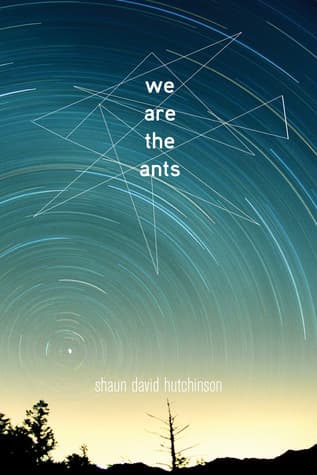
We Are the Ants cover
Archivist's Choice

We Are the Ants

Shaun David Hutchinson (2016)

Genre

Psychology / Fantasy / Science Fiction / Young Adult / Romance

Reading Time

450 min

Key Themes

See below

Track Your Reading

Sign in to track this book

A grieving, alien-abducted teenager, dealing with a broken family and his boyfriend's suicide, must weigh humanity's worth to decide if he will save Earth or let it be destroyed along with his pain.

Synopsis

Henry Denton, a cynical and grieving teenager, has been abducted by aliens for years. They tell him the world will end in 144 days unless he presses a red button. Haunted by his boyfriend Jesse's suicide, his struggling family, and his bleak life, Henry questions if the world is worth saving. He spends the countdown watching people around him, including his ex-friend Jasper, new friend Audrey, and the new student, Diego, trying to logically weigh humanity's good and bad. As the deadline nears, Henry deals with his grief, the complexities of love and betrayal, and the idea that even in pain, there can be connection and joy. Henry must decide whether to save a world that has caused him so much suffering, or let it, and his pain, be obliterated.
Reading time
450 min
Difficulty
Medium
Pacing
Moderate
Mood
Philosophical, Melancholy, Hopeful, Thought-provoking
✓ Read this if...
You enjoy thought-provoking Young Adult novels that blend sci-fi elements with deep psychological exploration of grief, mental health, and the meaning of existence.
✗ Skip this if...
You prefer light-hearted reads or find stories with heavy themes of suicide, grief, and family dysfunction too challenging.

Plot Summary

The First Abduction and the Ultimatum

Henry Denton, a high school student still recovering from his boyfriend Jesse's suicide, is abducted by aliens. During one abduction, the aliens, whom Henry calls the 'Ants,' give him an ultimatum: the world will end in 144 days unless Henry presses a large red button they gave him. This button, he's told, will reset the universe. However, given the pain in his own life—his struggling mother, his aimless brother, his grandmother's Alzheimer's, and his grief—Henry is unsure if he wants to save humanity. The story immediately shows his deep internal conflict and the weight of his personal losses against a cosmic responsibility.

Life at Home and the Memory of Jesse

Henry's home life is a constant stress. His mother, a waitress, struggles financially and emotionally, often using cigarettes and alcohol. His older brother, Charlie, is a jobless dropout whose girlfriend, Sarah, is pregnant, adding more tension to the household. Henry's grandmother, Sylvia, lives with them and is increasingly affected by Alzheimer's, her memories fading, which deeply affects Henry. Amidst this family chaos, Henry is haunted by memories of Jesse, his first love, whose suicide a year prior has left a lasting mark on Henry, making him question life's value.

Meeting Audrey and the Science Project

At school, Henry is assigned a science project with Audrey, a quirky and smart girl who quickly becomes his friend. Their project involves observing ants, which parallels Henry's alien abductions and his view of humanity. Audrey's down-to-earth perspective and genuine interest in Henry provide a needed anchor, even as Henry struggles to tell her about the aliens or his deeper worries. Their work together slowly pulls Henry out of his isolation, offering a glimmer of connection amidst his internal struggle.

Jasper and the Complicated Relationship

Henry has a complicated, physical relationship with Jasper, a bully who sometimes seeks Henry out for one-night stands. Their encounters lack emotional closeness, but they offer Henry a temporary escape from his grief and loneliness. Jasper's unpredictable nature and his own hidden vulnerabilities are slowly revealed through their interactions. This relationship shows Henry's self-destructive tendencies and his struggle with intimacy after Jesse's death, as he seeks physical connection without emotional investment, further complicating his decision about the button.

Meeting Diego and the Spark of Hope

A new student named Diego arrives at school, captivating Henry with his intelligence, wit, and mysterious manner. Diego's presence slowly starts to break down Henry's cynicism and grief. Their conversations are deep and thought-provoking, often touching on philosophy, science, and life's meaning. Diego represents a possible future, a chance for new love and happiness, which directly conflicts with Henry's thought of letting the world end. This growing connection forces Henry to confront his own ability for joy and the possibility of a life beyond his pain.

Charlie's Struggles and Sarah's Pregnancy

Charlie's girlfriend, Sarah, is pregnant, a development that creates significant stress for the family. Charlie, unemployed and without direction, struggles with the responsibility of impending fatherhood. His inability to provide for Sarah and their future child fuels his frustration and leads to arguments within the family. Henry sees his brother's despair and the burden placed on his mother, further strengthening his belief that life is full of suffering. This family drama serves as another point in Henry's internal debate about the world's worth.

Grandma Sylvia's Decline

Henry's grandmother, Sylvia, continues to decline due to Alzheimer's disease. Her memory loss is increasingly severe, and she often confuses Henry with Jesse or other people from her past. Henry struggles to watch her disappear, piece by piece, into the illness. He values the moments of clarity, but the overwhelming sense of loss and the futility of fighting a disease that steals identity deeply affects him. Sylvia's fading memories mirror Henry's own struggle to hold onto the past, especially his memories of Jesse, making the idea of an 'ending' seem less frightening.

The Revelation of Jesse's Betrayal

As Henry looks deeper into his memories and conversations, he uncovers a painful truth: Jesse had cheated on him with Jasper before his suicide. This revelation shatters Henry's perfect image of Jesse and complicates his grief. The betrayal adds another layer of bitterness and confusion to his emotional state, making him question their relationship's authenticity and the meaning of his pain. This discovery forces Henry to re-evaluate his past and Jesse's impact on his life, influencing his decision about the button.

The Countdown Intensifies

The countdown to the world's end, marked by the aliens at 144 days, steadily moves forward, increasing Henry's internal conflict. The 'Ants' continue their abductions, reminding him of the deadline. Henry feels the immense weight of the decision, knowing that his choice will impact not just himself, but all of humanity. He carefully weighs the joy and suffering he sees around him, using his scientific mindset to analyze the 'pros' and 'cons' of existence. The pressure grows as he deals with the deep implications of pressing—or not pressing—the button.

Confronting Jasper and Finding Forgiveness

Henry finally confronts Jasper about his affair with Jesse. This raw and emotional confrontation forces both boys to acknowledge the pain and secrets they've been carrying. While the conversation is difficult, it allows Henry to express his anger and confusion, and to begin understanding and, eventually, forgiving. This interaction is a step in Henry's healing, helping him move past the betrayal and see Jasper not just as a bully or a temporary escape, but as another complex human dealing with his own struggles.

Diego's Influence and Growing Connection

Diego's presence in Henry's life grows stronger, becoming a deep emotional and romantic connection. Diego consistently challenges Henry's cynical view, offering perspectives that show life's beauty, wonder, and value, even with its hardships. Their shared moments of intimacy and intellectual discussions provide Henry with a strong counter-argument to his desire for the world's end. Diego represents a future with love and possibility, making the thought of letting the world be destroyed increasingly difficult for Henry to accept.

The Decision and the Button

As the final day nears, Henry faces the ultimate decision. He reflects on all his experiences: the love he shared with Jesse, the pain of his loss and betrayal, his difficult family, his friendship with Audrey, his complicated relationship with Jasper, and his growing love with Diego. He considers the suffering, but also the moments of joy, connection, and hope. In a key moment, Henry, having found a renewed sense of purpose and a willingness to accept life's complexities, chooses to press the button, signifying his decision to save humanity and to choose life, despite all its flaws.

Principal Figures

Henry Denton

The Protagonist

Henry transforms from a nihilistic, grief-stricken individual who sees little value in life to someone who chooses to embrace its complexities and fight for its existence, finding healing and hope along the way.

Jesse

The Deceased Character (Catalyst)

His character's arc is revealed retrospectively; from an idealized first love, he becomes a more complex figure whose actions, even in death, force Henry to confront uncomfortable truths.

Audrey

The Supporting

Audrey remains a steady, supportive presence, demonstrating the enduring value of friendship and loyalty.

Jasper

The Supporting

Jasper evolves from a seemingly antagonistic, purely physical presence to a more vulnerable character who facilitates Henry's emotional processing of Jesse's betrayal.

Diego

The Supporting

Diego's arrival ignites a new romantic and intellectual connection for Henry, helping him to see the value in future possibilities and happiness.

Henry's Mom

The Supporting

Her character remains largely consistent, symbolizing the ongoing challenges of survival and the burdens of familial responsibility.

Charlie Denton

The Supporting

Charlie's arc revolves around his reluctant acceptance of adult responsibility, though his struggles persist throughout the narrative.

Sylvia (Grandma)

The Supporting

Her character arc is one of decline, symbolizing the relentless nature of illness and the pain of memory loss.

The Ants (Aliens)

The Mentioned (Plot Device)

They remain a mysterious, unchanging force, their purpose being to instigate Henry's existential crisis.

Themes & Insights

Grief and Loss

The novel is filled with the theme of grief, mainly Henry's struggle with Jesse's suicide. This loss is not just one event but a constant force that colors Henry's entire view of the world. His grandmother's Alzheimer's disease further emphasizes this theme, showing the gradual, painful loss of identity and memory. Henry's journey is about dealing with this overwhelming sorrow, learning to live with it, and finding reasons to choose life despite it. The memories and flashbacks to Jesse's life and death, ending with the revelation of his betrayal, force Henry to process his grief in its rawest, most complex form, moving beyond idealization to a more nuanced understanding of loss.

Grief is a house that has no doors. You can't get in, and you can't get out. You just live there, in the hallways and the stairwells, until you learn to make a home for yourself in that one room that has a window.

Narrator (Henry's internal thought)

The Value of Human Existence

At the story's heart is Henry's question: Is human existence, with all its suffering and flaws, worth saving? The alien demand forces Henry to carefully examine humanity's 'pros' and 'cons.' He sees his family's struggles—his mother's exhaustion, Charlie's lack of direction, his grandmother's decline—and the pain of betrayal and loneliness. However, through his friendships with Audrey, his complicated connection with Jasper, and his growing love for Diego, he also experiences moments of joy, connection, and hope. This theme is explored through his scientific, almost anthropological, observation of his own life and the lives around him, leading him to a personal conclusion about life's inherent, if imperfect, value.

Maybe the world isn't perfect. Maybe it's a giant mess. But it's our mess. And maybe that's enough.

Henry Denton

Love, Betrayal, and Forgiveness

Henry's relationships are central to his journey. His perfect love for Jesse is shattered by the revelation of Jesse's betrayal with Jasper, forcing Henry to face the complexities of love, trust, and deceit. This betrayal deeply affects his ability to trust and his willingness to start new relationships. His changing dynamic with Jasper, moving from physical encounters to a difficult confrontation and a hint of understanding, shows the possibility of forgiveness and moving past hurt. The new, hopeful love with Diego shows Henry's ability to open his heart again, demonstrating that even after deep betrayal, love and connection are still possible and important.

Love is a dangerous thing. It can make you feel like you're flying, and it can make you feel like you're falling, all at the same time.

Narrator (Henry's internal thought)

Finding Hope in Despair

Despite the overwhelming despair in Henry's life—his grief, his family's struggles, the cosmic threat—the novel ultimately explores the emergence of hope. Henry's initial lack of interest in saving the world comes from deep hopelessness. However, through his relationships, particularly with Audrey and Diego, and his own internal processing, he gradually finds reasons to hope. The simple beauty of friendship, the potential for new love, and the act of choosing to continue, even when things are difficult, become sources of hope. The resolution of his internal conflict and his decision to press the button symbolize a conscious choice to embrace hope and the future, despite life's inherent pain.

Sometimes, even in the darkest places, you can find a tiny flicker of light.

Diego

Plot Devices & Literary Techniques

The Red Button Ultimatum

A literal button that forces Henry to choose the fate of the world.

The red button, given to Henry by the aliens, serves as the central inciting incident and a powerful symbol. It externalizes Henry's internal conflict, forcing him to confront his grief and decide whether humanity, and by extension his own life, is worth saving. This device creates a concrete deadline (144 days) that drives the narrative forward and intensifies Henry's emotional journey. It allows the abstract philosophical question of 'the meaning of life' to become a tangible, high-stakes decision, making Henry's personal struggle resonate on a cosmic scale.

Alien Abductions (The Ants)

Periodic alien encounters that provide the cosmic context and the ultimatum.

Henry's recurring abductions by the 'Ants' introduce the science fiction element and the overarching cosmic threat. These abductions are often disorienting and dreamlike, blurring the line between reality and Henry's trauma. The aliens, largely impersonal, act as a catalyst, pushing Henry to confront his existential crisis without directly interfering in his emotional processing. They represent an indifferent universe, highlighting Henry's individual agency and responsibility in the face of overwhelming odds. Their 'ant' moniker also subtly underscores humanity's perceived insignificance, a feeling Henry initially shares.

Flashbacks and Memories of Jesse

Non-linear narrative elements that reveal Henry's past relationship and trauma.

The frequent use of flashbacks and Henry's internal memories of Jesse serves as a crucial plot device to gradually reveal the history of their relationship, the circumstances surrounding Jesse's suicide, and the eventual painful truth of his betrayal. These non-linear insertions allow the reader to understand the depth of Henry's grief and the complexities of his past, which directly influence his present choices. They build suspense and add layers to Jesse's character, transforming him from an idealized figure into a more flawed, human one, which is essential for Henry's healing process.

Grandma Sylvia's Alzheimer's

A personal tragedy that mirrors themes of loss and the fragility of memory.

Grandma Sylvia's battle with Alzheimer's disease serves as a poignant plot device that reinforces the novel's themes of loss, the impermanence of memory, and the pain of watching a loved one fade away. Her declining mental state provides a parallel to Henry's own struggle to hold onto memories of Jesse and his fear of losing himself to grief. Her confusion and occasional moments of clarity offer Henry both comfort and profound sadness, influencing his contemplation of whether a world where such suffering exists is worth preserving. It adds a deeply personal layer to the universal questions of life and death.

Critical analysis

Notable Quotes

Maybe it was all for nothing. Maybe the universe didn’t need saving. Maybe it was just a big, dark, empty place, and we were just little ants crawling on a speck of dust, and none of it mattered.

Henry ponders the futility of his mission and existence.

The universe is a cruel, uncaring void. The key to being happy isn't to search for meaning. It's to just keep yourself busy with unimportant stuff and hope you die before you notice how meaningless it all is.

Henry's cynical worldview regarding the universe.

I wasn’t suicidal. I was just tired of being alive.

Henry reflects on his depression and weariness with life.

Sometimes the only way to find yourself is to get utterly, hopelessly lost.

A thought about self-discovery through hardship.

Maybe the universe was a giant, cosmic Rube Goldberg machine, and we were just a tiny, insignificant cog in its intricate design.

Henry contemplates the mechanical nature of the universe and his place within it.

Grief is a house of cards. You can build it up, but one wrong move and it all comes crashing down.

Henry's metaphor for the fragile nature of grief.

The future isn’t a road that’s already been paved. It’s a road we pave ourselves, one step at a time.

A more hopeful perspective on agency and the future.

We are the ants. We build our nests, we gather our food, we fight our wars, and we die, all without ever truly understanding the giant foot that might crush us at any moment.

Henry reflects on humanity's smallness in the face of cosmic forces.

Love isn't about finding someone who completes you. It's about finding someone who accepts you completely.

Henry's developing understanding of love.

You can’t save the world if you can’t save yourself first.

A realization about the importance of self-care before grand endeavors.

Sometimes, the only way to keep going is to pretend you’re not falling apart.

Henry's coping mechanism for dealing with his internal struggles.

The past is a story we tell ourselves. The future is a story we haven't written yet.

A reflection on the subjective nature of memory and the potential of the future.

Even if the universe is meaningless, that doesn't mean our lives have to be. We can create our own meaning.

A shift towards finding personal meaning despite cosmic indifference.

Hope is a dangerous thing. It can keep you alive, but it can also make you suffer more.

Henry's conflicted feelings about the concept of hope.

Quiz

Test Your Knowledge

Ready to see how well you understood this book? Take our interactive quiz with 10 questions.

10
Questions
~5
Minutes
?
Best Score

Key Questions (FAQ)

Henry is given an ultimatum by aliens: the world will end in 144 days unless he pushes a big red button to save it. He is unsure if he wants to save a world that has brought him so much pain, including the recent suicide of his boyfriend, Jesse.

About the author