“Violence is a language, and I am fluent in it.”
— A character reflecting on their relationship with aggression and conflict.

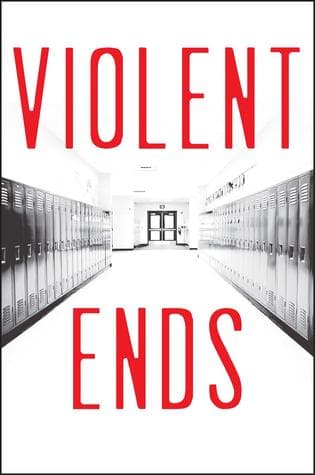
Shaun David Hutchinson (2015)
Genre
Psychology / Young Adult
Reading Time
360 min
Key Themes
See below
Sign in to track this book
Seventeen authors explore the life of a school shooter, Kirby Matheson, through different viewpoints, showing how a boy became a killer one memory, interaction, and consequence at a time.
The novel begins immediately after the shooting at Opportunity High, where Kirby Matheson killed six students and injured five others before killing himself. The story does not focus on the event itself, but on the questions and the community's effort to understand Kirby. Through many different, non-linear chapters, each told from the perspective of a different character who knew Kirby, the book explores parts of his life before the tragedy. These characters include his friends, classmates, and even strangers who had brief meetings with him. The first chapters set the mood, showing the collective shock and individual attempts to make sense of the 'Kirby they knew' with the 'monster he became,' showing the widespread confusion and grief.
Early chapters recall memories of Kirby from his childhood and early high school years. Characters like Asher, who played in the band with Kirby, remember him as quiet but passionate about music. Others, like Tiffani, remember him as a regular kid, perhaps a bit awkward but not dangerous. These first memories often show normal moments: band practice, school dances, shared jokes. However, small hints of Kirby's internal struggles start to appear. Some stories mention his introverted nature, his intense focus, or an early intensity that seemed harmless. These early perspectives establish the 'before' image of Kirby, making his eventual transformation more confusing and sad for those who knew him.
As the timeline moves through different perspectives, readers see the increasing pressures on Kirby. Chapters from characters like Lauren, a popular girl he liked, show his social anxieties and the pain of unrequited affection. Other accounts, perhaps from a teacher or a less prominent classmate, might mention academic stress or his struggles within the school's social groups. These chapters often show moments where Kirby felt overlooked, misunderstood, or rejected, adding to a growing sense of isolation. While still seeming normal to most, these stories subtly expose the cracks forming in his emotional state, suggesting he was becoming more open to negative influences or internal trouble.
The story shifts to more troubling observations of Kirby. Characters might recall times when he became more obsessed with certain ideas, or when he withdrew more from social interaction. For example, a chapter from a character who saw Kirby being bullied might show his quiet anger building. His insecurities become clearer, and his reaction to perceived insults or failures grows out of proportion. These stories show how seemingly small events or long emotional distress could lead to a dangerous internal state. The once quiet, awkward boy begins to show signs of deeper psychological distress, though often only clear in hindsight or to those who watched him closely during specific moments.
As the timeline gets closer to the shooting, the accounts become more unsettling. A chapter from a character who had an argument with Kirby might reveal his increasing anger or paranoia. Others might recall him expressing dark thoughts or showing an unusual interest in violence, perhaps through fictional stories or online content. However, these signs are often missed, downplayed, or seen as 'just Kirby being weird.' Friends might try to help, but their efforts are not enough or misunderstood. These chapters show the failure of the community to recognize how serious Kirby's mental state was getting, showing how isolated incidents, when seen together, paint a clear picture of a young man spiraling.
The final perspectives before the shooting day offer the most chilling insights. These chapters might come from a close friend who saw his final withdrawal, or someone who had a last, unsettling interaction with him. Details about his access to firearms, his isolation, and his internal thoughts (as inferred by those who knew him best) are put together. While the book avoids directly showing the shooting, these chapters show the result of all the previous struggles: the bullying, the rejection, the mental health issues, and easy access to weapons. The story suggests a perfect storm of factors that led Kirby to violence, making readers think about the complex reasons behind his actions and the impossibility of finding a single cause.
The Central Figure/Antagonist
From a quiet, artistic, and socially awkward boy, Kirby gradually descends into a state of profound psychological distress, culminating in his violent act and suicide.
The Supporting
Asher struggles to understand his friend's transformation, moving from grief to a painful search for answers and self-blame.
The Supporting
Lauren grapples with the unsettling realization that she was the object of the shooter's affection, re-evaluating her past interactions with fear and regret.
The Supporting
Tiffani moves from casual acquaintance to a survivor grappling with the incomprehensible actions of a peer.
The Supporting
Brendan confronts his role (or inaction) in the bullying Kirby faced, leading to a profound sense of regret and responsibility.
The Supporting
A teacher grappling with the professional and personal fallout of the shooting, reflecting on his interactions with Kirby and the missed opportunities to intervene.
The Supporting
Jessica moves from an ordinary encounter to a survivor haunted by a premonition she couldn't interpret.
The Mentioned
Not a primary arc, but represents the institutional response to the tragedy.
The Supporting
Sarah grapples with her own internal struggles and the chilling realization that she shared some commonalities with the shooter, leading to increased self-awareness and fear.
The novel explores how one person, Kirby Matheson, can be seen in many different, often conflicting, ways by those around him. Each chapter, from a different character's view, shows a unique 'Kirby' – a quiet bandmate, an awkward crush, a bullied kid, a strange loner, or a brief acquaintance. This fragmented portrayal shows that identity is not simple but a mix of personal experiences and outside observations. The community's struggle to reconcile the 'Kirby they knew' with the 'monster he became' shows how hard it is to truly know another person, especially when dealing with hidden struggles and mental health issues. The book suggests that the truth of who Kirby was, and why he acted, remains unclear, caught within the subjective memories of others.
““Everyone had a Kirby. And none of them were the same.””
Beyond the immediate tragedy, the book details the wide and varied effects of Kirby's violence on the entire community. Each character's chapter shows how widespread grief, trauma, and confusion are after such an event. Friends like Asher deal with guilt, classmates like Lauren are haunted by past interactions, and the wider community struggles with shock and the search for meaning. The story shows how one act of violence does not just affect direct victims but changes the lives, perceptions, and futures of everyone connected, even indirectly. It is a study in collective trauma and the long process of healing and understanding.
““The shooting had ended, but the bullets were still flying, tearing through the fabric of their lives, day after day.””
A main theme is the hidden nature of mental health struggles, especially isolation and the warning signs that were missed. Through various perspectives, the novel shows Kirby as a young man slowly withdrawing, having dark thoughts, and experiencing deep emotional distress. Characters recall his awkwardness, his anger, his quiet intensity, or his social struggles, which, in hindsight, become clear signs of a worsening mental state. However, at the time, these signs were often dismissed as 'just Kirby being weird,' or simply not recognized as serious. The book shows the failures to identify and help vulnerable individuals, stressing the importance of mental health awareness and support in preventing such tragedies.
““He was a puzzle piece that didn’t fit, and no one tried hard enough to see where he belonged.””
The complex and often harsh social dynamics of high school, particularly bullying, are explored. Several chapters mention or directly show times when Kirby was bullied or felt left out by his peers. These experiences, whether obvious or subtle, are presented as factors in his growing anger and isolation. The book examines how seemingly small acts of cruelty or exclusion can have deep and lasting effects on a person's mind. It also touches on the bystander effect and the community's responsibility to create an environment where all students feel safe and valued, instead of allowing vulnerability to turn into despair and anger.
““Sometimes the smallest cuts leave the deepest scars, the ones you can’t see until it’s too late.””
Ultimately, 'Violent Ends' addresses the human need to find clear answers and explanations for acts that are hard to understand, even when such answers are hard to find. Each character's story tries to put together a coherent narrative, to find the 'one thing' that explains why Kirby did what he did. However, the multi-perspective format shows that there is not a single answer, but rather many factors – personal struggles, social pressures, mental health issues, and individual choices. The book suggests that while we can analyze and reconstruct, the full 'why' of such violence often remains tragically out of reach, forcing the community to live with the lingering questions and the pain of unresolved understanding.
““We wanted a reason, a single, simple reason. But the truth was a thousand tiny pieces, scattered and sharp.””
The entire story is told through the eyes of various characters, each offering a unique glimpse into Kirby's life.
The most prominent plot device is the use of multiple, first-person (or close third-person limited) perspectives. Each chapter is written by a different author and focuses on a different character who knew Kirby Matheson. This fragmented narrative structure mirrors the community's own struggle to understand Kirby, as each character holds only a piece of the puzzle. It prevents any single, definitive explanation for Kirby's actions, instead presenting a complex, contradictory, and incomplete portrait. This device forces the reader to actively synthesize information and confront the subjective nature of truth and memory, emphasizing that no single perspective can fully grasp the entirety of a person or a tragedy.
The timeline of events is presented out of chronological order, jumping between past and present.
The story is not told chronologically. Chapters jump back and forth in time, presenting memories of Kirby from his childhood, his early high school years, and the days immediately preceding the shooting, interspersed with reflections from the aftermath. This non-linear approach mimics the way trauma affects memory, where fragments of the past resurface unexpectedly. It also builds suspense and allows for a gradual revelation of Kirby's deteriorating state, as readers piece together his journey from seemingly innocent boy to perpetrator. This device underscores the idea that understanding Kirby requires looking at his life as a series of interconnected, yet not always sequential, moments.
Kirby Matheson is the central figure, but his own voice is never heard, making him a mystery to both characters and readers.
Kirby Matheson is the central 'protagonist' in the sense that the entire book revolves around him, yet he never narrates a chapter himself. He remains an enigmatic figure, seen only through the subjective lenses of others. This device prevents readers from entering his mind, thereby preserving the mystery of his motivations and actions. It forces the audience to grapple with the same questions and uncertainties that plague the characters in the book: how could a seemingly ordinary person commit such an act? By denying direct access to Kirby's thoughts, the book emphasizes the profound unknowability of another's internal world, especially one that leads to such violence.
Early, seemingly innocuous details gain chilling significance in hindsight.
The narrative makes extensive use of foreshadowing and dramatic irony. Characters often recall seemingly innocent or minor interactions with Kirby – a strange look, a quiet comment, an unusual interest – which, in the context of the shooting, take on chilling new meaning. The reader, knowing the tragic outcome, interprets these 'warning signs' with a weight that the characters themselves could not have at the time. This device heightens the sense of tragedy and regret, emphasizing how easily crucial signals can be missed or misinterpreted when viewed without the benefit of hindsight. It underscores the collective failure to prevent the violence, not out of malice, but often out of ignorance or dismissiveness.
“Violence is a language, and I am fluent in it.”
— A character reflecting on their relationship with aggression and conflict.
“Sometimes the quietest people have the loudest minds.”
— Observation about introverted or reserved individuals harboring intense thoughts.
“We are all broken in some way, but it's how we put ourselves back together that defines us.”
— A philosophical statement on resilience and personal growth.
“The line between hero and villain is thinner than you think.”
— Commentary on moral ambiguity and perspective in the narrative.
“Fear doesn't make you weak; it makes you human.”
— A reassurance about the naturalness of fear and vulnerability.
“In the end, we are all just stories waiting to be told.”
— Reflection on the shared human experience and narrative.
“Anger is just love that's been hurt.”
— A psychological insight into the emotional roots of anger.
“The hardest battles are the ones we fight within ourselves.”
— Acknowledgment of internal struggles and mental health.
“You can't heal what you don't acknowledge.”
— Advice on the importance of facing one's issues for recovery.
“Sometimes the most violent thing you can do is nothing at all.”
— A paradoxical statement about inaction and its consequences.
“We are all mirrors, reflecting each other's pain.”
— Observation on empathy and shared suffering in society.
“The truth is a weapon, and we all wield it differently.”
— Commentary on how honesty can be used or misused.
“Loneliness is a prison you build for yourself.”
— A psychological take on self-imposed isolation.
“Every action has a reaction, but not every reaction is justified.”
— A reflection on cause, effect, and moral responsibility.
Ready to see how well you understood this book? Take our interactive quiz with 10 questions.

Rhonda Byrne
4.3

Menno Henselmans
4.3

Sylvia Plath
4.3
Elliot Aronson
4.3
Joseph Campbell
4.3
Erich Fromm
4.3

Irvin D. Yalom
4.2

Lucy Strange
4.2