“There are no monsters, only people. And sometimes, they do monstrous things.”
— The protagonist, Crispin, grapples with understanding the true nature of evil and the people around him.

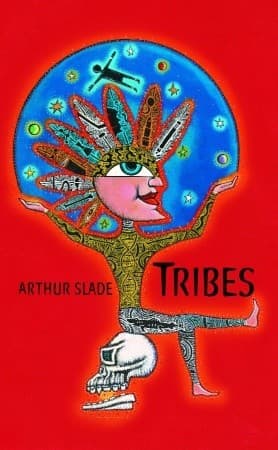
Arthur Slade (2002)
Genre
Psychology / Children's / Young Adult
Reading Time
120 min
Key Themes
See below
Sign in to track this book
A brilliant but grieving teenager observes high school social groups like an anthropologist, only to find himself drawn into the human drama he studies.
Percy, a keen observer, sees his high school, Lord Byron Collegiate, as a complex place with different 'tribes.' Four years after his anthropologist father's mysterious death in Africa, Percy has adopted his father's detached, analytical way of looking at people. He carefully records the rituals and interactions of various groups: the Jocks, the Born Again Christians, the Cool and Detached, and the Lipstick/Hairspray girls. His friend, Elissa, shares his interest, often acting as his sounding board. Percy believes that by understanding these 'tribes,' he can better understand the world, and perhaps himself, while keeping an emotional distance from the chaos of adolescence.
As the school year progresses, the upcoming graduation ritual makes the 'tribal' behaviors Percy observes more intense. His English teacher, Mr. Verplaz, whom Percy calls the 'Shaman' for his perceptive nature, notices Percy's intense observations. Mr. Verplaz often assigns essays that push Percy to go beyond just observing and to reflect personally, which makes Percy uncomfortable. The teacher subtly encourages Percy to engage with his subjects rather than just categorize them, suggesting that real understanding requires empathy and participation. This challenge starts to break down Percy's carefully built wall of detachment, hinting at the emotional complexities he avoids.
Elissa is the only person who truly understands Percy's unique perspective and his need for intellectual distance. She is his closest confidante, and their shared past includes the tragic death of their friend, Willard, the previous year. Willard's absence is a silent, painful undercurrent in their lives, a trauma Percy has mostly suppressed by focusing on observation. Elissa, however, is more openly affected by Willard's memory, and her emotional vulnerability starts to affect Percy. Her presence, and the unspoken grief they share, make it harder for Percy to keep his purely analytical stance, forcing him to confront the human part of his 'studies.'
Percy focuses his anthropological view on the Jock tribe, especially their preparations for prom. He notes their strict social rules, their displays of confidence, and their underlying worries about masculinity and social status. He observes their dating rituals, their athletic skills, and their seemingly strong appearance. But, as prom night nears, Percy starts to see weaknesses in their armor, showing a more complex picture of their desires for acceptance and connection, much like the other 'tribes.' This observation challenges his first, somewhat simple categorization, suggesting that all 'tribes' share basic human needs.
Percy then looks at the Born Again Christian tribe, observing their strong faith, their close community, and their attempts to 'save' their classmates. He notes their distinct language, their moral codes, and their firm belief system. While at first seeing them as another set of predictable behaviors, Percy starts to see the genuine sense of belonging and purpose they offer their members. He particularly observes their outreach efforts, which, despite their proselytizing nature, come from a desire to connect and share what they believe is truth. This observation further complicates his detached analysis, showing him the power of shared belief and community.
Frustrated with Percy's continued emotional distance, Elissa directly confronts him about his refusal to acknowledge his own feelings, especially about Willard's death. She accuses him of hiding behind his 'anthropology' to avoid dealing with his grief and connecting with others on a deeper level. Her words break through Percy's carefully built defenses, making him acknowledge the pain he has been suppressing. This confrontation is a big turning point, as Elissa, his closest ally, challenges the very basis of his observational method, pushing him toward self-reflection instead of external analysis.
Driven by Elissa's words and his own growing unease, Percy finds a hidden notebook belonging to his deceased father. This journal, full of his father's observations from Africa, reveals a personal crisis. His father was not just observing tribes; he was struggling with mental health issues, feeling overwhelmed by the complexities of human suffering and the burden of his research. The notebook suggests that his disappearance was not a heroic anthropological quest gone wrong, but a deliberate act of withdrawal, possibly due to depression or a desire to escape. This discovery shatters Percy's idealized image of his father and forces him to rethink his own observational approach.
The revelations from his father's notebook, along with Elissa's encouragement, compel Percy to finally face the truth about Willard's death. He realizes that his detached observation was not just a coping mechanism; it was also a way to avoid taking action or truly understanding Willard's struggles. He deals with guilt and regret, acknowledging his part in their shared tragedy. This painful realization allows Percy to start processing his grief, moving past intellectualizing his emotions toward genuine sorrow and self-reflection, an important step in his personal growth.
With his emotional walls breaking down, Percy starts to see his high school 'tribes' with new empathy. He no longer sees them as just subjects for analysis but as individuals dealing with universal human experiences: fear, joy, love, loss, and the desire for connection. The differences between the Jocks, the Born Agains, and the Cool and Detached begin to fade, showing a shared humanity beneath their surface differences. This change in perspective is profound, transforming his anthropological view from one of detachment to one of understanding and compassion, showing his own integration into the 'tribe' of humanity.
As graduation day arrives, Percy no longer feels the need to observe from a distance. He actively participates in the ritual, sharing moments with Elissa and even exchanging meaningful glances with other classmates he once only categorized. The graduation ceremony, once just another 'ritual' to be analyzed, becomes a personal milestone, a symbol of his transition from detached observer to engaged participant. He embraces the uncertainty of the future, recognizing that true understanding comes from experiencing life, not just studying it. Percy's journey ends with accepting his own emotions and his place within the human community.
The Protagonist
Percy evolves from a purely detached observer to an engaged participant, learning to embrace his emotions and connect with others authentically.
The Supporting
Elissa remains a steadfast and supportive friend, growing in her resolve to help Percy face his inner world.
The Supporting
Mr. Verplaz consistently challenges Percy's perspective, acting as a static but powerful force for change.
The Mentioned
His character arc is revealed posthumously, as Percy uncovers the truth of his struggles, deconstructing Percy's idealized image.
The Mentioned
Willard's character is explored through the memories and unaddressed grief of Percy and Elissa, driving Percy's emotional development.
The novel explores the tension between observing life from a detached, analytical perspective and actively participating in it. Percy first believes that true understanding comes from objective distance, categorizing his peers into 'tribes.' But this detachment keeps him from forming real connections and processing his own grief. Through Elissa's challenges and Mr. Verplaz's guidance, Percy learns that empathy and involvement are important for a deeper, more meaningful understanding of humanity, moving beyond surface classifications to embrace shared experiences. This is clear in his change from just documenting the Jocks' prom preparations to experiencing the event's emotional weight.
“You can't learn about people by standing outside their lives, Percy. You have to step inside.”
A main theme is how people cope with great loss. Percy's intense observational habits are a direct response to the traumas of his father's disappearance and Willard's death. His anthropological framework acts as a shield, letting him intellectualize his pain instead of feeling it. The novel shows the process of delayed grief, where suppressed emotions eventually demand to be recognized. Elissa's more open grieving process contrasts with Percy's, showing different ways people handle sorrow and the importance of facing painful truths for healing. The discovery of his father's notebook reveals another coping mechanism—withdrawal—that Percy must learn to avoid.
“Sometimes, the strongest walls are the ones we build around our own hearts.”
Percy's journey is about self-discovery. He first builds his identity around his father's idealized image, believing that a detached, analytical approach will make him strong and wise. However, as he uncovers the truth about his father's struggles and faces his own unaddressed grief, he realizes that true strength is in vulnerability and connection. His understanding of 'tribes' changes from a system of classification to a recognition of shared humanity, which in turn reshapes his own sense of self. He moves from an identity defined by observation to one defined by experience and emotional integration.
“Maybe the real tribe wasn't out there, to be studied. Maybe it was in here, waiting to be understood.”
Percy's anthropological framework is an attempt to bring order and control to the chaotic world of adolescence and unpredictable human emotion. By categorizing 'tribes' and their 'rituals,' he tries to make sense of a world that feels overwhelming and out of his control, especially after the traumatic losses he experienced. The novel shows that this perceived control is an illusion; life's complexities, particularly human relationships and personal grief, resist neat classifications. His journey involves letting go of the need for absolute control and embracing the messiness and unpredictability of genuine human experience and emotion.
“The more I tried to define them, the more they seemed to slip through my fingers, becoming just... people.”
Percy's unique perspective of viewing high school as a study of 'tribes.'
This device frames the entire narrative, allowing Percy to distance himself emotionally from his peers and his own problems. By categorizing students into distinct 'tribes' (Jocks, Born Again, Cool and Detached), he attempts to rationalize and control his social environment. It serves as a coping mechanism for his grief and provides a structured way for him to interpret human behavior. As the story progresses, this lens becomes increasingly inadequate, forcing Percy to move beyond mere observation and engage with the emotional realities of his 'subjects' and himself.
A hidden journal that reveals the truth about Percy's deceased father.
The discovery of his father's notebook acts as a pivotal plot device, serving as both a MacGuffin and a symbol of inherited trauma. Initially, Percy idealizes his father as the ultimate detached observer. The notebook shatters this illusion, revealing his father's personal struggles and the true nature of his disappearance. This revelation directly mirrors Percy's own avoidance, forcing him to confront his similar patterns of emotional withdrawal and providing a crucial catalyst for his personal growth and understanding of grief.
The culminating high school event that symbolizes transition and confrontation.
Graduation serves as a powerful symbolic plot device. For Percy, it initially represents the ultimate 'ritual' of the Grade Twelve tribe, a final event to be observed and analyzed. However, as his emotional journey progresses, the impending graduation forces him to confront his detachment and the unresolved issues from his past. By the end, it transforms from a mere observation point to a personal milestone, symbolizing his transition from a detached observer to an integrated participant in the human experience, ready to embrace connection and the future.
A teacher who acts as a guiding figure, challenging Percy's worldview.
Mr. Verplaz, whom Percy labels the 'Shaman,' functions as a mentor figure. He uses his position as an English teacher to subtly challenge Percy's observational methods and push him towards introspection. Through essay assignments and perceptive comments, he encourages Percy to look beyond the surface and consider the emotional and personal dimensions of his 'subjects.' He represents an external force that gently but persistently prods Percy to break down his emotional walls, acting as a catalyst for Percy's self-awareness and eventual emotional integration.
“There are no monsters, only people. And sometimes, they do monstrous things.”
— The protagonist, Crispin, grapples with understanding the true nature of evil and the people around him.
“Silence can be a weapon, but it can also be a shield.”
— Crispin often uses silence as a way to observe, protect himself, or communicate in subtle ways.
“Sometimes the greatest strength is knowing when to run.”
— A pragmatic view on survival, challenging the traditional idea of always fighting.
“We all wear masks, some more visible than others. It's what's behind them that truly matters.”
— Exploring themes of identity and hidden truths among the characters.
“Fear is a fire. It can consume you, or it can forge you.”
— Crispin's internal struggle with his own fears and how they shape him.
“The past is a stubborn ghost. It haunts us, but it can also guide us.”
— Characters are often influenced by past events and their histories.
“Trust is a fragile thing, easily broken, hard to mend.”
— The protagonist learns the difficulties of trust in a world full of betrayal.
“There are always choices, even when it feels like there are none.”
— A recurring message of agency and hope, even in dire situations.
“A story is never truly finished, only paused.”
— Reflecting on the ongoing nature of life and narratives.
“The greatest battles are often fought within ourselves.”
— Crispin's internal conflicts and moral dilemmas are central to his journey.
“Sometimes the quietest people have the loudest minds.”
— Crispin, being a quiet observer, often has profound thoughts and insights.
“Even in the darkest places, a flicker of light can still exist.”
— A hopeful sentiment that persists despite the bleak circumstances some characters face.
“The world is not always fair, but it is always changing.”
— Acknowledging the harsh realities of life while also suggesting potential for change.
“Every secret has a weight, and eventually, it must be put down.”
— Characters often carry burdens of secrets that eventually come to light.
Ready to see how well you understood this book? Take our interactive quiz with 10 questions.

Rhonda Byrne
4.3

Menno Henselmans
4.3

Sylvia Plath
4.3

Elliot Aronson
4.3
Joseph Campbell
4.3

Erich Fromm
4.3
Irvin D. Yalom
4.2

Lucy Strange
4.2