BookBrief
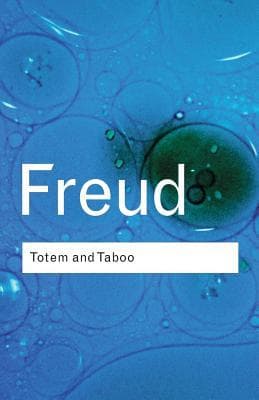
Totem and Taboo cover
Archivist's Choice

Totem and Taboo

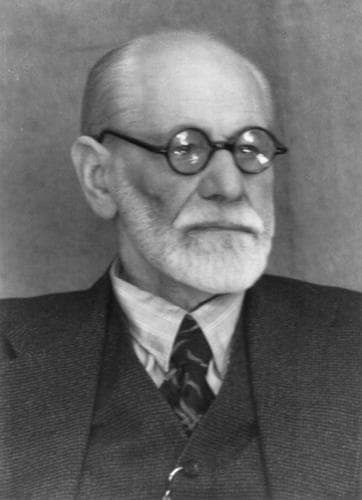
Sigmund Freud (2016)

Genre

Psychology / Spirituality / Science / Philosophy

Reading Time

240 min

Key Themes

See below

Track Your Reading

Sign in to track this book

Freud's book explores how society, religion, and morality began, connecting the incest taboo and Oedipal complex to human civilization.

Core Idea

Freud suggests that early human society, religion, and morality started with a primal murder. He believes a group of brothers killed and ate their powerful father to get access to women. This act caused great guilt, leading to the creation of totemism and the incest taboo. These were ways to hide the original crime and stop it from happening again. The totem animal became a stand-in for the murdered father, both respected and eaten in rituals. The incest taboo controlled sexual desires and kept the brothers, who shared the guilt and the rewards, together. Freud also says that this founding event and its psychological effects appear again in individual mental problems and group religious practices, showing a deep, unconscious link between early human thought and modern psychology.
Reading time
240 min
Difficulty
Hard
✓ Read this if...
You are interested in Freud's speculative theories on the origins of society, religion, and morality, and how he connects them to individual psychological development and neurosis.
✗ Skip this if...
You prefer empirically supported theories or find speculative, anthropological psychoanalysis unconvincing, or if you are looking for a straightforward historical or scientific account of human origins.

Core idea

The central argument and framework that powers the entire book.

Freud suggests that early human society, religion, and morality started with a primal murder. He believes a group of brothers killed and ate their powerful father to get access to women. This act caused great guilt, leading to the creation of totemism and the incest taboo. These were ways to hide the original crime and stop it from happening again. The totem animal became a stand-in for the murdered father, both respected and eaten in rituals. The incest taboo controlled sexual desires and kept the brothers, who shared the guilt and the rewards, together. Freud also says that this founding event and its psychological effects appear again in individual mental problems and group religious practices, showing a deep, unconscious link between early human thought and modern psychology.

At a glance

Reading time

240 min

Difficulty

Hard

Read this if...

You are interested in Freud's speculative theories on the origins of society, religion, and morality, and how he connects them to individual psychological development and neurosis.

Skip this if...

You prefer empirically supported theories or find speculative, anthropological psychoanalysis unconvincing, or if you are looking for a straightforward historical or scientific account of human origins.

Key Takeaways

1

The Oedipal Origin of Society

Primitive parricide as the foundational act of human civilization.

Quote

The beginnings of religion, morals, society and art converge in the Oedipus complex.

Freud suggests that the primal horde, ruled by a powerful father who had all the women, eventually rebelled. The brothers, wanting what the father had, together killed and ate him. This act, called parricide, started society. The guilt and regret that followed led to two main rules: no incest (replacing the father's control) and the sacredness of the totem (a symbol for the murdered father). This story, even if not historically true, explains the psychological basis of social structures, religion, and morality. It shows how shared gui...

Supporting evidence

Freud draws parallels between the behavior of the primal horde and the 'totemic meal' rituals observed in some indigenous cultures, where the totem animal (representing the father) is ritually killed and eaten, suggesting a reenactment of the original parricide and reconciliation.

Apply this

Understanding this Freudian concept helps to deconstruct the deep-seated, often unconscious, psychological dynamics at play in authority figures, societal rules, and even our personal relationships, particularly those involving power and competition within family structures. It encourages reflection on how guilt and reparation continue to shape collective behavior.

oedipus-complexprimal-hordeparricide
2

Totemism: The Ancestral Father

The totem as a symbolic stand-in for the murdered primal father.

Quote

The totem is the first father, and the totemic animal is his substitute.

After the father's murder, the brothers' regret and wish to prevent another powerful ruler led to the totem. The totem animal, often strong or respected, became a sacred symbol for the murdered father. It was a substitute, something to respect and identify with, showing both the awe and the guilt from the original act. The totemic system, with its rules about marrying outside the totem group and sacred food restrictions, managed the unresolved problems and worries from the original crime, strengthening social unity and preventing a re...

Supporting evidence

Freud examines ethnographic accounts of totemic societies, noting common features such as the sacredness of the totem animal, the belief in descent from the totem, and the strict taboos surrounding its consumption or harming, except during specific ritualistic meals.

Apply this

This concept provides a framework for understanding how symbolic representations and collective rituals can manage profound psychological conflicts and fears within a community. It highlights the enduring power of symbolism in maintaining social order and transmitting cultural values across generations, even in seemingly secular societies.

totemismexogamysymbolism
3

The Incest Taboo's Deep Roots

A universal prohibition rooted in the primal father's monopoly and subsequent guilt.

Quote

The incest taboo, universally binding, is the most powerful and primitive of human prohibitions.

Freud says that the incest taboo, a rule against incest found in almost all cultures, is not just a social rule but has deep psychological roots connected to the primal horde story. The powerful father's exclusive access to the group's women made them the main objects of desire for the sons. After the murder, the brothers, feeling guilty and wanting to stop more fighting over women, gave up their claim to the 'mother-figures' and created the incest taboo. This giving up was a step towards social organization, making men find partners ...

Supporting evidence

Freud points to the universality and intensity of the incest taboo across diverse human societies, arguing that such a pervasive and potent prohibition must stem from a fundamental psychological conflict rather than purely rational or genetic considerations.

Apply this

Recognizing the deep psychological roots of the incest taboo helps us understand its enduring power and the profound societal disruption that occurs when it is violated. It also illuminates how fundamental taboos, born from primal conflicts, serve to regulate sexual desire and maintain social cohesion, shaping the very structure of family and community.

incest-taboosexual-repressionsocial-cohesion
4

Neurosis as a Cultural Echo

Individual psychological conflicts mirroring humanity's primal history.

Quote

The neuroses are, so to speak, the negative of perversions.

Freud compares the psychological processes in individual mental problems to the historical development of cultural institutions. He suggests that mental problems often mean repressed desires and conflicts are returning. This is like how humanity's past—specifically the primal murder and its aftermath—continues to be seen in cultural practices and beliefs. Just as a person with mental problems deals with unresolved childhood issues, humanity as a whole, through religion and morality, deals with the 'original sin' of killing the primal ...

Supporting evidence

Freud compares the obsessive rituals of neurotics (e.g., compulsive hand-washing) to the ceremonial rites of primitive religions, arguing both serve to alleviate unconscious guilt and anxiety through symbolic acts, often related to forbidden desires or perceived transgressions.

Apply this

This takeaway encourages us to look beyond superficial explanations for cultural phenomena and individual psychological distress. It suggests that many of our societal norms, religious practices, and even personal anxieties might be distant echoes of ancient, unresolved conflicts, providing a deeper, more challenging understanding of human nature and civilization.

neurosisrepressioncultural-evolution
5

Animism: The Dawn of Thought

Early attempts to control the world through magical thinking.

Quote

Animism is the first complete worldview, which makes it possible for man to understand the world.

Freud outlines the stages of human thought, starting with animism. In this early worldview, people believed that objects and nature had spirits, intentions, and consciousness. This belief system included the idea that thoughts could directly affect reality. Animism shows humanity's early attempts to understand and control an unpredictable world, before scientific inquiry and organized religion. While it seems simple, it was a step in developing abstract thought and a coherent, though magical, understanding of the universe.

Supporting evidence

Freud discusses the prevalence of magical practices, sorcery, and belief in spirits in primitive cultures, where rituals are performed to influence weather, hunt animals, or heal sickness, all based on the premise that mental acts can exert control over external reality.

Apply this

Understanding animism helps us appreciate the origins of human curiosity and our innate desire to find meaning and exert control over our environment. It also offers a lens through which to view remnants of magical thinking that persist in modern society, from superstitions to the belief in the power of positive thinking, reminding us of the enduring human need for coherence and agency.

animismmagical-thinkingomnipotence-of-thoughts
6

Obsessive Actions & Taboo

The psychological link between personal neuroses and societal prohibitions.

Quote

What is taboo is alien and hostile, but at the same time, it is something to which one feels a strong attraction.

Freud connects the 'compulsive actions' seen in people with mental problems and the idea of taboo in early societies. He says both involve a strong inner conflict: an unconscious desire for something forbidden, along with an equally strong, often irrational, rule against it. A compulsive person's rituals try to prevent an imagined punishment for a hidden wish, similar to how an early person follows taboos to avoid supernatural revenge. This comparison shows how guilt, mixed feelings, and the need for symbolic repair work on both indiv...

Supporting evidence

Freud details case studies of his neurotic patients, observing their compulsive rituals and intrusive thoughts, and compares these to the strict, often seemingly arbitrary, prohibitions and purification rites found in anthropological accounts of taboo-ridden cultures.

Apply this

This insight allows for a deeper understanding of why certain societal rules and personal anxieties are so potent and resistant to rational explanation. It suggests that many prohibitions, whether personal or cultural, are not simply logical dictates but are deeply rooted in emotional conflicts and the management of forbidden desires, encouraging a more empathetic and nuanced view of both individual struggles and cultural practices.

obsessive-compulsivetabooambivalence
7

The Ambivalence of Emotions

Love and hate inextricably linked in the origins of taboo.

Quote

Ambivalence is an inherent characteristic of all human relations.

A main idea in Freud's Totem and Taboo is emotional ambivalence, especially having both love and hate for the same thing or person. This mixed feeling is important to understanding how the totem and taboo system started. The brothers, while hating and envying the powerful father for his control and exclusive access to women, also loved and admired him. So, the murder was followed by strong regret, turning the hated father into a respected totem. This double emotional response—wanting to destroy and then idealizing—gives taboos their...

Supporting evidence

Freud describes how mourning rituals in primitive cultures often involve both expressions of grief and a subtle, underlying hostility towards the deceased, particularly if the relationship was fraught with power dynamics or unresolved conflicts.

Apply this

Recognizing the inherent ambivalence in our emotions, especially towards authority figures, loved ones, or societal institutions, offers a more realistic and forgiving perspective on human relationships. It helps explain why we can simultaneously adore and resent, respect and rebel, and how these conflicting feelings drive both personal and collective behaviors.

ambivalencelove-hatemourning
8

Religion as Collective Neurosis

Shared rituals and beliefs as a way to manage primal guilt.

Quote

Religion is a universal obsessional neurosis of humanity.

Extending his comparison between individual mental problems and cultural phenomena, Freud calls religion a 'universal compulsive mental problem of humanity.' He claims that religious beliefs and rituals, especially those with sacrifice, atonement, and respect for a god (the 'Father-God'), are group attempts to manage the unresolved guilt and repressed desires from the primal murder. The 'original sin' in religious stories, for Freud, is a symbol of this founding crime. Religious practices provide a structured, group way to deal with t...

Supporting evidence

Freud points to the centrality of the 'Father' figure in monotheistic religions, the emphasis on sin and redemption, and the ritualistic nature of worship as parallels to the totem system and the management of parricidal guilt.

Apply this

This controversial but insightful perspective prompts a critical examination of religious practices, not as literal truths, but as powerful psychological mechanisms. It encourages us to explore the emotional and social functions of belief systems, understanding how they address fundamental human anxieties and collective guilt, regardless of one's personal faith.

religioncollective-neurosisoriginal-sin
9

The Return of the Repressed

Unconscious desires and conflicts resurfacing in disguised forms.

Quote

What has been repressed always returns in some form.

A core Freudian principle shown throughout Totem and Taboo is the 'return of what is repressed.' This idea explains how unconscious desires, traumatic memories, and unresolved conflicts, though pushed out of conscious awareness, do not disappear. Instead, they appear in disguised ways in dreams, mental problems, cultural practices, myths, and even jokes. For Freud, the lasting power of the primal murder and its guilt comes from its repression from conscious historical memory, forcing it to reappear symbolically in the totem system, ...

Supporting evidence

Freud illustrates this through the persistent, irrational fear and reverence for the totem animal, which, despite being a substitute, still carries the emotional charge of the original, repressed crime against the father.

Apply this

This takeaway is fundamental to understanding not only psychoanalysis but also the deeper currents of human culture. It encourages us to look for symbolic meanings and underlying psychological dynamics in seemingly irrational behaviors, persistent societal problems, or recurring cultural themes, recognizing that what is unacknowledged often exerts the strongest influence.

return-of-the-repressedunconscioussymbolism
10

From Magic to Science

Humanity's intellectual journey through animism, religion, and scientific inquiry.

Quote

Magic, religion, and science are three successive world-views, or rather, three successive stages in man's attempt to master the world.

Freud describes a progression of human thought in trying to understand and control the world: from animistic magical thinking, where thoughts are believed to directly affect reality; to the religious stage, where spirits or gods are asked for help; and finally, to the scientific stage, with rational observation, experiments, and the search for natural laws. This progression shows a move from subjective, self-centered views to more objective, reality-focused approaches. While Totem and Taboo focuses on the earlier stages, Freud impli...

Supporting evidence

Freud contrasts the 'omnipotence of thoughts' in animism with the supplication to gods in religion, and ultimately to the empirical investigation of science, each representing a different mode of engagement with the external world.

Apply this

This historical-psychological framework provides a compelling meta-narrative for human intellectual development. It encourages us to appreciate the evolutionary journey of human thought and to recognize that even in our scientific age, echoes of earlier modes of thinking can persist, influencing our understanding of the world and our attempts to shape it.

animismreligionscienceintellectual-evolution

Critical analysis

Notable Quotes

The beginnings of religion, morals, society and art converge in the totemism.

Freud's central thesis on the origins of civilization.

The ambivalent emotional attitude, which to-day still causes the son to love his father and at the same time to hate him, was extended to the totem animal.

Discussing the transference of Oedipal complex onto the totem.

The taboo is itself an ambivalent word, and signifies on the one hand, sacred, consecrated; on the other, uncanny, dangerous, forbidden.

Explaining the dual nature of the concept of taboo.

The two crimes, the primal parricide and the primal incest, remain at the core of all human guilt.

Summarizing the foundational transgressions in his theory of human guilt.

In the beginning was the deed.

A concise statement emphasizing the primacy of action over thought in the primal scene.

The killing of the father by the brothers, the cannibalistic meal, and the establishment of the totem are all linked together.

Describing the sequence of events in the primal horde theory.

The first form of human society was a horde ruled over despotically by a powerful male.

Setting the scene for the primal horde theory.

The neurotic is a person who has remained in childhood, or has returned to it.

Drawing a parallel between neurotic behavior and the psychological state of 'primitive' man.

The omnipotence of thoughts, the overvaluation of psychical acts, is a characteristic feature of primitive thinking.

Discussing a key aspect of 'primitive' mentality, which he links to neurosis.

Magic, the most ancient and for a long time the only technique of mankind, is permeated by this belief in the omnipotence of thoughts.

Connecting the concept of omnipotence of thoughts to the practice of magic.

The totem meal, which is perhaps mankind’s oldest festival, would thus be a repetition and a commemoration of this memorable criminal deed.

Interpreting the totem meal as a reenactment of the primal parricide.

Animism, religion and the scientific outlook correspond to three stages of the human attitude towards the world.

Outlining a developmental progression of human thought systems.

The sense of guilt of mankind is derived from the Oedipus complex and was acquired at the killing of the father by the brothers in the primal horde.

Directly linking the origin of human guilt to the primal scene and Oedipal themes.

The primitive savage is thus a sort of neurotic, and the neurotic is an archaic man.

A striking analogy Freud uses to connect the psychology of 'primitive' people with that of neurotics.

Quiz

Test Your Knowledge

Ready to see how well you understood this book? Take our interactive quiz with 10 questions.

10
Questions
~5
Minutes
?
Best Score

Key Questions (FAQ)

Freud's 'Totem and Taboo' explores the origins of religion, morality, society, and the incest taboo through a psychoanalytic lens. He posits that these foundational aspects of human culture stem from an ancient, primal parricide and the subsequent guilt and remorse.

About the author