BookBrief
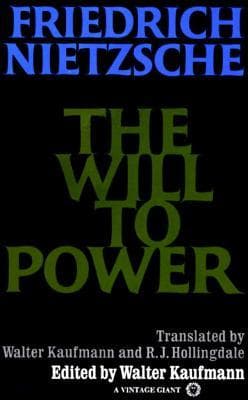
The Will to Power cover
Archivist's Choice

The Will to Power

Friedrich Nietzsche

Genre

Psychology / History / Spirituality / Philosophy

Reading Time

1200 min

Key Themes

See below

Track Your Reading

Sign in to track this book

Friedrich Nietzsche's private notebooks, carefully compiled and annotated, show the origins of his ideas on nihilism, morality, art, and human will.

Core Idea

Nietzsche's 'The Will to Power' is a collection of his notes, published after his death. It offers a new way of looking at existence, focusing on the 'Will to Power'—a basic, cosmic drive for growth, overcoming, and self-mastery, not just survival or pleasure. He says that all human values, moral systems, and philosophies come from this will, often in hidden or weakened forms. Nietzsche criticizes the nihilism of his time, which he saw as the result of traditional religious and metaphysical structures losing their meaning. He argues that this 'valuelessness' is not an end but a chance to 'revalue all values,' where people can make new, life-affirming ideals based on strength, creativity, and individual excellence.
Reading time
1200 min
Difficulty
Hard
✓ Read this if...
You are a serious student of philosophy, interested in challenging conventional morality, exploring the foundational drives of human nature, or grappling with the implications of nihilism and the potential for human self-overcoming.
✗ Skip this if...
You prefer structured, systematically argued philosophical texts, are easily offended by radical critiques of established values, or are looking for an accessible introduction to Nietzsche's thought (this is a compilation of notes, not a finished book).

Core idea

The central argument and framework that powers the entire book.

Nietzsche's 'The Will to Power' is a collection of his notes, published after his death. It offers a new way of looking at existence, focusing on the 'Will to Power'—a basic, cosmic drive for growth, overcoming, and self-mastery, not just survival or pleasure. He says that all human values, moral systems, and philosophies come from this will, often in hidden or weakened forms. Nietzsche criticizes the nihilism of his time, which he saw as the result of traditional religious and metaphysical structures losing their meaning. He argues that this 'valuelessness' is not an end but a chance to 'revalue all values,' where people can make new, life-affirming ideals based on strength, creativity, and individual excellence.

At a glance

Reading time

1200 min

Difficulty

Hard

Read this if...

You are a serious student of philosophy, interested in challenging conventional morality, exploring the foundational drives of human nature, or grappling with the implications of nihilism and the potential for human self-overcoming.

Skip this if...

You prefer structured, systematically argued philosophical texts, are easily offended by radical critiques of established values, or are looking for an accessible introduction to Nietzsche's thought (this is a compilation of notes, not a finished book).

Key Takeaways

1

The Will to Power as a Cosmic Drive

Beyond mere survival, all life strives for growth and mastery.

Quote

Life itself is Will to Power; survival is only an indirect and secondary consequence.

Nietzsche changes the definition of 'will' from conscious desire to an inherent, unconscious, and constant drive in all living things to overcome resistance, expand, and assert dominance. This is not just individual ambition; it is a cosmic principle, a basic force behind all biological and psychological events. He says that even the most selfless acts or the search for truth are ultimately expressions of the Will to Power, hidden or changed. It is not about a 'will to live' (Schopenhauer), but a 'will to more,' a constant effort for ...

Supporting evidence

Nietzsche contrasts his concept with Darwinian 'will to survive,' suggesting that even survival is a means to power, not an end in itself. He observes this drive in biological processes of growth and expansion, as well as in human psychological and cultural endeavors.

Apply this

Reframe personal challenges not as obstacles to avoid, but as resistance to be overcome, opportunities for the Will to Power to assert itself and grow. Seek out situations that demand growth and the exertion of your capabilities, rather than comfort and stagnation.

will-to-powerself-overcomingnihilism
2

Nihilism: The Unveiling of Valuelessness

The inevitable crisis when traditional values lose their foundation.

Quote

Nihilism stands at the door: whence comes this uncanniest of all guests?

Nietzsche predicted and identified nihilism as the main problem of modern times. He saw it not as a philosophical choice but as a historical necessity from the 'death of God' – the weakening of Christian metaphysical and moral systems that had given life meaning and value. When these basic beliefs are seen as human creations rather than divine truths, people are left with a deep sense of meaninglessness and valuelessness. This can appear as passive nihilism (tiredness, acceptance, a wish for an end) or active nihilism (the urge to des...

Supporting evidence

Nietzsche points to the decline of religious faith and the rise of scientific rationalism as key drivers. He observes the psychological effects of this decline in the 'weariness' and lack of direction prevalent in European society.

Apply this

Recognize the signs of nihilism in contemporary culture (e.g., pervasive cynicism, loss of shared purpose, despair over grand narratives). Instead of succumbing to it, view it as an opportunity to critically examine existing values and actively participate in the creation of new, life-affirming ones.

nihilismdeath-of-godrevaluation-of-values
3

The Revaluation of All Values

Overthrowing inherited morality to forge new, life-affirming ideals.

Quote

What is good? All that heightens the feeling of power, the will to power, power itself in man. What is bad? All that proceeds from weakness. What is happiness? The feeling that power increases – that a resistance is overcome.

Nietzsche asks for a complete 'revaluation of all values' as the cure for nihilism and the way to human flourishing. He says that Western morality, especially Christian morality, has been 'slave morality,' coming from resentment and weakness. It condemns strength, pride, and earthly desires for humility, pity, and an otherworldly paradise. This has led to the domestication of humanity. A revaluation means questioning every inherited moral idea – good, evil, justice, truth – and judging them by whether they improve or worsen life, whet...

Supporting evidence

Nietzsche critiques Christian virtues like pity and humility, arguing they are symptoms of a declining life-force. He contrasts this with ancient Greek ideals of heroism and self-assertion.

Apply this

Critically examine your own deeply held moral beliefs. Ask: 'Does this value empower me and others to live more fully, creatively, and strongly, or does it diminish, restrict, and weaken?' Be willing to discard values that no longer serve life.

revaluation-of-valuesmaster-moralityslave-moralityethics
4

Art as the Supreme Counter-Movement to Nihilism

Creating meaning and beauty in a world devoid of inherent value.

Quote

We have art lest we perish of the truth.

In a world where old sources of meaning have disappeared, Nietzsche says art is humanity's strongest tool against the despair of nihilism. Art, for him, is not just imitation or decoration, but a basic act of will-to-power, a creative act of putting form, order, and beauty onto the chaotic, meaningless void. It lets us change suffering, to affirm existence even in its most tragic parts, and to create values through aesthetic experience. Art provides a 'lie' that makes truth bearable, a necessary illusion that lets us live and thrive. ...

Supporting evidence

Nietzsche praises Greek tragedy for its ability to affirm life in the face of suffering and chaos, transforming it into something beautiful. He sees the artist as a creator of values, a type of 'overman'.

Apply this

Engage with art not just for entertainment, but as a vital source of meaning and inspiration. Consider creative expression (in any form) as a powerful tool for self-overcoming and for imposing your unique values and perspective onto the world.

artaestheticsnihilismaffirmation-of-life
5

The Ascetic Ideal: Self-Denial as a Form of Power

Even the will to nothingness is a will, albeit a twisted one.

Quote

Man would rather will nothingness than not will.

Nietzsche examines the ascetic ideal – self-denial, fasting, chastity, and poverty – which he sees as common in different forms throughout history, from religious monks to some philosophical schools and even modern scientific objectivity. He says that while it seems opposite to the Will to Power, the ascetic ideal is itself a form of it, though a twisted one. When life becomes unbearable or meaningless, people would rather use their will against themselves, to master suffering through self-punishment, than to stop willing altogether. ...

Supporting evidence

Nietzsche analyzes the motivations behind religious asceticism, philosophical skepticism, and even the self-imposed discipline of scientists, arguing that all stem from a desire for mastery, even if over one's own impulses or the 'chaos' of reality.

Apply this

Examine seemingly self-sacrificing behaviors or extreme disciplines. Ask whether they genuinely affirm life and growth, or if they are ultimately expressions of a will directed against life, a subtle form of escapism or resentment disguised as virtue.

asceticismwill-to-nothingnesssufferingpsychology
6

Truth as a Necessary Fiction

Our 'truths' are merely useful perspectives for survival and power.

Quote

Truth is the kind of error without which a certain species of life could not live. The value for life is ultimately decisive.

Nietzsche questions the traditional idea of objective truth. He says that 'truths' are not timeless, universal, or divinely revealed facts, but rather perspectives, interpretations, and useful fictions that humans (or any species) create to understand the world, survive, and use their Will to Power. Our concepts, language, and logic are tools for simplifying and controlling, not mirrors of ultimate reality. What we call 'truth' is often the most helpful error or the most deeply held prejudice that allows a certain way of living. The v...

Supporting evidence

Nietzsche points to the historical contingency of scientific and philosophical 'truths,' showing how they evolve and are discarded. He suggests that even our most fundamental logical categories (like identity or causality) are human inventions.

Apply this

Approach all claims of absolute truth with skepticism, including scientific and moral ones. Instead of asking 'Is this true?', ask 'What purpose does this 'truth' serve? What kind of life does it enable or restrict? Who benefits from this perspective?'

truthperspectivismepistemologylanguage
7

The Superman (Übermensch): A New Ideal for Humanity

Beyond human, a self-overcoming being who creates new values.

Quote

Man is something that shall be overcome. What have you done to overcome him?

The concept of the Übermensch (often called 'Superman' or 'Overman') is Nietzsche's idea for a higher type of human, one who has gone beyond traditional morality and nihilism to create their own values and meaning. The Übermensch is not biologically superior, but spiritually and psychologically so, marked by strong self-discipline, creativity, courage, and an affirmation of life in all its tragic beauty. They see suffering as a way to grow, live authentically, and show the highest expression of the Will to Power. This ideal is not for...

Supporting evidence

Nietzsche contrasts the Übermensch with 'the last man' – a complacent, comfort-seeking individual who has no great aspirations or struggles. He presents the Übermensch as the answer to the crisis of nihilism.

Apply this

Identify areas in your life where you are complacent or bound by inherited values. Actively strive for self-overcoming, embracing challenges and creating your own meaning and purpose, rather than passively accepting what is given. Cultivate qualities of courage, creativity, and self-mastery.

übermenschself-overcomingnihilismhuman-potential
8

Eternal Recurrence: The Ultimate Test of Affirmation

Would you choose to relive your life, every joy and sorrow, infinitely?

Quote

The greatest weight. What if a demon were to steal after you into your loneliest loneliness and say to you: 'This life as you now live it and have lived it, you will have to live once more and innumerable times more; and there will be nothing new in it, but every pain and every joy and every thought and sigh and everything unutterably small or great in your life will have to return to you, all in the same succession and sequence – even this spider and this moonlight between the trees, and even this moment and I myself.'

The idea of Eternal Recurrence is a thought experiment by Nietzsche, a deep ethical challenge. It asks: if every moment of your life, every joy, every sorrow, every small detail, were to happen again infinitely, exactly as it did, would you affirm it? Would you accept this fate with joy, or would you pull back in despair? It is not a scientific claim about the universe's mechanics, but a moral command and a test of one's life affirmation. To truly love one's fate (amor fati) means to want the eternal return of everything, showing comp...

Supporting evidence

Nietzsche presents this concept as a 'greatest weight' to be considered, a measure of whether one's life is truly lived in affirmation. He explores its implications for overcoming resentment and embracing fate.

Apply this

Periodically reflect on your life choices and experiences. If you were to relive this day, this year, or your entire life exactly as it happened, would you still choose it? Use this thought experiment to motivate living each moment with purpose, integrity, and a deep sense of affirmation, eliminating regret and embracing your fate.

eternal-recurrenceamor-fatiaffirmation-of-lifeethics
9

The Herd Instinct and the Dangers of Conformity

The masses suppress individuality for the sake of comfort and security.

Quote

The herd instinct is still powerful in Europe, and herd morality is the morality of the common man.

Nietzsche often criticizes what he calls the 'herd instinct' – the human tendency to follow group norms, to seek safety in groups, and to value comfort and security over individual excellence and self-overcoming. He says this instinct, often supported by democratic ideas and 'slave morality,' leads to mediocrity, the suppression of powerful individuals, and a general lowering of human potential. The herd dislikes those who stand out, who are strong or creative, and tries to control them. This conformity stops higher types of humanity ...

Supporting evidence

Nietzsche observes the rise of democratic sentiments and socialist movements in Europe, which he interprets as expressions of the herd's desire for equality and the suppression of exceptional individuals. He sees this in the suppression of 'master morality' by 'slave morality.'

Apply this

Actively question social norms, popular opinions, and inherited beliefs. Cultivate independent thought and the courage to pursue your own path, even if it means standing apart from the crowd. Beware of the subtle pressures to conform that stifle individuality and creativity.

herd-mentalityconformityindividualitymass-society
10

Suffering as a Catalyst for Growth

Embrace hardship as a necessary path to self-overcoming.

Quote

What does not kill me makes me stronger.

Nietzsche rejects the idea that suffering is bad or should be avoided at all costs. Instead, he sees suffering as a necessary part of growth, a test through which the Will to Power asserts itself and becomes stronger. It is by facing and overcoming pain, hardship, and loss that people gain depth, resilience, and a deep appreciation for life. To remove all suffering, as some philosophies or religions try to do, would remove the very conditions needed for human greatness, for the Übermensch to appear. A life without struggle is a life w...

Supporting evidence

Nietzsche frequently refers to the 'discipline of suffering' and how it forged great spirits throughout history. He contrasts this with the 'pity' and 'comfort' sought by the weak, which he sees as debilitating.

Apply this

Instead of fearing or avoiding suffering, cultivate a mindset that sees challenges and difficulties as opportunities for growth and self-mastery. Actively seek out experiences that push your limits, knowing that overcoming them will strengthen your will and deepen your character.

sufferingresilienceself-overcominggrowth

Critical analysis

Notable Quotes

What is good? -- All that heightens the feeling of power, the will to power, power itself, in man. What is bad? -- All that springs from weakness. What is happiness? -- The feeling that power increases -- that a resistance is overcome.

Defining good, bad, and happiness from the perspective of the will to power.

God is dead. God remains dead. And we have killed him. How shall we comfort ourselves, the murderers of all murderers? What was holiest and mightiest of all that the world has hitherto possessed has bled to death under our knives: who will wipe this blood off us? What water is there for us to cleanse ourselves? What festivals of atonement, what sacred games shall we have to invent? Is not the greatness of this deed too great for us? Must we ourselves not become gods simply to appear worthy of it?

A reflection on the profound implications of the death of God for humanity.

Man, the bravest of animals and the one most accustomed to suffering, does not deny suffering as such: he wills it, he even seeks it out, provided that he is shown a meaning for it, a purpose of suffering.

Exploring humanity's relationship with suffering and the need for meaning.

The world is the will to power—and nothing besides! And you yourselves are also this will to power—and nothing besides!

A concise summary of Nietzsche's fundamental metaphysical assertion.

To 'humanize' the world means to make it human, to make it more human. But this humanizing is an unceasing, striving, conquering, becoming, evolving. It is not a fixed state.

Discussing the dynamic and active process of 'humanizing' the world.

The greatest danger for humanity, for the individual as well as for the species, lay in the illusion of a world order that was supposed to be given, fixed, and eternal.

Critiquing the dangers of static worldviews and dogmatism.

A matter of taste, for example: to want to abolish suffering is a matter of taste. It is an error of taste, an error of judgment, not a moral error.

Reframing the desire to abolish suffering as an aesthetic or intellectual preference rather than a moral imperative.

The will to power, which is the will to life, is not a striving to avoid suffering, but to master it.

Clarifying that the will to power is not about escaping suffering but overcoming it.

All values are only interpretations, perspectives; they are not 'in themselves'.

Underscoring the subjective and interpretive nature of all values.

The spiritualization of sensuality is called love: it is a great triumph over Christianity.

Contrasting his view of love as a 'spiritualized sensuality' with Christian asceticism.

What is great in man is that he is a bridge and not a goal.

Emphasizing humanity's transitional nature and potential for self-overcoming.

The strongest and most evil spirits have hitherto advanced humanity the most: they have rekindled again and again the slumbering passions—every so often at the expense of their own lives.

Arguing that powerful, even 'evil', individuals have historically driven human progress.

Every elevation of man is rooted in the overcoming of a lower type, a lower value. One must not be deceived here.

Asserting that progress involves the superseding of prior forms or values.

The 'subject' is not something given, it is something added on and invented and projected behind what there is.

Critiquing the traditional philosophical concept of a fixed, independent subject or ego.

Quiz

Test Your Knowledge

Ready to see how well you understood this book? Take our interactive quiz with 10 questions.

10
Questions
~5
Minutes
?
Best Score

Key Questions (FAQ)

'The Will to Power' is a compilation of notes and aphorisms from Friedrich Nietzsche's private notebooks, topically arranged to present his thoughts on various subjects like nihilism, art, morality, and religion. It offers an unfiltered look into his intellectual development during his most productive years, rather than being a single systematic work.

About the author