“The trees are in their autumn beauty, The woodland paths are dry, Under the October twilight the water Mirrors a still sky;”
— Opening lines of 'The Wild Swans at Coole,' setting the scene in the park.

William Butler Yeats (2017)
Genre
General
Reading Time
3 min
Key Themes
See below
Sign in to track this book
In 'The Wild Swans at Coole,' Yeats watches wild swans, whose unchanging dance mirrors his own aging spirit.
The poem begins with the speaker revisiting Coole Park, nineteen years after his first visit. He stands by the water, watching the 'nine-and-fifty swans.' He notices the beautiful, still autumn evening, with the water mirroring the sky. The speaker remembers counting the swans on his first visit and feels a sense of loss as he realizes how much time has passed. He marvels at the swans' unchanging beauty and energy, contrasting it with his own aging and weariness.
The speaker thinks about the swans' lasting energy and passion. He describes them as 'unwearied still,' their 'hearts have not grown old.' They are full of 'passion or conquest, wander where they will,' and continue to 'drift on the still water' or 'climb the air' with the same strength he remembers. This observation deepens the speaker's sense of his own mortality and the changes he has experienced. He feels his own 'heart grown sore,' marked by life's experiences, unlike the seemingly eternal youth of the swans.
The speaker recalls the 'bell-beat of their wings' as they rose from the water, a sound that 'trod with a lighter tread' in his youth. This memory shows the difference between his past self and his current state. The swans' ongoing activity reflects his own life journey, marked by both joy and sadness. He remembers the initial wonder of seeing them, which now gives way to a more melancholic thought about time's effects.
The poem highlights the swans' companionship and unity. They are described as 'lover by lover,' suggesting a deep connection within the flock. Their 'hearts have not grown old; Passion or conquest, wander where they will, Attend upon them still.' This imagery contrasts with the speaker's solitary reflection and perhaps his own experiences of love and loss. The swans' strong bond and shared vitality emphasize their timeless nature and the continuous cycle of life and love they represent.
The speaker's mood is sad as he considers his own aging. He states, 'All's changed since I first heard that bell-beat of their wings.' This internal change affects how he sees the world and himself. He feels a weariness that the swans do not share, and his 'heart grown sore' suggests a lifetime of experiences, both joyful and painful, that have left their mark. The swans' unchanging nature is a reminder of his own impermanence.
In the final stanza, the speaker thinks about the swans' future, imagining their departure from Coole Park. He asks, 'But now they drift on the still water, Mysterious, beautiful; Among what rushes will they build, By what lake's edge or pool Delight men's eyes, when I awake some day To find they have flown away?' This question shows his awareness of change and loss. He knows that the swans, despite appearing timeless, will move on and eventually leave this familiar place, just as he too will face his own departure.
The speaker's thought of the swans' future departure connects with his own mortality. The idea 'when I awake some day To find they have flown away?' suggests not just a physical absence but also an end to a familiar comfort or a personal era. The swans' flight will mean a finality, breaking the connection he has felt with them for so long. This anticipation of loss emphasizes the poem's sad tone and its main idea of time's passage and the impermanence of all things, even those that seem eternal.
The Protagonist
The speaker moves from nostalgic recollection to a melancholic acceptance of time's passage and the inevitability of change.
The Symbolic figures/Supporting
The swans remain static in their timeless beauty, serving as a constant against which the speaker's own changes are measured.
The Mentioned/Contextual
Not applicable, as she is not an active character.
This is the main theme, explored through the speaker's thoughts on his own aging compared to the swans' unchanging nature. The 'nineteen autumns' between his visits highlight the relentless march of time, bringing weariness and change to the human spirit ('my heart grown sore') while the swans remain 'unwearied still.' The poem's sadness comes from this awareness of personal decay set against nature's cycles. The speaker's thought of the swans' eventual departure further emphasizes the impermanence of even seemingly eternal beauty, mirroring human mortality.
“All's changed since I first heard that bell-beat of their wings.”
The wild swans show nature's timeless beauty, passion, and vitality. They are 'Mysterious, beautiful,' with 'hearts have not grown old,' and full of 'Passion or conquest.' Their ability to 'drift on the still water' or 'climb the air' with the same strength year after year presents a strong image of nature's resilience and eternal youth. This theme contrasts with the human condition, offering a glimpse into a world untouched by the weariness and sorrow that affect the speaker. The swans represent an ideal of sustained energy and grace that people often desire.
“Their hearts have not grown old; / Passion or conquest, wander where they will, / Attend upon them still.”
The speaker's return to Coole Park after nineteen years is full of nostalgia. He remembers his first visit and the 'lighter tread' of his youth, which highlights a deep sense of what has been lost over time. The memory of the swans' 'bell-beat of their wings' is mixed with a wistful longing for a past self and a past joy that cannot be fully regained. This theme of loss is not just about time passing but also about the inevitable changes within oneself, where the innocence and strength of youth give way to the 'soreness' of experience.
“All's changed since I first heard that bell-beat of their wings; / The nineteenth autumn has come upon me.”
The speaker uses the natural world, specifically the swans, to explore philosophical questions about existence, time, and the human spirit. The swans are not just observed; they are considered, becoming symbols that help the speaker express his inner turmoil and his understanding of life's cycles. Their mysterious beauty and unchanging nature prompt him to question his place in the world and the meaning of his experiences. The natural setting of Coole Park becomes a space for deep, personal reflection.
“Mysterious, beautiful; / Among what rushes will they build, / By what lake's edge or pool / Delight men's eyes, when I awake some day / To find they have flown away?”
The swans symbolize enduring beauty, vitality, and the timelessness of nature.
The wild swans are the central symbol of the poem. They represent an ideal of unchanging beauty, passion, and vitality that contrasts sharply with the speaker's human experience of aging and weariness. Their 'unwearied' hearts and constant presence for nineteen years symbolize nature's eternal cycles and resilience. However, their anticipated flight at the poem's end also symbolizes the inevitable passage of all things, even those that seem timeless, hinting at the cyclical nature of existence and the speaker's own eventual departure.
The speaker's aging and weariness are contrasted with the swans' timeless youth and energy.
The poem heavily relies on the contrast between the human condition and the natural world. The speaker's 'heart grown sore' and his awareness of 'nineteen autumns' having passed underscore his aging and the changes he has undergone. This is set against the swans, whose 'hearts have not grown old,' who are 'unwearied still,' and full of 'passion or conquest.' This stark difference highlights the themes of mortality and the enduring quality of nature, deepening the speaker's sense of melancholy and contemplation.
Coole Park reflects the speaker's internal state and provides a stage for his contemplation.
Coole Park is more than just a backdrop; it is integral to the poem's mood and themes. The 'still water' and the 'autumn evening' contribute to the melancholic and reflective atmosphere. The familiar setting, revisited after nineteen years, triggers the speaker's memories and his awareness of the passage of time. The stable, beautiful environment of the park, particularly the lake, serves as a mirror for both the unchanging nature of the swans and the speaker's own internal changes, making the external landscape a reflection of his internal journey.
Vivid sensory details evoke the beauty of the swans and the park.
Yeats employs rich imagery to bring Coole Park and the swans to life. Phrases like 'bell-beat of their wings,' 'lover by lover,' 'still water,' and 'mysterious, beautiful' create a sensory experience for the reader. The visual image of 'nine-and-fifty swans' on the water, and the auditory image of their wings, are particularly potent. This imagery not only establishes the setting but also enhances the symbolic weight of the swans, making their beauty and vitality tangible and deeply affecting to both the speaker and the reader.
“The trees are in their autumn beauty, The woodland paths are dry, Under the October twilight the water Mirrors a still sky;”
— Opening lines of 'The Wild Swans at Coole,' setting the scene in the park.
“Unwearied still, lover by lover, They paddle in the cold Companionable streams or climb the air;”
— Describing the enduring energy and bond of the swans.
“Their hearts have not grown old;”
— A key observation about the swans, contrasting with the speaker's own aging.
“All’s changed since I, calling to mind That first time I ever came here, Upon this shore,”
— The speaker reflects on the passage of time since his first visit to Coole.
“And now my heart is sore.”
— A concise expression of the speaker's emotional state, feeling the weight of time and change.
“But now they drift on the still water, Mysterious, beautiful;”
— The swans' enduring beauty and enigmatic nature are highlighted.
“Among what rushes will they build, By what lake’s edge or pool Delight men’s eyes when I awake some day To find they have flown away?”
— The speaker ponders the swans' future and his own mortality, anticipating their eventual departure.
“I have heard the curlew cry When the stars began to glimmer;”
— From 'The Fisherman', painting a vivid evening scene in the Irish landscape.
“All that I have said and done, Now that I am old and ill, Turns into a question mark;”
— From 'The Cat and the Moon', reflecting on life's meaning in old age.
“O body swayed to music, O brightening glance, How can we know the dancer from the dance?”
— From 'Among School Children', exploring the unity of art and artist.
“Things fall apart; the centre cannot hold;”
— From 'The Second Coming', a famous line about societal decay and chaos.
“The best lack all conviction, while the worst Are full of passionate intensity.”
— From 'The Second Coming', describing the moral inversion of a collapsing world.
“That twenty centuries of stony sleep Were vexed to nightmare by a rocking cradle,”
— From 'The Second Coming', alluding to the birth of a new, terrifying era.
“I know that I shall meet my fate Somewhere among the clouds above;”
— From 'An Irish Airman Foresees His Death', a poignant reflection on a pilot's impending demise.
“Nor law, nor duty bade me fight, Nor public men, nor cheering crowds, A lonely impulse of delight Drove to this tumult in the clouds;”
— From 'An Irish Airman Foresees His Death', explaining the personal motivation behind the airman's choice.
Ready to see how well you understood this book? Take our interactive quiz with 10 questions.
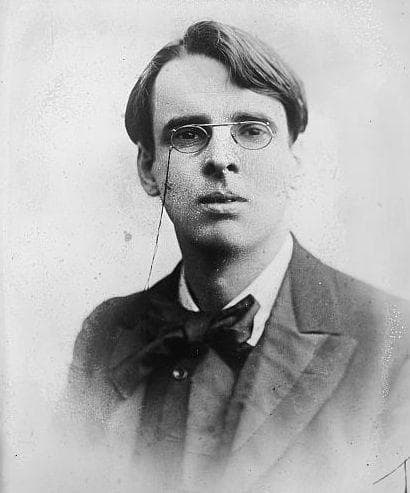
William Butler Yeats was an Irish poet, dramatist, writer and politician. One of the foremost figures of 20th-century literature, he was a driving force behind the Irish Literary Revival and became a pillar of the Irish literary establishment who helped to found the Abbey Theatre. In his later years, he served two terms as a Senator of the Irish Free State.