“In the beginning, the world was not as we know it, but a tapestry of forgotten truths and hidden histories.”
— Opening lines of the book, setting the tone for its blend of fantasy and historical fiction.

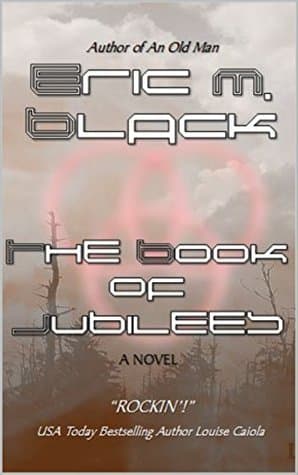
Eric M. Black (2015)
Genre
Fantasy / Historical Fiction
Reading Time
120 min
Key Themes
See below
Sign in to track this book
Juan Ponce de Leon finds a mythical fountain from Eden. He and his enemy, Diego Columbus, are drawn into an ancient war against fallen angels, Nephilim, and the Elioud. They fight to reclaim the Ark of the Covenant and save creation using King Solomon's wisdom and the Book of Jubilees.
The story starts with Juan Ponce de Leon, following a legend, finding the true Fountain of Youth. It is a relic from the Garden of Eden, with great power to heal. His discovery does not stay secret. His old enemy, Diego Columbus, son of Christopher Columbus, learns of Juan's find. Driven by jealousy and a wish for power, Diego pursues Juan. Their rivalry ends in a fight where both men battle for control over the fountain and its secrets, setting the stage for a larger conflict.
During their intense fight over the Fountain of Youth, Diego Columbus is mortally wounded. Juan Ponce de Leon must save his dying rival, perhaps feeling a shared humanity. Juan takes Diego to the mythical Garden of Eden, the fountain's true source. In Eden, Diego is healed, and the experience changes both men. They emerge with new knowledge and a sense of purpose, no longer just rival explorers but figures meant for a greater role.
After their change in the Garden of Eden, Juan and Diego learn about an ancient conflict that has affected humanity since its beginning. They hear of the Watchers, fallen angels who came to Earth, mixed with humans, and taught forbidden knowledge. These Watchers are the antagonists, wanting to corrupt and control creation. Juan and Diego, now seemingly immortal or enhanced, are to lead this old struggle, understanding their personal rivalry was just a start to a greater, cosmic battle against these powerful beings.
The Watchers, clever and persistent, find the Ark of the Covenant, an artifact of great divine power. Seeing its potential, they take the Ark and use its strong energies. With the Ark's power, the Watchers begin to control creation, threatening to bring darkness and subjugation to the world. This act means a big increase in the ancient war, forcing Juan and Diego to fully accept their new roles. The Watchers' misuse of the Ark is a catastrophic threat the heroes must face.
Knowing the Watchers' immense power, especially with the Ark of the Covenant, Juan and Diego realize they cannot face this threat alone. They set out to gather a diverse and strong group of warriors from history and myth. Among these allies is King Solomon, whose wisdom and knowledge of old secrets are very helpful. This group prepares to fight not only the fallen angels but also their monstrous children, the Nephilim, and the mysterious, powerful Elioud, all aligned with the Watchers' dark plan.
As the conflict grows, King Solomon, with his wide understanding of ancient texts, identifies the Book of Jubilees as a key source of information. This old text, often seen as apocryphal, holds forgotten truths about creation, the Watchers, the Nephilim, and the nature of the cosmic struggle. The warriors, guided by Solomon, read its pages, looking for historical context, strategic insights, weaknesses of their enemies, and ways to counter the Watchers' power, especially their control over the Ark of the Covenant. The Book becomes their guide to winning.
The forces of Juan, Diego, King Solomon, and their allies attack the Watchers, the Nephilim, and the Elioud. The battle is huge, covering lands and dimensions, testing the heroes' new powers and combined strength. During this final struggle, the true nature and loyalty of the Elioud become clearer. They are not just monstrous children but a distinct, powerful lineage with their own reasons and weaknesses, making them a complex and strong challenge in the Watchers' plan for control.
In the peak of the final battle, the main goal is clear: reclaim the Ark of the Covenant from the Watchers. Juan, Diego, and their allies carry out a bold plan, using wisdom from the Book of Jubilees. This ancient knowledge gives them specific ways to neutralize the Ark's corrupted power or use it against its current masters. Through great sacrifice and smart strategy, they take the Ark from the Watchers, stripping the fallen angels of their greatest weapon and turning the war in favor of humanity and its defenders.
With the Ark of the Covenant reclaimed and the Watchers' power broken, the remaining forces of the fallen angels, Nephilim, and Elioud are defeated or scattered. Juan Ponce de Leon and Diego Columbus, now unified champions, along with King Solomon and their allies, work to restore balance to creation. The knowledge from the Book of Jubilees not only helped them win but also showed how to prevent such a threat from happening again. The ancient war ends, securing mankind's future and removing the Watchers' dark influence for good.
The Protagonist
Transforms from a self-interested explorer to a selfless leader and warrior against cosmic evil.
The Protagonist/Antagonist (initially)
Transitions from a vengeful rival to a transformed ally and co-leader in a cosmic war.
The Antagonists
Their ancient plan for dominion culminates in a direct conflict, leading to their ultimate defeat.
The Supporting
Provides essential ancient wisdom to guide the heroes to victory against the Watchers.
The Supporting Antagonists
Serve as the physical enforcers of the Watchers' will, ultimately defeated alongside their progenitors.
The Supporting Antagonists
Their mysterious allegiance and powers are revealed as they fight alongside the Watchers, ultimately sharing their defeat.
The Mentioned
His historical legacy indirectly shapes the initial motivations of his son, Diego.
This theme is central to the story, especially through Juan Ponce de Leon and Diego Columbus. Their journey to the Garden of Eden, healing, and empowerment change them both. Diego's shift from a vengeful rival to a selfless ally shows redemption. This theme suggests that old rivalries and personal goals can be overcome through shared experience and a greater purpose, leading to personal growth and moral change.
“A transformation happens and Juan and Diego become leaders in an ancient fight against a band of fallen angels known as the Watchers.”
The book's entire idea is an ancient, cosmic conflict between good (Juan, Diego, and their allies) and evil (the Watchers, Nephilim, and Elioud). The Watchers are an old evil, seeking to corrupt and control creation, while the heroes defend it. This theme explores the ongoing fight between these forces, looking at the origins of evil in old texts and the constant need to fight it. It frames the human and celestial struggle as a battle for existence itself.
“Juan and Diego become leaders in an ancient fight against a band of fallen angels known as the Watchers.”
The Book of Jubilees heavily features forbidden knowledge, mainly through the Watchers who taught humans forbidden arts and secrets. This act led to humanity's corruption and the birth of the Nephilim, starting the ancient conflict. The Ark of the Covenant, a powerful artifact, also represents knowledge and power that can be misused. The story explores the dangerous results of seeking or using knowledge and power not meant for mortals or used for bad reasons, showing the ethical issues of such discoveries.
“The Watchers learn the whereabouts of the Ark of the Covenant and use the power within the Ark to take over creation.”
The Book of Jubilees, as a story element, shows the power of ancient lore and forgotten scriptures. King Solomon's use of this text to guide the heroes shows that answers to current (or old) problems can often be found in forgotten wisdom. The story suggests that these ancient texts hold not only historical accounts but also strategic insights, magical knowledge, and prophecies important for understanding and defeating cosmic threats. It emphasizes the lasting relevance and power of historical and mythical records.
“Through the help of King Solomon, these warriors must seek the answers found in the Book of Jubilees to finally eliminate the threat that has faced mankind since the beginning.”
The catalyst for the heroes' transformation and entry into the cosmic conflict.
The Fountain of Youth, revealed to be from the Garden of Eden, serves as the primary catalyst for the entire narrative. It is not merely a source of immortality but a place of profound transformation and initiation. Its discovery by Juan Ponce de Leon and the subsequent healing of Diego Columbus within the Garden fundamentally alters their existence, granting them enhanced abilities and drawing them into the ancient war against the Watchers. This device elevates a historical legend into a mystical gateway to a larger, supernatural world, driving the plot forward and shaping the protagonists' destinies.
A powerful divine artifact misused by the antagonists, becoming the central objective.
The Ark of the Covenant functions as a critical plot device representing immense divine power. Its acquisition by the Watchers drastically escalates the conflict, as they use its power to assert control over creation. This makes the Ark a central objective for the heroes, who must reclaim it to neutralize the Watchers' threat. The Ark's presence underscores the high stakes of the war, as it is a weapon of cosmic significance, capable of altering the very fabric of reality, and its misuse represents the ultimate corruption of divine power.
An ancient, apocryphal text providing crucial knowledge and strategy.
Within the narrative, 'The Book of Jubilees' itself acts as a vital plot device. It is presented as an ancient, sacred text containing forgotten truths about creation, the Watchers, the Nephilim, and the history of the cosmic conflict. King Solomon guides the heroes to consult this book for strategic insights, weaknesses of their enemies, and methods to counteract the Watchers' power. It serves as a repository of essential information, providing the 'answers' needed to defeat the ancient threat, thus emphasizing the power of ancient wisdom and scripture in overcoming supernatural challenges.
The narrative journey of Juan and Diego transforming from adversaries to unified leaders.
The transformation of Juan Ponce de Leon and Diego Columbus's relationship from bitter rivals to unified allies is a key character and plot device. Their initial animosity and competition for the Fountain of Youth drive early plot points. However, Diego's mortal wounding and subsequent salvation by Juan, followed by their shared experience in the Garden of Eden, forces them to overcome their personal differences. This arc demonstrates themes of redemption and the power of shared purpose, providing a strong emotional core to the story and illustrating how personal conflicts can evolve into a greater, collective struggle for good.
“In the beginning, the world was not as we know it, but a tapestry of forgotten truths and hidden histories.”
— Opening lines of the book, setting the tone for its blend of fantasy and historical fiction.
“The past is not a fixed point but a river, flowing with currents of memory and myth.”
— A character reflects on the nature of history and its interpretation.
“To wield power is to dance with shadows; one misstep and you become the darkness you sought to control.”
— A warning given to a protagonist about the dangers of ambition and magic.
“In every legend, there is a kernel of truth, buried beneath layers of time and human fear.”
— A scholar character discusses how myths might be based on real events.
“The heart of a kingdom beats not in its throne, but in the stories its people tell.”
— A ruler learns about the importance of culture and narrative over mere governance.
“Magic is not a gift, but a burden—a whisper from the ancients that demands to be heard.”
— A character with magical abilities describes their internal struggle.
“We are all fragments of a greater story, searching for our place in the grand design.”
— A philosophical moment where characters ponder destiny and purpose.
“The greatest battles are not fought with swords, but with words that shape the future.”
— A diplomat argues for the power of negotiation and ideas over violence.
“Time is a cruel master, erasing what we love, yet preserving what we fear.”
— A lament about the passage of time and its selective memory.
“In the silence between heartbeats, the universe reveals its secrets to those who dare to listen.”
— A mystical character teaches about perceiving hidden truths.
“A single act of kindness can unravel a tapestry of hatred woven over centuries.”
— A moment where a small gesture leads to significant change in the plot.
“The stars are not just lights in the sky, but maps to forgotten realms and ancient promises.”
— A character uses astronomy to guide a quest in the fantasy setting.
“History is written by the victors, but it is remembered by the dreamers.”
— A critique of historical narratives and the role of imagination.
“To love is to risk everything, for in the end, even the mightiest empires are built on fragile hearts.”
— A romantic subplot highlights personal stakes amid larger conflicts.
Ready to see how well you understood this book? Take our interactive quiz with 10 questions.







