“When Gregor Samsa awoke one morning from troubled dreams, he found himself transformed into a monstrous insect.”
— The opening sentence of the novella, describing Gregor's sudden and inexplicable transformation.

Sign in to track this book
When Gregor Samsa wakes up as a monstrous insect, his sudden change tears apart his family's sense of duty and reveals their cold indifference.
Gregor Samsa, a traveling salesman, wakes up one morning to find he has turned into a monstrous insect. Lying on his back, he struggles to understand his new body, noticing his many legs and hard shell. His main worry is missing his train and being late for work, which would upset his demanding boss and cause money problems for his family. He tries to get out of bed, but his new body makes it impossible. His mother, father, and sister Grete worry about his unusual quietness and absence from work, knocking on his door and calling out, unaware of the terrible change inside.
As Gregor struggles with his change, his boss's chief clerk arrives at the apartment, demanding to know why Gregor is late. The clerk stresses the company's unhappiness and the possible consequences for Gregor and his family's finances. Gregor, desperate to explain, manages to unlock his bedroom door with his mouth. His family and the chief clerk are horrified to see him. The clerk immediately runs from the apartment in fear, and Gregor's father, filled with disgust and anger, pushes Gregor back into his room with a walking stick and a newspaper.
After his first appearance, Gregor is confined to his room, which becomes his new world. His family struggles to accept his change. Only his younger sister, Grete, shows any kindness. She takes on the job of feeding him, bringing him different foods to see what he might eat, and cleaning his room. She first tries to make his room comfortable but soon realizes he prefers rotting food and dark, hidden spots. This period establishes Grete as Gregor's only link to humanity, though even her care has a hint of disgust.
Grete, believing Gregor needs more room to crawl and climb, suggests to her mother that they remove all the furniture from his room. Gregor's mother hesitates, worrying about his feelings, but Grete insists. Gregor, overhearing their talk, becomes very upset. He feels that taking away his things would remove the last bits of his human identity and memories. In a desperate try to save at least one item, he clings to a picture on the wall. His mother sees him and faints, causing more stress and misunderstanding in the family.
After his mother faints during the furniture removal, Gregor's father chases him. Mr. Samsa has returned from work and misunderstood the scene. Angry at the perceived threat to his wife, Mr. Samsa throws apples at Gregor. One apple gets stuck in Gregor's back, causing a severe and painful wound that never fully heals. This event marks a turning point, showing the complete rejection and hostility Gregor faces from his father. The apple stays in his flesh, a constant reminder of his family's violence and his isolated state, making him physically weak and movement difficult.
With Gregor unable to work, the Samsa family's money situation becomes terrible. They have to rely on their small savings and the money from Gregor's old job, which quickly runs out. To cope, Gregor's father, who had retired, goes back to work as a bank messenger, despite his age and weakness. His mother starts sewing for a fashion company, and Grete, despite her youth, finds work as a salesgirl. The family's new jobs lead to exhaustion and more resentment towards Gregor, whom they blame for their problems. Their focus shifts entirely to survival, and Gregor's well-being becomes an afterthought.
To earn more money, the Samsa family decides to take in three male lodgers, who are very picky and demanding. This decision further highlights Gregor's isolation, as his room must be kept hidden from them. The boarders get the best room, which was once the family's dining room, and they eat their meals there, often leaving Gregor's door slightly open. Gregor, from his dark room, can hear their talks and the sounds of family life going on without him. His existence becomes a secret shame, and the family's efforts to keep him hidden increase his feeling of being an outcast.
One evening, Grete, who plays the violin well, performs for the three boarders. Gregor, despite his worsening physical state and the pain from his wound, is deeply moved by the music. He is drawn out of his room by the melody and slowly crawls into the living room. The boarders, seeing him, are disgusted and refuse to pay rent, threatening to leave at once. This public display of Gregor's monstrous form shatters the family's attempts to seem normal and shows the lasting damage his change has caused to their social and financial standing.
After the embarrassing incident with the boarders, Grete, who had been Gregor's most caring helper, reaches her breaking point. She tells her parents they can no longer live with Gregor. She argues that 'it' is not Gregor but a burden that is ruining their lives and future. Her words are full of desperate finality, showing her complete emotional detachment and rejection of her brother. Her parents quickly agree, seeing the situation through her eyes and recognizing that their current life is impossible.
Overwhelmed by Grete's harsh judgment and the realization of his family's complete rejection, Gregor goes back to his room. He feels a deep sense of peace and emptiness, accepting his fate. He thinks of his family kindly, despite their cruelty, and slowly dies from his injuries, neglect, and emotional exhaustion. The next morning, the cleaning woman finds his shriveled, lifeless body. She calls out to the family, who first react with a mix of shock and relief. His death marks the end of their suffering and the beginning of their freedom.
After Gregor's body is removed, the Samsa family feels an immediate and clear sense of relief. They decide to take a day off from work, enjoying the sunshine and talking about their future. They realize that despite their difficulties, they are still relatively young and have opportunities. They discuss moving to a smaller, cheaper apartment and consider Grete's marriage prospects. The story ends with the family looking toward a bright, hopeful future, completely free from Gregor's memory, as Grete stretches her young body, full of life and promise.
The Protagonist
Gregor's arc is one of tragic decline, from human provider to monstrous outcast, culminating in his quiet, neglected death.
The Supporting
Grete transforms from a caring sister into a resentful, pragmatic young woman who advocates for her brother's expulsion, symbolizing the family's complete abandonment.
The Supporting
Mr. Samsa regains his patriarchal authority and vitality as Gregor declines, becoming increasingly hostile towards his son.
The Supporting
Mrs. Samsa remains largely static in her fear and weakness, unable to fully accept or reject Gregor, ultimately succumbing to the family's collective decision.
The Mentioned
The Chief Clerk serves as a catalyst for the family's initial confrontation with Gregor's transformation and then disappears from the narrative.
The Supporting
The cleaning woman remains a static, pragmatic figure, serving as a functional tool for the family's ultimate liberation.
The Supporting
The boarders serve as catalysts, exposing the family's shame and accelerating the decision to get rid of Gregor.
Loneliness is key to 'The Metamorphosis.' Gregor's physical change into an insect immediately separates him from his family and the human world. He is confined to his room, unable to speak, and increasingly seen as a repulsive burden rather than a son or brother. This isolation is not just physical; it is emotional and mental, as his family's first attempts at care turn into neglect, fear, and hostility. The scene where Gregor, drawn by Grete's violin, crawls out only to face disgust from the boarders and his family, clearly shows his complete separation from human connection.
“He was a tool of the boss, without brains or independence.”
Kafkaesque absurdity fills the story from the very first sentence. Gregor's change is unexplained and without cause, a sudden, illogical event that upends his and his family's lives. The family's reactions, though initially horrified, quickly shift to practical matters like work and money, rather than seeking a cure or understanding. The lack of explanation for the change itself, along with the out-of-proportion focus on everyday details amid such a monstrous event, highlights the inherent meaninglessness and irrationality that can suddenly enter human life. Gregor's quiet acceptance of his fate further shows this absurd surrender.
“When Gregor Samsa woke up one morning from unsettling dreams, he found himself changed in his bed into a monstrous vermin.”
Before his change, Gregor was the only provider, burdened by his family's debts and expectations. His change shifts this burden greatly. The family's initial care for Gregor is quickly overshadowed by the financial strain and social shame he represents. Their sense of duty turns into resentment, as they are forced to work and hide their monstrous son. Grete's final statement that 'it's not Gregor' and that they must get rid of him shows how family love and obligation can break down under extreme stress, turning a loved one into an unbearable burden. The family's relief at his death highlights their previous suffering.
“He still had to earn money for his father, mother, and sister.”
Gregor's physical change directly challenges his sense of self and how others see him. Despite keeping his human mind, his family quickly stops recognizing him as Gregor, calling him 'it' or 'the vermin.' His identity is stripped away, first by his physical form, then by the removal of his furniture, and finally by his family's complete rejection. He becomes simply a monstrous obstacle. This theme explores how outward appearance and social usefulness can define one's humanity in the eyes of others, and how losing these can lead to complete dehumanization, even for those who keep their inner self.
“This was not Gregor.”
Gregor's insect form symbolizes his feeling of worthlessness and alienation.
Gregor's transformation into a 'monstrous vermin' is the central symbol. It represents his deep-seated feelings of worthlessness, his dehumanization by his oppressive job and family expectations, and his complete alienation from society. Insects are often associated with dirt, disease, and insignificance, reflecting how Gregor feels about himself and how his family eventually comes to view him. The specific type of insect is never identified, contributing to the universality and ambiguity of his plight, making him a symbol of the 'other' in society.
The sudden, uncaused transformation highlights the absurd and irrational nature of existence.
The metamorphosis itself is a key plot device. It occurs without warning, explanation, or clear cause, plunging the narrative directly into the realm of the absurd. This lack of explanation forces the reader to focus on the consequences and reactions rather than the 'how' or 'why.' It emphasizes the vulnerability of human existence to arbitrary, incomprehensible forces, and the fragility of normalcy. The unexplained nature contributes to the dreamlike, unsettling quality of the story and prevents any easy rationalization of Gregor's fate.
A physical wound that symbolizes his family's violence and his permanent suffering.
The apple lodged in Gregor's back, thrown by his father, serves as a potent symbol. It represents the permanent physical and emotional wound inflicted upon Gregor by his own family. It is a constant source of pain and debilitation, a physical manifestation of their rejection and violence. The apple, traditionally a symbol of temptation or knowledge, here becomes an instrument of suffering, highlighting the destructive nature of familial hostility and the inescapable burden of his transformation.
Symbolizes Gregor's physical and emotional isolation.
The door to Gregor's room functions as a recurring motif and symbol of his isolation. Initially, it's a barrier he struggles to open, separating him from his family. Once open, it exposes his monstrous form, leading to his forced confinement behind it. Later, the family often leaves it ajar, allowing Gregor glimpses into their lives, which only heightens his sense of exclusion. The door represents the physical boundary of his imprisonment and the emotional chasm that grows between him and his family, ultimately sealing his fate as an outcast.
“When Gregor Samsa awoke one morning from troubled dreams, he found himself transformed into a monstrous insect.”
— The opening sentence of the novella, describing Gregor's sudden and inexplicable transformation.
“He was a commercial traveler, and if he did not like his work, at least he was good at it.”
— Describing Gregor's profession and his dutiful, if unenthusiastic, approach to it before his change.
“To be calm, to be calm, to be calm. This was the most important thing.”
— Gregor's internal monologue as he tries to cope with his new form and the immediate practicalities.
“The chief clerk, a man of some authority, had come in person because of Gregor's absence.”
— Highlighting the immediate pressure Gregor faces from his job, even in his transformed state.
“Was he an animal, that music could move him so? He felt as if the way to the unknown nourishment he craved was opening before him.”
— Gregor's reaction to his sister Grete playing the violin, showing his lingering humanity and desire for connection.
“He must go on living, he must go on living, if he were not to be a burden to them.”
— Gregor's initial thoughts on his responsibility to his family, even after his transformation.
“He thought of his family with tenderness and love. His conviction that he must disappear was, if possible, even firmer than his sister's.”
— Gregor's final thoughts as he approaches death, accepting his family's desire for his removal.
“It was as if there were a silent agreement that Gregor should stay in his room.”
— Describing the family's gradual isolation of Gregor, making his room his permanent prison.
“They had to try to get rid of it. That was the only way, Father said.”
— Mr. Samsa's declaration, marking the family's decisive turn towards viewing Gregor as an unwanted burden.
“And it was no dream, his room, a regular human room, only a little too small, lay quietly within its four familiar walls.”
— Gregor's initial shock and realization that his transformation is real, contrasting with the normalcy of his surroundings.
“He felt a great tenderness for his sister, who was, after all, the one who had taken care of him.”
— Gregor's appreciation for Grete's initial care, before her patience wears thin.
“He was filled with rage at the thought of his family's negligence.”
— Gregor's fleeting moments of anger as his family increasingly neglects and mistreats him.
“But with a last glance, he saw his mother, who was now completely awake, rush out from under the blanket to him.”
— Gregor's mother's desperate attempt to reach him after he is injured, showing a flicker of maternal instinct.
“And it was like a confirmation of their new dreams and good intentions when, at the end of their journey, their daughter got up first and stretched her young body.”
— The family's hopeful outlook after Gregor's death, focusing on Grete's potential and their future.
Ready to see how well you understood this book? Take our interactive quiz with 10 questions.
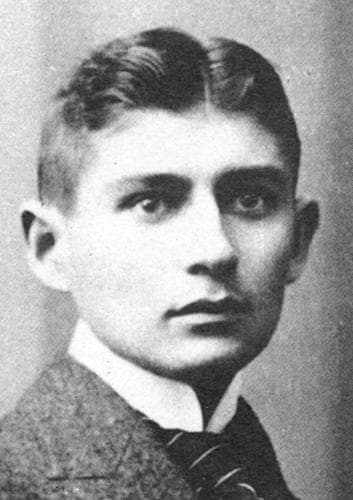
Franz Kafka was a German-speaking Bohemian novelist and short-story writer based in Prague, who is widely regarded as one of the major figures of 20th-century literature. His work fuses elements of realism and the fantastic. It typically features isolated protagonists facing bizarre or surrealistic predicaments and incomprehensible socio-bureaucratic powers. It has been interpreted as exploring themes of alienation, existential anxiety, guilt, and absurdity. His best known works include the novella The Metamorphosis and novels The Trial and The Castle. The term Kafkaesque has entered English to describe absurd situations like those depicted in his writing.

Ashley Antoinette
4.6

Mark McDonald
4.4
Luo Guanzhong
4.4

Mia McKenzie
4.3

Dorothy Parker
4.3

Joaquim Maria Machado de Assis
4.3

James Thurber
4.2

Terry Kay
4.2