“The thing about being alive is that it's a constant battle, a fight against the inevitable.”
— Reflecting on the nature of survival in a post-apocalyptic world.

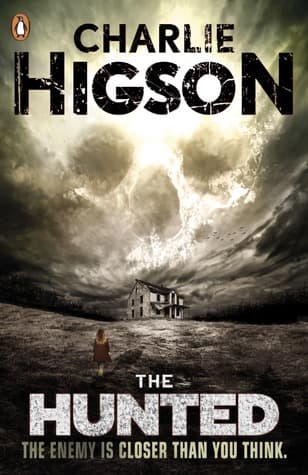
Charlie Higson (2014)
Genre
Romance
Reading Time
11 hours 0 min
Key Themes
See below
Sign in to track this book
A lone girl and her mysterious rescuer navigate a dangerous countryside while a determined boy fights through infected hordes to find her, all as the infected converge on London.
Ella, separated from her group and lost in the countryside, is trapped in a farmhouse under siege by Sicks. A silent, masked figure, Scarface, appears, killing the Sicks with brutal efficiency. He rescues Ella, and they flee the burning farmhouse. Ella is initially afraid of Scarface due to his disfigured face and movements, but she quickly realizes he is her only chance of survival. Their journey begins, marked by silence and constant watch against the Sicks.
Back in London, Ed feels guilty and worried for Ella, having been separated from her during an earlier escape attempt. Despite the dangers of leaving the fortified London borough, Ed decides he must find her. He tells his friend Small Sam, who tries to dissuade him but understands Ed's resolve. Ed begins preparing, gathering supplies and studying maps, knowing the journey will be dangerous. His belief that Ella is alive and needs him strengthens his purpose in the bleak city.
Across the countryside, a disturbing event begins: Sicks are inexplicably drawn towards London. This is not random; it is a massive, coordinated migration, like an unstoppable tide. Survivors witness this horrifying movement, realizing that whatever force drives the Sicks is powerful and relentless. This migration creates a threat, as it funnels the most dangerous creatures directly to the largest concentration of children, trapping them. The 'Calling' of the Sicks becomes a terrifying mystery, changing survival for everyone.
As Ella and Scarface travel, fragmented flashbacks reveal Scarface's past. He was once a boy named David, living with his family in the early days of the sickness. He saw his parents succumb to the disease and made difficult choices to survive. His disfigured face resulted from a horrific encounter with Sicks, leading to his silent, hardened demeanor. These glimpses into his history humanize him, explaining his survival skills and trauma, especially his inability to speak due to a past injury or psychological shock.
Ed, with Small Sam and a small group of other survivors, tries to break out of London. Their escape is dangerous, as the city's outer districts are overrun by Sicks due to the migration. They have many close calls, navigating destroyed streets and abandoned buildings. Their journey is complicated by internal disagreements and the constant threat of Sicks or other hostile survivor groups. Ed's leadership is tested as they face dwindling supplies and the psychological toll of constant fear, pushing them to their limits.
During their travels, Ella and Scarface find a small, isolated community of child survivors led by Jess, a pragmatic and wary girl. Jess's group is suspicious of outsiders, especially Scarface. While Ella tries to build trust, Scarface's silent, protective nature is misunderstood as aggression. Tensions rise, leading to a confrontation. Despite initial mistrust, the growing threat of migrating Sicks forces the groups to consider a temporary alliance. Ella acts as a bridge, trying to clarify Scarface's intentions and convince Jess's group of their shared danger.
As the plot continues, the sheer number of Sicks heading towards London becomes an apocalyptic sight. Ella and Scarface, and later Ed's group, witness rivers of Sicks flowing across the landscape, an endless tide. This gathering shows a terrifying, almost organized intelligence behind the Sickness, far beyond mere wandering. The survivors realize no conventional defenses will hold against such numbers. This mass movement is a game-changer, indicating a new, more dangerous phase in the war against the Sicks, forcing everyone to reconsider their survival strategies.
Ed's group, having made progress out of London, finds itself on a collision course with the migrating Sicks. Simultaneously, Ella and Scarface, with Jess's group, are also caught in the periphery of this movement. There are moments where their paths almost cross, subtle signs like discarded items or recent tracks suggesting other survivors. However, the overwhelming and chaotic flow of the Sicks acts as a barrier, preventing their reunion. The proximity creates a sense of tragic irony, as they are so close yet so far, highlighting the vastness of the danger separating them.
In a confrontation with a massive horde of Sicks, Scarface shows incredible bravery, putting himself in extreme danger to protect Ella and the others. He uses his skills and knowledge of the Sicks to create a diversion or hold off an attack, allowing Ella and Jess's group to escape. During this desperate struggle, Scarface is gravely injured, or his fate is left ambiguous, cementing his role as a tragic hero. In the aftermath, Ella, distraught but safe, is unexpectedly reunited with Ed, who, against all odds, has navigated the chaos and found her. Their reunion is a mix of relief and sorrow, overshadowed by Scarface's sacrifice.
As the story ends, subtle clues and observations begin to explain the 'Calling' drawing all the Sicks towards London. It is suggested that the Sicks might not be entirely mindless, or that a more powerful variant of the sickness is emerging, capable of organizing them. Some survivors hypothesize about a central 'hive mind' or a specific location in London acting as a beacon. While the full truth is not revealed, the implication is that the Sicks are evolving, becoming a more sophisticated and coordinated threat. This partial revelation sets the stage for the next, and final, book, deepening the mystery and the stakes.
The Protagonist
Ella evolves from a vulnerable, lost girl to a more hardened and pragmatic survivor, while still retaining her compassion and leadership qualities.
The Supporting/Anti-hero
Scarface begins as an enigmatic, terrifying figure and is gradually revealed as a deeply traumatized but heroic individual, culminating in a selfless act.
The Protagonist
Ed's arc is defined by his unwavering quest, solidifying his leadership and demonstrating his profound loyalty and resilience.
The Supporting
Small Sam's arc reinforces his role as a loyal friend, demonstrating his courage and resourcefulness in the face of extreme danger.
The Supporting
Jess learns to overcome some of her ingrained mistrust, forming an uneasy alliance for mutual survival.
The Antagonists
The Sicks evolve from a chaotic, localized threat to a unified, migrating force, indicating a new, more dangerous phase of the sickness.
This theme explores how humanity is both lost and kept in the face of apocalypse. The Sicks show ultimate dehumanization, twisted into monstrous versions of their former selves. In contrast, characters like Ella and Ed fight to keep their empathy, loyalty, and compassion, even when forced to commit brutal acts for survival. Scarface's journey, from a traumatized boy to a silent protector, shows the struggle to remain human when stripped of everything. The children's constant battle against the Sicks highlights civilization's fragility and the lasting spirit of human connection.
“'We weren't just kids anymore. We were something else. Something harder. But we still had to remember who we were, or there'd be nothing left worth saving.'”
The novel constantly forces characters to make difficult choices between what is needed for survival and what is morally right. Ed's decision to leave London's safety to find Ella, risking his own life and those of his companions, directly addresses this theme. Similarly, Jess's initial mistrust of Ella and Scarface, driven by a need to protect her group, highlights the difficult compromises survivors make. Scarface's brutal efficiency in dispatching Sicks, though horrifying, is a necessary evil. The book questions how much of one's humanity must be sacrificed to simply stay alive.
“'Sometimes, to live, you had to do things that made you feel dead inside.'”
Despite the brutal world, the bonds of friendship, loyalty, and love are strong driving forces. Ed's unwavering quest to find Ella, and Small Sam's loyalty to Ed, are central to the plot. Ella's growing trust in Scarface, despite his intimidating appearance, forms a deep, protective bond. These relationships provide hope and purpose where despair is common. They show that even when society has crumbled, human connection remains a fundamental need and a source of strength, enabling characters to face overwhelming odds and endure suffering.
“'Even when the world was gone, some things still mattered. Some people still mattered.'”
'The Hunted' introduces a terrifying new aspect to the Sickness with the mass migration towards London. This 'Calling' means the threat is evolving, becoming more organized and potentially more intelligent than previously understood. It creates a sense of dread and mystery, as the children face an enemy that is numerous, savage, and capable of coordinated action. This theme explores the fear of the unknown and the constant adaptation needed to survive against an unpredictable and escalating foe, forcing survivors to question everything they knew about the Sicks.
“'This wasn't just random. This was… a tide. And it was coming for us all.'”
A mysterious force drawing all Sicks towards London, escalating the threat.
This device serves as the primary catalyst for the escalating tension and the converging storylines. The 'Calling' transforms the Sicks from a localized, chaotic threat into a unified, overwhelming force. It acts as a ticking clock, creating urgency for both Ella and Ed's groups as they navigate a countryside increasingly swamped by the migrating infected. It also introduces a profound mystery about the nature of the sickness, suggesting a new level of intelligence or control, setting up future revelations and raising the stakes for the entire series.
Used to reveal Scarface's tragic backstory and explain his unique characteristics.
This device is crucial for developing the character of Scarface, who is otherwise silent and enigmatic. Through fragmented flashbacks, the reader gains insight into his traumatic past, including the loss of his family and the events that led to his disfigurement and muteness. These glimpses humanize him, transforming him from a terrifying figure into a tragic hero. They also provide context for his exceptional survival skills and his deep-seated protectiveness, allowing the reader to empathize with a character who cannot verbally express himself.
The rural landscape, initially perceived as safe, becomes more dangerous than the city.
This device subverts the common post-apocalyptic trope of the countryside being a refuge from urban danger. In 'The Hunted,' the rural areas are depicted as vast, desolate, and increasingly overrun by Sicks, especially due to the 'Calling.' This creates a sense of vulnerability and isolation for Ella and Scarface, contrasting sharply with the relative, albeit dangerous, safety of London's fortified zones. It heightens the stakes for Ed's journey out of the city and emphasizes that no place is truly safe, forcing characters to constantly adapt to an ever-changing threat landscape.
Ed's relentless pursuit of Ella drives a significant portion of the narrative.
This classic narrative device provides a clear goal and motivation for Ed's character, propelling his storyline forward through immense danger. His quest to find Ella not only showcases his loyalty and determination but also allows the reader to experience the wider, increasingly perilous world outside London. It creates parallel narratives that eventually converge, building anticipation and emotional resonance. The search also symbolizes the enduring human need for connection and purpose in a world stripped of meaning, giving the arduous journey a deeper significance.
“The thing about being alive is that it's a constant battle, a fight against the inevitable.”
— Reflecting on the nature of survival in a post-apocalyptic world.
“Love, in a world like this, wasn't a luxury. It was a weapon. A reason to keep fighting.”
— Contemplating the role of love amidst constant danger.
“Every day was a gift, wrapped in razor wire and uncertainty.”
— Describing the precariousness of daily existence.
“Hope was a dangerous thing. It could keep you going, or it could break your heart.”
— Mulling over the double-edged nature of hope.
“The past was a ghost, always at your heels, but you couldn't let it catch you.”
— Thinking about moving forward despite past traumas.
“He looked at her, and in that moment, the world didn't feel quite so broken.”
— A character finding solace and connection in another.
“Sometimes, the only way to survive was to forget who you used to be.”
— Considering the necessity of adapting to a brutal new reality.
“Their hands met, a spark in the darkness, a promise whispered without words.”
— A pivotal moment of intimacy and connection between two characters.
“Fear was a constant companion, but it wasn't the boss of her.”
— A character asserting their strength against overwhelming fear.
“Trust was a fragile thing, easily shattered, hard to rebuild.”
— Reflecting on the challenges of forming bonds in a treacherous environment.
“Even in the ruins, there was beauty, if you knew where to look.”
— Finding moments of appreciation amidst widespread destruction.
“He would burn the world for her, if it meant keeping her safe.”
— A character's fierce protective instinct towards their loved one.
“The silence was louder than any scream, filled with all the things they hadn't said.”
— A moment of unspoken tension or emotion between characters.
“Their scars told stories no words ever could.”
— Recognizing the shared history and experiences reflected in physical and emotional scars.
Ready to see how well you understood this book? Take our interactive quiz with 10 questions.

Charlie Higson is a British author, best known for his thrilling Young Adult horror series, 'The Enemy'. He also penned the popular 'Young Bond' series, including titles like 'SilverFin' and 'Hurricane Gold'. Higson's work often features suspenseful plots and relatable teenage protagonists facing extreme situations.