“If you shut me out, I shall stand outside and knock.”
— Gregers to Hjalmar, expressing his determination to reveal the truth.

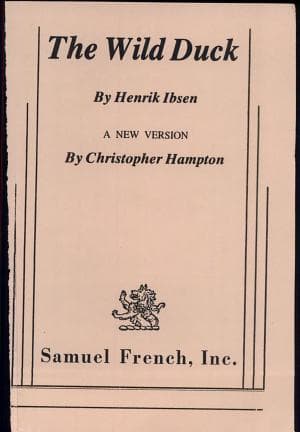
Henrik Ibsen (2014)
Genre
General
Reading Time
128 min
Key Themes
See below
Sign in to track this book
An idealistic son shatters the fragile peace of his childhood friend's home by unearthing a buried truth, forcing the question of whether some illusions are better left undisturbed, even at the cost of honesty.
The play opens with a dinner party at the home of Hakon Werle, a wealthy merchant. Hjalmar Ekdal, a photographer and old friend of Werle's son, Gregers, is among the guests. Gregers Werle, recently returned from a long stay in the mountains, is bothered by the wealth and superficiality he sees. He confronts his father, Hakon, about his past wrongs, especially concerning Old Ekdal (Hjalmar's father), who was wrongly imprisoned as Werle's business partner. Gregers also observes the seemingly content Hjalmar, unaware of the deep lies that support his home life. This meeting sets the stage for Gregers's misguided plan to 'enlighten' Hjalmar.
Disgusted by his father's actions and the moral decay he sees, Gregers Werle decides to leave his comfortable life and pursue a higher goal: revealing the truth. He moves into the Ekdal family's apartment, which is in the attic of his father's building. Gregers plans to show Hjalmar the deception he believes surrounds him. He sees Hjalmar's life as built on a lie, especially regarding his marriage to Gina and Hedvig's paternity. Gregers believes that by revealing the 'truth,' he can free Hjalmar and guide him to true happiness, a concept he calls an 'ideal demand.'
The Ekdal family lives in a small but comfortable attic apartment. Hjalmar Ekdal, a somewhat lazy and self-absorbed photographer, dreams of inventing something great but mostly procrastinates. His practical wife, Gina, runs the photography business and manages the house. Their fourteen-year-old daughter, Hedvig, is sensitive and imaginative; her eyesight is failing, a hereditary condition. The attic also holds various animals, including chickens, rabbits, pigeons, and the 'wild duck.' Old Ekdal, Hjalmar's father, treats the duck as a precious pet. This attic sanctuary represents a world of comforting illusion for the family.
Old Ekdal, Hjalmar's father, is a broken man, shamed by a past scandal where he was imprisoned for illegal timber felling, a crime arranged by Hakon Werle. He spends his days in the attic, dressed in his old lieutenant's uniform, hunting imaginary bears and other game among the rafters and in the attic's 'forest.' The wild duck, a wounded bird that Hakon Werle once shot, becomes a strong symbol for Old Ekdal, representing his own brokenness and resilience. He and Hedvig share a special bond over caring for these animals, finding refuge from the harsh realities outside.
Driven by his 'ideal demand,' Gregers begins to question Gina Ekdal about her past. He learns that Gina was once a housekeeper for Hakon Werle before marrying Hjalmar. Through subtle questions and direct accusations, Gregers uncovers the truth: Gina had a relationship with Hakon Werle, and it is strongly suggested that Hedvig is Hakon's daughter, not Hjalmar's. Gina, always practical and protective of her family's peace, tries to avoid Gregers's questions, understanding how destructive such revelations could be. Gregers, however, sees this as more proof of the lies in the Ekdal household.
Against Gina's wishes and in his misguided pursuit of truth, Gregers tells Hjalmar the devastating news about Gina's past with Hakon Werle and the strong possibility that Hedvig is not his biological daughter. Hjalmar, a man who values his self-image as a loving father and an ingenious inventor, is shattered by this news. His world, built on what he believed were pure and noble foundations, collapses. He feels betrayed by Gina and views Hedvig, whom he previously adored, with suspicion and resentment, believing his 'sacred calling' as a father has been made a mockery.
Overwhelmed by the 'truth' Gregers has revealed, Hjalmar withdraws into self-pity and anger. He distances himself from Gina and, most cruelly, from Hedvig. He treats Hedvig with coldness and suspicion, questioning her paternity and rejecting her affection. Hedvig, who idolizes her father, is deeply hurt by his sudden change. She struggles to understand why her father, who once cherished her, now pushes her away. Her fragile world begins to fall apart, mirroring the fate of the wild duck, which is also a creature of the attic, vulnerable to outside forces.
Distraught by her father's rejection and desperate to win back his love, Hedvig seeks advice from Gregers. Gregers, still holding to his 'ideal demand' and believing in the purifying power of sacrifice, suggests that Hedvig make a grand gesture to prove her devotion to Hjalmar. He subtly implies that if she were to sacrifice the wild duck, her most cherished possession, it would show her love for her father and perhaps reconcile them. Hedvig, misunderstanding his intentions as a way to restore her father's affection, takes his advice seriously.
In a desperate attempt to win back her father's love, Hedvig goes to the attic with the wild duck and her grandfather's pistol. She intends to shoot the wild duck as a sacrifice, believing it will prove her loyalty and restore her father's affection. However, a gunshot rings out, and Hedvig is found dead, having shot herself in the chest. Her death is a tragic result of Gregers's misguided idealism and Hjalmar's self-absorbed despair. The family is left shattered, dealing with the irreversible consequences of the 'truth' Gregers so relentlessly pursued.
Hedvig's death leaves the Ekdal family and Gregers in shock and despair. Hjalmar is consumed by guilt and regret, realizing too late the depth of his daughter's love and his own cruel rejection. Gina, ever the stoic pragmatist, is heartbroken but firm in her grief. Gregers, finally facing the devastating outcome of his 'ideal demand,' must acknowledge the destructive power of his relentless pursuit of truth. Dr. Relling, the cynical and realistic doctor, condemns Gregers's actions, emphasizing the necessity of 'life-lies' for human happiness. The play ends with the characters left to rebuild their shattered lives, with no easy answers or solutions.
The Protagonist
He begins as a content, if self-absorbed, man, but Gregers's revelations shatter his illusions, leading to a cruel rejection of his daughter and ultimately, profound guilt and despair.
The Antagonist/Catalyst
He begins as a self-righteous idealist, convinced of his mission, but ends in despair and self-reproach, realizing the tragic consequences of his actions.
The Supporting
She remains steadfast and practical throughout, acting as the family's anchor, but is ultimately devastated by Hedvig's death, though she retains her quiet strength.
The Supporting/Tragic Victim
She begins as a cherished and imaginative girl, but her father's rejection and Gregers's influence lead her to a desperate, self-sacrificing act.
The Supporting
He remains largely static, finding his escape in the attic, though his presence underscores the past wrongs.
The Supporting
He consistently maintains his cynical view on human nature and the necessity of illusion, serving as a critical commentator on the unfolding drama.
The Supporting/Antagonist (off-stage influence)
His past actions drive much of the plot, but he remains largely static, representing the unpunished wealthy.
This is the main conflict. Gregers Werle's rigid idealism, his 'ideal demand' for absolute truth, is shown to be destructive. He believes that removing comforting illusions will lead to freedom and true happiness. However, Dr. Relling argues passionately for the necessity of 'life-lies' – the self-deceptions and comforting fantasies that allow people like Hjalmar and Old Ekdal to endure and find meaning. Hedvig's tragic death, a direct result of Gregers's actions, powerfully condemns absolute idealism and highlights the fragile but vital role of illusion in human well-being. The Ekdal attic, with its wild duck and imaginary forest, is a perfect metaphor for this necessary illusion.
“If you take away the life-lie from an average person, you take away his happiness as well.”
The past affects the present for all characters. Hakon Werle's past wrongs – his exploitation of Old Ekdal and his relationship with Gina – are the root cause of the Ekdal family's 'life-lie.' Old Ekdal is permanently scarred by his imprisonment, living in a fantasy world. Hjalmar's comfortable existence is built on the consequences of these past events, which he largely ignores. Gregers himself is shaped by his resentment of his father's past. The play shows how secrets and unaddressed injustices from the past inevitably resurface, often with devastating consequences, especially when forcibly revealed.
“There are some things that should never be spoken, no matter how true they are.”
The question of Hedvig's paternity is a key element, driving much of the conflict. The revelation that she might be Hakon Werle's daughter, not Hjalmar's, shatters Hjalmar's sense of identity as a loving father and undermines his entire self-perception. This theme explores how biological lineage can affect one's sense of self and belonging within a family. Hedvig's identity is tied to her father's love, and when that love is questioned due to paternity doubts, her very existence feels invalidated, leading to her desperate act. The play suggests that emotional bonds can be more defining than biological ones, yet the biological 'truth' has destructive power.
“My child! I have no child!”
The theme of sacrifice, especially Hedvig's, is central to the play's tragic end. Gregers's 'ideal demand' subtly pushes Hedvig towards a sacrificial act, suggesting that a grand gesture of devotion could redeem her in her father's eyes. Hedvig's desire to sacrifice the wild duck, her most cherished possession, is a desperate attempt to win back Hjalmar's love and 'redeem' herself from the perceived burden of her questionable paternity. Her ultimate self-sacrifice, however, is not redemptive but tragically pointless, highlighting the futility of such acts when driven by misguided idealism and self-interest rather than true understanding.
“I want to save my father. I want to save him and his honour.”
A central symbol representing the characters' woundedness and their need for illusion.
The wild duck, a wounded bird living in the Ekdal's attic, is a powerful and multi-layered symbol. It represents Old Ekdal's own brokenness and resilience, having been shot by Hakon Werle but finding refuge. For Hedvig, it symbolizes her special bond with her grandfather and a cherished part of her innocent world. More broadly, the wild duck symbolizes all the characters who have been 'wounded' by life or by others (like Old Ekdal and Hedvig) and who find solace in the comforting 'attic' of illusion. Its eventual death, intended as a sacrifice, tragically mirrors Hedvig's own fate, signifying the destruction of innocence and the impossibility of true escape from harsh realities.
A physical and symbolic refuge where characters escape reality through fantasy.
The Ekdal's attic, transformed into a miniature 'forest' with animals, serves as a crucial plot device and symbol. It is a physical space where Old Ekdal can relive his hunting days and where Hedvig finds wonder and solace. Symbolically, it represents a sanctuary, a 'life-lie' in microcosm, where characters can escape the harsh realities of the outside world and indulge in comforting illusions. It is a place of imagination and refuge, but also a fragile one, vulnerable to the intrusion of 'truth' from the outside. The attic's existence highlights the human need for escape and fantasy.
A symbolic physical ailment that underscores themes of truth, illusion, and lineage.
Hedvig's progressively failing eyesight, a hereditary condition, serves as a potent plot device and symbol. Physically, it links her to Hakon Werle, as the condition runs in his family, subtly hinting at her true paternity. Symbolically, the blindness represents the characters' inability or unwillingness to see the truth, both about themselves and their circumstances. Hjalmar is 'blind' to his own self-delusions, and Gregers is 'blind' to the destructive potential of his idealism. Hedvig's failing sight highlights the vulnerability of those who are most innocent and exposed to the 'truth' that others prefer to ignore.
A recurring prop that foreshadows the play's tragic climax.
Old Ekdal's old pistol is introduced early in the play as a prop for his imaginary hunting games in the attic. Its presence serves as a subtle but persistent element of foreshadowing. It's a loaded weapon in a literal and metaphorical sense, hinting at potential violence or tragedy within the confined and emotionally charged space of the Ekdal home. When Hedvig takes the pistol with the intention of sacrificing the wild duck, the audience is prepared for a tragic outcome, though the specific nature of her self-sacrifice remains a shocking climax. The pistol represents the dangerous reality lurking beneath the surface of the Ekdal's illusions.
“If you shut me out, I shall stand outside and knock.”
— Gregers to Hjalmar, expressing his determination to reveal the truth.
“What does it profit a man if he gains the whole world and loses his own soul?”
— Gregers, a biblical allusion, arguing for moral integrity.
“Take the life-lie away from the average man, and you take away his happiness as well.”
— Dr. Relling's cynical view on the necessity of self-deception.
“I will not let you go until you have made it all good again!”
— Hedvig to Hjalmar, pleading for his love and acceptance after his rejection.
“It's a strange thing, but I always feel so much better when I have a secret.”
— Hedvig, reflecting on the comfort she finds in her inner world.
“The wild duck has dived to the bottom. But it will come up again.”
— Gregers, expressing hope for Hjalmar's eventual realization and change.
“There are certain things in this world that are best left undisturbed.”
— Dr. Relling, cautioning against Gregers's meddling with people's illusions.
“My home is here, in the attic, with the wild duck.”
— Hedvig, emphasizing her connection to her imaginary world and the duck.
“The ideal demands payment.”
— Gregers, suggesting that pursuing an ideal often comes at a cost.
“It's all over with me now. I don't care about anything anymore.”
— Hedvig, in despair after Hjalmar's rejection and her father's harsh words.
“I am not a man who runs away from his responsibilities.”
— Hjalmar, ironically, trying to maintain an image of himself as responsible.
“Happiness is a kind of intoxication. It's best not to overdo it.”
— Dr. Relling, offering a pragmatic and somewhat cynical view on happiness.
“I shall be a great inventor. I shall devote my life to it.”
— Hjalmar, often making grand, unfulfilled pronouncements about his future.
“The truth is a terrible thing when it's not softened by illusion.”
— Dr. Relling, reinforcing his belief in the necessity of illusions for human well-being.
Ready to see how well you understood this book? Take our interactive quiz with 10 questions.
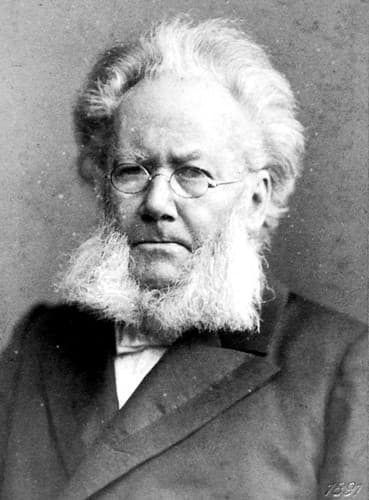
Henrik Johan Ibsen was a Norwegian playwright and theatre director. As one of the founders of modernism in theatre, Ibsen is often referred to as "the father of realism" and one of the most influential playwrights of his time. His major works include Brand, Peer Gynt, An Enemy of the People, Emperor and Galilean, A Doll's House, Hedda Gabler, Ghosts, The Wild Duck, When We Dead Awaken, Rosmersholm, and The Master Builder. Ibsen is the most frequently performed dramatist in the world after Shakespeare, and A Doll's House was the world's most performed play in 2006.