Zen's Unspeakable Nature
The core of Zen cannot be grasped through intellect or language.
Quote
Zen, in its essence, is a liberation from the fetters of language and conceptual thinking.
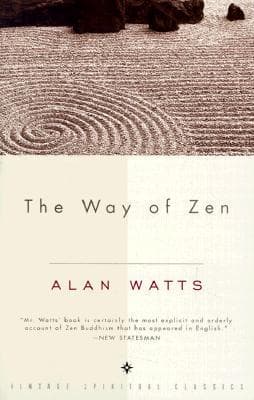
Watts introduces Zen's central paradox: it cannot truly be expressed with words or logic. Trying to define Zen precisely misses its point. It is not a philosophy, a religion in the Western sense, or a set of rules, but an experience, a way of seeing. This resistance to intellectual capture makes Zen both freeing and difficult for Westerners used to systematic thought. The 'way' of Zen is about direct awareness, not theoretical knowledge, emphasizing 'no-mind' (wu-hsin) or 'thinking without thinking.' It moves away from the idea that t...
Supporting evidence
Watts consistently highlights the Zen masters' use of koans and mondo (dialogues) not as puzzles to be solved logically, but as tools to break the student's reliance on intellect and push them towards direct insight. He cites examples of masters striking students or giving nonsensical answers to profound questions to short-circuit conceptual thought.
Apply this
Practice mindfulness and meditation not as a means to achieve a specific mental state, but as a way to observe thoughts without judgment and to cultivate a direct, unmediated awareness of the present moment. Challenge your own assumptions that understanding comes solely through verbal explanation or logical deduction.