BookBrief
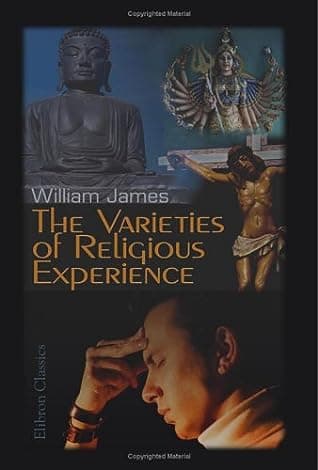
The Varieties of Religious Experience cover
Archivist's Choice

The Varieties of Religious Experience

William James (1817)

Genre

Psychology / History / Spirituality / Science / Philosophy

Reading Time

12-15 hours

Key Themes

See below

Track Your Reading

Sign in to track this book

William James, a psychologist, examines individual experiences of faith, showing a range of human spirituality that needs tolerance and respect.

Core Idea

William James's "The Varieties of Religious Experience" says that religious experiences, though varied in outward forms and beliefs, share a common psychological core. This core comes from individual subjective feeling, not from intellectual rules or church structures. James argues that these experiences, especially those involving an 'unseen order,' often help people. They can change a person's outlook, give them more purpose, and help them deal with suffering. He suggests that the usefulness and power of these experiences, not their objective truth, make them important for human life and worth studying.
Reading time
12-15 hours
Difficulty
Hard
✓ Read this if...
You are interested in understanding religion from a psychological and philosophical perspective, focusing on individual experience rather than dogma or institutions. You want to explore the nature of faith, mysticism, and conversion through an empirical lens.
✗ Skip this if...
You are looking for a theological defense or critique of specific religions, or a purely historical account. If you prefer concise, modern self-help, this dense philosophical text might not be for you.

Core idea

The central argument and framework that powers the entire book.

William James's "The Varieties of Religious Experience" says that religious experiences, though varied in outward forms and beliefs, share a common psychological core. This core comes from individual subjective feeling, not from intellectual rules or church structures. James argues that these experiences, especially those involving an 'unseen order,' often help people. They can change a person's outlook, give them more purpose, and help them deal with suffering. He suggests that the usefulness and power of these experiences, not their objective truth, make them important for human life and worth studying.

At a glance

Reading time

12-15 hours

Difficulty

Hard

Read this if...

You are interested in understanding religion from a psychological and philosophical perspective, focusing on individual experience rather than dogma or institutions. You want to explore the nature of faith, mysticism, and conversion through an empirical lens.

Skip this if...

You are looking for a theological defense or critique of specific religions, or a purely historical account. If you prefer concise, modern self-help, this dense philosophical text might not be for you.

Key Takeaways

1

Religion's Personal Core

True religion resides in individual experience, not institutional dogma.

Quote

The feelings, acts, and experiences of individual men in their solitude, so far as they apprehend themselves to stand in relation to whatever they may consider the divine.

James changes how we define religion. He moves the focus from churches and beliefs to individuals' deeply personal, inner experiences. He says religion's core is in the subjective feelings, perceptions, and actions that connect a person to what they see as divine. This is true regardless of specific beliefs or group practices. This psychological view allows for a wide understanding of religious events. It recognizes the variety of spiritual encounters without favoring any one tradition. By focusing on individual experience, James open...

Supporting evidence

James's opening definition of religion as 'the feelings, acts, and experiences of individual men in their solitude' sets the stage for his entire inquiry, distinguishing his approach from sociological or theological studies.

Apply this

Reflect on your own 'solitude' and what feelings or experiences connect you to something larger than yourself. Journal about these moments, observing them without judgment or the need to fit them into pre-existing religious categories.

personal-religionsubjective-experiencepsychology-of-religion
2

The Healthy-Minded vs. The Sick Soul

Two distinct psychological temperaments shape religious outlooks.

Quote

The world is all the richer for having a devil in it, if the devil is only there to be finally overcome.

James identifies two main psychological types that greatly affect how people approach and experience religion: the 'healthy-minded' and the 'sick soul.' The healthy-minded are naturally hopeful. They tend to see good in the world, and religion often seems like a natural part of their positive outlook. They usually downplay evil and suffering, focusing on divine kindness and the joy of life. In contrast, the 'sick soul' is very aware of suffering, evil, and life's natural flaws. For them, religion often meets a deep need for redemption...

Supporting evidence

James dedicates entire chapters to 'The Religion of Healthy-Mindedness' and 'The Sick Soul,' providing numerous anecdotal accounts and philosophical discussions to illustrate these two poles of human temperament and their religious implications.

Apply this

Identify whether your natural temperament leans more towards healthy-mindedness or the sick soul. Consider how this predisposition has shaped your past or current spiritual beliefs and practices, and explore how understanding both perspectives can enrich your empathy for others' spiritual journeys.

healthy-mindednesssick-soulreligious-temperamentoptimism-pessimism
3

Conversion as a Psychological Pivot

Religious conversion is a profound and often sudden psychological transformation.

Quote

To be converted, to be regenerated, to receive grace, to experience religion, to gain an assurance, are so many phrases which denote the process, gradual or sudden, by which a self hitherto divided, and consequently unhappy, becomes unified and consciously right, either by its own efforts or by the grace of a higher power.

James sees religious conversion as more than a religious event; it is a key psychological event. He carefully studies the process, which can be slow or sudden. In it, a person's previously divided self finds a new sense of unity and purpose, often with strong emotional experiences. This change involves a shift in the 'usual center of their personal energy,' leading to new reasons, values, and a clear worldview. He looks at different kinds of conversion, from conscious choices to involuntary, often spiritual, experiences. He stresses t...

Supporting evidence

James cites numerous conversion narratives, including those of famous figures like Tolstoy, as well as accounts from his own correspondents, detailing the sudden shifts in perspective, emotional intensity, and subsequent behavioral changes.

Apply this

Reflect on any significant shifts in your own values, beliefs, or life direction. Consider if these changes, even if not explicitly 'religious,' share psychological characteristics with the conversions James describes, such as a re-centering of purpose or a newfound sense of unity.

religious-conversionpsychological-transformationspiritual-awakeningunified-self
4

Mysticism's Four Marks

Mystical experiences share universal characteristics, transcending religious traditions.

Quote

They are states of insight into depths of truth unplumbed by the discursive intellect. They are illuminations, revelations, full of significance and importance, all inarticulate though they remain; and as a rule they carry with them a curious sense of authority for after-time.

James looks at mystical experiences. He says that despite their varied cultural and religious backgrounds, they have four main features: they cannot be fully put into words (ineffability), they give deep insights into truth (noetic quality), they are usually short (transiency), and the person feels taken over by a higher power (passivity). He suggests that these shared features point to a common underlying psychological, and perhaps spiritual, reality. By looking at accounts from Christian saints, Sufi mystics, and Eastern meditators,...

Supporting evidence

James analyzes a wide array of mystical accounts, from St. Teresa of Ávila and Meister Eckhart to lesser-known individuals, identifying these four 'marks' as recurring patterns across different traditions.

Apply this

When encountering accounts of profound spiritual or 'peak' experiences, look for these four marks. Consider how such experiences, even if not explicitly mystical, might offer insights that transcend ordinary language or rational thought.

mystical-experienceineffabilitynoetic-qualityspiritual-insighttranscendent-experience
5

The Fruits, Not the Roots

The value of religion is judged by its practical effects on life, not its origins.

Quote

By their fruits ye shall know them, not by their roots.

James clearly states that the best way to judge a religious experience is by its 'fruits' — its practical, ethical, and psychological results in a person's life. This is more important than its 'roots' — its possible psychological or physical origins. He rejects the idea that religious experiences can be dismissed by saying they are only brain states or illnesses. While some religious events might have unusual physical links, James argues that an experience's truth or value comes from its ability to help moral action, strength, joy, a...

Supporting evidence

James critiques 'medical materialism' by arguing that while the 'roots' (e.g., physiological states) of an experience are interesting to science, they do not invalidate the 'fruits' (e.g., moral transformation) of that experience. He provides examples of individuals whose lives were demonstrably improved by their religious experiences, regardless of their origins.

Apply this

When evaluating any belief system or spiritual practice, focus less on its historical claims or origins and more on its tangible impact on your own life and the lives of others. Does it promote kindness, resilience, growth, and connection?

pragmatismreligious-valueethical-impactmedical-materialismconsequences-of-belief
6

The Subconscious and the Divine

The subconscious mind serves as a conduit for spiritual impulses.

Quote

The further limits of our being plunge, it seems to me, into an altogether other dimension of existence from the sensible and continuous world.

James suggests that the subconscious, or 'subliminal,' self is important in religious experience. It acts as a link between our normal awareness and a 'wider self' or even a divine reality. He thinks that many religious insights, inspirations, and feelings of connection to a higher power might come from this deeper, often hidden, part of our minds. This does not necessarily reduce religion to just psychological events. Instead, it raises the subconscious as a possible point of contact with spiritual truths. James's study of the subcon...

Supporting evidence

James frequently refers to the 'subliminal self' as a source of religious inspiration, intuitions, and even 'invasions' of consciousness, drawing on contemporary psychological theories and anecdotal accounts of spontaneous spiritual insights.

Apply this

Pay attention to your intuitions, dreams, and sudden insights, especially those that carry a sense of profound meaning or guidance. Consider how these might be expressions of a deeper, subconscious part of yourself interacting with a wider reality.

subconscioussubliminal-selfwider-selfdivine-connectionintuition
7

A Pluralistic Universe

The divine is multifaceted, inviting diverse human interpretations and missions.

Quote

The divine can mean no single quality, it must mean a group of qualities, by being champions of which in alternation, different men may all find worthy missions.

James supports a very open view of the divine and religious truth. He argues against the idea of a single God or a single path to spiritual fulfillment. Instead, he suggests that 'the divine' includes many qualities. Different people, with their unique personalities and experiences, will naturally connect with and show different parts of this many-sided reality. This openness is not just tolerance but active respect. It recognizes that diverse religious expressions are valid and needed, each showing a part of the ultimate truth. This ...

Supporting evidence

James's entire work is a testament to religious pluralism, as he draws examples from Christianity, Buddhism, Islam, and various individual experiences, demonstrating that the 'divine' manifests in countless forms and inspires varied missions.

Apply this

Actively seek to understand the spiritual perspectives of others, even those that differ radically from your own. Recognize that their 'worthy mission' might be to champion a different, yet equally valid, aspect of the divine or ultimate reality.

religious-pluralismdivine-multiplicityspiritual-tolerancediverse-missions
8

The Will to Believe

Faith is a rational choice when evidence is inconclusive and the stakes are high.

Quote

Our passional nature not only lawfully may, but must, decide an option between propositions, whenever it is a genuine option that cannot by its nature be decided on intellectual grounds.

While not a main topic in Varieties, James's earlier essay 'The Will to Believe' supports much of his approach to religious experience. He argues that when there is not enough proof to make a clear choice, but the choice itself is 'forced, living, and momentous,' it is not only allowed but often necessary for our 'passional nature' (our feelings, hopes, and desires) to influence our belief. For James, believing in certain religious or moral ideas, even without full proof, can be a rational act, especially if that belief has good, li...

Supporting evidence

While 'The Will to Believe' is a separate essay, its core argument about the legitimacy of choosing belief in the face of insufficient evidence informs James's acceptance of diverse religious experiences as valid, even if their 'roots' are not scientifically verifiable. He implicitly applies this principle when evaluating the 'fruits' of religious life.

Apply this

When faced with significant life choices where purely rational evidence is lacking, consider what belief, if acted upon, would lead to the most positive and fulfilling outcome for you and others. Embrace the idea that some truths are only accessible through active engagement and belief.

will-to-believepragmatic-belieffaith-as-choicepassional-naturetruth-seeking
9

The Utility of Suffering

Adversity and suffering can be catalysts for profound spiritual growth.

Quote

The world is all the richer for having a devil in it, if the devil is only there to be finally overcome.

James, especially through his look at the 'sick soul,' shows how suffering can lead to change. He suggests that while pain, sorrow, and fear about existence are hard, they can greatly help spiritual growth and the development of a stronger faith. Those who have faced life's darker parts often reach a deeper sense of redemption. They find meaning and purpose that the always 'healthy-minded' miss. This does not mean suffering is good. Instead, it means religion, in its strongest forms, offers a way to deal with and move beyond hardship,...

Supporting evidence

The extensive discussions on 'The Sick Soul' and 'The Divided Self' are replete with examples of individuals who found their deepest spiritual insights and conversions precisely through periods of intense suffering, despair, and mental anguish.

Apply this

When facing personal difficulties, consider how these challenges, while painful, might be an opportunity for deeper reflection, spiritual growth, and the development of greater empathy and resilience. Look for the meaning that can emerge from struggle.

suffering-and-faithspiritual-growthmeaning-in-adversitysick-soulredemption
10

Empirical Psychology of Faith

Religious experience is a legitimate subject for scientific psychological inquiry.

Quote

To the psychologist the religious propensities of man must be at least as interesting as any other of the facts pertaining to his mental constitution.

James's most lasting contribution is establishing the psychology of religion as a real field of study. He argues that religious experiences, though personal and often hard to describe, are observable 'facts about man's mental makeup.' Thus, they can be studied psychologically. By collecting, sorting, and explaining many personal stories, confessions, and life accounts, James showed that religious events could be studied without needing to agree with or deny their religious claims. He approached these experiences with intellectual care...

Supporting evidence

The entire methodology of the book—collecting and analyzing hundreds of individual accounts of religious experiences—serves as evidence for James's commitment to an empirical, psychological approach to religion, treating it as a natural phenomenon.

Apply this

Approach your own spiritual questions and the beliefs of others with a spirit of open inquiry, seeking to understand the psychological and experiential dimensions without immediately resorting to judgment or theological debate. See religious life as a valid expression of human consciousness.

psychology-of-religionempirical-studyscientific-inquiryhuman-consciousnessdescriptive-psychology

Critical analysis

Notable Quotes

The only reason for living is to have our whole nervous system aware and tingling with the sense of it.

From a discussion about the intensity of religious experience and the search for meaning.

Our normal waking consciousness, rational consciousness as we call it, is but one special type of consciousness, whilst all about it, parted from it by the flimsiest of screens, there lie potential forms of consciousness entirely different.

Introducing the idea that human consciousness is not monolithic and that other states exist.

If you have intuitions, it is because you are a thinking being and have been forming them all your life.

Emphasizing the experiential and developmental nature of intuition, rather than it being purely mystical.

The greatest discovery of my generation is that a human being can alter his life by altering his attitudes of mind.

Highlighting the power of mindset and internal change in transforming one's life.

The sway of alcohol over mankind is unquestionably due to its power to stimulate the mystical faculties of human nature, usually crushed to earth by the weight of the material world.

Discussing altered states of consciousness induced by substances and their connection to mystical experiences.

To be converted, to be regenerated, to receive grace, to experience religion, to gain an assurance, are so many phrases which denote the process, gradual or sudden, by which a self hitherto divided, and consciously wrong, inferior and unhappy, becomes unified and consciously right, superior and happy, in consequence of its firmer hold upon religious realities.

Defining conversion experience as a unifying and transformative psychological process.

The world is all the richer for having a devil in it, if only because we can then better appreciate the saints.

A somewhat provocative statement on the necessity of contrast and opposition for understanding good.

Religion, whatever it is, is a man's total reaction upon life.

Offering a broad and inclusive definition of religion beyond institutional dogma.

The value of a religious experience is not to be judged by its origin, but by its fruits.

Arguing for a pragmatic approach to evaluating religious phenomena, focusing on practical outcomes.

The baby, assailed by eyes, ears, nose, skin, and entrails at once, feels it all as one great blooming, buzzing confusion.

Describing the sensory overload and unformed consciousness of an infant, a famous quote from James.

If a certain system of ideas makes you feel better and live a more effective life, it is true for you.

Reflecting on the pragmatic truth of beliefs based on their utility and positive impact.

The highest flights of charity, devotion, trust, patience, and courage are in themselves the strongest arguments for the religious hypothesis.

Suggesting that the moral and psychological fruits of religion provide evidence for its value.

The fact that a person has a religious experience does not prove that God exists, but it does prove that the person had a religious experience.

Distinguishing between the subjective reality of an experience and its objective truth claim.

Not God, but life, more life, a larger, richer, more satisfying life, is in the last analysis the end of religion.

Proposing that the ultimate goal of religious pursuit is the enhancement of life itself.

Quiz

Test Your Knowledge

Ready to see how well you understood this book? Take our interactive quiz with 10 questions.

10
Questions
~5
Minutes
?
Best Score

Key Questions (FAQ)

William James's 'The Varieties of Religious Experience' aims to descriptively survey the religious propensities of individuals from a psychological perspective. It explores religion as a personal, felt experience rather than through institutional or theological definitions, analyzing diverse accounts of spiritual life.

About the author