“Maybe it’s not about finding the person you want to spend the rest of your life with. Maybe it’s about finding the person you want to spend the rest of your life *figuring things out* with.”
— Molly's internal reflection on love and relationships.

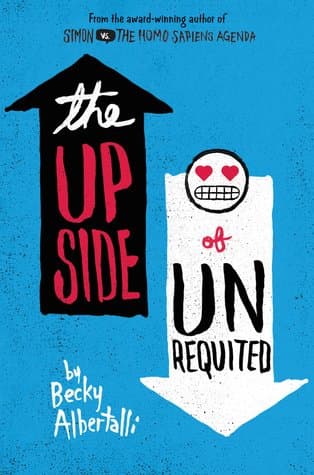
Becky Albertalli (2017)
Genre
Psychology / Young Adult / Romance
Reading Time
360 min
Key Themes
See below
Sign in to track this book
Seventeen-year-old Molly, an expert in secret crushes and the fear of rejection, navigates first love and self-acceptance when her twin finds romance and she's left to choose between a 'perfect' crush and an unexpected, awkward coworker.
Seventeen-year-old Molly Peskin-Suso is an expert in unrequited crushes, having had twenty-six of them without ever confessing her feelings. She carefully writes about these crushes in a notebook, preferring the safety of fantasy over the risk of rejection, especially as a plus-sized girl. Her twin sister, Cassie, a confident and outgoing lesbian, constantly tells Molly to be more assertive. The sisters' close bond changes when Cassie meets and quickly falls for Mina, a charming new girl in town. Cassie becomes completely absorbed in her new relationship, leaving Molly feeling increasingly sidelined and lonely, a new and unsettling experience for her as Cassie's main confidante and best friend.
Mina's arrival in Cassie's life also brings Will, Mina's best friend from their previous town. Will is an attractive, easygoing, and seemingly perfect hipster boy who immediately catches Molly's eye. Seeing a chance to not only experience her first kiss but also possibly get Cassie back into their usual twin dynamic, Molly decides to pursue Will. She believes that if she can successfully date Will, she'll achieve a personal milestone and restore balance in her relationship with Cassie, who is currently focused on Mina. This plan becomes Molly's new goal, giving her a sense of purpose amid her feelings of displacement.
Molly gets a summer job at a local art supply store, a new environment that pushes her out of her comfort zone. There, she meets Reid, a coworker who is the opposite of her usual crush type. Reid is socially awkward, a devoted Tolkien fan, and passionate about the Renaissance Faire, which Molly first finds endearing but also a bit odd. Despite his quirks, Reid is kind and observant, often making insightful comments that surprise Molly. She initially dismisses him as a possible romantic interest, convinced he's too different from her ideal, focusing instead on her pursuit of Will.
Molly begins to spend time with Will, and their interactions are generally pleasant. They go on several casual dates, which Molly carefully examines for signs of a real connection. While Will is charming and makes her feel comfortable, Molly questions whether the dates truly meet her expectations. The 'spark' she always imagined for her first serious relationship seems to be missing, despite Will being attractive and kind. She struggles to match her long-held fantasies about a perfect first love with the reality of her experiences with Will, leading to growing doubts.
Reid invites Molly to the Renaissance Faire, an event she first dismisses as nerdy and not her style. However, she agrees to go, partly out of curiosity and partly because Reid's enthusiasm is infectious. To her surprise, Molly has a genuinely good time. She sees a different, more confident side of Reid as he enjoys the Faire's culture. More importantly, she feels a comfortable ease and a surprising sense of belonging with him. This experience begins to subtly change her view of Reid, making her question her strict ideal of a romantic partner and what she truly values in a connection.
As Cassie and Mina's relationship deepens, it also faces its first challenges. Cassie experiences the complexities and anxieties of a serious romance, something Molly has only seen from afar. Despite her earlier feelings of being neglected, Molly returns to her role as a supportive sister, offering advice and listening to Cassie. Seeing Cassie's emotional struggles helps Molly gain perspective on her own idealized views of love. It also reminds her of the strength and importance of their twin bond, which, despite the changes, remains a central part of her life.
Molly finds herself increasingly confused by her emotions. While she continues to date Will, her thoughts often turn to Reid, whose quirky charm and genuine kindness are slowly winning her over. She begins to compare her interactions with the two boys, finding a comfortable authenticity with Reid that is sometimes missing with Will. To understand her conflicting feelings, Molly looks at her old crush journal, where she kept notes on her twenty-six unrequited loves. She realizes that her past crushes were largely based on superficial ideals and fantasies, a stark contrast to the real, though unexpected, connection she feels with Reid.
After much thought, Molly finally admits that her pursuit of Will was driven more by a desire for a 'first kiss' and a specific ideal than by real romantic affection. She realizes that while Will is a good person, he isn't the right person for her. Gathering her courage, Molly decides to be honest with Will and gently ends their new relationship. This act of self-assertion is a significant step for Molly, marking a change from her pattern of passive crushes and showing a new confidence in expressing her needs and desires, even if it means facing discomfort.
With her relationship with Will ended, Molly spends more time with Reid, both at work and casually. Their conversations become deeper and more personal, and Molly finds herself effortlessly being her true self around him. She discovers that Reid sees and appreciates her in a way no one else has, valuing her intelligence, humor, and even her quirks. This growing comfort and genuine connection make her rethink everything she thought she wanted in a partner. She realizes that the easy, authentic bond she shares with Reid is far more meaningful than any idealized fantasy.
Molly finally acknowledges her growing feelings for Reid. In a moment of mutual understanding and affection, Molly and Reid share their first kiss. This kiss is not the grand, cinematic event she had always fantasized about with her previous crushes, but it is deeply meaningful and real. It shows a deep change in Molly's understanding of love and self-acceptance. It's a kiss born of genuine connection and mutual appreciation, marking the start of a new, unexpected, and truly fulfilling romantic chapter for Molly, one where she feels seen and loved for exactly who she is.
The Protagonist
Molly evolves from a girl who lives in the fantasy of unrequited love to one who embraces vulnerability and finds genuine connection by being her authentic self.
The Supporting
Cassie experiences the ups and downs of a serious relationship, learning about compromise and the challenges of love, while reaffirming her bond with Molly.
The Love Interest
Reid remains consistently himself, offering Molly a safe space to explore her true feelings and ultimately helps her achieve genuine romantic connection.
The Initial Love Interest
Will serves as a catalyst for Molly's growth, helping her realize what she truly desires in a relationship, rather than undergoing significant personal change himself.
The Supporting
Mina's relationship with Cassie develops, serving as a parallel narrative to Molly's romantic journey and highlighting the challenges of real-world love.
The Supporting
Olivia provides consistent friendship and support to Molly throughout her journey.
The Supporting
Abby provides consistent friendship and support to Molly throughout her journey.
Molly's journey is deeply connected to her struggles with body image and self-acceptance. As a plus-sized girl, she constantly feels the need to be 'careful' and believes rejection is unavoidable, leading her to hide her crushes. Her internal thoughts often reflect societal pressures and her own insecurities about her weight. Through her experiences with Will and Reid, and especially through Reid's genuine appreciation of her, Molly begins to understand that her worth and lovability are not tied to her size. This theme is central to her change from hiding to embracing her true self, ending with her feeling truly seen and loved for who she is.
“Fat girls always have to be careful.”
A main theme explores the clear difference between Molly's idealized, fantasy-driven crushes and the messy, real nature of romantic relationships. Molly's journal of twenty-six unrequited loves represents her comfort zone of imagining perfect scenarios without the risk of real-world interaction. Her initial pursuit of Will is driven by a desire to complete a checklist (first kiss, 'perfect' boyfriend) rather than genuine connection. Only through her unexpected bond with Reid, which is built on shared interests, humor, and mutual respect, does Molly learn that true love is often found in the unexpected, in comfortable silences, and in being fully accepted, rather than in grand, cinematic gestures.
“I’d been so focused on getting my first kiss, I hadn’t thought about what came after.”
The bond between Molly and Cassie is a fundamental part of the novel. Initially, their twin relationship is Molly's main source of comfort and identity. However, Cassie's new relationship with Mina disrupts this dynamic, causing Molly to feel neglected and forcing her to face her own loneliness. This shift, while painful, ultimately pushes Molly to seek her own experiences and define herself outside of her sister's shadow. The sisters' journey highlights how relationships change, how to handle feelings of jealousy and displacement, and ultimately, how to strengthen a deep bond even as individual lives change and grow.
“I’d always assumed Cassie and I would be in this together. But maybe that was the problem. Maybe I’d assumed too much.”
Molly's entire character arc shows the theme of vulnerability and the courage it takes to embrace it. For years, she avoids rejection by keeping her crushes secret, choosing the safety of unrequited love. Her decision to pursue Will is a hesitant step, but her true courage appears when she admits that Will isn't right for her and, more importantly, when she allows herself to feel and act on her genuine feelings for Reid. This involves stepping outside her comfort zone, risking her heart, and expressing her true self, leading to a more fulfilling and honest connection.
“It was terrifying, admitting what I wanted, what I really felt.”
Molly's secret notebook documenting her 26 unrequited crushes.
The crush journal serves as a tangible representation of Molly's internal world and her avoidance of vulnerability. It symbolizes her comfort in fantasy and her fear of rejection. By meticulously documenting her crushes without ever acting on them, Molly creates a safe space where she controls the narrative. As the story progresses, the journal becomes a tool for reflection, allowing Molly to recognize the superficiality of her past crushes compared to the genuine connection she develops with Reid, ultimately leading her to close that chapter of her life.
A quirky annual event that becomes a setting for unexpected connection.
The Renaissance Faire functions as a symbolic space where Molly can shed her preconceived notions and experience genuine connection. Initially, Molly dismisses the Faire as 'nerdy' and outside her comfort zone, reflecting her judgmental tendencies and adherence to societal norms. However, by attending with Reid, she not only sees a different, more confident side of him but also finds herself enjoying the immersive experience. It represents a place where people can embrace their unique interests without judgment, mirroring the acceptance Molly eventually finds for herself and in her relationship with Reid.
Molly's supportive friend group who share experiences of being plus-sized.
The 'Fat Girls Club' provides Molly with a crucial support system and a sense of shared identity regarding her body image. It highlights the collective experience of navigating a world that often stigmatizes plus-sized individuals, offering a safe space for Molly to voice her insecurities and anxieties. While it reinforces some of Molly's fears about being a 'fat girl,' it also provides comfort and solidarity, emphasizing the importance of friendship and shared understanding in building self-esteem and confidence.
“Maybe it’s not about finding the person you want to spend the rest of your life with. Maybe it’s about finding the person you want to spend the rest of your life *figuring things out* with.”
— Molly's internal reflection on love and relationships.
“It’s weird, how you can spend your whole life being one way, and then suddenly, you’re not.”
— Molly's thoughts as her feelings and understanding of herself begin to shift.
“I’m not a fan of the word ‘normal.’ I think it’s a trap.”
— Molly discussing societal expectations with a friend.
“The thing about having a twin is that you always have a witness. Someone who knows exactly what you mean, even when you don’t say it.”
— Molly reflecting on her relationship with her twin sister, Cassie.
“It’s like, how do you know if you like someone, or if you just like the idea of liking someone?”
— Molly grappling with her own romantic feelings and perceptions.
“Sometimes the most overwhelming feelings are the ones you don’t expect.”
— Molly experiencing new and confusing emotions about a person she hadn't considered romantically.
“Being brave isn’t about not being scared. It’s about being scared and doing it anyway.”
— Molly encouraging herself to take a risk.
“Unrequited love is kind of my brand. My specialty.”
— Molly's initial self-assessment of her romantic history.
“It’s strange, how you can be so close to someone, and still feel miles apart.”
— Molly observing the dynamics within her family or friend group.
“Maybe it’s okay to not have all the answers. Maybe it’s okay to be a little messy.”
— Molly coming to terms with the uncertainties of life and love.
“The world is full of people who are going to try to tell you who you are. The only person you should listen to is yourself.”
— A piece of advice given to Molly, or her own internal mantra.
“Sometimes the biggest adventures are the ones that happen inside your own head.”
— Molly's vivid internal world and imagination.
“It's a weird thing, to want something so bad, and then to get it, and realize it's not exactly what you thought.”
— Molly reflecting on the reality of a desired outcome versus her expectations.
Ready to see how well you understood this book? Take our interactive quiz with 10 questions.

Becky Albertalli is a New York Times bestselling author known for her heartwarming and humorous young adult novels. Her most famous work, "Simon vs. the Homo Sapiens Agenda," was adapted into the critically acclaimed film "Love, Simon." Albertalli's writing often explores themes of identity, friendship, and romance with relatable characters and authentic dialogue.
Rhonda Byrne
4.3

Menno Henselmans
4.3
Sylvia Plath
4.3
Elliot Aronson
4.3
Joseph Campbell
4.3
Erich Fromm
4.3
Irvin D. Yalom
4.2
Lucy Strange
4.2