BookBrief
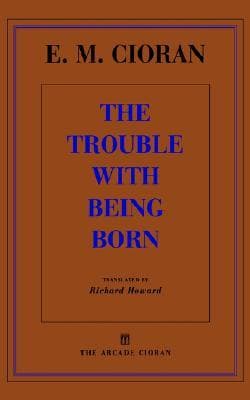
The Trouble with Being Born cover
Archivist's Choice

The Trouble with Being Born

Emil M. Cioran

Genre

Psychology / Philosophy

Reading Time

212 min

Key Themes

See below

Track Your Reading

Sign in to track this book

Emil Cioran's 'The Trouble with Being Born' argues that existence is the original flaw, making birth, not death, the true disaster.

Core Idea

Emil Cioran's "The Trouble with Being Born" states that existence itself is an original, unforgivable flaw, the source of all suffering. He examines the pain of consciousness, the pointlessness of human effort, and the illusion of progress. He argues that birth forces people into a state of constant anguish, making non-existence the only real peace. Through short sayings and thoughts, Cioran explores how every part of life – from love and art to religion and philosophy – is a temporary, often self-deceiving, escape from the weight of being. Suicide, he suggests, is a constant but useless temptation against the reality of birth.
Reading time
212 min
Difficulty
Hard
✓ Read this if...
You are drawn to profound, dark philosophical reflections on existence, suffering, and the human condition, appreciate aphoristic writing, or are interested in anti-natalist perspectives.
✗ Skip this if...
You are seeking optimistic, self-help, or constructive philosophical arguments, are sensitive to nihilistic themes, or prefer traditional narrative structures.

Core idea

The central argument and framework that powers the entire book.

Emil Cioran's "The Trouble with Being Born" states that existence itself is an original, unforgivable flaw, the source of all suffering. He examines the pain of consciousness, the pointlessness of human effort, and the illusion of progress. He argues that birth forces people into a state of constant anguish, making non-existence the only real peace. Through short sayings and thoughts, Cioran explores how every part of life – from love and art to religion and philosophy – is a temporary, often self-deceiving, escape from the weight of being. Suicide, he suggests, is a constant but useless temptation against the reality of birth.

At a glance

Reading time

212 min

Difficulty

Hard

Read this if...

You are drawn to profound, dark philosophical reflections on existence, suffering, and the human condition, appreciate aphoristic writing, or are interested in anti-natalist perspectives.

Skip this if...

You are seeking optimistic, self-help, or constructive philosophical arguments, are sensitive to nihilistic themes, or prefer traditional narrative structures.

Key Takeaways

1

Birth: The Original Catastrophe

Existence itself is the fundamental error, not death.

Quote

It is not the prospect of death which is a disaster, but the fact of birth.

Cioran states that the real tragedy is not death, which offers a possible release, but birth. To be born is to be put into an inescapable situation of suffering, consciousness, and endless disappointments. He sees birth as a 'ridiculous accident' that subjects a person to the 'control of the ego' and the inherent pointlessness of trying. This view changes how we understand human existence, suggesting our natural state is not one of potential joy, but of an imposed, often regrettable, awareness. The act of starting life is the main sou...

Supporting evidence

Cioran's entire philosophical framework is built on this premise, articulated through numerous aphorisms that lament the unasked-for imposition of life. He frequently contrasts the 'burden of being' with the 'bliss of non-being.'

Apply this

While bleak, recognizing birth as a potential 'catastrophe' can foster a radical acceptance of life's inherent difficulties, reducing the pressure to constantly seek meaning or happiness. It allows for a more stoic, less demanding posture towards existence, acknowledging that suffering is not an anomaly but a fundamental feature.

existentialismnihilismanti-natalism
2

The Burden of Consciousness

Awareness of self is a curse, leading to endless introspection and suffering.

Quote

Consciousness is a disease.

For Cioran, consciousness is not a gift but a sickness. It is the ability that lets us see our own suffering, our end, and the ultimate meaninglessness of our efforts. This self-awareness traps us in a cycle of thinking, doubt, and worry, preventing us from experiencing the thoughtless 'happiness' of non-conscious life. The more conscious one becomes, the more deeply one feels the absurdity and pain of life. This view challenges the common praise of consciousness, suggesting that its development is a tragic mistake that dooms humanity...

Supporting evidence

Cioran repeatedly contrasts the 'happiness' of animals or inanimate objects with the 'torment' of human self-awareness, lamenting the inability to revert to a state of unthinking existence.

Apply this

Understanding consciousness as a potential burden can lead to a healthy skepticism towards excessive self-analysis. It encourages periods of mindful disengagement, finding solace in simple, non-intellectual pursuits, or even embracing moments of 'unthinking' to alleviate the constant pressure of self-awareness.

introspectionalienationsolipsism
3

The Temptation of Suicide (and its Futility)

Suicide is a constant, tantalizing option, yet ultimately a redundant gesture.

Quote

It is not worth the bother of killing yourself, since you always kill yourself too late.

Cioran often explores the idea of suicide, not as an answer, but as an always-present 'temptation' that, strangely, allows one to keep living. The freedom to end one's life provides a psychological safety net, making daily existence more bearable by offering an escape. However, he also dismisses it as useless, arguing that one 'always kills oneself too late' – the harm of birth has already happened. This mixed feeling shows the deep despair in his philosophy while also criticizing even the most extreme forms of personal choice. It is ...

Supporting evidence

Cioran's personal writings often reveal his own struggles with suicidal ideation, which he reframed as a tool for survival rather than an act of despair. He saw it as 'a permanent possibility' that allowed him to continue living.

Apply this

Recognizing the psychological function of having 'an escape route' can help individuals understand and manage profound feelings of despair, not as an encouragement to act, but as an acknowledgement of the mind's protective mechanisms. It can foster a deeper empathy for those who struggle with such thoughts, understanding them as a complex part of the human condition.

fatalismdespairnihilism
4

Time: The Destroyer of Illusions

Time reveals the emptiness of all striving and the erosion of all meaning.

Quote

There is no reality except in the here and now, which is to say that there is no reality.

Cioran views time not as a neutral thing, but as an active force that wears down and disappoints. Every moment that passes reduces our illusions, shows the pointlessness of our goals, and eventually leads to decay. The past is gone, the future is uncertain, and the present is a quick moment of suffering. This constant movement of time removes any idea of permanence or ultimate importance, leaving only the stark reality of eventual non-existence. His view encourages a deep doubt about any grand stories or future hopes, as time will ine...

Supporting evidence

Cioran's aphorisms frequently lament the destructive power of time on memory, youth, and aspirations, often comparing human endeavors to fleeting shadows.

Apply this

Embracing the transient nature of time can lead to a radical detachment from material possessions, societal expectations, and even personal achievements. It can foster a liberation from the pressure to 'make something of oneself,' instead encouraging a focus on the immediate, unadorned experience of being, however bleak.

transienceephemeralitypessimism
5

God and Religion: Comforting Fictions

Religious belief is a human invention to escape the terror of existence.

Quote

God is a habit that can be broken.

For Cioran, God and religion are complex, but ultimately clear, human creations designed to lessen the terror of existence. They offer false promises of meaning, immortality, and divine purpose, providing a comforting illusion against the harsh realities of suffering and death. He sees religious passion as a desperate attempt to externalize inherent human worries, rather than face them directly. While acknowledging their psychological use for some, Cioran views them as dishonest and harmful to a clear understanding of the human condit...

Supporting evidence

Cioran frequently critiques religious dogma as a form of intellectual laziness or a symptom of humanity's inability to face its own insignificance. He often contrasts the 'bliss' of faith with the 'agony' of doubt.

Apply this

Questioning the foundations of religious belief, even if one is a believer, can lead to a more nuanced and personal understanding of faith. For non-believers, it reinforces the necessity of finding meaning (or accepting its absence) without external divine intervention, fostering intellectual honesty and self-reliance.

atheismagnosticismtheodicy
6

The Blessing of Insomnia

Sleeplessness offers a unique, unfiltered access to existential truth.

Quote

Insomnia is a filter of reality.

Cioran, who suffered from insomnia, saw sleeplessness as a strange 'benefit' rather than a problem. He believed that the night hours, without the distractions and illusions of daylight, offered a raw, unfiltered confrontation with existential realities. In the silence and loneliness of the night, the mind is forced to deal with its own worries, its mortality, and the ultimate meaninglessness of its pursuits. This constant self-confrontation, though painful, was for Cioran a way to a deeper, though bleaker, understanding of truth. It i...

Supporting evidence

Cioran's personal experience with chronic insomnia is well-documented and frequently referenced in his writings as the crucible for his most profound and pessimistic insights.

Apply this

While not advocating for insomnia, this perspective encourages embracing moments of discomfort or solitude as opportunities for genuine introspection. Instead of constantly seeking distraction, allowing oneself to sit with difficult thoughts, even for short periods, can lead to unexpected clarity and a deeper understanding of one's inner landscape.

introspectionsolitudemelancholy
7

The Virtue of Indifference

Detachment from outcomes is the only sane response to a meaningless world.

Quote

The only way to avoid being a victim of life is to be indifferent to it.

Given the suffering and pointlessness of existence, Cioran suggests that indifference is not a flaw but a necessary good quality. To care deeply about life's outcomes, goals, or relationships is to invite inevitable disappointment and pain. By developing a deep detachment, one can reduce suffering and find some psychological peace. This is not about apathy, but a conscious, intellectual withdrawal from the emotional ups and downs of human effort. It is a defense mechanism, a philosophical stance that recognizes the ultimate insignific...

Supporting evidence

Cioran often praises figures who have achieved a state of serene detachment, even if it borders on nihilism, seeing it as a superior form of wisdom.

Apply this

Practicing detachment from external validation, material success, or even the opinions of others can liberate one from undue stress and anxiety. It encourages focusing on one's internal state and finding a quiet resilience in the face of an indifferent world, rather than constantly seeking external affirmation.

stoicismapathydetachment
8

Language as a Form of Suffering

Words, while necessary, amplify our anxieties and distance us from authenticity.

Quote

Language is a disease.

Cioran had a deeply mixed relationship with language. While he was a master of short, impactful prose, he also saw language as flawed and even a source of suffering. Words, by trying to define and categorize, inevitably twist reality and create distance between us and real experience. They allow for endless thinking, exaggeration of troubles, and the building of complex, often misleading, stories. The act of speaking can solidify worries and prevent the release that silence might offer. He often expresses a desire for a pre-linguistic...

Supporting evidence

Cioran's unique, fragmented writing style reflects his distrust of systematic thought and complete expression, often using aphorisms to hint at truths rather than fully stating them.

Apply this

Becoming more mindful of how language shapes our perceptions and emotions can lead to a more discerning use of words, both internally and externally. It encourages periods of silence and non-verbal contemplation, recognizing that some truths are better felt or experienced than articulated, thereby reducing the mental chatter that language often fuels.

linguistic-relativitysemioticsineffability
9

The Superiority of Failure

Success is a delusion; failure provides a more honest view of existence.

Quote

Only he who has nothing to lose can be truly free.

Cioran often implies that failure, rather than success, offers a more real and less deluded understanding of life. Success creates illusions of control, importance, and meaning, trapping people in a cycle of striving and attachment. Failure, on the other hand, removes these comforting stories, forcing a confrontation with one's insignificance and the inherent pointlessness of most human efforts. It frees one from the pressure to achieve, allowing for a deep, though bleak, sense of freedom and detachment. To have 'nothing to lose' is t...

Supporting evidence

Cioran's own life, marked by self-imposed exile and a deliberate eschewal of conventional academic or social success, serves as a testament to this philosophy.

Apply this

Re-evaluating the cultural obsession with success can lead to a healthier relationship with personal ambition. Embracing 'failure' or setbacks as opportunities for learning and detachment, rather than as ultimate defeats, can foster resilience and a more grounded, less anxious approach to life's challenges.

stoicismanti-achievementresignation
10

The Allure of Silence

Ultimately, silence is the most profound and honest response to existence.

Quote

Words are not enough. There must be silence, too.

Despite being a prolific writer, Cioran often expresses a desire for silence, seeing it as the ultimate form of intellectual and existential honesty. Words, arguments, and philosophical systems all try to impose order or meaning onto a chaotic and meaningless reality. Silence, however, accepts this reality without decoration or comment. It is the purest expression of resignation, a refusal to take part in the charade of meaning-making. For Cioran, true wisdom often goes beyond words, in the quiet acceptance of what simply 'is,' withou...

Supporting evidence

Cioran's later works often become more terse, aphoristic, and increasingly point towards the limits of language and the wisdom found in non-expression.

Apply this

Cultivating moments of genuine silence – free from noise, distractions, and internal monologue – can provide a powerful antidote to modern life's constant stimulation. It encourages deep listening, both to the external world and one's inner self, fostering a sense of peace and clarity that words often obscure.

contemplationmeditationnon-duality

Critical analysis

Notable Quotes

It is not worth the bother of being born if, in the end, you have to die. All that effort for nothing.

Reflecting on the futility of life given its inevitable end.

The only way to endure existence is to flee from it, to seek refuge in a phantom world, to embrace the void.

Suggesting a coping mechanism for the harshness of reality.

To be born is a misfortune, a tragic accident, a grotesque mistake.

A direct and stark declaration on the nature of birth.

Every thought is a shipwreck. Every idea, a ruin.

Expressing skepticism about the value and permanence of human thought.

What do we do in this world? We suffer. We cause others to suffer. We die.

Summarizing the human condition in a bleak manner.

Only those who have renounced the world can truly understand it.

Implying that detachment is necessary for genuine insight.

Happiness is impossible, for it implies a cessation of being, a suspension of time.

Defining happiness in a way that makes it unattainable in life.

The fact that life has no meaning is a reason to live—moreover, the only one.

Paradoxically finding a reason for living in life's inherent meaninglessness.

To write a book is to have a terrible disease and to want to give it to others.

A cynical view on the act of creation and sharing knowledge.

I aspire to be a vegetable, to become a stone.

Expressing a desire for non-existence or a state devoid of consciousness and suffering.

We are all deep in a hell, but we are too cowardly to admit it.

Suggesting a universal state of suffering that humanity avoids acknowledging.

To think is to commit an act of sabotage.

Viewing intellectual activity as inherently destructive or self-defeating.

The only way to be free is to realize that nothing matters.

Linking freedom to the acceptance of ultimate insignificance.

I'm not saying that everything is meaningless. I'm saying that everything is meaningless if you look at it long enough.

Clarifying the temporal aspect of his pervasive sense of meaninglessness.

Quiz

Test Your Knowledge

Ready to see how well you understood this book? Take our interactive quiz with 10 questions.

10
Questions
~5
Minutes
?
Best Score

Key Questions (FAQ)

Cioran's central argument posits that the fundamental tragedy of human existence lies not in death, but in the involuntary act of birth itself. He views birth as a 'laughable accident' that subjects individuals to the inherent suffering and meaninglessness of life.

About the author