BookBrief
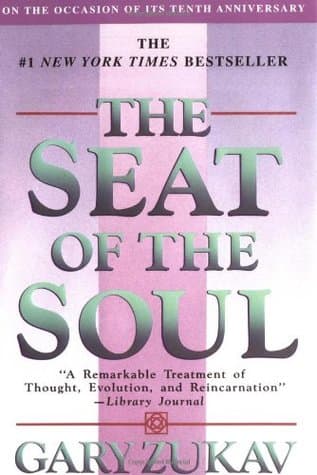
The Seat of the Soul cover
Archivist's Choice

The Seat of the Soul

Gary Zukav (1989)

Genre

Psychology / Spirituality / Philosophy / Self-Help

Reading Time

240 min

Key Themes

See below

Track Your Reading

Sign in to track this book

Aligning your personality with your soul unlocks authentic power and begins a new era of human evolution, guided by higher senses and respect for life.

Core Idea

Gary Zukav's "The Seat of the Soul" says humanity is in an evolutionary shift, moving from a focus on external power, driven by the five senses and control over the physical world, to authentic power. Authentic power, he says, is the alignment of one's personality with one's soul, shown by compassion, respect for life, and sensing more than the five senses. The book says our emotions are guidance systems, showing if our intentions align with our soul's purpose—which is spiritual growth. Zukav states that every choice, thought, and action, based on intention, creates our reality and helps our spiritual evolution. He asks readers to take responsibility for their creations and to live with reverence and interconnectedness.
Reading time
240 min
Difficulty
Medium
✓ Read this if...
You are seeking a deep dive into spiritual evolution, the purpose of the soul, and how to cultivate a life of authentic power and compassion beyond conventional success metrics.
✗ Skip this if...
You prefer practical, actionable self-help advice over philosophical and spiritual exploration, or are uncomfortable with concepts like karma, reincarnation, and the soul as central tenets.

Core idea

The central argument and framework that powers the entire book.

Gary Zukav's "The Seat of the Soul" says humanity is in an evolutionary shift, moving from a focus on external power, driven by the five senses and control over the physical world, to authentic power. Authentic power, he says, is the alignment of one's personality with one's soul, shown by compassion, respect for life, and sensing more than the five senses. The book says our emotions are guidance systems, showing if our intentions align with our soul's purpose—which is spiritual growth. Zukav states that every choice, thought, and action, based on intention, creates our reality and helps our spiritual evolution. He asks readers to take responsibility for their creations and to live with reverence and interconnectedness.

At a glance

Reading time

240 min

Difficulty

Medium

Read this if...

You are seeking a deep dive into spiritual evolution, the purpose of the soul, and how to cultivate a life of authentic power and compassion beyond conventional success metrics.

Skip this if...

You prefer practical, actionable self-help advice over philosophical and spiritual exploration, or are uncomfortable with concepts like karma, reincarnation, and the soul as central tenets.

Key Takeaways

1

From External to Authentic Power

Shifting from control and manipulation to soul-aligned action.

Quote

Authentic power is the alignment of the personality with the soul.

Zukav says humanity is moving from seeking 'external power' – the ability to control others and the environment – to 'authentic power.' External power, while seeming to work, leads to fear, competition, and unhappiness because it depends on outside approval and dominance. Authentic power, in contrast, comes from inside, from aligning one's personality (thoughts, emotions, actions) with the soul's wisdom and intentions. This change is not about becoming more powerful in the usual way, but about becoming more whole, integrated, and purp...

Supporting evidence

Zukav contrasts historical examples of power dynamics, from tribal warfare to corporate competition, as manifestations of external power. He posits that the increasing global interconnectedness and spiritual awakening indicate a collective yearning for authentic power.

Apply this

Reflect on your motivations. Are you acting to gain control, approval, or material possessions (external power), or are you acting from a place of genuine purpose, compassion, and service (authentic power)? Practice conscious intention-setting before actions.


authentic-powerexternal-powersoul-alignment
2

The Soul's Purpose: Evolution and Growth

Life's challenges are opportunities for spiritual development.

Quote

Every experience, every encounter, is an opportunity for the soul to evolve.

Zukav introduces the idea that our souls are on an evolutionary journey, and Earth is a 'school' for spiritual growth. Every challenge, relationship, and situation we face is not random but is set up by our higher selves, or soul, to teach us lessons and help us evolve. This view changes how we see suffering and difficulty, seeing them not as punishments, but as ways to develop qualities like compassion, patience, courage, and unconditional love. Understanding this lets us approach life with purpose and curiosity, looking for lessons ...

Supporting evidence

Zukav frequently uses the analogy of life as a classroom and the soul as the student, consistently emphasizing that our experiences are tailored to our individual needs for growth. He points to recurring life patterns as indicators of unlearned lessons.

Apply this

When facing a difficult situation, ask yourself: 'What is this teaching me? What quality am I meant to develop here?' Embrace the challenge as an opportunity for profound personal and spiritual growth.

soul-evolutionspiritual-growthlife-lessons
3

Emotions as Guidance Systems

Understanding emotions as feedback from your soul.

Quote

Your emotions are your soul's language, telling you whether your personality is aligned with its intentions.

Zukav redefines emotions not as random reactions or weaknesses, but as guidance systems from our soul. Positive emotions like joy, peace, and love show that our personality's thoughts, words, and actions align with our soul's intentions. Negative emotions such as fear, anger, jealousy, and resentment signal that we are not aligned, often driven by ego fears or external power needs. This view lets us use our emotions as a compass, prompting us to check our inner state and make changes to get back in alignment. It promotes mindful aware...

Supporting evidence

He explains that when we feel fear or anger, it's often because we perceive a threat to our external power or identity, indicating a deviation from the soul's path of love and trust. Joy, on the other hand, is the natural state of soul-alignment.

Apply this

When you experience strong negative emotions, pause and ask: 'What belief or intention is driving this emotion? How is this out of alignment with my highest self?' Use it as a prompt to shift your perspective or action.

emotional-guidancesoul-languageinner-compass
4

Intention is Everything

The power of conscious intention in shaping reality.

Quote

Every action, every thought, every feeling is preceded by an intention, whether conscious or unconscious.

Zukav states that intention is the creative force in our lives. What we do, and why we do it, determines the energy we put out and the experiences we draw. Unconscious intentions, often from fear, insecurity, or a desire for external power, can lead to bad outcomes even when our actions seem good. Conscious intentions from love, compassion, and authentic power align us with the universe's creative flow, leading to fulfilling and harmonious results. By becoming aware of our intentions before we act, speak, or even think, we gain power ...

Supporting evidence

He discusses how even seemingly altruistic actions, if driven by a subconscious desire for recognition or control, will not produce the same 'light' or positive outcome as actions purely motivated by love and service. The 'energy' of the intention is paramount.

Apply this

Before starting a task, engaging in a conversation, or making a decision, take a moment to clarify your intention. Ask: 'What is my deepest, most authentic intention behind this?' Choose intentions that serve your highest good and the good of all.

conscious-intentioncreative-forceshaping-reality
5

The Multisensory Human

Expanding beyond the five senses to perceive energy.

Quote

Human experience is exploding beyond the five senses.

Zukav says humanity is becoming a 'multisensory species,' meaning our perception is growing beyond the five senses to include sensing energy, intentions, and subtle parts of reality. This is not about developing psychic powers in a dramatic way, but about becoming more aware of the energy currents under physical reality. We are becoming more sensitive to the intentions behind words, the energy in a room, and the subtle messages from our souls and the collective consciousness. This increased awareness is important for the shift to auth...

Supporting evidence

Zukav points to the increasing interest in intuition, energy healing, and spiritual practices as evidence of this evolutionary shift. He describes how we can 'feel' the intention behind someone's words, even if their spoken words are different.

Apply this

Practice paying attention to your 'gut feelings' or intuitive nudges. Notice the energy of people and places. Engage in practices that cultivate inner awareness, such as meditation or mindfulness, to sharpen your subtle perceptions.

multisensory-perceptionenergetic-awarenessintuition
6

Responsibility for Creation

You are the conscious creator of your life and experiences.

Quote

Every experience you have is created by you for your spiritual growth.

A main idea of Zukav's philosophy is that we are fully responsible for what we create, individually and together. This is not about blame, but about empowerment. He states there are no victims, only co-creators. Every experience, relationship, and challenge in our lives reflects our inner state – our beliefs, fears, desires, and intentions. By taking full responsibility for what we attract and create, we reclaim our power to consciously shape our reality. This means moving past blaming outside situations or other people and looking in...

Supporting evidence

Zukav illustrates this by explaining that even seemingly 'bad luck' or 'accidents' serve a purpose for the soul's evolution, reflecting an unconscious intention or a lesson needed for growth. He reframes 'karma' as simply the natural consequence of our intentions.

Apply this

Instead of asking 'Why is this happening to me?', ask 'What within me is creating or attracting this experience? What lesson is here for me?' Take ownership of your role in every situation.

personal-responsibilityco-creationmanifestation
7

The Illusion of Separation

Recognizing our interconnectedness as spiritual beings.

Quote

We are all part of one vast, magnificent, multi-dimensional, living, moving, and purposeful organism.

Zukav questions the idea of separation that causes much human suffering and conflict. From a soul perspective, we are not isolated individuals competing for things, but connected parts of a larger, unified consciousness. Believing in separation creates fear, judgment, and the desire for external power because it makes an 'us vs. them' mindset. Recognizing our connection creates compassion, empathy, and a natural desire for cooperation and harmony. When we hurt another, we hurt ourselves, and when we uplift another, we uplift everyone....

Supporting evidence

He describes the 'new species' as inherently longing for harmony and cooperation, a natural consequence of recognizing this inherent interconnectedness, contrasting it with historical conflicts driven by perceived scarcity and competition.

Apply this

Practice seeing beyond superficial differences and recognizing the soul in every person you encounter. Cultivate empathy by imagining yourself in another's shoes, understanding that their struggles are, in a sense, your struggles too.

interconnectednessunity-consciousnessillusion-of-separation
8

Reverence for Life

Cultivating awe and respect for all existence.

Quote

Reverence for Life is the experience of awe and respect for all that is alive.

A key part of the 'new species' and a sign of authentic power is respect for all life. This goes beyond human life to include animals, plants, and Earth itself. It is a deep respect for the sacredness of existence and the web of life. This respect comes naturally when we connect with our souls and see the divine spark in all beings. It changes our relationship with the environment from using it to protecting and appreciating it. Having respect for life guides our choices toward sustainability, compassion, and non-violence, showing an ...

Supporting evidence

Zukav explicitly states that the 'new species' longs for harmony, cooperation, sharing, and reverence for Life. He contrasts this with the historical exploitation of natural resources driven by a desire for external power and material gain.

Apply this

Spend time in nature, consciously appreciating the beauty and complexity of the natural world. Practice gratitude for the food you eat, the air you breathe, and the life that surrounds you. Consider the impact of your actions on all living things.

reverence-for-lifeecological-awarenesssacredness-of-life
9

The Evolution of the Heart

Leading with compassion and intuition rather than pure intellect.

Quote

The new species uses higher orders of logic and justice -- those of the heart.

Zukav says the new human consciousness is marked by an 'evolution of the heart.' This means moving past a purely intellectual, rational, and often fear-based way of making decisions and solving problems, towards one guided by intuition, compassion, and empathy. The 'logic of the heart' includes emotional intelligence, spiritual wisdom, and a deep understanding of interconnectedness. While intellect is still useful, it serves the heart, rather than leading it. This change allows for more complete, fair, and loving solutions to personal...

Supporting evidence

Zukav describes the 'new species' as using 'higher orders of logic and justice -- those of the heart,' directly contrasting this with the often cold and calculating logic of the ego or external power dynamics.

Apply this

Before making significant decisions, engage in practices that connect you to your heart's wisdom, such as meditation or quiet reflection. Ask yourself: 'What does my heart tell me is the most compassionate and aligned path?' Listen to your intuition.

heart-intelligenceemotional-intelligencecompassionate-action

Critical analysis

Notable Quotes

The only thing you are ever in control of is your own attitude.

Discussing personal power and responsibility.

Every intention, word, and action has consequences.

Emphasizing the ripple effect of our choices.

Authentic power is the alignment of your personality with your soul.

Defining the core concept of 'authentic power'.

When the personality comes fully to serve the energy of the soul, that is authentic power.

Further elaborating on the nature of authentic power.

The journey toward authentic power is a journey of the heart.

Highlighting the emotional and spiritual nature of the path.

When you choose to be loving, you choose to be powerful.

Connecting love directly to power and choice.

Emotional awareness is the first step to emotional mastery.

Discussing the importance of understanding one's own emotions.

Every encounter is a spiritual encounter.

Suggesting that all interactions hold deeper meaning and opportunity for growth.

The five-sensory human is becoming the multi-sensory human.

Describing the evolution of human consciousness beyond physical senses.

Fear is the only thing that separates you from your authentic power.

Identifying fear as the primary obstacle to spiritual growth.

Your soul is a portion of God.

Explaining the divine nature and origin of the soul.

When you are in alignment with your soul, you feel joy.

Describing joy as a natural consequence of spiritual alignment.

Responsibility is the ability to respond.

Redefining responsibility in an empowering way.

Your life is a school, and you are here to learn.

Framing life experiences as opportunities for spiritual education.

Quiz

Test Your Knowledge

Ready to see how well you understood this book? Take our interactive quiz with 10 questions.

10
Questions
~5
Minutes
?
Best Score

Key Questions (FAQ)

Authentic power is the alignment of the personality with the soul. It moves beyond external control and manipulation, stemming instead from spiritual growth, intention, and the values of the heart, leading to harmony and cooperation.

About the author