“It was a room, yes, a room. And in the room, I was. And outside the room, the world was. But the room was the world, too, in a way.”
— The protagonist's initial contemplation of his isolated existence.


Genre
Psychology / Fantasy
Reading Time
360 min
Key Themes
See below
Sign in to track this book
In his suffocating cell, a man's mind turns into a battleground where his hatred and revenge dance to the echoes of a society that rejected him.
Harry White, a man of unclear age and background, is led into a cramped, filthy remand cell. The first moments establish the suffocating feeling of his new reality. He immediately starts to rail against the unfairness of his arrest and the terrible conditions of his confinement. The cell itself is a character, a physical sign of his entrapment, with peeling paint, cold concrete, and a single, barred window offering no comfort. Harry's internal monologue quickly turns into a stream of consciousness, moving between self-pity, anger, and growing despair. He examines every detail of his surroundings, each observation feeding his resentment and the burgeoning sadistic fantasies that will come to control his thoughts.
As hours pass, Harry's thoughts become darker and more violent. He starts to create elaborate, brutal fantasies of revenge against the judge he believes wrongly sentenced him. These mental scenarios are graphic and detailed, focusing on the humiliation, torture, and eventual murder of the judge. Harry imagines himself as the powerful orchestrator of this retribution, planning every agonizing step. These fantasies are not just fleeting thoughts but fully immersive experiences, giving him a temporary, though twisted, escape from his physical situation. They are a coping mechanism, letting him regain a sense of control and power in an environment where he is powerless, though they also reflect his deep rage and psychological instability.
Harry's sadistic fantasies shift to the prison guards, whom he sees as extensions of the oppressive system. He imagines them suffering similar, if not worse, degradations than those he envisions for the judge. These mental tortures often involve sexual humiliation and physical abuse, with Harry always in control. The guards, in his mind, become pathetic figures, begging for mercy that he gleefully denies. These fantasies are powerful in showing a reversal of power, where the powerless prisoner controls the fate of his tormentors. This mental exercise gives Harry a twisted satisfaction and a temporary break from his own suffering, deepening his descent into a world of violent imagination.
Mixed with his violent fantasies, Harry's thoughts drift to his past life outside the cell. These memories are fragmented and show a pervasive sense of being cut off and an emotional emptiness. He remembers interactions with various women, none of which seem based on genuine connection or affection. Instead, they are marked by manipulation, resentment, and a lack of empathy from Harry. He recalls an encounter with a woman, detailing his cruel treatment of her, without remorse. These memories paint a picture of a man always detached from humanity, unable to form meaningful bonds, and consumed by his own self-serving desires. His past partly explains his current rage.
Harry gets a visit from his appointed lawyers, a brief break from his internal world. This interaction is tense and shows Harry's deep paranoia and distrust. He sees the lawyers not as allies but as part of the same system that wrongly imprisoned him. He is evasive, suspicious, and dismissive of their attempts to help, convinced they are either incompetent or actively working against him. The conversation is stiff and unproductive, further isolating Harry from any potential help. This scene highlights his deep alienation and his inability to connect or trust others, even those who are supposedly on his side. It reinforces his belief that he is alone against a hostile world, solidifying his retreat into his own mind.
Harry becomes acutely aware of sounds from other cells and corridors – distant shouts, muffled conversations, clanging doors. These sounds, rather than providing a sense of shared humanity, intensify his feeling of isolation. He imagines the other prisoners with disdain, projecting his own misanthropy onto them. He sees them as pathetic, weak, or equally deserving of their fate. His internal monologues often involve him mentally mocking or dismissing their unseen struggles. The sounds of the jail create a claustrophobic soundscape that reinforces his entrapment, and his interpretation of these sounds only deepens his conviction that he is unique in his suffering and superior to his fellow inmates, further solidifying his psychological detachment.
As his time in the cell continues, Harry's sadistic fantasies become more elaborate and disturbing. The violence he imagines escalates, moving beyond physical abuse to include psychological torment and grotesque mutilation. He goes into minute details of dismemberment, prolonged agony, and the complete dehumanization of his imagined victims. These fantasies are not just cathartic; they seem to consume him, blurring the lines between his internal world and external reality. He gets intense pleasure from these mental acts, finding a twisted sense of power and satisfaction in controlling the suffering of others, even if only in his mind. This escalation marks a significant step in his psychological deterioration, showing a deeper immersion into his disturbed inner world.
Along with general sadistic fantasies, Harry's thoughts often turn to sexual violence and dominance. He imagines women, often from his past or generic figures, being subjected to his absolute control and humiliation. These scenarios are not about intimacy or connection, but purely about power and degrading the other. The sexual acts are shown as tools of subjugation, reinforcing his misogyny and his need to assert his superiority. These fantasies are particularly disturbing as they show a deep inability to engage with women as equals, seeing them only as objects for his gratification and control. They highlight his deep-seated psychological issues and his warped view of human relationships, especially those between men and women.
The structure of Harry's internal monologue begins to reflect his deteriorating mental state. His thoughts become more fragmented, repetitive, and disjointed. Sentences break off mid-thought, ideas loop back on themselves, and his language becomes increasingly raw and unhinged. The difference between his conscious thoughts, his memories, and his fantasies almost completely blurs. He often repeats certain phrases or images, showing an obsessive quality to his mental processes. This stylistic shift in the narrative mirrors Harry's descent into madness, showing how confinement and his disturbed mind are eroding his ability to think clearly. The reader is plunged deeper into the chaotic landscape of his tormented mind, experiencing his breakdown firsthand.
Occasionally, amidst his rage and fantasies, Harry has brief moments of self-awareness. He might briefly question his own thoughts or the reality of his situation. However, these brief glimpses of introspection are quickly overwhelmed and suppressed by his ingrained anger, self-pity, and the comforting pull of his sadistic imaginings. He cannot sustain any genuine self-reflection or accept responsibility for his actions or mental state. These moments are quickly followed by a renewed surge of blame directed at others or the system, reinforcing his victim complex. This internal struggle, though brief, highlights the deep psychological conflict within him, even if his darker impulses ultimately win.
As the novel nears its end, it is clear that Harry White is trapped in an endless cycle of hatred, resentment, and violent fantasy. There is no resolution, no redemption, and no escape from his tormented mind. His physical confinement mirrors his mental imprisonment. The narrative suggests that even if he were released from his cell, he would remain locked within his own twisted mind. The final scenes reinforce the claustrophobic nature of his existence, both physically and mentally. His thoughts continue to spiral into darkness, leaving the reader with the unsettling impression of a man irrevocably lost to his own inner demons, condemned to a perpetual state of rage and imagined retribution.
The Protagonist
Harry's 'arc' is a descent, not an ascent. He begins alienated and ends completely consumed by his own hatred and fantasies, with no hope of redemption or change.
The Antagonist (imagined)
The Judge's 'arc' is entirely within Harry's mind, becoming increasingly dehumanized and subjected to greater torment as Harry's fantasies escalate.
The Antagonist (imagined)
The Guards, as imagined by Harry, undergo a transformation from figures of authority to helpless victims in his escalating fantasies.
The Mentioned/Supporting (imagined)
These women have no arc; they serve as static representations of Harry's past cruelties and current desires for domination.
The Supporting
The Lawyers serve as a brief, external attempt to intervene in Harry's situation, but their efforts are futile against his entrenched paranoia.
The novel shows how extreme physical confinement and social isolation can twist the human mind. Harry's small, filthy cell speeds up his mental decay, removing outside stimuli and forcing him inward. This internal journey, however, leads not to self-reflection or growth, but to increasingly violent and sadistic fantasies. The lack of real human interaction, combined with the dehumanizing conditions of his imprisonment, increases his existing hatred of people and his paranoia. His mind, without healthy outlets, turns inward to create a perverse, self-sustaining world of hatred and revenge. This theme is clear from the very first scene of Harry entering his cell, immediately feeling the suffocating weight of his new reality.
“And the room, the room was the room and it was empty and cold and lonely and it was a cell and it was a room and it was a cell and it was a room and it was a room and it was a cell and it was a room.”
Fantasy acts as both Harry's coping mechanism and his ultimate downfall. At first, his violent daydreams offer a temporary escape from his powerlessness and a way to regain control in his mind. He carefully creates elaborate scenarios of revenge, humiliation, and torture against those he sees as tormentors. However, these fantasies quickly become all-consuming, blurring the lines between imagination and reality. They are not cathartic in a healthy way, but instead fuel his rage and worsen his psychological illness. The novel suggests that while fantasy can provide comfort, when unchecked and rooted in hatred, it can become a prison more insidious than any physical cell, trapping the individual in a cycle of destructive thought.
“He smiled, a small, tight smile that did not reach his eyes, and the room was no longer cold and empty but filled with a warmth that only he could feel.”
A deep sense of misanthropy and alienation fills Harry's character and the entire story. Harry views humanity with contempt, seeing others as weak, corrupt, or deserving of his scorn. His memories show a history of loveless relationships and emotional detachment, suggesting that his isolation is not just from his imprisonment but a core part of his personality. He trusts no one, not even his lawyers, and finds no comfort in the presence or sounds of other prisoners. This theme highlights a society where real connection is missing, and individuals are left to fester in their own bitterness. Harry's internal world reflects this deep alienation, where empathy is absent and hatred rules.
“They were all the same. All of them. Just waiting for someone to blame. Just waiting for someone to hurt.”
The novel explores how both societal structures and internal psychological processes can lead to someone losing their humanity. Harry's imprisonment in a squalid, anonymous cell strips him of his dignity and identity, reducing him to a number in a system. However, his own mind also contributes to this dehumanization, both of himself and others. By reducing others (the judge, guards, women) to mere objects of his sadistic fantasies, he simultaneously dehumanizes them and, in doing so, further dehumanizes himself. He loses touch with his own humanity, becoming a vessel for pure, unadulterated rage and depravity. The lack of a clear reason for his imprisonment further emphasizes this theme, suggesting his identity has been erased.
“He was nothing. Just a number. A piece of meat in a cage.”
Selby looks into the origins and forms of evil, not as an outside force, but as an internal, psychological event. Harry's evil is not grand or strategic, but a petty, festering hatred born from a feeling of powerlessness and resentment. His sadistic fantasies are disturbingly ordinary in their detail, making the evil feel real. The novel suggests that evil can grow in the absence of empathy and connection, unchecked in an isolated mind. It explores how a seemingly ordinary man can hold such deep darkness, questioning whether this evil is inherent, a result of circumstances, or self-inflicted. The constant focus on Harry's internal world makes this exploration particularly chilling.
“He closed his eyes and smiled, a pure, unadulterated smile of absolute joy, as he watched the scene unfold again and again.”
The narrative is presented entirely through Harry White's unfiltered thoughts.
The novel employs a relentless stream of consciousness, plunging the reader directly into Harry White's mind without traditional narrative breaks or external perspective. This device creates an intense, claustrophobic experience, mirroring Harry's physical and mental confinement. The lack of quotation marks for dialogue blurs the line between spoken words and internal thoughts, further immersing the reader in his distorted reality. It allows for an unfiltered exploration of his sadistic fantasies, paranoia, and misanthropy, making the reader a reluctant witness to his psychological deterioration. This technique is crucial for conveying the raw, unhinged nature of Harry's inner world.
The small, isolated cell serves as both a physical and psychological prison.
The remand cell is more than just a setting; it is a central character and a powerful plot device. Its cramped, filthy, and inescapable nature directly contributes to Harry's mental breakdown. The physical confinement forces his mind inward, amplifying his existing psychological issues and fueling his violent fantasies. The cell becomes a metaphor for his trapped psyche, a space where external reality fades and his internal demons run rampant. The detailed descriptions of the cell's squalor and unchanging nature emphasize the suffocating lack of hope and escape, both physically and mentally, for Harry White.
The use of repetitive phrases and broken sentences reflects Harry's deteriorating mental state.
Selby frequently uses repetition of words and phrases, along with fragmented and unpunctuated sentences, to mimic Harry's obsessive thought patterns and his descent into madness. This stylistic choice creates a sense of urgency, chaos, and psychological decay. The looping thoughts and broken grammar prevent the reader from finding a stable footing, mirroring Harry's own loss of mental coherence. This device not only reflects his internal state but also draws the reader into the disorienting and suffocating experience of his tormented mind, making the narrative itself a reflection of his psychological imprisonment.
Harry White's perspective is the only one offered, making his account inherently biased and untrustworthy.
As the entire narrative is filtered through Harry White's stream of consciousness, he functions as an unreliable narrator. His perceptions of events, his past, and the motivations of others are deeply colored by his paranoia, self-pity, and hatred. The reader is never given an objective account of his arrest or the 'truth' of his situation. This device forces the reader to constantly question the veracity of Harry's claims and to infer his true character and circumstances from his distorted perspective. It highlights the subjective nature of reality within his mind and contributes to the unsettling ambiguity surrounding his guilt or innocence, though his internal monologues clearly paint a picture of a deeply disturbed individual regardless of his legal status.
“It was a room, yes, a room. And in the room, I was. And outside the room, the world was. But the room was the world, too, in a way.”
— The protagonist's initial contemplation of his isolated existence.
“The walls were breathing. I could feel them, a slow, deliberate expansion and contraction, like a great, sleeping beast.”
— A moment of intense sensory hallucination or heightened awareness within the room.
“My thoughts were like flies in a jar, buzzing and bumping against the glass, never quite finding a way out.”
— The protagonist's struggle with his own mental processes and lack of escape.
“He knew things, the man outside. He knew what I was, and what I wasn't. And that was a terrible, beautiful thing.”
— Reflecting on the mysterious figure who occasionally interacts with the room's occupant.
“The silence was not empty. It was full of unspoken words, of forgotten sounds, of the very hum of being.”
— A profound observation on the nature of quietude and introspection.
“I tried to remember a face, a name, a place. But they were all just fragments, like shattered glass in a dark room.”
— The protagonist's struggle with memory loss and the fading past.
“Was I mad? Or was the world outside the room mad, and I merely a sane observer of its insanity?”
— Questioning his own sanity in contrast to external reality.
“The light was a lie. It showed me only what it wanted me to see, not what truly was.”
— Skepticism about the nature of perception and truth.
“Every day was the same day, and every night the same night. A loop, a coil, tightening around my soul.”
— Describing the monotonous and repetitive nature of his existence.
“I spoke to the room, sometimes. It didn't answer, but I felt it listened. A silent confidante, a vast ear.”
— The protagonist's personification of the room as a companion.
“The fear wasn't of dying, but of never truly having lived. Of being a shadow in a forgotten corner.”
— Confronting existential dread and the fear of an unfulfilled life.
“He brought me a flower once. A single, wilting bloom. It was the most beautiful thing I had ever seen.”
— A rare moment of external beauty and connection in his confined world.
“The boundaries were not just physical. They were in my mind, in my very bones, in the air I breathed.”
— Realizing the profound psychological and internal nature of his confinement.
“To escape, one must first know what one is escaping from. And I knew only the room, and myself within it.”
— A reflection on the difficulty of seeking freedom without a clear understanding of one's predicament.
Ready to see how well you understood this book? Take our interactive quiz with 10 questions.

Biography coming soon.

Rhonda Byrne
4.3

Menno Henselmans
4.3

Sylvia Plath
4.3

Elliot Aronson
4.3

Joseph Campbell
4.3
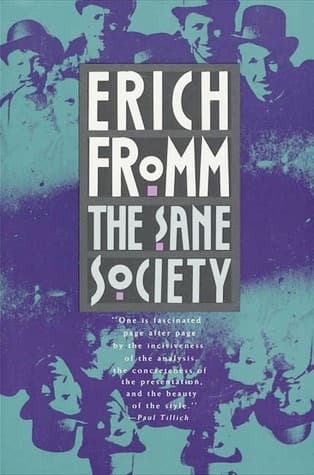
Erich Fromm
4.3

Irvin D. Yalom
4.2

Lucy Strange
4.2