“It's not that I don't want to be a hero. It's that I don't want to have to be a hero.”
— Mikey reflects on the 'chosen ones' and his desire for a normal life.

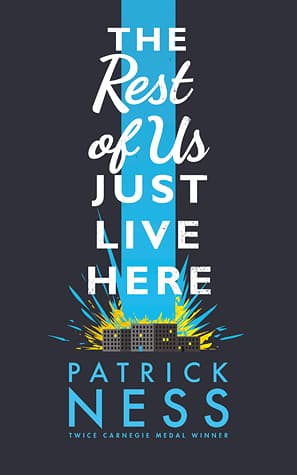
Patrick Ness (2015)
Genre
Psychology / Fantasy / Young Adult / Romance
Reading Time
464 min
Key Themes
See below
Sign in to track this book
Mikey navigates prom, first crushes, and graduation in a world facing constant supernatural apocalypse, showing that living an ordinary life amidst chaos can be heroic.
Mikey, a senior at Satchel High, cares about everyday things: graduating, asking out Henna, and managing his anxiety. His best friend, Jared, is the adopted son of the town's 'Indie Kid' leader, Finn, and has unusual healing powers. The story begins with the 'Immortal Kids'—the chosen ones who fight supernatural threats—battling a new problem: glowing blue lights that make people vanish or spontaneously combust. Mikey and his friends, including Henna and Mel, talk about the latest 'battle' at the local coffee shop, trying to ignore the constant chaos. Mikey's family life is also complex, with his older sister Meredith having an eating disorder and his younger sister, Jess, being unusually observant and quiet. The constant supernatural threat makes ordinary life feel uncertain, yet they try to live normally.
Jared's unique abilities, like healing and a strange connection to nature (especially mountain lions), become more noticeable. He heals Mikey's small injuries and seems to find comfort in the wild. Meanwhile, Finn, the Immortal Kids' leader and Jared's adoptive father, is consumed by the new 'blue light' threat. He thinks the lights are linked to an ancient power called the 'Soul Eater,' which they thought was beaten years ago. Finn's obsession isolates him, and he pushes Jared away, treating him more as a tool than a son. This creates tension between Jared and Finn, as Jared wants a normal life and resents his role in the supernatural battles.
Mikey's anxiety, which he calls 'The Voice,' often overwhelms him. He frequently has panic attacks, especially when faced with the supernatural or important social events. He likes Henna, a kind and artistic girl who understands him well. He tries to ask her out many times but is always interrupted by the Immortal Kids' latest crisis or his own fear. Henna, however, always shows him warmth and understanding, often calming him during his episodes. Their shared desire for a normal life and their quiet moments together show their growing connection amid the town's chaos.
As prom approaches, Mikey and his friends plan for a normal senior year event. Mikey finally asks Henna to prom, and she says yes. However, the blue light events get worse, causing more disappearances and disruptions. At the same time, Mikey's sister, Meredith, struggles with her eating disorder, made worse by the stress and instability of their lives. Her condition worsens, leading to hospital visits and growing family concern. Mikey feels helpless to help Meredith, which reflects his frustration with his inability to control the larger supernatural threats, making his wish for a normal prom feel increasingly distant and fragile.
Finn confirms his fears: the blue lights are the Soul Eater, a powerful entity that consumes souls and was supposedly defeated years ago. The Immortal Kids prepare for a final fight. Jared, increasingly troubled by Finn's methods and the Soul Eater's growing power, learns a shocking truth about himself. He is not just a healer; he is a 'Godslayer,' able to absorb and hold immense supernatural power, including the Soul Eater's. This explains his connection to nature, his healing abilities, and why the Immortal Kids adopted him—they knew he was special but misunderstood his true purpose.
Prom night arrives, and Mikey, Henna, Mel, and Jared go, determined to have a normal time. However, the Soul Eater attacks the high school, turning the dance into a battlefield. The Immortal Kids fight bravely but are overwhelmed. People start vanishing, and blue lights fill the hall. Jared, seeing the destruction and the danger to his friends, realizes he cannot stand by. He chooses to embrace his Godslayer nature, despite the huge personal cost, understanding that he alone can stop the Soul Eater. This act of self-sacrifice is a turning point for him.
Jared faces the Soul Eater, not to fight it, but to absorb it. He uses his Godslayer ability to pull the entity into himself, containing its destructive power. The process is painful and changes him, making him ethereal and permanently linked to the absorbed power. The Soul Eater is gone, but so is the Jared his friends knew. Afterward, the world is changed forever. The supernatural threats that bothered the town for generations disappear, along with the Immortal Kids who fought them. The 'Chosen Ones' are no longer needed, and the world becomes a more ordinary, but also more peaceful, place. Mikey and his friends deal with the loss of Jared and the new reality.
With the Soul Eater gone and Jared changed, the supernatural events that defined their town stop. The Immortal Kids, their purpose met, fade away, some leaving town, others trying to find new identities. Mikey, Henna, and Mel try to rebuild their lives. The lack of constant danger is both a relief and a strange emptiness. Mikey finds comfort in his relationship with Henna, and they begin to build a future together. Meredith's condition also starts to get better in the calmer environment, suggesting a link between her stress and the town's instability. The focus shifts to everyday challenges and the beauty of ordinary life.
Senior year ends, and Mikey, Henna, and Mel graduate. The ceremony is a reminder of all they have endured and overcome. Mikey has learned to manage his anxiety better, finding strength in Henna and in accepting that not everything needs to be a big battle. He and Henna plan to attend the same university, eager to start a life together defined by their choices, not by outside threats. While they will never forget Jared or the sacrifices made, they choose to look forward, embracing the quiet heroism of living a normal life. The ending highlights the value of the ordinary and the strength found in personal connections.
The Protagonist
Mikey learns to manage his anxiety and finds strength in his relationships, embracing the extraordinary nature of an ordinary life.
The Supporting/Deuteragonist
Jared transforms from a reluctant participant in supernatural battles to a self-sacrificing hero who reshapes the world.
The Supporting/Love Interest
Henna's unwavering support helps Mikey navigate his struggles and build a future focused on their shared ordinary life.
The Supporting
Mel maintains her pragmatic outlook, adapting to the changing world and supporting her friends through it all.
The Supporting
Meredith's health fluctuates with the town's stability, showing signs of recovery once the supernatural threats are removed.
The Supporting
Jess remains an observant background figure, subtly reflecting the changing atmosphere of the world.
The Supporting
Finn's unwavering dedication to his role leads to his eventual obsolescence when the supernatural threats vanish.
The Mentioned
Their purpose becomes obsolete after the Soul Eater is defeated, and they are forced to find new identities.
This is the main theme, contrasting the dramatic lives of the 'Chosen Ones' with the quiet heroism of everyday existence. Mikey and his friends constantly aim for normalcy—graduating, going to prom, having relationships—even as their world is literally ending. The novel suggests that finding joy and meaning in these ordinary experiences, and building strong personal connections, is as, or more, important than fighting big battles. The ending, where the supernatural threats vanish, lets Mikey and others truly embrace the beauty and importance of an ordinary life.
“Because sometimes there are problems bigger than this week’s end of the world, and sometimes you just have to find the extraordinary in your ordinary life.”
Mikey's severe anxiety, called 'The Voice,' is a major part of his character and the story. It shows the internal struggles people face, often unseen, even amid external chaos. His panic attacks and constant inner thoughts show how mental health issues can be as difficult as any outside threat. The novel normalizes anxiety and shows Mikey's journey to manage it, not cure it, finding strength in self-acceptance and the support of loved ones. Meredith's eating disorder further highlights the theme of mental health challenges.
“The Voice was always there, a tiny, insistent whisper that told him all the things he was doing wrong, all the ways he was going to mess up.”
Both Mikey and Jared deal with their identities. Mikey struggles with being 'just' an ordinary person in a world of heroes, while Jared struggles with his destiny as a 'Godslayer' versus his desire for a normal life. The story explores how external expectations and extraordinary events can shape or change one's sense of self. Jared's final sacrifice is an act of self-acceptance, embracing his true nature for the greater good. Mikey's journey is about accepting his 'ordinary' identity as valuable and meaningful, separate from any heroic deeds.
“He wasn't the hero. He was the guy who just lived here. And that was okay. That was more than okay.”
The novel cleverly changes and critiques the common 'Chosen One' trope in YA fantasy. The 'Immortal Kids' represent these typical heroes, but they are shown as disruptive, self-absorbed, and often unaware of the real consequences of their battles. The story shifts focus to the 'rest of us' who deal with the damage and simply try to live their lives. It questions the romanticizing of constant conflict and highlights the untold stories of those on the edges of grand adventures, suggesting their experiences are just as valid and important.
“They were the main characters. We were just… the rest of us. The ones who had to deal with the aftermath.”
Personification of Mikey's internal anxiety and self-doubt.
Mikey's anxiety manifests as an internal monologue he calls 'The Voice,' which constantly criticizes him, predicts disaster, and fuels his panic attacks. This personification allows the author to externalize Mikey's internal struggles, making his anxiety a tangible presence for the reader. It serves as an internal antagonist that Mikey must learn to manage, highlighting his journey of self-acceptance and resilience. The Voice underscores the theme of mental health and shows how deeply internal struggles can affect daily life, even more so than external supernatural threats.
The 'Chosen Ones' are relegated to the periphery of the main narrative.
Instead of being the protagonists, the Immortal Kids and their epic battles are presented as a constant, often annoying, background element to Mikey's story. Their fights are described briefly, often with a sense of resignation or frustration from Mikey's perspective, highlighting the collateral damage and disruption they cause. This device effectively satirizes the typical 'Chosen One' narrative by shifting focus to the 'ordinary' people whose lives are affected, thereby emphasizing the theme of the value of the ordinary and critiquing the romanticization of constant conflict.
A unique supernatural ability that provides a definitive end to the ongoing threats.
Jared's true nature as a 'Godslayer,' capable of absorbing immense supernatural power, serves as a deus ex machina that resolves the overarching conflict of the Soul Eater and all subsequent supernatural threats. While it provides a convenient ending, it also carries a significant personal cost for Jared, preventing it from feeling entirely unearned. This device allows the narrative to definitively transition from a world of constant supernatural peril to one of ordinary peace, reinforcing the novel's central theme that the 'Chosen One' narrative can end, paving the way for the 'rest of us' to live.
The primary supernatural threat that drives the climax of the story.
The blue lights represent the latest, most dangerous iteration of the supernatural threats plaguing the town, eventually revealed to be the ancient 'Soul Eater.' This device provides the immediate external conflict that pushes Jared to embrace his destiny and brings the 'Chosen One' narrative to its ultimate conclusion. Its destructive power and the mystery surrounding it build tension throughout the story, culminating in the prom night attack that forces the climax. It serves as the ultimate 'monster of the week' that finally breaks the cycle of endless supernatural battles.
“It's not that I don't want to be a hero. It's that I don't want to have to be a hero.”
— Mikey reflects on the 'chosen ones' and his desire for a normal life.
“The world is full of people who are trying to be something they're not. And it's full of people who are trying to be something they are.”
— Mikey observes the different struggles of his peers.
“Sometimes the greatest power is just to live.”
— A central theme, contrasting the 'chosen ones' with the 'rest of us'.
“There's a difference between being important and being special.”
— Mikey pondering his place in a world with extraordinary events.
“You don't have to save the world to make a difference.”
— A quiet realization for Mikey about everyday acts of kindness and care.
“Love isn't about saving someone. It's about being there for them.”
— Mikey's evolving understanding of his relationship with Henna.
“The world doesn't need another hero. It needs more people who are brave enough to just be themselves.”
— A commentary on the pressure to conform to heroic archetypes.
“Everyone has their own apocalypse.”
— Mikey realizing that personal struggles can feel as overwhelming as world-ending events.
“It's hard to have your own problems when the world is ending.”
— Mikey's internal conflict between his anxieties and the supernatural drama around him.
“Sometimes, the only way to be strong is to let yourself be weak.”
— Mikey grappling with his own vulnerabilities and seeking help.
“The greatest adventure is just getting through the day.”
— A reflection on the challenges of everyday life for 'normal' people.
“You can't choose what happens to you, but you can choose how you react.”
— Mikey learning to cope with the chaotic world he lives in.
“Maybe being ordinary isn't so bad after all.”
— Mikey coming to terms with his non-hero status and finding value in it.
Ready to see how well you understood this book? Take our interactive quiz with 10 questions.

Biography coming soon.

Rhonda Byrne
4.3

Menno Henselmans
4.3

Sylvia Plath
4.3

Elliot Aronson
4.3
Joseph Campbell
4.3

Erich Fromm
4.3
Irvin D. Yalom
4.2

Lucy Strange
4.2