“He that would have a wife obedient, young, handsome, and rich, must not look for all these in one woman.”
— Gazet is advising Vitelli on the difficulties of finding an ideal wife.

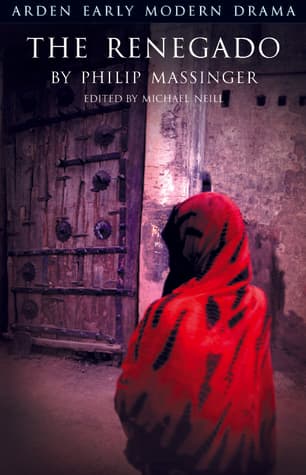
Philip Massinger (2010)
Genre
General
Reading Time
272 min
Key Themes
See below
Sign in to track this book
In "The Renegado," a Christian hero faces erotic captivity in Ottoman Algiers, exploring religious conversion and cultural clashes with surprising relevance, all within a romance and political intrigue.
The play begins in Tunis, where Mustapha, a Turkish Basha, describes his niece Donusa's strange behavior. She has grown fond of a Christian slave. Her uncle, Asambeg, a Turkish merchant, is troubled, fearing dishonor to their family and religion. He believes she is being corrupted by Christianity and plans to separate her from her captive. Meanwhile, in Messina, Vitelli, a Venetian noble, prepares to sail for Tunis. He is full of grief and anger over his sister Paulina's abduction by pirates and enslavement in Tunis. He vows to rescue her or die, disguised as a renegade, a Christian convert to Islam, to enter the city.
In Tunis, Paulina, a captive, is held in the palace of Amurath, the Turkish Emperor. Gazet, a eunuch serving Amurath, tries to win her over, promising luxury and status if she converts to Islam and becomes the Emperor's concubine. Paulina refuses, asserting her Christian faith and commitment to purity. Francisco, a Jesuit friar disguised as a merchant, secretly visits her, offering spiritual guidance and comfort. He tells her to remain strong in her faith, assuring her that God will provide a way for her release and reminding her of chastity and resilience.
Donusa, in love with Antonio, the Christian slave, makes her feelings known. She does not know Antonio is Vitelli, who has entered Tunis under this name. Donusa, driven by passion, suggests they elope and escape Tunis, offering him wealth and marriage if he converts to Islam. Vitelli, seeing a chance to advance his mission, pretends interest in her offer, careful not to reveal his true identity or goals. He realizes Donusa's feelings could help him find and rescue Paulina, and he starts to plan around her infatuation.
Asambeg, increasingly suspicious of Donusa's behavior and her attachment to Antonio, decides to spy on her. He sees her secret meetings with Vitelli, becoming more convinced she is straying from her faith and shaming their family. Donusa, aware of her uncle's watch, cleverly manipulates him. She pretends to be interested in converting Antonio to Islam, using this as a reason to spend more time with him. Her deception allows her to pursue her own romantic goals while easing Asambeg's immediate fears, giving Vitelli more access to the Basha's household.
Francisco, the friar, having contacted Paulina, arranges a daring escape plan for her. He enlists help from sympathetic Christian captives and outlines a strategy for her to flee Amurath's palace. Meanwhile, Vitelli, still disguised as Antonio and using Donusa's affections, finally finds Paulina. The reunion is emotional. Vitelli, relieved and joyful, reveals his true identity as her brother and explains his dangerous mission to rescue her. Paulina, overjoyed, is also fearful, knowing the immense danger they face in the heart of the Ottoman Empire.
Donusa, upon learning Vitelli's true identity and his deception about his feelings for her, is filled with furious rage. Feeling betrayed and humiliated, her love turns to bitter anger. In a fit of vengeance, she reports Vitelli's true mission and his presence in Tunis to her uncle, Mustapha, the Basha. Mustapha, outraged by the Christian's infiltration and his niece's involvement, orders Vitelli's immediate arrest. Vitelli is captured and condemned to death, facing execution for espionage and his perceived offense to the Ottoman Empire and its customs.
Paulina, distraught by her brother's capture and coming execution, bravely confronts Mustapha and pleads for Vitelli's life. She argues for his innocence and the nobility of his intentions, appealing to Mustapha's sense of justice and mercy. At this point, Francisco, the friar, steps forward and reveals his true identity as a Christian priest. He offers Mustapha a deal: if Vitelli and Paulina are spared, he will offer to convert Donusa to Christianity, suggesting a spiritual exchange that could bring peace and understanding between the two faiths, a bold move in Tunis.
Moved by Paulina's sincerity and Francisco's arguments, Donusa begins to rethink her actions and faith. Francisco, with his knowledge and compassionate manner, guides her through Christian beliefs. Donusa, seeking comfort and forgiveness for her betrayal of Vitelli, eventually embraces Christianity, undergoing a spiritual change. Mustapha, seeing his niece's conversion, is left in conflict. He is torn between loyalty to his religion and family honor, and a growing respect for the unwavering faith and courage of the Christians.
Emperor Amurath, the supreme ruler, arrives in Tunis, informed of the events in Mustapha's household. Mustapha, fearing the Emperor's anger, tries to explain the complex situation, stressing the unexpected power of Christian faith that led to Donusa's conversion. He details Vitelli's mission, Paulina's steadfastness, and Francisco's arguments. Mustapha's story is a desperate attempt to lessen the Emperor's anger, showing how the extraordinary circumstances and the Christians' conviction led to these outcomes under his rule.
After considering Mustapha's explanation and seeing Donusa's change, Emperor Amurath gives his judgment. To many's surprise, he is moved by the faith and courage shown by Vitelli, Paulina, and Francisco. Recognizing the sincerity of Donusa's conversion and the power of their beliefs, Amurath, in an act of mercy, spares Vitelli's life. He allows Vitelli, Paulina, and Francisco to return to Messina and permits Donusa to go with them, giving her freedom to practice her new faith. This decision shows a rare moment of interfaith understanding.
The Christians, with the newly converted Donusa, safely return to Messina. The city celebrates their escape and their return. Vitelli, having rescued his sister and found an unexpected love, prepares to marry Donusa, who has fully accepted her new faith and culture. Paulina, free from captivity, reunites with her family and starts a new life, her experiences in Tunis having changed her. The play ends with the promise of a harmonious future, symbolizing the triumph of love, faith, and forgiveness over religious and cultural divides.
The Protagonist
Vitelli transforms from a vengeful brother to a man who finds love and facilitates interfaith understanding.
The Supporting
Paulina endures captivity with unwavering faith and is ultimately liberated, returning to a life of freedom.
The Supporting
Donusa undergoes a dramatic conversion from a passionate Muslim to a Christian, finding redemption and love.
The Supporting
Francisco successfully guides and saves the Christian captives, and orchestrates Donusa's conversion.
The Supporting
Mustapha moves from rigid adherence to tradition to a reluctant acceptance and understanding of Christian faith.
The Supporting
Amurath, despite his imperial power, grants mercy and allows interfaith harmony.
The Supporting
Asambeg's attempts to control Donusa ultimately fail as she embraces a new faith.
The Mentioned
Gazet's attempts to corrupt Paulina are unsuccessful, reinforcing her virtue.
The play explores the impact of religious conversion, especially Donusa's change from Islam to Christianity. It looks at the reasons for such a shift—love, forgiveness, and spiritual belief—and its societal effects. Francisco's role as a guide highlights the power of evangelism, while Mustapha's dilemma shows the conflict between personal faith and cultural loyalty. The theme asks the audience to consider how religious identity can change and the possibility of understanding between faiths, as seen in Emperor Amurath's final judgment, which respects individual faith over strict rules.
“What power is in this Christian faith that can work such wonders?”
Love, in its various forms, drives the story, often mixed with deception. Vitelli's initial 'love' for Donusa is a planned trick to achieve his mission, while Donusa's passionate, real love for 'Antonio' leads her to defy her family and faith. This mix of true emotion and strategic manipulation explores the complexities of human relationships in extreme situations. The eventual reconciliation and true love between Vitelli and Donusa suggest that even deception can lead to real connection, showing how love can bridge cultural and religious differences.
“I will change my heaven for thee, and learn to love thy God.”
Captivity, both physical and spiritual, is a constant theme. Paulina's actual enslavement drives much of the plot, showing the danger for Christians in Ottoman lands. Donusa's initial 'captivity' by her societal and religious expectations, and her later 'freedom' through conversion, offers a nuanced view of the theme. The play uses captivity as a symbol for the limits of identity and tradition, showing how characters seek freedom not just from physical chains but also from the restrictions imposed by their situations and beliefs, finding freedom in faith and self-determination.
“My mind is free, though my body be a slave.”
The idea of honor, especially family honor, is important to the Turkish characters, particularly Asambeg and Mustapha. Donusa's actions are first seen as a deep dishonor to her family and religion, threatening their social standing and spiritual integrity. The play explores the tension between individual desires and family expectations, and how these conflicts can lead to dramatic choices. The ending suggests that honor can be redefined, moving beyond strict tradition to include compassion, understanding, and acceptance of individual choice, even if it challenges long-held beliefs.
“To lose my honor, is to lose my life.”
Vitelli's use of a false identity to infiltrate Tunis.
Vitelli's disguise as Antonio, a 'renegado' (a Christian converted to Islam), is a central plot device. This allows him to move freely within Tunis, gain access to powerful figures like Donusa, and ultimately locate Paulina. The disguise creates dramatic irony, as characters like Donusa are unaware of his true identity and motives, leading to misunderstandings and escalating tension. It also highlights the theme of hidden identities and the blurred lines between appearance and reality in a foreign and hostile environment, making the audience privy to information that characters within the play are not.
The audience's knowledge of Vitelli's true identity and intentions.
Dramatic irony is heavily employed, particularly regarding Vitelli's true identity as Antonio. The audience is aware from the outset that Vitelli is a Christian nobleman on a rescue mission, while characters like Donusa and Mustapha believe him to be a genuine renegado or a simple slave. This creates suspense and tension, as the audience anticipates the inevitable revelation and its consequences. It also allows for deeper appreciation of the characters' motivations and reactions, as their actions are often based on incomplete or false information, leading to heightened emotional impact when truths are finally revealed.
The figure of a Christian convert to Islam, used as a narrative catalyst.
The 'renegado' archetype, a Christian who converts to Islam, is a significant plot device. Vitelli's adoption of this persona is crucial for his mission, but the play also explores the genuine possibility of such conversions through Donusa's journey. This archetype taps into contemporary anxieties and fascinations with the Ottoman Empire and religious conversion, serving as a catalyst for dramatic conflict and thematic exploration. It allows Massinger to explore questions of religious loyalty, identity, and the boundaries between cultures, making the 'renegado' a symbol of both betrayal and potential bridge-building between faiths.
The unexpected intervention of a powerful figure to resolve conflict.
Emperor Amurath's final decision to grant mercy to the Christians and allow Donusa's conversion can be seen as a form of deus ex machina. His unexpected compassion and understanding, overriding the expected harsh justice of the Ottoman court, provides a swift and somewhat miraculous resolution to the seemingly insurmountable conflicts. While it might appear as a convenient plot device, it also serves to underscore the play's thematic message of potential interfaith harmony and the triumph of human compassion over rigid dogma, suggesting that even ultimate authority can be swayed by profound demonstrations of faith and love.
“He that would have a wife obedient, young, handsome, and rich, must not look for all these in one woman.”
— Gazet is advising Vitelli on the difficulties of finding an ideal wife.
“For there is no hell to a troubled mind.”
— Francisco reflects on the internal torments of guilt and conscience.
“Honour is a mere humour, a vain breath, and where it is not fed with profit, a mere nothing.”
— Asambeg expresses a cynical view of honor, prioritizing material gain.
“We are all mortal, and our life a dream.”
— Donusa contemplates the fleeting nature of human existence.
“There is no freedom to a mind in chains.”
— Vitelli laments his emotional captivity despite physical liberty.
“He that would please all, must please none.”
— Gazet comments on the impossibility of satisfying everyone.
“The devil himself cannot be a greater hypocrite.”
— Donusa describes the extreme deceit of another character.
“A woman's heart is a riddle, which few men can read.”
— Vitelli reflects on the complexities and inscrutability of female emotions.
“For lust, though it burn fiercely for a time, consumes itself, and turns to loathing.”
— Francisco warns against the destructive nature of unchecked desire.
“Revenge, though it be sweet, yet in the end, it ever leaves a bitter taste behind it.”
— Asambeg considers the ultimate unsatisfying nature of vengeance.
“Who builds on sand, expects a sudden fall.”
— Donusa uses a proverb to illustrate the danger of unstable foundations or plans.
“There is no greater torment than to love, and not be loved again.”
— Vitelli expresses the anguish of unrequited love.
“Conscience, that makes cowards of us all, and yet sometimes spurs us on to brave attempts.”
— Francisco muses on the dual nature of conscience, both hindering and motivating.
“He that would command, must first learn to obey.”
— A general principle is stated regarding leadership and discipline.
Ready to see how well you understood this book? Take our interactive quiz with 10 questions.
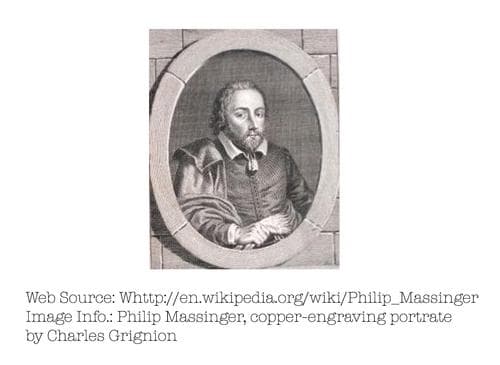
Biography coming soon.