“The thing about being a copper, you learn to read people. You see 'em come in here, all full of themselves, and you know exactly what they're going to do before they do it.”
— Sergeant Simmonds talking to Constable Ross about his experience.

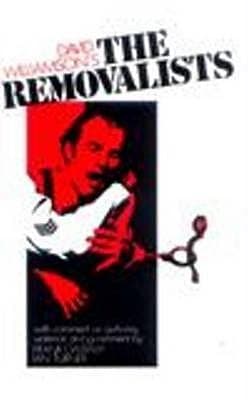
David Williamson (1971)
Genre
General
Reading Time
90 min
Key Themes
See below
Sign in to track this book
A rookie cop's first day descends into a brutal ballet of power and perversion, exposing the raw, seedy underbelly of justice in a single, shattering removal.
The play opens in the police station where sisters Fiona and Kenny Carter try to file a complaint about a faulty wardrobe they bought from a removalist company. Fiona, the more assertive sister, describes the damage and the company's unhelpful response. Kenny is quieter and more submissive. Sergeant Simmonds, a seasoned and cynical officer, initially dismisses their concerns, seeing it as a minor issue. He suggests they contact consumer affairs, but Fiona is persistent, insisting on her rights. Simmonds, somewhat reluctantly, agrees to investigate, hinting at his own methods for dealing with such issues.
Constable Ross, a young and idealistic rookie policeman, is introduced. He wants to learn and uphold the law, believing in justice and proper procedure. Sergeant Simmonds takes Ross under his wing but immediately begins to teach him a more brutal and pragmatic view of law enforcement. Simmonds explains his philosophy: some people only understand force, and the law is often a tool to be manipulated rather than strictly followed. He subtly tests Ross's resolve and moral compass, hinting at the need for officers to be tough and decisive, even if it means bending rules. Ross, though uncomfortable, tries to absorb Simmonds' lessons, wanting to prove himself competent.
Following the sisters' complaint, the removalist company sends two employees, Robbie and Neville, to inspect the damaged wardrobe at Fiona's apartment. Robbie is the more dominant and aggressive, while Neville is younger and more easily influenced. They immediately dismiss Fiona's claims, stating the damage was pre-existing or caused by her. The interaction is tense, with Robbie showing a condescending and confrontational attitude toward Fiona. Neville mostly follows Robbie's lead, though he sometimes seems uncomfortable with his colleague's belligerence. Fiona tries to stand her ground but is clearly intimidated by their combined presence and refusal to acknowledge responsibility.
Sergeant Simmonds and Constable Ross arrive at Fiona's apartment to 'mediate' the dispute. Simmonds immediately takes control, sizing up Robbie and Neville. He uses psychological tactics, his authority and physical presence to intimidate Robbie. Simmonds questions Robbie's honesty and professionalism, subtly implying he knows more than he lets on. He uses pointed questions and veiled threats, aiming to break Robbie's composure and force him to admit fault. Ross observes this display of power, initially impressed by Simmonds' commanding presence, but also disturbed by the aggressive and unorthodox nature of the interrogation.
Simmonds' interrogation of Robbie quickly escalates from verbal threats to physical violence. Simmonds begins to physically assault Robbie, using slaps, punches, and kicks, all under the guise of 'maintaining order' or 'teaching him a lesson.' He demands Robbie admit responsibility for the damaged wardrobe and show respect for the law. Ross is shocked and horrified by the brutality, torn between his duty to obey his superior and his moral objections to the excessive force. Kenny, who has been largely quiet, becomes increasingly distressed by the violence. Fiona is also deeply uncomfortable, realizing the situation has spiraled beyond her initial complaint.
Under Simmonds' explicit instruction and implicit threat, Ross is forced to participate in the physical abuse of Robbie. Simmonds orders Ross to hit Robbie, testing his loyalty and willingness to conform to the unwritten rules of their policing. Ross, deeply conflicted, reluctantly complies, his actions fueled by fear and a desire to not appear weak in front of his superior. Kenny, witnessing the escalating violence and her sister's complicity, becomes increasingly distraught. She tries to intervene verbally, pleading for the violence to stop, but Simmonds ignores her pleas, as does her own sister, Fiona, who seems paralyzed by the situation.
As the violence against Robbie continues, Fiona remains strangely detached, almost passive, despite initiating the complaint. Her initial assertiveness has evaporated, replaced by a cold indifference to Robbie's suffering. Neville, the younger removalist, becomes terrified and tries to escape the apartment. He sees the brutality inflicted upon Robbie and fears he might be next. Simmonds, however, quickly apprehends Neville, preventing his escape and bringing him back into the apartment. This act further shows Simmonds' complete control over the situation and the helplessness of the victims caught in his web of authority and violence.
After the prolonged and brutal assault, Robbie is left severely beaten and incapacitated. Simmonds, seemingly unperturbed, tries to justify his actions to Ross and the sisters, framing the violence as a necessary lesson for Robbie. He argues that Robbie's arrogance and disrespect for women and the law necessitated such a harsh response. Ross is visibly shaken and disgusted by what has happened, struggling to reconcile his ideals with the reality of police brutality he has just witnessed and participated in. The sisters, particularly Fiona, remain silent, their initial complaint having led to a horrifying outcome they seemingly did not anticipate or fully comprehend.
Kenny's mental state rapidly deteriorates after the violence. She becomes increasingly agitated, confused, and childlike, her previous quiet demeanor giving way to a more erratic and vulnerable state. Ross, deeply disturbed by the entire ordeal, tries to confide in Simmonds, expressing his discomfort and questioning the methods used. He struggles to voice his moral objections, but Simmonds easily dismisses his concerns, reiterating his 'tough love' philosophy and implying that Ross is simply not strong enough for the job. Simmonds' manipulation continues, further isolating Ross and eroding his sense of right and wrong.
In a climactic and horrifying turn, Robbie is accidentally killed. Simmonds, still trying to assert his dominance and extract a final 'confession' or sign of submission, carelessly handles Robbie, perhaps trying to prop him up or move him. In his weakened state from the previous beating, Robbie collapses or is mishandled in such a way that he dies. The exact mechanics are somewhat ambiguous, but the implication is that his death is a direct consequence of the sustained brutality and Simmonds' negligence. The realization of Robbie's death creates a panicked atmosphere among those present, particularly Simmonds and Ross, as they now face the very real consequences of their actions.
Upon realizing Robbie is dead, Simmonds immediately shifts into damage control mode. His primary concern is to avoid personal responsibility and protect his career. He begins to concoct a story, trying to frame Robbie's death as an accident or a consequence of his own actions, rather than police brutality. Simmonds tries to implicate Ross, suggesting that Ross's earlier, reluctant participation in the beating makes him equally culpable. He manipulates Ross, playing on his inexperience and fear, coercing him into complicity in the cover-up. The sisters, particularly Fiona, are now implicated as witnesses, further complicating the web of deceit.
The play concludes with the characters grappling with the horrific aftermath of Robbie's death and the impending cover-up. Simmonds orchestrates the false narrative, ensuring everyone understands their 'story.' Ross is left in profound shock and moral compromise, his idealism shattered, his future irrevocably altered by his complicity. Kenny is utterly broken, her fragile mind unable to cope with the trauma. Fiona, while perhaps not as directly traumatized, is now an unwilling participant in a dark secret, her initial complaint having opened a Pandora's Box of violence and corruption. The apartment, once a domestic setting, becomes a scene of profound moral decay and the chilling reality of unchecked power.
The Antagonist
Simmonds remains steadfast in his brutal ideology, showing no remorse or change, instead solidifying his corruption through a cover-up.
The Protagonist
Ross's idealism is completely shattered as he is forced into complicity with police brutality, ending the play as a morally compromised and traumatized individual.
The Supporting
Fiona's initial assertiveness gives way to passivity and complicity as she becomes entangled in the violence she inadvertently triggered.
The Supporting
Kenny begins as quiet and submissive but descends into a state of severe mental distress due to the trauma she witnesses.
The Victim
Robbie goes from arrogant and dismissive to a helpless victim of police brutality, culminating in his death.
The Supporting
Neville attempts to escape the escalating violence, highlighting his fear and relative innocence compared to Robbie and the police.
The central theme is the corrupting influence and brutal consequences of unchecked power within institutions, specifically the police force. Sergeant Simmonds exemplifies this, using his badge not to uphold justice but to exert dominance and inflict violence. His indoctrination of Constable Ross shows how systemic abuse can perpetuate itself, forcing individuals into complicity. The minor complaint about a wardrobe rapidly escalates into a fatal beating, demonstrating how easily authority can be perverted when accountability is absent. Simmonds' manipulation and the subsequent cover-up further highlight the insidious nature of this abuse.
““Some people only understand force, Constable. You’ll learn that.””
The play vividly portrays the shattering of idealism, particularly through Constable Ross. Ross begins his career believing in justice and proper procedure, eager to serve. However, under Simmonds' brutal mentorship, he is forced to witness, and then participate in, horrific acts of violence. His moral compass is compromised, and his initial ideals are systematically dismantled. This theme explores how individuals can be coerced into complicity, leading to deep psychological trauma and a loss of personal integrity, as seen in Ross's profound shock and moral degradation by the play's end.
““I… I don’t think… I don’t think we should have done that, Sergeant.””
The play explores how violence, both physical and psychological, can become normalized and even justified within certain environments. Simmonds' casual brutality toward Robbie, and his attempts to frame it as a 'lesson,' illustrate this chilling normalization. The escalating nature of the violence, from verbal threats to a fatal beating, highlights a dangerous trajectory where boundaries are constantly pushed. The passive reactions of Fiona and the initial reluctance of Ross, who eventually succumbs, show how individuals can become desensitized or coerced into accepting such brutality as a part of their reality, leading to devastating consequences.
““He had it coming. You gotta teach these bastards a lesson sometimes.””
Underlying much of the violence and power dynamics is a strong current of misogyny. Fiona's initial complaint, though legitimate, is met with dismissiveness from Simmonds and condescension from Robbie, both men subtly undermining her agency. Simmonds' 'protection' of women is revealed to be a pretext for his own violent impulses and a way to assert male dominance. The play suggests that the aggression and brutality displayed by the male characters are, in part, a response to perceived threats to their patriarchal authority, and women like Fiona and Kenny become collateral damage or catalysts for their violent expressions.
““Some of these blokes, they just don’t know how to treat a woman.””
The audience is aware of the true nature of Simmonds' intentions and the impending danger.
From early in the play, Simmonds' cynical remarks and veiled threats signal to the audience that his approach to law enforcement is far from ethical. The audience understands the danger Robbie is in long before the characters fully grasp it, creating a sense of dread and inevitability. This device heightens the tension as we watch Ross's idealism slowly erode and Fiona's complaint spiral out of control, knowing the tragic outcome is brewing beneath the surface of seemingly mundane interactions.
The damaged wardrobe symbolizes the breakdown of order and the fragility of everyday life.
The faulty wardrobe, the catalyst for the entire plot, symbolizes more than just a consumer complaint. It represents a disruption of domestic order and the failure of systems (the removalist company, and by extension, the police) to rectify it. Its damage foreshadows the much greater 'damage' that will be inflicted upon human lives. The seemingly trivial nature of the initial problem contrasts sharply with the horrifying escalation of violence, highlighting how easily minor issues can unravel into chaos when handled by corrupt authority.
Constable Ross serves as the audience's entry point into the moral dilemma.
Ross, as the naive rookie, acts as the audience's surrogate, witnessing the corruption and brutality of Simmonds through fresh eyes. His internal conflict and visible discomfort reflect the audience's own moral outrage. His presence allows the play to explore the process of moral compromise and the difficulty of standing up to authority, making the corruption more visceral and relatable. His eventual, reluctant complicity underscores the insidious power of the system to corrupt individuals.
“The thing about being a copper, you learn to read people. You see 'em come in here, all full of themselves, and you know exactly what they're going to do before they do it.”
— Sergeant Simmonds talking to Constable Ross about his experience.
“It's all a game, isn't it? Just a big bloody game. And some of us are better at playing it than others.”
— Kenny, after being questioned and manipulated, expressing his view on power dynamics.
“You think you're so smart, don't you? Well, let me tell you something, smart-arse. There's always someone smarter.”
— Sergeant Simmonds asserting dominance over Kenny.
“She's just a woman, Ross. They all want the same thing in the end. Someone to look after them.”
— Sergeant Simmonds giving 'advice' to Constable Ross about women.
“I just want my furniture back. That's all I want. My own furniture.”
— Fiona, repeatedly expressing her simple desire amidst the escalating chaos.
“You've got to assert yourself, Ross. Let 'em know who's boss. Otherwise, they'll walk all over you.”
— Sergeant Simmonds instructing Constable Ross on how to handle suspects.
“He hit me! He actually hit me!”
— Fiona's shocked reaction after Kenny physically assaults her.
“We're just doing our job, love. Keeping the peace. That's what we do.”
— Sergeant Simmonds' justification for his actions to Fiona.
“I didn't mean it. I swear to God, I didn't mean it.”
— Kenny's panicked denial after his violence escalates.
“You can't just go around hitting people, Kenny. There are rules.”
— Constable Ross trying to intervene and appeal to a sense of order.
“It's a man's world, Ross. And you've got to learn to live in it.”
— Sergeant Simmonds' cynical worldview imparted to Ross.
“I just wanted to get away. Start fresh. Is that so wrong?”
— Fiona explaining her motivation for leaving Kenny.
“They always come back, one way or another. The women always come back.”
— Kenny's deluded belief about Fiona returning to him.
“We're all just trying to survive, aren't we? In this big, ugly world.”
— A moment of dark reflection from one of the characters.
Ready to see how well you understood this book? Take our interactive quiz with 10 questions.

David Williamson is a celebrated Australian playwright and screenwriter, renowned for his sharp social commentary and incisive dialogue. His most famous works include the groundbreaking play 'The Removalists' and the popular film 'Emerald City,' both of which offer critical examinations of Australian society and its power dynamics.