BookBrief
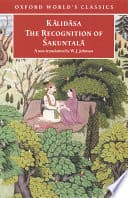
The Recognition of Sakuntala cover
Archivist's Choice

The Recognition of Sakuntala

Kalidasa (2001)

Genre

General

Reading Time

12 Minutes

Key Themes

See below

Track Your Reading

Sign in to track this book

A king's passionate pursuit of a hermit girl is tested by a curse, leading to a separation and reunion that embodies the height of Sanskrit drama and aims for aesthetic joy.

Synopsis

Kalidasa's "The Recognition of Sakuntala" tells the enchanting tale of King Dusyanta and the hermitage girl Sakuntala. Their initial, passionate encounter leads to a secret marriage, but a powerful curse causes the King to forget Sakuntala entirely, leading to their painful separation. Sakuntala, pregnant and heartbroken, is left to navigate a world that no longer recognizes her and her claim. The play masterfully unfolds their journey through separation, the consequences of the curse, and the eventual, fated reunion, exploring themes of love, memory, fate, and divine intervention. It is considered the pinnacle of Sanskrit drama, renowned for its lyrical beauty, emotional depth, and erotic undertones, designed to evoke aesthetic rapture in its audience.
Difficulty
Medium
Pacing
Moderate
Mood
Romantic, passionate, melancholic, ultimately hopeful, ethereal

Plot Summary

The Royal Hunt and the Hermitage

King Dusyanta, hunting a deer, enters Sage Kanva's hermitage. He sees Sakuntala, a beautiful maiden tending plants, and is immediately drawn to her. He learns she is of royal lineage, the daughter of Sage Visvamitra and nymph Menaka, left in Kanva's care. Dusyanta, smitten, plans to stay near her. He claims he needs protection from wild animals to remain at the hermitage, hoping to win her affection. Her innocence and beauty contrast with his royal life.

A Secret Union

While Sage Kanva is away, Dusyanta courts Sakuntala. He declares his love, and Sakuntala, though hesitant, returns his feelings. With help from her friends, Priyamvada and Anasuya, Dusyanta and Sakuntala marry in a Gandharva ceremony—a secret, mutual consent union for royalty. Dusyanta promises to return for her and enthrone her as his queen, leaving her a signet ring as a token.

The Curse of Durvasa

After Dusyanta leaves, Sakuntala is lost in thoughts of her husband, neglecting her duties. One day, the irritable Sage Durvasa arrives. Distracted, Sakuntala fails to greet him with respect. Enraged, Durvasa curses her: the person she is thinking of will forget her entirely, and only a specific token will restore his memory. Her friends, overhearing, plead with Durvasa, who softens the curse, stating that the king's memory will return when he sees an identifying mark or ornament.

Departure for the Capital

As time passes, Sakuntala's pregnancy is apparent. Sage Kanva returns and, through divine insight, learns of Sakuntala's secret marriage and impending motherhood. Accepting the union, he prepares her for her journey to Dusyanta's palace, accompanied by two disciples, Sarngarava and Saradvata, and an elderly ascetic, Gautami. Kanva gives her heartfelt advice on a wife's duties and sends her off with blessings. Sakuntala feels both anticipation and fear, leaving the only home she has known.

The Lost Ring

During the journey to Hastinapura, while crossing a river, Sakuntala dips her hand into the water. The signet ring Dusyanta gave her, the token meant to break the curse, slips from her finger and is lost. This incident proves to be a turning point, sealing her fate for a time. The group continues its journey, unaware of the loss, believing the king's memory would return upon seeing her.

Rejection at Court

At Dusyanta's court, Sakuntala and her companions present themselves to the king. Because of Durvasa's curse, Dusyanta does not remember Sakuntala or their marriage. He sees her as a stranger and dismisses her claims, accusing her of deception. Sakuntala is devastated and tries to remind him of their past, but he does not listen. When she tries to show him the signet ring as proof, she discovers it is missing. Her companions are dismayed, and Dusyanta's minister advises the king to reject her, fearing scandal.

A Celestial Intervention

After her humiliating rejection, Sakuntala is in despair. With no one to believe her and no proof, she is helpless. As she is about to collapse, a flash of divine light appears, and a celestial nymph, believed to be Menaka, Sakuntala's birth mother, carries her away to a heavenly hermitage. This intervention saves Sakuntala from further suffering and provides a sanctuary where she can raise her son, Bharata, away from the earthly court.

The Fisherman's Discovery

Some time later, a fisherman catches a large fish. Cleaning it, he finds a royal signet ring inside. Recognizing the king's insignia, he takes it to the royal police. The ring is brought before King Dusyanta. Upon seeing the familiar ring, the curse is lifted, and Dusyanta's memory of Sakuntala, their love, and their marriage returns. He is filled with remorse and grief for his actions and the injustice he inflicted upon her, lamenting his loss and desperately wishing to find her.

Dusyanta's Remorse and Penance

Overwhelmed by guilt and sorrow, Dusyanta becomes melancholic and withdrawn. He constantly thinks of Sakuntala, regretting his harsh words and the pain he caused her. He neglects his royal duties, consumed by grief. His court notices his changed demeanor. He expresses his deep remorse to his jester and ministers, recounting his forgotten love. He longs for reunion but does not know where Sakuntala is. He performs acts of penance and lives a life of quiet suffering, hoping to atone.

Journey to Marica's Hermitage

Indra, king of the gods, summons Dusyanta to the heavens to help him battle a demon. Dusyanta, eager for a distraction and a chance to earn merit, accepts. After defeating the demon, Dusyanta is rewarded. On his way back to earth, his celestial chariot passes through Sage Marica's hermitage, a divine sage. This hermitage is on a sacred mountain, a place of peace, setting the stage for his reunion.

Encounter with Bharata

At Marica's hermitage, Dusyanta sees a brave and strong young boy playing with a lion cub. The boy's strength and regal bearing remind Dusyanta of himself. He feels an inexplicable fatherly affection for the child. He learns the boy's name is Sarvadamana (later Bharata) and that he is the son of a celestial nymph and a powerful king, abandoned by his mother after his father rejected her. Dusyanta notices a distinctive mark on the boy's hand, confirming his own lineage, and a realization begins to dawn on him.

The Reunion

After meeting Bharata, Dusyanta encounters Sakuntala at Marica's hermitage. She is older, more serene, and dressed in ascetic clothes, having lived a life of piety. Initially, she is hesitant, remembering his rejection. However, hearing his heartfelt apologies and seeing his genuine remorse, along with their son and Sage Marica's explanation of the curse, she forgives him. Marica explains the divine plan and the curse, absolving Dusyanta. The family is joyfully reunited, and Dusyanta takes Sakuntala and Bharata back to Hastinapura, where Bharata is eventually crowned heir.

Principal Figures

King Dusyanta

The Protagonist

Dusyanta transforms from a passionate but forgetful lover into a remorseful, penitent king who ultimately earns his reunion and the respect of the gods.

Sakuntala

The Protagonist

Sakuntala evolves from a naive, lovestruck maiden into a dignified, resilient woman who endures profound suffering before achieving a blessed reunion.

Sage Kanva

The Supporting

Kanva remains a consistent figure of wisdom and paternal love, guiding Sakuntala through life's transitions.

Priyamvada

The Supporting

Priyamvada remains a steadfast and supportive friend, witnessing Sakuntala's joys and sorrows.

Anasuya

The Supporting

Anasuya, like Priyamvada, serves as a consistent, caring friend, sharing in Sakuntala's journey.

Sage Durvasa

The Antagonist/Catalyst

Durvasa appears briefly as a catalyst, his curse initiating the play's central conflict and driving the plot towards its resolution.

Bharata (Sarvadamana)

The Supporting

Bharata is introduced as a powerful child, serving as the bridge to reunite his parents and establish his heroic destiny.

Sage Marica

The Supporting

Marica appears at the climax to reveal the truth of the curse and orchestrate the family's reunion, embodying divine wisdom.

Themes & Insights

Love and Separation (Vipralambha Sringara)

The central theme is the love between Dusyanta and Sakuntala, followed by their painful separation. This separation, caused by a divine curse, explores 'Vipralambha Sringara'—love in separation, a key aesthetic in Sanskrit drama. It highlights the depth of their affection, the agony of longing, and love's enduring nature, leading to a more mature reunion.

KING: Yes. I shall release you - SAKUNTALA: When? KING: When? When, like a bee, I kiss the bud of your unbruised lip And flood my thirsting mouth with nectar.

King Dusyanta

Fate vs. Free Will

The play explores the interaction between fate (karmic destiny, divine curses) and individual choice. Durvasa's curse is a strong example of fate, causing Dusyanta's forgetfulness and Sakuntala's suffering. However, the characters' reactions—Sakuntala's resilience, Dusyanta's remorse, and their reunion through divine grace—suggest that while fate brings trials, human virtue and devotion shape outcomes. The lost ring shows how small, fated events can have large consequences.

When a man's heart is pure, even a misfortune becomes an ornament.

Narrator/Sage Kanva (paraphrased)

Dharma (Righteousness and Duty)

Dharma, moral and ethical duties, is a constant theme. Dusyanta's initial adherence to royal duty leads him to the hermitage, and his eventual acceptance of Sakuntala as his queen fulfills his duty as a husband and king. Sakuntala's duty as a devoted wife, even in rejection, and Sage Kanva's fatherly duty are central. The curse itself is a result of Sakuntala's momentary neglect of her duty towards a guest. The play ultimately emphasizes righteous conduct and fulfilling one's roles in society.

A daughter is indeed another's wealth; today, having sent her to her husband, my mind is at ease.

Sage Kanva

Nature and the Hermitage

The hermitage, with its natural beauty and peaceful environment, symbolizes innocence, purity, and spiritual harmony. Sakuntala's connection to nature, her care for plants and animals, reflects her pure spirit. The contrast between the peaceful hermitage and the busy royal court highlights the play's appreciation for natural virtue and a simpler, more authentic life. Nature also mirrors the characters' emotions, from the blooming flowers of love to the signs of separation.

The trees, her sisters, drop their flowers in her path, as though to strew a bridal carpet for her feet.

Anasuya

Plot Devices & Literary Techniques

The Curse of Durvasa

A magical curse causing Dusyanta's amnesia.

This is the primary plot device that drives the entire narrative. The short-tempered Sage Durvasa curses Sakuntala, causing Dusyanta to forget her completely unless he sees a specific token. This curse creates the central conflict of separation, rejection, and subsequent suffering, allowing for the exploration of themes like fate, love, and human resilience. It also provides a supernatural justification for Dusyanta's otherwise inexplicable cruel behavior, preserving his heroic image while allowing for dramatic tension and eventual redemption.

The Signet Ring

A token of love and the key to restoring memory.

The signet ring given by Dusyanta to Sakuntala is a crucial symbolic and functional plot device. It represents their secret union and love. Its loss in the river directly prevents the curse from being lifted during Sakuntala's presentation at court, leading to her rejection. Its subsequent discovery by the fisherman is the catalyst for Dusyanta regaining his memory and initiating his remorse. The ring thus acts as both the instrument of separation and the means of eventual reunion, embodying the fickle nature of fate.

Divine Intervention

Gods and celestial beings influencing human events.

Divine intervention manifests in several ways: Durvasa's curse, Menaka's rescue of Sakuntala after her rejection, Indra's summons of Dusyanta to battle demons, and Sage Marica's role in explaining the curse and orchestrating the final reunion. These interventions highlight the belief in a cosmic order and the influence of higher powers on human destiny. They serve to move the plot forward when human agency is insufficient, ensuring that dharma ultimately prevails and the protagonists find their rightful place.

Prophecy and Omens

Foreshadowing and divine insights guiding the narrative.

Throughout the play, prophecies and omens subtly guide the narrative. Sage Kanva's divine insight into Sakuntala's marriage, the auspicious signs that appear before her journey, and the prophecy concerning Bharata's future as a great emperor all contribute to the sense of an unfolding destiny. These devices build anticipation, validate the characters' actions (especially Kanva's acceptance of the Gandharva marriage), and reassure the audience that despite the trials, a harmonious resolution is divinely ordained.

Critical analysis

Notable Quotes

Quiz

Test Your Knowledge

Ready to see how well you understood this book? Take our interactive quiz with 10 questions.

10
Questions
~5
Minutes
?
Best Score

Key Questions (FAQ)

The play tells the story of King Dusyanta and Sakuntala, a girl raised in a hermitage. It chronicles their love, separation due to a curse, and eventual reunion. It is considered the pinnacle of Sanskrit drama by the renowned poet and playwright Kalidasa.

About the author

Kalidasa

Kālidāsa was a Classical Sanskrit author who is often considered ancient India's greatest poet and playwright. His plays and poetry are primarily based on Hindu Puranas and philosophy. His surviving works consist of three plays, two epic poems and two shorter poems.