BookBrief
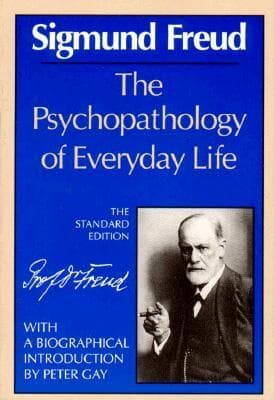
The Psychopathology of Everyday Life cover
Archivist's Choice

The Psychopathology of Everyday Life

Sigmund Freud (1904)

Genre

Psychology / Science / Philosophy

Reading Time

395 min

Key Themes

See below

Track Your Reading

Sign in to track this book

Freud, using personal and humorous stories, explains that our 'accidental' slips of tongue, memory lapses, and daily errors are actually deliberate actions from our unconscious mind.

Core Idea

Sigmund Freud's "The Psychopathology of Everyday Life" says that small errors, like slips of the tongue (Freudian slips), forgetting names, or misplacing things, are not random. Instead, they show unconscious desires, hidden thoughts, and conflicts. These 'parapraxes' reveal how the mind works and how much the unconscious affects daily behavior. Freud believes mental life is set, and even small mistakes have a reason, expressing wishes or intentions the conscious mind tries to hide. By looking at many examples, Freud shows how these everyday errors give insight into a person's inner world, connecting normal and unhealthy mental functioning and showing how childhood experiences affect adult behavior.
Reading time
395 min
Difficulty
Hard
✓ Read this if...
You are fascinated by the hidden meanings behind everyday mistakes, curious about the origins of psychoanalysis, or want to understand how the unconscious mind influences seemingly trivial actions.
✗ Skip this if...
You prefer empirically verifiable psychological theories, find Freudian concepts outdated or unscientific, or are looking for practical self-help advice rather than theoretical exploration.

Core idea

The central argument and framework that powers the entire book.

Sigmund Freud's "The Psychopathology of Everyday Life" says that small errors, like slips of the tongue (Freudian slips), forgetting names, or misplacing things, are not random. Instead, they show unconscious desires, hidden thoughts, and conflicts. These 'parapraxes' reveal how the mind works and how much the unconscious affects daily behavior. Freud believes mental life is set, and even small mistakes have a reason, expressing wishes or intentions the conscious mind tries to hide. By looking at many examples, Freud shows how these everyday errors give insight into a person's inner world, connecting normal and unhealthy mental functioning and showing how childhood experiences affect adult behavior.

At a glance

Reading time

395 min

Difficulty

Hard

Read this if...

You are fascinated by the hidden meanings behind everyday mistakes, curious about the origins of psychoanalysis, or want to understand how the unconscious mind influences seemingly trivial actions.

Skip this if...

You prefer empirically verifiable psychological theories, find Freudian concepts outdated or unscientific, or are looking for practical self-help advice rather than theoretical exploration.

Key Takeaways

1

Slips of the Tongue Reveal Hidden Desires

Freudian slips are not random errors, but manifestations of repressed thoughts.

Quote

Many of the cases of slips of the tongue which I have collected can be easily explained as short, though complete, expressions of ideas, intentions, or desires which are suppressed or kept back.

Freud said that 'slips of the tongue' (parapraxes) are not accidental language mistakes. Instead, they show what is in our unconscious mind. These small errors, often funny or embarrassing, are a mix of our conscious plans and our hidden, often unwanted, thoughts or desires. They show what we truly think or want to say, even if we do not know it or are trying to hide it. The slip is a brief break in our mental defenses, allowing a peek at the underlying mental processes. This idea challenges the belief that behavior is purely accident...

Supporting evidence

Freud provides numerous anecdotes, including his own, such as mistakenly saying 'aufgefordert' (invited) instead of 'aufgeklärt' (enlightened) when discussing a patient's sexual history, revealing his unconscious focus on the patient's sexual invitations.

Apply this

Pay closer attention to your own and others' 'slips of the tongue' during conversations. Rather than dismissing them, consider what underlying thoughts, feelings, or intentions might be trying to surface. This can offer valuable insight into unspoken truths or unresolved conflicts.

parapraxesunconscious-mindrepression
2

Forgetting Names is Rarely Accidental

Memory lapses for names often stem from unconscious associations or a desire to avoid the person.

Quote

The forgetting of proper names is an extremely frequent and easily observable phenomenon. It is often caused by a psychical motive, even if the motive is not obvious at first glance.

Freud says that forgetting a name, especially a proper name, is rarely just a memory failure. Instead, it is often a mental act of hiding something. The forgotten name might be unconsciously connected to a bad memory, someone we dislike, or a topic we want to avoid. Forgetting acts as a defense, letting us briefly get away from the uncomfortable connection. It is not a sign of bad memory, but an active, though unconscious, effort to hide something. This also applies to forgetting words or phrases, which can be linked to emotions or a ...

Supporting evidence

Freud recounts forgetting the name 'Signorelli' and, through self-analysis, traces it back to associations with death and sexuality, specifically a conversation about a patient who committed suicide and a discussion about a Turkish custom involving sexual pleasure and death.

Apply this

When you find yourself forgetting a name, especially one you should know, pause and reflect. What immediate associations, feelings, or recent conversations come to mind regarding that person or a similar context? This self-inquiry can reveal hidden aversions or unresolved feelings.

repressionmemory-lapsesunconscious-associations
3

Errors in Action Reveal Hidden Intentions

Mistakes like misplacing objects or seemingly accidental injuries are often self-inflicted for unconscious reasons.

Quote

When we make an error in action, we are often unconsciously carrying out an intention which we had previously repressed.

Freud extends the idea of parapraxes beyond verbal slips to include errors in action. Misplacing objects, 'accidentally' breaking something, or even minor self-injuries are rarely true accidents. Instead, they are often the unconscious acting out of a hidden desire or plan. For example, 'losing' an object might come from a desire to get rid of it, or 'forgetting' to do a task might be a sign of resistance. These actions, while seeming clumsy or unlucky, serve an unconscious purpose, allowing the person to express a forbidden wish or a...

Supporting evidence

Freud details a case of a man who 'accidentally' broke an expensive antique given to him by a relative he disliked, revealing an unconscious wish to destroy the gift and sever ties. He also discusses 'losing' keys when one wishes to avoid returning home.

Apply this

When you 'accidentally' misplace something important, or find yourself making repetitive 'mistakes' in a particular task, consider if there's an underlying unconscious desire to avoid or get rid of that item/task. Reflect on your true feelings towards the object or responsibility.

errors-in-actionunconscious-intentionsself-sabotage
4

The Determinism of Mental Life

No psychological event is truly accidental; everything has a cause, even if unconscious.

Quote

I hope that the reader will be convinced by the examples here collected that even the most trifling and apparently unmotivated of our mental acts are not without their determinants.

This is the main idea of Freud's work in 'The Psychopathology of Everyday Life.' He rejects the idea of pure chance or accident in mental life. Every thought, feeling, slip of the tongue, forgotten name, and error in action is seen as caused by hidden mental forces, often working unconsciously. There are no 'random' events in the mind; everything is connected and has a cause, even if that cause is hidden from us. This view means there is a deep order and meaning to even our smallest behaviors, encouraging self-analysis instead of dism...

Supporting evidence

The entire book serves as evidence, with each anecdote demonstrating how seemingly trivial errors are traced back to specific, often complex, psychological motivations and conflicts. Freud's own detailed self-analyses are particularly convincing.

Apply this

Adopt a more curious and analytical stance towards your own 'accidents' and 'mistakes.' Instead of shrugging them off, ask yourself: 'What might be the hidden reason or desire behind this?' This shift in perspective can unlock deeper self-understanding.

psychic-determinismunconscious-causesmeaningful-errors
5

Childhood Influences Persist in Adulthood

Early experiences and repressed childhood wishes continue to shape adult behavior and slips.

Quote

The psychological significance of the forgotten elements often lies in their connection with repressed childhood experiences or wishes.

Freud connects adult mental illness and everyday errors back to childhood experiences and hidden desires. Many of our unconscious conflicts and the ways we deal with them start in our early years. A small slip in adulthood might be traced back to an unresolved childhood conflict, an unfulfilled childhood wish, or a bad memory that has been pushed out of conscious awareness. The book suggests that the past is not just gone; it actively shapes and affects our current behavior, often in subtle and hidden ways through our 'accidental' act...

Supporting evidence

While not explicitly detailed as case studies in this book, Freud frequently alludes to the 'childishness' or 'infantile' nature of the repressed wishes revealed by parapraxes, connecting them to fundamental drives established in early development.

Apply this

When analyzing your own slips or peculiar behaviors, consider if there are any parallels or echoes of your childhood. Were there similar situations, feelings, or unfulfilled desires from your past that might be resurfacing in a disguised form?

childhood-experiencesrepressed-memoriesdevelopmental-psychology
6

Superstition as Projected Guilt

Belief in bad omens or ill luck can be a projection of unconscious guilt or self-punishment.

Quote

We believe in external chance in order not to have to believe in an internal determination.

Freud looks into the psychology of superstition, suggesting it is not just irrational belief but often serves a mental purpose. Superstitious thoughts, like believing in bad luck or signs, can be a projection of unconscious guilt or a need for self-punishment. Instead of admitting an internal desire for misfortune or a feeling of blame, people blame negative events on outside forces. This lets them avoid facing their own hidden aggressive feelings or feelings of unworthiness. It is a defense that moves internal conflict outside, keepi...

Supporting evidence

Freud cites instances where individuals who experience a 'premonition' of something bad happening later 'accidentally' contribute to that misfortune, suggesting their unconscious wish for it to occur, which they then attribute to an external 'omen.'

Apply this

Examine your own superstitious beliefs or moments of 'bad luck.' Is there an underlying sense of guilt, unworthiness, or a hidden desire for things to go wrong that you might be projecting onto external forces? Challenge yourself to consider your internal role.

superstitionprojectionunconscious-guiltself-punishment
7

The Ubiquity of the Unconscious

The unconscious mind is not a rare phenomenon but a constant, active force in everyday life.

Quote

The unconscious is not merely a theoretical construct but a living, active force that constantly influences our thoughts, feelings, and actions.

One of the important points of 'The Psychopathology of Everyday Life' is how widespread the unconscious is. Freud does not say the unconscious only appears in dreams or severe mental illnesses, but as an always-present, active force shaping our most ordinary behaviors. Our daily 'mistakes' are strong proof that much of our mental life works outside of conscious awareness and control. This challenges the idea that humans are purely rational, suggesting that a large, hidden part dictates much of what we do, say, and even forget.

Supporting evidence

The sheer volume and variety of everyday examples—slips of the tongue, forgotten names, misreadings, bungled actions, mistaken objects—all point to the constant, subtle influence of unconscious processes on normal, non-pathological individuals.

Apply this

Cultivate a greater awareness of your mental processes. Don't immediately dismiss your 'random' thoughts or actions. Begin to see them as potential messages from your unconscious, inviting you to explore deeper meanings and motivations.

unconscious-mindeveryday-psychologymental-processes
8

Humor as a Release of Repression

Many jokes derive their amusement from the momentary, permissible expression of repressed thoughts.

Quote

The pleasure in jokes arises from the release of psychic energy that was previously used to maintain repression.

While not the main topic, Freud discusses the link between everyday errors and humor. He suggests that much of what we find funny in jokes, especially those with wordplay or double meanings, comes from the brief and allowed release of hidden thoughts or desires. A joke lets us express, indirectly and playfully, something that would otherwise be censored or seen as wrong. Laughter is a release of the mental energy that was holding the hidden thought back. This shows another way, besides slips, that the unconscious can surface.

Supporting evidence

Freud's later work 'Jokes and Their Relation to the Unconscious' elaborates on this, but in 'Psychopathology,' he notes how certain 'accidental' humorous remarks often reveal a truth the speaker wished to conceal, and the amusement comes from this unexpected revelation.

Apply this

Analyze jokes that you find particularly funny. What taboo subjects, forbidden desires, or repressed thoughts might they be subtly expressing? Understanding this can offer insight into societal and personal repressions.

humor-psychologyrepressionunconscious-expression
9

Self-Analysis as a Tool for Understanding

Freud's willingness to analyze his own 'mistakes' encourages personal introspection.

Quote

I hope that no one will assume that I am ashamed of these self-confessions. I am convinced that a thorough self-analysis is indispensable for the understanding of others.

A notable part of 'The Psychopathology of Everyday Life' is Freud's openness about himself. He often uses his own slips, forgotten names, and errors as examples for analysis, showing a willingness to examine his own mind. This not only makes his theories more believable but also sets an example for the reader. It encourages self-analysis as a key tool for understanding the human mind, both one's own and others'. By looking at our daily 'accidents' with curiosity instead of shame, we can gain insight into our hidden reasons and conflic...

Supporting evidence

Freud recounts numerous personal anecdotes, such as his difficulty recalling the name 'Signorelli' and his detailed, multi-layered self-analysis of why this occurred, tracing it back to complex unconscious associations.

Apply this

Embrace self-reflection. Keep a journal of your own 'slips' and 'mistakes.' Instead of dismissing them, spend time contemplating what unconscious thoughts or desires they might be revealing. This practice can foster significant self-awareness.

self-analysisintrospectionpersonal-growth

Critical analysis

Notable Quotes

The forgetting of names, in fact, is a typical example of the psychopathology of everyday life.

Introduction to the concept of forgetting as a psychological phenomenon.

The forgetting of intentions is perhaps the most common of all parapraxes.

Discussion on how forgetting plans reveals unconscious motives.

A slip of the tongue is not a mere accident; it has a meaning and can be interpreted.

Analysis of verbal mistakes as expressions of hidden thoughts.

The forgetting of foreign words is often due to an unconscious association with something disagreeable.

Example of how memory lapses relate to emotional conflicts.

Childhood memories are often not recollections but later elaborations.

Exploration of how early memories are constructed and distorted.

The mislaying of objects is frequently an act of unconscious hostility.

Interpretation of losing items as symbolic of repressed feelings.

In the psychopathology of everyday life, no phenomenon is too trivial for analysis.

Emphasis on the significance of minor errors in understanding the mind.

The forgetting of proper names is often a defense against unpleasant memories.

Case study linking name-forgetting to emotional avoidance.

Errors in reading and writing reveal the interference of unconscious thoughts.

Examination of mistakes in literacy as psychological indicators.

The determination of parapraxes is overdetermined; multiple causes converge.

Theoretical point on the complexity of psychological errors.

Superstitions often arise from the projection of unconscious wishes.

Connection between irrational beliefs and inner desires.

The psychical mechanism of forgetting is not a simple failure but an active process.

Argument against viewing memory lapses as mere accidents.

In slips of the pen, the writer's true intention may betray itself.

Analysis of writing errors as revelations of hidden motives.

The interpretation of everyday errors opens a window into the unconscious mind.

Summarizing the book's central thesis on psychological insight.

Quiz

Test Your Knowledge

Ready to see how well you understood this book? Take our interactive quiz with 10 questions.

10
Questions
~5
Minutes
?
Best Score

Key Questions (FAQ)

The book explores how seemingly minor errors in daily life—like forgetting names, slips of the tongue, or misplacing objects—are not random accidents but reveal unconscious psychological conflicts and desires. Freud uses personal anecdotes and amusing stories to illustrate these concepts without heavy technical jargon.

About the author