The Elusive Nature of Psychopathy
Psychopathy is not a clear-cut diagnosis but a complex spectrum, often influenced by subjective interpretation and societal context.
Quote
The problem with psychopathy, I was learning, was that it wasn't a static, easily definable thing. It was a shifting, slippery diagnosis, often dependent on who was doing the diagnosing and what they wanted to achieve.
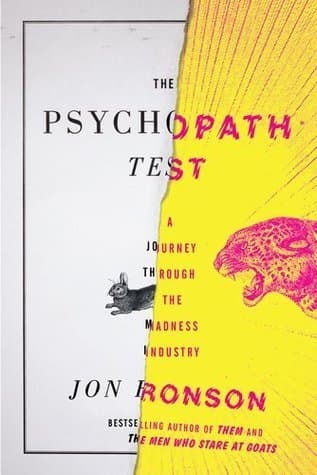
Ronson starts his journey by trying to identify psychopaths using Dr. Robert Hare's Psychopathy Checklist-Revised (PCL-R). He quickly finds that applying the checklist is not straightforward. Criteria like 'lack of remorse' or 'superficial charm' are open to interpretation, meaning different clinicians can get very different scores for the same person. This subjectivity is clear in the case of Tony, a patient in Broadmoor, who carefully breaks down the PCL-R to argue he is sane. Tony shows how 'psychopathic' traits can be seen as reas...
Supporting evidence
The application of the PCL-R to individuals like Tony, the patient at Broadmoor, and the various interpretations of his responses by different experts.
Apply this
Approach psychological diagnoses, especially those with significant social stigma, with a critical eye, understanding that they are constructs, not absolute truths. Seek multiple perspectives and consider the context of behavior.