BookBrief
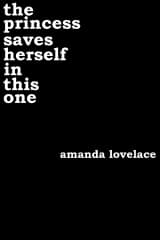
The Princess Saves Herself in This One cover
Archivist's Choice

The Princess Saves Herself in This One

Amanda Lovelace (2016)

Genre

Psychology / Memoir / Romance

Reading Time

90 min

Key Themes

See below

Track Your Reading

Sign in to track this book

Amanda Lovelace's poetry collection shows her change from a quiet princess to a strong queen, helping readers heal and find self-love.

Core Idea

Amanda Lovelace's "The Princess Saves Herself in This One" is a poetry collection that redefines the traditional fairy tale. Through her personal story, the author addresses trauma, abuse, and societal pressures on women. She advocates for self-rescue and self-love instead of waiting for someone else to help. The book's main idea is that true strength and healing come from inside. This happens by being vulnerable, dealing with grief, and telling your own story. This helps readers break free from old expectations and find their own way to strength and self-acceptance.
Reading time
90 min
Difficulty
Easy
✓ Read this if...
You are navigating personal trauma, seeking to reclaim your narrative, or appreciate concise, impactful poetry that challenges traditional gender roles and promotes self-empowerment.
✗ Skip this if...
You prefer traditional narrative structures, are uncomfortable with direct discussions of abuse and trauma, or are looking for lighthearted, escapist poetry.

Core idea

The central argument and framework that powers the entire book.

Amanda Lovelace's "The Princess Saves Herself in This One" is a poetry collection that redefines the traditional fairy tale. Through her personal story, the author addresses trauma, abuse, and societal pressures on women. She advocates for self-rescue and self-love instead of waiting for someone else to help. The book's main idea is that true strength and healing come from inside. This happens by being vulnerable, dealing with grief, and telling your own story. This helps readers break free from old expectations and find their own way to strength and self-acceptance.

At a glance

Reading time

90 min

Difficulty

Easy

Read this if...

You are navigating personal trauma, seeking to reclaim your narrative, or appreciate concise, impactful poetry that challenges traditional gender roles and promotes self-empowerment.

Skip this if...

You prefer traditional narrative structures, are uncomfortable with direct discussions of abuse and trauma, or are looking for lighthearted, escapist poetry.

Key Takeaways

1

The Evolution of Self-Identity

From helpless princess to empowered queen, self-perception transforms through adversity.

Quote

the princess, the damsel, & the queen piece together the life of the author in three stages

Lovelace uses the 'princess,' 'damsel,' and 'queen' types as changing stages of personal growth. The first 'princess' stage shows a naive self, often relying on others for approval or help. The 'damsel' stage then shows vulnerability, reflecting times of trauma, grief, and feeling trapped. This is not a step backward but a necessary look into deep pain. The final 'queen' stage means taking back control. The individual, after facing their difficulties, becomes strong, independent, and powerful. This journey shows that real power is not...

Supporting evidence

The book's structure itself, divided into 'the princess,' 'the damsel,' and 'the queen,' directly illustrates this progression through the author's own life stages.

Apply this

Reflect on your own life's chapters using these archetypes. Identify moments where you felt like a 'princess' (idealized, perhaps protected), a 'damsel' (vulnerable, in crisis), and a 'queen' (empowered, self-reliant). Recognize that each stage contributes to your overall strength and narrative.

identity-formationpersonal-growtharchetypal-psychology
2

Healing Through Poetic Expression

Poetry serves as a potent vehicle for processing trauma and fostering emotional catharsis.

Quote

Explores life & all of its love, loss, grief, healing, empowerment, & inspirations.

Lovelace's direct poetry shows how powerful creative expression can be for dealing with emotions like grief, abuse, and self-discovery. By writing down her inner struggles, she not only processes her own experiences but also helps readers confront theirs. The short, clear poems cut through confusion, allowing for immediate emotional connection. This writing is more than just recording; it is an active way to make sense of things and release emotions. It turns pain into art and offers a way for both writer and reader to find comfort an...

Supporting evidence

The entire collection serves as evidence, with each poem directly addressing personal traumas, heartbreaks, and subsequent healing, such as 'the witch' poem or those detailing abusive relationships.

Apply this

Consider journaling or writing poetry to process difficult emotions. Don't focus on perfection; prioritize authentic expression. Allow yourself to write freely about your pain, anger, or joy as a form of emotional release and self-discovery.

expressive-therapytrauma-recoveryemotional-catharsis
3

Dismantling Fairy Tale Expectations

The book deconstructs idealized narratives to reveal the messy reality of self-rescue.

Quote

Ah, life- the thing that happens to us while we're off somewhere else blowing on dandelions & wishing ourselves into the pages of our favorite fairy tales.

Lovelace cleverly changes traditional fairy tale stories. She challenges the idea that women need a 'prince charming' to be saved. Her 'princess' first fits this idea, but the journey through the 'damsel' and 'queen' stages is clearly about saving herself. She replaces the passive damsel story with an active, often painful, process of self-freedom. This is not a negative view of hope, but a realistic one: hope comes from one's own strength and ability to love and stand up for oneself. The book says that true power comes from within, n...

Supporting evidence

The title itself, 'The Princess Saves Herself in This One,' directly signals this thematic reversal. Poems throughout the collection explicitly reject the need for a male savior.

Apply this

Examine the narratives you've internalized about happiness and success. Are you waiting for an external event or person to 'save' you? Identify areas where you can take proactive steps to 'save yourself,' fostering independence and self-reliance.

feminist-critiqueself-reliancenarrative-subversion
4

The Power of Vulnerability

Sharing personal pain openly can forge deep connections and foster collective healing.

Quote

you serves as a note to the reader & all of humankind.

Lovelace's willingness to show her deepest wounds—from abuse and grief to insecurity and self-doubt—is a sign of great strength. This openness creates an immediate and deep connection with the reader. It changes a lonely experience of suffering into a shared understanding. By being so honest about her struggles, she normalizes pain and gives a voice to unspoken experiences, especially for those who have felt alone in their trauma. This sharing helps build empathy and a community of readers who see parts of themselves in her words. It ...

Supporting evidence

The 'you' section, directly addressing the reader, explicitly invites this connection and shared experience. The widespread popularity and resonance of the book with survivors of trauma further supports this.

Apply this

Practice intentional vulnerability in safe spaces. Share a personal struggle with a trusted friend or therapist. Observe how this act of opening up can deepen connections and alleviate feelings of isolation.

emotional-intelligenceinterpersonal-connectionshared-experience
5

Grief as a Transformative Force

Loss, while devastating, can be a crucible for profound personal change and resilience.

Quote

Explores life & all of its love, loss, grief, healing, empowerment, & inspirations.

The book shows grief not as a straight path but as a wild, consuming force that changes everything. Lovelace shows how the deep loss of loved ones (her sister and mother) puts her into the 'damsel' stage, a time of deep sadness. However, this sadness is not the end; it is a trigger. It forces her to face death, fragility, and the meaning of life. Through the painful process of mourning, she slowly starts to rebuild, finding new strength and purpose. This view highlights that while grief is painful, it can also lead to big changes. It ...

Supporting evidence

Poems explicitly detailing the deaths of her sister and mother, and the subsequent emotional turmoil, are central to the 'damsel' section and the journey towards healing.

Apply this

If experiencing grief, allow yourself to feel its full spectrum without judgment. Understand that healing is not about 'getting over it,' but about integrating the loss into your life and finding new ways to carry forward the love and lessons learned.

grief-processresilience-buildingpost-traumatic-growth
6

Reclaiming Your Narrative

Taking ownership of one's story is crucial for agency and self-definition.

Quote

the princess, the damsel, & the queen piece together the life of the author in three stages

A main message of the book is the need to take back and rewrite one's personal story, especially after trauma or when others have told your story for you. Lovelace's journey from 'princess' (perhaps a story imposed by society) to 'damsel' (a story of being a victim, often imposed by abusers or situations) and finally to 'queen' (a self-written story of strength and survival) shows this. She actively takes control of her past, refusing to let it fully define her. Instead, she uses it as a basis for her present and future self. This act...

Supporting evidence

The entire structure of the book, moving from passive archetypes to an active, self-defined 'queen,' demonstrates the author's reclamation of her own story.

Apply this

Identify any narratives about yourself that feel limiting or were imposed by others. Begin to actively reframe or rewrite these stories, focusing on your strengths, resilience, and agency. Consider what narrative you want to live by.

narrative-therapyself-empowermentagency
7

The Interconnectedness of Pain and Love

Profound love often brings profound pain, and understanding this link fosters deeper empathy.

Quote

Explores life & all of its love, loss, grief, healing, empowerment, & inspirations.

Lovelace's poetry often connects the beauty of love with the pain of loss, showing how these opposing forces are deeply linked. The intense grief she feels is a direct result of the deep love she had for her sister and mother. This connection shows a basic truth of being human: to love deeply is to be open to the possibility of deep pain. The book accepts this reality, suggesting that the ability to love and the ability to grieve are two sides of the same coin. This understanding does not lessen love. Instead, it makes it richer, lead...

Supporting evidence

The poems that celebrate the love for her sister and mother are often followed by, or interspersed with, those that express the crushing grief of their loss.

Apply this

Acknowledge that vulnerability to pain is an inherent part of deep love. Instead of fearing loss, lean into the joy and connection of love, understanding that the full spectrum of emotions is part of a rich life experience.

emotional-dualityhuman-connectionempathy
8

The 'You' as a Call to Action

The final section directly empowers readers to embark on their own journey of self-rescue.

Quote

you serves as a note to the reader & all of humankind.

The book's structure ends with the 'you' section, which speaks directly to the reader. This is more than just an author's note; it is a clear call to action. It changes the reader from someone just watching Lovelace's story to someone taking part in their own. By changing the focus, Lovelace helps her audience see their own ability to be strong, heal, and save themselves. It is a universal message of hope and encouragement, urging people to face their own 'princess,' 'damsel,' and 'queen' stages. This part emphasizes that while her st...

Supporting evidence

The entire 'you' section, with its direct address and encouraging tone, serves as this call to action, offering solace and strength to the reader.

Apply this

After reading, reflect on the 'you' section's message. What specific actions can you take to apply the lessons of self-rescue and empowerment to your own life? Consider setting a small, actionable goal for personal growth.

reader-engagementpersonal-empowermentself-help
9

Challenging Societal Expectations of Women

The book critiques restrictive gender roles and champions female autonomy.

Quote

the princess saves herself in this one.

Beyond the personal story, Lovelace's work challenges what society expects of women. The 'princess' type, while a stage of life, also represents the traditional idea of a woman as beautiful, passive, and needing rescue. The journey to 'queen' is a rejection of this. It shows a woman's ability to be strong, lead, and decide for herself outside of old gender roles. The book supports women's independence, not just in relationships, but in defining their own worth, purpose, and path. It encourages women to drop the expectations of being '...

Supporting evidence

Poems that critique abusive relationships, the pressure to be 'perfect,' and the ultimate triumph of self-love and independence over external validation.

Apply this

Identify any societal expectations that feel limiting to you as a woman. Challenge them by making choices that align with your authentic self and your own definition of strength and success, even if they go against conventional norms.

feminist-literaturegender-rolesfemale-empowerment

Critical analysis

Notable Quotes

the princess locked herself away in the highest tower, hoping a knight in shining armor would come to her rescue.

Opening lines of the book, setting up the theme of self-reliance.

i was not a princess waiting to be saved. i was a dragon waiting to be unleashed.

A turning point where the speaker embraces her own power.

you cannot leave me. i am already gone.

Reflecting on loss and emotional detachment.

the thing about having a broken heart is that every little piece still loves him.

Exploring the complexity of love after heartbreak.

she was a storm, not the kind you run from, the kind you chase.

Describing a powerful, magnetic presence.

i am my own knight in shining armor.

A declaration of self-sufficiency and inner strength.

the princess saved herself in this one.

The titular line, summarizing the book's central message.

you do not owe anyone your grief.

A reminder about personal boundaries in mourning.

i am not a hotel room. i am a home.

Asserting self-worth and permanence in relationships.

the dragon learned to love the knight who did not come to slay her.

A metaphor for finding acceptance and love.

my heart is a museum of everyone who has ever left.

Poetic reflection on past relationships and loss.

she built a kingdom from the bones of her past.

Symbolizing growth and resilience from hardship.

i am not a lesson. i am a person.

Rejecting objectification and asserting humanity.

the princess learned to wield her own sword.

Metaphor for gaining self-defense and agency.

Quiz

Test Your Knowledge

Ready to see how well you understood this book? Take our interactive quiz with 10 questions.

10
Questions
~5
Minutes
?
Best Score

Key Questions (FAQ)

'The Princess Saves Herself in This One' is a poetry collection by Amanda Lovelace that explores the author's personal journey through trauma, healing, and empowerment. Divided into four sections—the princess, the damsel, the queen, and you—it weaves themes of love, loss, grief, and self-discovery, ultimately offering inspiration to readers.

About the author