BookBrief
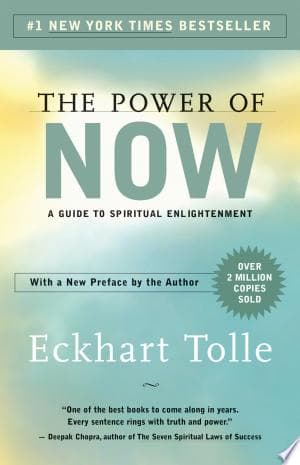
The Power of Now cover
Archivist's Choice

The Power of Now

Eckhart Tolle (2010)

Genre

Self-Help

Reading Time

240 min

Key Themes

See below

Track Your Reading

Sign in to track this book

Learn to quiet your mind and live in the present, finding your true self and freedom from suffering.

Core Idea

The Power of Now says that most human suffering comes from identifying with constant thoughts, especially those about the past or future. Real peace, joy, and understanding come only from living fully in the present moment, moving beyond the ego and its false ideas of time. By being present, people can connect with their deeper, true self and get rid of the 'pain-body'—old emotional pain—which ends unhappiness and leads to spiritual awakening.
Reading time
240 min
Difficulty
Medium
✓ Read this if...
You are seeking a spiritual path to inner peace, want to reduce anxiety about the future or regret about the past, and are open to profound shifts in your perception of self and reality.
✗ Skip this if...
You prefer practical, actionable self-help advice over spiritual philosophy, are skeptical of concepts like 'ego' and 'enlightenment', or are not ready to challenge your fundamental understanding of time and identity.

Core idea

The central argument and framework that powers the entire book.

The Power of Now says that most human suffering comes from identifying with constant thoughts, especially those about the past or future. Real peace, joy, and understanding come only from living fully in the present moment, moving beyond the ego and its false ideas of time. By being present, people can connect with their deeper, true self and get rid of the 'pain-body'—old emotional pain—which ends unhappiness and leads to spiritual awakening.

At a glance

Reading time

240 min

Difficulty

Medium

Read this if...

You are seeking a spiritual path to inner peace, want to reduce anxiety about the future or regret about the past, and are open to profound shifts in your perception of self and reality.

Skip this if...

You prefer practical, actionable self-help advice over spiritual philosophy, are skeptical of concepts like 'ego' and 'enlightenment', or are not ready to challenge your fundamental understanding of time and identity.

Key Takeaways

1

The Tyranny of the Mind

Your thoughts are not who you are; they are often the source of your suffering.

Quote

The primary cause of unhappiness is never the situation but your thoughts about it.

Tolle says our minds, though useful, often control us, trapping us in constant thinking, worrying, and dwelling on the past or future. This endless mental talk, which he calls the 'egoic mind,' creates a false self, making us identify with thoughts and emotions instead of our deeper, true self. This identification causes most human suffering, as the mind constantly judges, resists, and makes up stories that pull us from the peace of the present. Recognizing this mental control is the first step to freedom.

Supporting evidence

Tolle frequently uses the analogy of the 'monkey mind' or a 'madman' within, constantly chattering and creating problems that don't exist in the present reality. He points to common human experiences of anxiety and depression, attributing them to an overactive, future- or past-obsessed mind.

Apply this

Practice observing your thoughts without judgment. Notice when your mind drifts to the past (regret, nostalgia) or future (worry, anticipation). Simply acknowledge these thoughts as mental events, not as your identity or ultimate truth. This creates a space between you and your thoughts.

egoic-mindmental-chatteridentification
2

Embrace the Now

The present moment is all you ever truly have; find peace by fully inhabiting it.

Quote

The past has no power over the present moment.

Tolle's main teaching is that the present moment, the 'Now,' is the only real thing. The past is a memory, and the future is an imagined idea; both exist only as thoughts in your mind. True peace and spiritual awakening come from focusing intensely on and accepting the present moment as it is, without resistance. This doesn't mean ignoring planning or learning from the past, but doing these things from a place of presence, without letting them take over your awareness. By fully accepting the Now, you connect with the eternal, timeless...

Supporting evidence

Tolle often asks readers to consider when they have ever experienced anything outside of the present moment. He challenges the notion that 'waiting' for a future event will bring happiness, arguing that true joy can only be found in the current experience.

Apply this

Consciously bring your attention to your senses in any given moment: the sounds you hear, the feeling of your breath, the sights around you. When performing routine tasks like washing dishes or walking, do so with complete attention, making the task itself the primary focus, not a means to an end.

the-nowpresencetimelessness
3

The Pain-Body Explained

Unprocessed emotional pain accumulates into an energetic entity that seeks to perpetuate itself.

Quote

The pain-body is an energy field, almost an entity, that has accumulated old emotional pain.

Tolle describes the 'pain-body' as a collection of past emotional pain—physical, mental, and emotional—that stays within us. This pain-body is usually inactive but can be triggered by current events that remind us of past traumas or bad experiences. When active, it seeks more pain, often by making us think negative thoughts, feel sorry for ourselves, or cause conflict in relationships. Knowing about the pain-body and how it works helps us stop identifying with it and keeps it from controlling our lives.

Supporting evidence

Tolle describes the pain-body's manifestation as sudden mood swings, irrational anger, or deep sadness that seems disproportionate to the current situation. He highlights how people often unconsciously seek out situations that will feed their pain-body, such as engaging in arguments or holding onto grievances.

Apply this

When you feel a wave of intense negative emotion, instead of getting lost in its story, acknowledge it as the pain-body. Observe it without judgment or reaction, as if watching a cloud pass by. Do not identify with it. This conscious observation starves the pain-body of the energy it needs to sustain itself.

pain-bodyemotional-painsuffering
4

Beyond Thought: True Being

Discover your true self in the stillness that underlies all mental activity.

Quote

The most important thing is to make the Now your friend.

Below the constant flow of thoughts and emotions is a deeper level of consciousness, which Tolle calls 'Being.' This is our true self, an unchanging, eternal, and always present awareness. We lose touch with Being when we identify too much with our minds and external things. By letting go of our thoughts and being deeply present, we find this inner stillness and a deep sense of peace, joy, and connection. This is an direct experience, not just an intellectual understanding.

Supporting evidence

Tolle suggests that moments of deep appreciation for nature, profound silence, or intense concentration where the mind momentarily quiets down, offer glimpses into this state of Being. He posits that this inner stillness is the source of all creativity and true happiness.

Apply this

Practice 'no-mind' states by focusing intensely on a single sensory input, such as the sound of rain, the feeling of your breath, or looking at a flower without labeling it. In moments of quiet, simply 'be' without needing to think or do anything. This cultivates a connection to your deeper self.

beingconsciousnessstillnessenlightenment
5

Ending Unhappiness: No Resistance

Accept what is, rather than resisting or judging the present moment.

Quote

Whatever you fight, you strengthen, and what you resist, persists.

Much of our suffering comes not from situations themselves, but from resisting them. When we call a situation 'bad,' wish it were different, or fight against what is, we create inner conflict. Tolle says true freedom comes from accepting the present moment completely, without judgment or resistance. This doesn't mean being passive or doing nothing, but approaching situations from a place of inner peace and clarity, rather than struggling. Acceptance frees up the energy used in resistance for constructive action.

Supporting evidence

Tolle uses examples of people stuck in traffic or dealing with minor annoyances, where their internal resistance and frustration amplify the unpleasantness far beyond the actual external event. He also touches on how resistance to physical pain can often make it feel worse.

Apply this

When facing an unpleasant situation, consciously say to yourself, 'This is what is.' Observe your internal reaction. Instead of fighting it, try to accept its existence for that moment. Then, from that place of acceptance, decide if any action is required. If not, simply let it be.

acceptanceresistancesufferingpeace
6

The Power of Surrender

When you can't change a situation, surrender to it to find inner peace.

Quote

Surrender is the simple but profound wisdom of yielding to rather than opposing the flow of life.

For Tolle, surrender is not weakness or giving up; it is a smart acceptance of 'what is' when you cannot change it. It means letting go of inner resistance to a situation, person, or event, especially when facing unavoidable suffering or an unchangeable reality. This act of surrender doesn't mean you stop trying to improve your life, but it means you don't let outside circumstances control your inner state. By surrendering, you align with life's flow and find a deeper inner strength and peace that goes beyond the external situation.

Supporting evidence

Tolle often refers to situations of terminal illness or irreversible loss. In such cases, fighting against reality only adds to the suffering. Surrender, in this context, allows for a deeper peace and dignity in the face of the inevitable.

Apply this

Identify an area in your life where you are constantly fighting or resisting something you cannot change. Acknowledge the resistance. Then, consciously make the choice to surrender, not to the problem itself, but to the fact that it *is*. Feel the relief that comes from letting go of the struggle. Then, if possible, act from that place of peace.

surrenderacceptanceflow-of-lifeinner-peace
7

Time as Illusion

The psychological concept of time is a mental construct that prevents true presence.

Quote

All negativity is caused by an accumulation of psychological time and denial of the present.

Tolle distinguishes between 'clock time' (practical time for daily tasks) and 'psychological time' (the mind's habit of dwelling on past regrets/memories or future worries/expectations). He argues that psychological time is an illusion created by the ego, a distraction from the only true reality: the present moment. Most unhappiness, anxiety, and stress come from living in psychological time, rather than being fully present. Taking back awareness from psychological time is a key step to experiencing the power and peace of the Now.

Supporting evidence

Tolle points out how often people are 'waiting' for something better to happen in the future – a vacation, a promotion, retirement – and thus miss the richness of their current experience. He also highlights the pervasive nature of guilt and regret, which are rooted in an unreleased past.

Apply this

Catch yourself whenever you are lost in thoughts about the past or future. Gently bring your attention back to the current activity or sensation. When planning for the future, do so consciously and then return your awareness to the Now. Don't let future goals become an escape from the present.

psychological-timeclock-timeillusionpresent-moment
8

Inner Body Awareness

Connect with the subtle energy field of your inner body to anchor yourself in the Now.

Quote

The inner body is your link to Being.

To deepen presence, Tolle encourages readers to become aware of their 'inner body'—the subtle energy field that gives life to the physical body. This means feeling your body from within, not just thinking about it. By bringing conscious attention to the aliveness, the 'feeling of being alive,' throughout your body, you firmly ground yourself in the present moment and bypass constant mental chatter. This practice creates an anchor for your awareness, making it harder for the mind to pull you into psychological time or the pain-body.

Supporting evidence

Tolle suggests simple practices like feeling the aliveness in your hands or feet, or sensing the subtle energy field throughout your entire body. He claims this practice can lead to a deeper sense of vitality, peace, and even physical healing.

Apply this

Take a few minutes each day to close your eyes and bring your attention to the sensations within your body. Feel the subtle energy in your hands, feet, or throughout your entire torso. Don't analyze, just feel. This helps you reconnect with your deeper self and quiet the mind.

inner-bodyenergy-fieldpresencegrounding
9

Relationships as Spiritual Practice

Relationships can be powerful catalysts for awakening if approached with conscious presence.

Quote

If you cannot be at ease with yourself when you are alone, you will seek a relationship to cover up your unease.

Tolle sees relationships, especially close ones, as big chances for spiritual growth. However, he warns that without conscious presence, relationships often become places for ego drama and pain-body activation. Instead of looking for fulfillment from another person, which is an external and conditional source, he suggests bringing full presence to the interaction. When both partners act from a place of Being, relationships go beyond their ego functions and become ways for mutual awakening, love, and a deeper connection to universal co...

Supporting evidence

Tolle highlights how relationships often become battlegrounds for egoic needs, where partners project their unmet desires or pain-body onto each other. He contrasts this with moments of deep, shared presence where love is experienced as a profound, unconditional state of Being.

Apply this

In your interactions, particularly with close ones, practice active listening and full presence. When conflict arises, observe your internal reactions and the other person's without immediately reacting from your ego or pain-body. Respond from a place of stillness and awareness, seeking understanding rather than victory.

conscious-relationshipsegoic-dramaspiritual-growthunconditional-love
10

Enlightenment is Available Now

Spiritual awakening is not a future goal, but a state of being accessible in the present.

Quote

Enlightenment is a state of natural oneness with Being.

Tolle makes enlightenment seem less mysterious, presenting it not as a distant, impossible state for a few, but as a natural state of deep presence and unity with Being that everyone can reach. It's not about learning new things or beliefs, but about shedding the layers of identification with the mind and ego. By regularly practicing presence, observing the mind, and letting go of the pain-body, one slowly awakens to this natural state of inner peace and freedom. This awakening is an ongoing process of deepening presence, not a final ...

Supporting evidence

Tolle shares his own sudden spiritual awakening experience, emphasizing that it was a shift in consciousness rather than an intellectual achievement. He also points to the common human experience of moments of pure joy or peace that spontaneously arise when the mind is momentarily quiet.

Apply this

Let go of the idea that you need to 'achieve' enlightenment. Instead, focus on cultivating presence in each moment. Trust that by simply being present and aware, you are already on the path to deeper awakening. See every moment as an opportunity to practice and deepen your connection to Being.

enlightenmentspiritual-awakeningonenesspresence

Critical analysis

Notable Quotes

The primary cause of unhappiness is never the situation but rather your thoughts about it.

Tolle emphasizes that our interpretation and mental commentary, not external events, create suffering.

Realize deeply that the present moment is all you ever have. Make the Now the primary focus of your life.

This is a core teaching, urging readers to live fully in the present rather than dwelling on past or future.

Whatever you fight, you strengthen, and what you resist, persists.

Tolle explains that resisting negative emotions or situations only gives them more power.

You are not your mind. Your mind is a tool. It is there to serve you, not to be you.

A fundamental distinction Tolle makes between one's true self and their incessant mental chatter.

To complain is always nonacceptance of what is. It invariably carries an unconscious negative charge.

Tolle views complaining as a form of resistance to the present moment, draining energy.

Life is the dancer and you are the dance.

A poetic way of expressing the interconnectedness of existence and our role within it.

Any action is often better than no action, especially if you have been stuck in an unhappy situation for a long time. If it is a mistake, at least you learn something, in which case it's no longer a mistake. If you remain stuck, you learn nothing.

Tolle encourages decisive action, even imperfect action, over paralysis.

The more you are in the Now, the more you realize that you are the formless One Life.

Connecting presence with the realization of a deeper, universal consciousness.

Stress is caused by being 'here' but wanting to be 'there.'

A concise definition of stress as the discrepancy between present reality and desired reality.

Suffering has a noble purpose: the burning up of the ego.

Tolle suggests that suffering, while painful, can be a catalyst for spiritual awakening and the dissolution of the ego.

Don't seek happiness. If you seek it, you won't find it, because seeking is the antithesis of happiness.

Happiness is seen as a byproduct of presence, not something to be pursued externally.

To be identified with your mind is to be trapped in time: the compulsion to live almost exclusively through memory and anticipation.

Explaining how identification with the mind keeps us from the present moment.

Whenever you are able to accept what is, every moment is the best moment. That is enlightenment.

Linking radical acceptance of the present with the concept of spiritual enlightenment.

The greatest obstacle to enlightenment is your attachment to your thoughts, thinking, the mind.

Highlighting the mind's role as both a tool and a potential barrier to spiritual awakening.

Quiz

Test Your Knowledge

Ready to see how well you understood this book? Take our interactive quiz with 10 questions.

10
Questions
~5
Minutes
?
Best Score

Key Questions (FAQ)

The Power of Now emphasizes the importance of living fully in the present moment, rather than being consumed by past regrets or future anxieties. It teaches that true peace and enlightenment can only be found by transcending the egoic mind and connecting with one's deeper Being in the 'Now'.

About the author

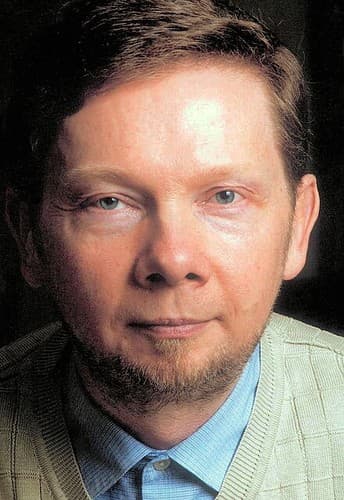
Eckhart Tolle

Eckhart Tolle is a spiritual teacher and author renowned for his profound insights into consciousness and personal transformation. His bestselling works, including "The Power of Now" and "A New Earth," have guided millions worldwide toward greater presence and inner peace. Tolle's teachings emphasize the importance of living in the present moment and transcending the ego for spiritual enlightenment.