BookBrief
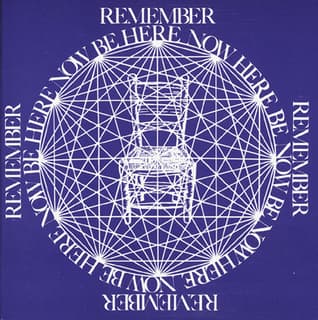
Be Here Now cover
Archivist's Choice

Be Here Now

Ram Dass (1971)

Genre

Psychology / Memoir / Spirituality / Philosophy / Self-Help

Reading Time

416 min

Key Themes

See below

Track Your Reading

Sign in to track this book

Explore Richard Alpert's transformation into Ram Dass, an illustrated journey into spiritual awakening and conscious living through Yoga's wisdom.

Core Idea

Ram Dass's 'Be Here Now' argues that the ego is an illusion, hiding our true, interconnected spiritual nature. Through personal stories, Eastern philosophy, and his path from Harvard psychologist Richard Alpert to spiritual teacher Ram Dass, the book helps readers move past dualistic thought and the limits of the rational mind. It suggests that real freedom and presence come from embracing the 'now,' seeing the divine in everyone, and understanding life as a play of consciousness.
Reading time
416 min
Difficulty
Medium
✓ Read this if...
You are exploring Eastern spirituality, consciousness, the nature of self, or the integration of psychedelic experiences into a spiritual framework. You appreciate a non-linear, experiential approach to profound philosophical questions.
✗ Skip this if...
You prefer a purely academic, linear, or scientific approach to psychology and spirituality, or are looking for a prescriptive, step-by-step self-help guide without a mystical or philosophical bent.

Core idea

The central argument and framework that powers the entire book.

Ram Dass's 'Be Here Now' argues that the ego is an illusion, hiding our true, interconnected spiritual nature. Through personal stories, Eastern philosophy, and his path from Harvard psychologist Richard Alpert to spiritual teacher Ram Dass, the book helps readers move past dualistic thought and the limits of the rational mind. It suggests that real freedom and presence come from embracing the 'now,' seeing the divine in everyone, and understanding life as a play of consciousness.

At a glance

Reading time

416 min

Difficulty

Medium

Read this if...

You are exploring Eastern spirituality, consciousness, the nature of self, or the integration of psychedelic experiences into a spiritual framework. You appreciate a non-linear, experiential approach to profound philosophical questions.

Skip this if...

You prefer a purely academic, linear, or scientific approach to psychology and spirituality, or are looking for a prescriptive, step-by-step self-help guide without a mystical or philosophical bent.

Key Takeaways

1

The Ego is a Construct

Our perceived 'self' is a collection of experiences, not our true essence.

Quote

The game is not about becoming somebody, it's about becoming nobody.

Ram Dass, then Richard Alpert, describes his journey from a Harvard professor focused on academic and material success to a seeker letting go of his ego. He argues that the 'I' we identify with—our personality, achievements, fears, and desires—is just a construct, a temporary vessel for our consciousness. This ego-self creates suffering through its attachments and dislikes, always trying for control and approval. The main realization is that true freedom comes from separating from this temporary self and recognizing the deeper, univer...

Supporting evidence

Alpert's personal narrative of his prestigious academic career, his experiments with psychedelics at Harvard, and his subsequent disillusionment, leading him to India and his guru, Maharaji, serves as the primary evidence. His transformation from 'Dr. Richard Alpert, PhD' to 'Baba Ram Dass' is the living proof of shedding an egoic identity.

Apply this

Practice mindful observation of your thoughts and emotions, recognizing them as transient phenomena rather than defining aspects of your identity. Engage in self-inquiry: 'Who am I beyond my roles, possessions, and thoughts?' Regularly detach from the outcome of your actions, focusing instead on the act itself.


ego-deathself-inquirynon-attachment
2

Psychedelics as a Doorway, Not the Destination

Mind-altering substances can offer glimpses of higher consciousness, but true realization requires sustained spiritual practice.

Quote

LSD was a very profound spiritual experience, but it wasn't lasting. It showed me the possibility, but didn't give me the way to live it.

Ram Dass openly discusses his research with psychedelics, especially LSD, at Harvard in the 1960s. He acknowledges their power to dissolve ego boundaries, create mystical experiences, and show interconnectedness. These experiences were key in shaking him out of his traditional worldview and pointing him toward deeper truths. However, he clearly states that psychedelics are only 'chemical curds,' temporary insights, not the lasting state of liberation. They can open a door, but they do not teach you how to live in the new room. The dee...

Supporting evidence

His detailed accounts of the Harvard Psilocybin Project and the subsequent dismissal of him and Timothy Leary, alongside his later reflections on how his psychedelic experiences, while profound, ultimately led him to seek a guru for sustained transformation.

Apply this

If you've had profound experiences (with or without substances), don't cling to the memory; instead, use the insight as motivation to explore practices like meditation, yoga, or selfless service. Seek out genuine spiritual teachings and integrate them into your daily life rather than relying on fleeting peak experiences.

psychedelicsenlightenmentintegrationspiritual-practice
3

The Guru as a Mirror

A true spiritual teacher reflects your own inner wisdom and helps you transcend limitations.

Quote

The guru is not outside you. The guru is in you. The guru is the light that illuminates the darkness of your ignorance.

Ram Dass's meeting with his guru, Neem Karoli Baba (Maharaji), is a turning point in the book. He first approaches Maharaji with his intellectual doubts and ego-driven demands, expecting a traditional teacher-student dynamic. However, Maharaji consistently disarms him, seeing through his illusions and reflecting his true nature back to him. The guru's role, as Ram Dass explains, is not to give new knowledge, but to remove the barriers preventing one from realizing the wisdom already within. Maharaji's unconditional love, simple presen...

Supporting evidence

Numerous anecdotes about Maharaji's interactions with Ram Dass: Maharaji knowing Alpert's thoughts before he spoke them, his seemingly miraculous feats, and his simple, yet profound, teachings like 'Love everyone, serve everyone, remember God.'

Apply this

Seek out mentors or teachers who embody the qualities you aspire to, but always remember that the ultimate authority resides within yourself. Cultivate discernment to distinguish genuine wisdom from charismatic illusion. Practice seeing the 'guru' in everyone and everything, recognizing the interconnectedness of all beings.

guruspiritual-teacherdiscernmentunconditional-love
4

Living 'Be Here Now'

True presence in the present moment is the gateway to spiritual freedom and joy.

Quote

The quieter you become, the more you can hear.

The main message of 'Be Here Now' is a call to radical presence. Ram Dass emphasizes that most human suffering comes from dwelling on the past or worrying about the future. The mind constantly pulls us away from the richness of the current moment, creating anxiety, regret, and missed chances for real connection. By developing awareness and focusing our attention fully on 'now,' we begin to break the ego's hold and access a deeper sense of peace and clarity. This is not about ignoring planning or learning from the past, but about groun...

Supporting evidence

The book's entire structure, particularly the 'From Bindu to Ojas' section, is a meditation on this principle, presented through sparse text, evocative illustrations, and direct calls to presence. Maharaji's simple teachings also consistently pointed to the importance of the present moment.

Apply this

Integrate mindfulness into everyday activities: eating, walking, listening. Practice meditation for even a few minutes daily, focusing on your breath. When your mind wanders to the past or future, gently guide it back to the present moment without self-judgment. Notice the beauty and detail in your immediate surroundings.

mindfulnesspresent-momentawarenessmeditation
5

Karma and the Dance of Life

Our actions, thoughts, and intentions create consequences that shape our reality.

Quote

Each of us is creating our own reality through the way we perceive and act in the world.

Ram Dass introduces karma not as punishment, but as a basic law of cause and effect in the universe. Every action, thought, and intention creates a ripple effect, shaping our external circumstances and our inner state and future experiences. Understanding karma encourages personal responsibility, moving past victimhood toward conscious creation. It is a reminder that we are always co-creating our reality. This understanding also promotes compassion, as we recognize that everyone is on their own karmic journey. The goal is not to escap...

Supporting evidence

The book illustrates karmic principles through stories of individuals' suffering and liberation, and through the emphasis on selfless service (seva) as a path to purify karma.

Apply this

Reflect on the motivations behind your actions. Practice conscious choice-making, asking yourself if your actions are aligned with love and compassion. Engage in selfless service without expectation of reward. Forgive yourself and others, recognizing that everyone is doing their best within their karmic framework.

karmacause-and-effectresponsibilitycompassionseva
6

The Path of Service

Selfless service is a potent practice for dissolving ego and cultivating love.

Quote

The spiritual journey is not about arriving at a destination. It is about becoming more loving and compassionate.

Beyond meditation and self-reflection, Ram Dass supports seva, or selfless service, as a key part of spiritual growth. When we serve without attachment to results, recognition, or personal gain, we begin to dismantle the ego's self-centeredness. Serving others helps us see beyond our individual desires and connect with the shared humanity and divinity in all beings. It turns abstract spiritual ideas into lived experience, promoting compassion, empathy, and unconditional love. Giving, when done from the heart, cleanses the mind, open...

Supporting evidence

Ram Dass's own life post-India, particularly his involvement in prison ministry and the Seva Foundation, exemplifies his commitment to service as a spiritual practice, showing how he integrated his insights into practical action.

Apply this

Look for opportunities to serve others in your community without expecting anything in return. Approach your daily tasks, especially those for others, with a spirit of selfless giving. Practice 'seeing God' in everyone you serve, regardless of their circumstances.

sevaselfless-servicecompassionunconditional-lovealtruism
7

Death as the Ultimate Teacher

Embracing mortality can deepen our appreciation for life and release fear.

Quote

The quieter you become, the more you can hear.

While not directly a book about death, 'Be Here Now' implicitly prepares the reader for the impermanence of all things, including life itself. Ram Dass's teachings encourage awareness of death not as an end, but as a transition, a natural part of existence. By acknowledging our mortality, we are encouraged to live more fully, to release attachments, and to prioritize what truly matters—love, connection, and spiritual growth. Facing death can be a strong catalyst for spiritual awakening, dissolving the illusion of permanence and prom...

Supporting evidence

The cyclical nature of the book's illustrations and its overall philosophical stance on impermanence, though less direct than his later works on dying, lays the groundwork for understanding death as part of the 'now.' Maharaji's teachings often contained subtle references to the ephemeral nature of life.

Apply this

Contemplate your own mortality in a non-morbid way, perhaps by journaling about your legacy or what truly matters to you. Practice letting go of attachments to possessions, relationships, and even your self-image. Live each day as if it were precious, because it is.

impermanencemortalityacceptanceletting-gocycle-of-life
8

The Illusion of Separateness

Behind individual forms lies a unifying consciousness, connecting all beings.

Quote

We are all just walking each other home.

One of Ram Dass's most important insights is that our perceived separateness is an illusion. While we feel like distinct individuals, beneath the surface of form and personality lies a unified field of consciousness. This realization, often seen through deep meditation or psychedelic experiences, fundamentally changes one's perspective from an 'us vs. them' mindset to a deep sense of interconnectedness. It promotes empathy, compassion, and a recognition of the divine spark within every being. When we understand that we are all express...

Supporting evidence

Ram Dass's personal experiences of ego dissolution, both through psychedelics and his interactions with Maharaji, repeatedly led to this realization of interconnectedness and the 'one-ness' of all things.

Apply this

Practice seeing beyond the superficial differences between people and recognizing their inherent humanity and shared consciousness. Cultivate empathy by imagining yourself in others' shoes. Engage in practices that foster a sense of unity, such as group meditation or community service.

unity-consciousnessinterconnectednessonenessempathydivinity
9

Beyond Dualities

True wisdom lies in transcending the mind's tendency to categorize and judge.

Quote

The dance between form and emptiness is the whole game.

The human mind, trying to understand the world, constantly creates dualities: good/bad, light/dark, pleasure/pain, self/other. While these distinctions are useful for navigating the physical world, they cause suffering when we cling to one side and reject the other. Ram Dass encourages readers to move beyond this dualistic thinking, recognizing that apparent opposites are often two sides of the same coin, interdependent and ultimately unified. True liberation comes from seeing the inherent perfection in all of existence, embracing bot...

Supporting evidence

The book's illustrations often depict complementary forces and the interplay of opposites. Maharaji's teachings, while simple, consistently transcended conventional moral judgments, focusing instead on love and presence.

Apply this

When you encounter a challenging situation, try to see it from multiple perspectives, or consider the 'gift' within the difficulty. Practice non-judgment towards yourself and others. Recognize that qualities you perceive as 'negative' often have a 'positive' counterpart or serve a purpose.

non-dualityacceptancetranscendenceparadoxwholeness
10

The Play (Lila) of Consciousness

Life is a divine play, and we are both actors and the audience.

Quote

Just as the wave is part of the ocean, so too are you part of the Great Being.

Ram Dass introduces Lila, the divine play or cosmic dance of consciousness. From this view, existence itself is a playful, spontaneous unfolding of the divine. We, as individuals, are participants in this grand drama, taking on various roles and experiencing the full range of emotions and events. Seeing life as Lila helps us approach challenges with a lighter heart, understanding that even suffering can be part of the larger script for our growth. It encourages us to engage fully in life's experiences without becoming too attached t...

Supporting evidence

The whimsical and often humorous tone of the book, particularly in the later sections, reflects this playful understanding of existence. Maharaji's often playful and seemingly illogical actions also embody Lila.

Apply this

Cultivate a sense of humor about your own struggles and the absurdities of life. Approach your daily activities with a spirit of playfulness and curiosity. Remember that your current role or situation is temporary, and you are part of a much larger, beautiful unfolding.

liladivine-playcosmic-dancedetachmentjoy

Critical analysis

Notable Quotes

The game is not about becoming somebody, it's about unbecoming somebody.

Ram Dass discusses shedding ego and preconceived notions of self.

The most important thing is to be here now. To be present.

A central theme of the book, emphasizing mindfulness and presence.

When you know how to listen, everyone is a guru.

Highlighting the potential for learning and wisdom from all sources.

We are all just walking each other home.

A compassionate view of human connection and shared spiritual journey.

The quieter you become, the more you can hear.

Emphasizing the importance of inner stillness for perception.

Suffering is part of our training program for becoming wise.

Framing challenges and pain as opportunities for growth and wisdom.

Your problem is you are too busy holding onto your unworthiness.

Addressing self-doubt and the internal obstacles to self-acceptance.

Treat everyone you meet as if they are God in drag.

Encouraging unconditional love and reverence for all beings.

The spiritual journey is not about arriving at a destination where you no longer have problems. It's about arriving at a place where your experience of problems is transformed.

Clarifying the nature of spiritual growth as a shift in perspective.

The only thing that is ultimately real is love.

A fundamental belief in the ultimate power and reality of love.

When you stop identifying with the thoughts and emotions, you realize that you are the space in which they arise.

Describing the process of disidentification from the ego and mind.

The mind is a wonderful servant, but a terrible master.

Highlighting the importance of controlling one's thoughts rather than being controlled by them.

My guru said, 'Love everyone, serve everyone, remember God.'

A concise summary of core spiritual practices given by Neem Karoli Baba.

Quiz

Test Your Knowledge

Ready to see how well you understood this book? Take our interactive quiz with 10 questions.

10
Questions
~5
Minutes
?
Best Score

Key Questions (FAQ)

'Be Here Now' chronicles Richard Alpert's transformation into Baba Ram Dass, exploring his spiritual journey from academic psychology to Eastern mysticism. It serves as a guide to conscious living and the importance of embracing the spiritual dimension of human existence.

About the author