BookBrief
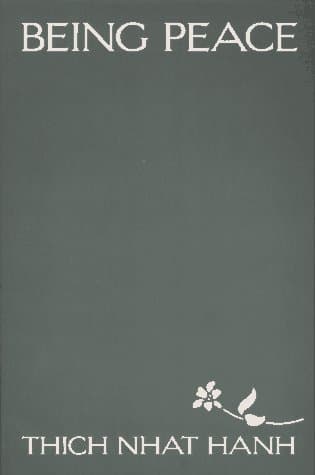
Being Peace cover
Archivist's Choice

Being Peace

Thich Nhat Hanh (1987)

Genre

Psychology / Spirituality / Philosophy / Self-Help

Reading Time

12 Minutes

Key Themes

See below

Track Your Reading

Sign in to track this book

Thich Nhat Hanh offers a gentle guide to finding inner calm by turning everyday pressures into mindful moments, showing that peace begins within.

Core Idea

Thich Nhat Hanh's "Being Peace" argues that peace is not an external state to be achieved, but an internal quality to be cultivated and embodied within each individual. Drawing from Buddhist principles, he emphasizes that true peace arises from mindfulness, present moment awareness, and compassionate action towards oneself and others. The book posits that by practicing mindfulness in our daily lives, we can transform suffering, cultivate inner tranquility, and radiate peace into the world, thereby contributing to collective peace and understanding.
Difficulty
Easy

Core idea

The central argument and framework that powers the entire book.

Thich Nhat Hanh's "Being Peace" argues that peace is not an external state to be achieved, but an internal quality to be cultivated and embodied within each individual. Drawing from Buddhist principles, he emphasizes that true peace arises from mindfulness, present moment awareness, and compassionate action towards oneself and others. The book posits that by practicing mindfulness in our daily lives, we can transform suffering, cultivate inner tranquility, and radiate peace into the world, thereby contributing to collective peace and understanding.

At a glance

Difficulty

Easy

Key Takeaways

1

Inner Peace as Global Peace

Cultivating personal tranquility directly contributes to a more peaceful world.

Quote

There is no way to peace; peace is the way.

Thich Nhat Hanh's main point, and perhaps the book's strongest idea, is that outer peace is impossible without first finding inner peace. He challenges the common belief that peace is something we reach through external acts like protests or negotiations. Instead, he states that peace is a way of living that begins within each person. When we practice mindfulness, kindness, and understanding daily, we naturally spread this calm outwards, affecting our families, communities, and eventually, the world. This is not a passive approach, bu...

Supporting evidence

The core philosophy is demonstrated through practical exercises like mindful breathing and walking, showing how these simple acts transform internal states, which then naturally extends to interactions with others.

Apply this

Begin each day with a few minutes of mindful breathing, focusing on the sensation of your breath. Throughout the day, when you encounter conflict or stress, pause and return to your breath. This simple practice helps anchor you in the present moment and prevents reactive, unpeaceful responses.

2

Mindfulness in Everyday Life

Transforming mundane activities into opportunities for profound awareness.

Quote

Washing the dishes is just washing the dishes.

The book promotes the idea that mindfulness is not just for formal meditation but is available in every moment. Thich Nhat Hanh explains how simple acts like washing dishes, drinking tea, or walking can become deep spiritual practices when done with full awareness. The key is to fully experience the present, noticing sensations, thoughts, and emotions without judgment. This practice goes against the modern habit of multitasking and rushing through life, which often causes anxiety and a feeling of being disconnected. By paying consciou...

Supporting evidence

The anecdote of mindfully washing dishes, where the practitioner is fully present with the water, soap, and dishes, rather than thinking about the past or future, serves as a central example.

Apply this

Choose one routine activity each day – perhaps brushing your teeth, drinking your morning coffee, or walking to your car – and commit to doing it with full, undivided attention. Notice the sensations, the sounds, the smells, without letting your mind wander. This builds your mindfulness muscle.

3

The Power of Mindful Breathing

The breath as an anchor for the present moment and a tool for emotional regulation.

Quote

Breath is the bridge which connects life to consciousness, which unites your body to your thoughts. Whenever your mind becomes scattered, use your breath to gather yourself together.

Thich Nhat Hanh often points to the breath as the easiest and most immediate way to practice mindfulness and return to the present. He teaches simple breathing exercises that can be done anywhere, anytime, to calm the mind and body. By focusing on breathing in and out, we ground ourselves, letting go of constant thoughts and worries. This practice is not about controlling the breath, but observing it naturally. The breath connects our often-scattered mind with our physical body, creating a sense of completeness and reducing stress. Th...

Supporting evidence

The 'in-breath, out-breath' meditation is a recurring theme, presented as a universal practice for calming the mind and body.

Apply this

When you feel overwhelmed or stressed, pause and take three conscious breaths. Inhale deeply, noticing the air filling your lungs, and exhale slowly, feeling the release. Repeat this simple exercise whenever you need to recenter yourself throughout the day.

4

Interbeing: The interconnectedness of all things

Recognizing our profound connection to everything and everyone around us.

Quote

If you are a poet, you will see clearly that there is a cloud floating in this sheet of paper. Without a cloud, there will be no rain; without rain, the trees cannot grow; and without trees, we cannot make paper.

The idea of 'interbeing' (tiếp hiện in Vietnamese) is central to Thich Nhat Hanh's philosophy, and it is a truly transforming insight. He explains that nothing exists on its own; everything is connected and dependent. Using the example of a sheet of paper containing a cloud, the sun, the logger, and even our own awareness, he breaks down the idea of a separate self. This understanding creates deep kindness and a sense of shared responsibility, as it shows that harming another person or the environment ultimately harms ourselves. It ch...

Supporting evidence

The vivid metaphor of a sheet of paper containing all elements of the universe (cloud, sun, logger, etc.) is a primary illustration of interbeing.

Apply this

Next time you eat a meal, take a moment to consider all the elements and people involved in bringing that food to your plate: the sun, rain, soil, farmers, transporters, and cooks. This practice cultivates gratitude and a deeper sense of connection.

5

Transforming Suffering into Understanding

Using pain and difficulty as fuel for compassion and personal growth.

Quote

When we are angry, we are like a tree on fire. If we don’t take care of the tree, it will burn everything around it.

Thich Nhat Hanh does not suggest avoiding suffering but embracing it with mindfulness. He teaches that our pain, anger, and difficulties are not barriers to peace but chances for deep understanding and change. By acknowledging and looking closely at our suffering, rather than suppressing or reacting to it, we can find its origins and begin to heal. This process, often called 'watering the seeds of peace,' involves recognizing the 'seeds' of suffering within us and actively growing 'seeds' of joy and kindness. This view offers a strong...

Supporting evidence

He uses the metaphor of 'watering seeds' – nurturing positive qualities and acknowledging negative ones without judgment – to illustrate how we cultivate our internal garden.

Apply this

When you experience a strong negative emotion like anger or sadness, instead of reacting immediately, acknowledge it by saying internally, 'I know you are there, my anger/sadness.' Then, take a few conscious breaths, allowing yourself to feel the emotion without judgment. This creates space for a wiser response.

6

The Community (Sangha) as a Practice

The importance of collective mindfulness for sustained peace.

Quote

A good sangha is like a raft that takes you to the other shore.

While much of the book focuses on individual practice, Thich Nhat Hanh strongly stresses the important role of community, or 'Sangha,' in keeping and deepening one's path to peace. He sees the Sangha not just as a group of like-minded people, but as a living system where members support each other in mindful living. Practicing together—walking, eating, meditating, and sharing—creates a shared energy of mindfulness that is stronger than individual effort alone. This community aspect provides encouragement, accountability, and a way for...

Supporting evidence

He often references the Plum Village community and the benefits of shared practice, like mindful walking in a group, to amplify the energy of mindfulness.

Apply this

Seek out a local meditation group, mindfulness club, or even a book club focused on spiritual growth. Regularly engaging with others who share similar intentions can significantly reinforce your personal practice and provide a sense of belonging.

7

Engaged Buddhism: Action from a Place of Peace

Applying mindfulness and compassion to social and political issues.

Quote

When you plant a lettuce, if it does not grow well, you don't blame the lettuce. You look for reasons it is not doing well. It may need fertilizer, or more water, or less sun. You never blame the lettuce. Yet if we have problems with our friends or family, we blame the other person.

Thich Nhat Hanh is known for creating and living by 'Engaged Buddhism,' which is discussed and woven throughout 'Being Peace.' This idea argues against a purely contemplative or detached spiritual practice, insisting that true peace requires active participation in the world to ease suffering. However, unlike reactive activism, Engaged Buddhism stresses that social action must come from a place of deep inner peace, mindfulness, and kindness. Without this foundation, efforts to change the world risk being driven by anger, frustration, ...

Supporting evidence

His own life story, including his activism during the Vietnam War, serves as the ultimate evidence for Engaged Buddhism, though not explicitly detailed in this short book, its principles are clearly articulated.

Apply this

Before engaging in any potentially confrontational discussion or action regarding a social issue, take a few moments to center yourself through mindful breathing. Set an intention to listen deeply, speak with kindness, and seek understanding, rather than just winning an argument.

8

Non-Duality of Self and Other

Dissolving the perceived separation between 'me' and 'them' to foster true empathy.

Quote

The other person is you.

Building on the idea of interbeing, Thich Nhat Hanh explores the non-dual nature of existence further, especially regarding our relationships with others. He argues that the strict difference between 'self' and 'other' is an illusion, a main cause of conflict and suffering. When we truly look closely, we can see ourselves in others, recognizing shared humanity, fears, and hopes. This understanding is not just intellectual but comes from experience, developed through mindful practice. It allows us to move past judgment and blame toward...

Supporting evidence

The practice of 'deep looking' into the nature of another person, seeing their suffering and their roots, is offered as a way to transcend the 'self/other' dichotomy.

Apply this

When you find yourself in conflict with someone, take a moment to consider their perspective. What might be their fears, their past experiences, their unmet needs? Try to see the situation through their eyes, even if you don't agree with their actions.

9

The Seed of Peace Within

Recognizing and nurturing the inherent capacity for peace and joy in every individual.

Quote

We have the seed of peace in us. We have the seed of joy in us. We have the seed of compassion in us.

A very hopeful and empowering idea in 'Being Peace' is the claim that every person naturally has the 'seeds' of peace, joy, understanding, and kindness. These are not external qualities to be gained, but hidden potentials waiting to be nurtured through mindful practice. Thich Nhat Hanh encourages readers to recognize and develop these inner resources, rather than always seeking happiness or peace from outside sources. This view shifts the focus from fixing what is wrong to growing what is right within us, fostering self-acceptance and...

Supporting evidence

The recurring metaphor of 'seeds' (of joy, peace, anger, etc.) that reside within us and are 'watered' by our attention and practice, is a central illustrative device.

Apply this

At the end of each day, reflect on at least one moment where you experienced peace, joy, or acted with compassion. Acknowledge and appreciate these moments, as this is how you 'water' those positive seeds within yourself.

10

The Impermanence of All Things

Embracing change and letting go as a path to freedom.

Quote

When we know how to suffer, we suffer much less.

While not a separate chapter, the Buddhist concept of impermanence (anicca) is part of Thich Nhat Hanh's teachings in 'Being Peace.' He gently guides readers to understand that everything—thoughts, emotions, relationships, physical forms—is always changing. Our suffering often comes from resisting this basic truth, from clinging to what is pleasant and avoiding what is unpleasant. By mindfully observing that all things are temporary, we can gradually lessen our attachment and develop a greater sense of calm. This understanding does no...

Supporting evidence

The practice of mindful observation of thoughts and feelings, recognizing them as transient phenomena, is a practical application of understanding impermanence.

Apply this

When you notice yourself clinging to a pleasant experience or resisting an unpleasant one, remind yourself that 'this too shall pass.' Observe the sensation or thought without judgment, allowing it to come and go naturally, like clouds in the sky.

Critical analysis

Notable Quotes

Quiz

Test Your Knowledge

Ready to see how well you understood this book? Take our interactive quiz with 10 questions.

10
Questions
~5
Minutes
?
Best Score

Key Questions (FAQ)

The central message of 'Being Peace' is that inner peace is achievable through mindfulness and can transform our external circumstances. Thich Nhat Hanh teaches that by cultivating a peaceful state of mind and body, we can create a more peaceful world around us.

About the author