BookBrief
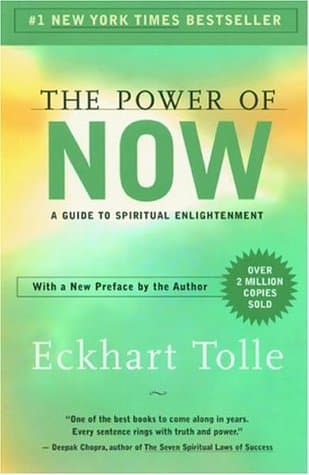
The Power of Now: A Guide to Spiritual Enlightenment cover
Archivist's Choice

The Power of Now: A Guide to Spiritual Enlightenment

Eckhart Tolle (1997)

Genre

Psychology / Spirituality / Philosophy / Self-Help

Reading Time

180 min

Key Themes

See below

Track Your Reading

Sign in to track this book

Eckhart Tolle's "The Power of Now" guides readers to dismantle mental barriers to peace and happiness through present-moment awareness, turning spiritual ideas into practical steps for daily life.

Core Idea

The Power of Now says human suffering comes mainly from identifying with the mind, which constantly pulls us into the past (regret, guilt) or future (anxiety, expectation). This hides the present moment, the only true reality. Spiritual enlightenment means separating from constant thoughts, watching the mind without being consumed by it, and staying deeply aware of the present. Tolle argues this practice dissolves the ego, quiets the 'pain-body,' and lets us access an inner state of peace, joy, and true being that is always available beneath mental noise.
Reading time
180 min
Difficulty
Medium
✓ Read this if...
You are seeking a profound shift in perspective on consciousness, time, and suffering, and are open to spiritual concepts presented in an accessible, yet challenging, manner.
✗ Skip this if...
You prefer a purely scientific or psychological approach to well-being, are uncomfortable with spiritual or mystical language, or are looking for practical, step-by-step self-help exercises rather than philosophical contemplation.

Core idea

The central argument and framework that powers the entire book.

The Power of Now says human suffering comes mainly from identifying with the mind, which constantly pulls us into the past (regret, guilt) or future (anxiety, expectation). This hides the present moment, the only true reality. Spiritual enlightenment means separating from constant thoughts, watching the mind without being consumed by it, and staying deeply aware of the present. Tolle argues this practice dissolves the ego, quiets the 'pain-body,' and lets us access an inner state of peace, joy, and true being that is always available beneath mental noise.

At a glance

Reading time

180 min

Difficulty

Medium

Read this if...

You are seeking a profound shift in perspective on consciousness, time, and suffering, and are open to spiritual concepts presented in an accessible, yet challenging, manner.

Skip this if...

You prefer a purely scientific or psychological approach to well-being, are uncomfortable with spiritual or mystical language, or are looking for practical, step-by-step self-help exercises rather than philosophical contemplation.

Key Takeaways

1

The Tyranny of Time

Most suffering stems from living in the past or future, not the present moment.

Quote

The primary cause of unhappiness is never the situation but your thoughts about it.

Tolle says our minds are always stuck in a self-made illusion of time, replaying past problems or future worries. This mental time-travel stops us from fully living in the present moment, which is the only real reality. He believes this constant mental chatter, often driven by the ego's need for identity, causes most human suffering. By seeing this pattern and consciously disengaging from it, we can start to break down the mental structures that block our inner peace. The past is gone, the future isn't here yet; only the now is real.

Supporting evidence

Tolle frequently uses analogies of a 'mental prison' or 'dream state' to illustrate how individuals are perpetually caught in their own thought patterns, oblivious to the present.

Apply this

Whenever you catch yourself dwelling on past events or worrying about future ones, consciously bring your attention to your breath or a sensory experience in your immediate environment. Ask yourself, 'What is happening right now?'
ego-mindmental-time-travelpresent-moment
2

The Pain-Body Awakens

Unprocessed emotional pain accumulates into an energetic entity that feeds on negative thoughts.

Quote

The pain-body is an energy field, almost like a separate entity, that resides in most humans, an accumulation of old emotional pain.

Tolle introduces the 'pain-body,' an energetic collection of past emotional pain—both personal and shared—that lives within us. This pain-body is usually dormant but can be triggered by events or thoughts, causing negative emotions like anger, sadness, or resentment. When active, it tries to keep itself going by creating more suffering, often by making us think and act in ways that cause drama or conflict. Recognizing the pain-body as separate from 'who you are' is the first step to detaching from it and stopping it from controlling y...

Supporting evidence

Tolle describes how the pain-body can manifest as sudden, overwhelming emotional reactions that seem disproportionate to the present situation, often stemming from childhood trauma or collective human suffering.

Apply this

When intense negative emotions arise, observe them without judgment. Acknowledge the pain-body's presence and say to it, 'I see you, but you don't control me.' Focus on your inner body awareness to ground yourself in the present.

pain-bodyemotional-releaseinner-body-awareness
3

Beyond the Thinking Mind

True liberation comes from disidentifying with the incessant voice in your head.

Quote

The most important step in your journey toward enlightenment is to realize that you are not your mind.

For Tolle, the 'mind' is not our true self but a tool, often misused and overgrown, that constantly produces thoughts, judgments, and stories. We wrongly identify with this voice, thinking it is who we are, which creates a false self (the ego). This identification is the main barrier to spiritual enlightenment and inner peace. By observing our thoughts without getting caught up in them, we create a space of awareness—a gap between the observer and the observed. This 'watching the thinker' practice helps us go beyond the mind and conne...

Supporting evidence

Tolle encourages readers to actively 'listen to the voice in your head' and realize its incessant, often repetitive and negative nature, thereby creating a distance from it.

Apply this

Practice mindfulness meditation where you simply observe your thoughts as they arise and pass, without engaging or judging them. Recognize that you are the awareness *behind* the thoughts, not the thoughts themselves.

egoobserving-the-thinkermindfulness
4

The Gateway of the Now

The present moment is the only point of access to true spiritual realization.

Quote

The Power of Now is the power to be truly present. It is the power that transforms the universe.

Tolle stresses that the present moment is not just a part of time but the only way to access the timeless and formless dimension of being. It is the 'gateway to spiritual enlightenment.' By fully accepting and giving in to the now, we move past the limits of the egoic mind and connect with the deeper consciousness that underlies all existence. This doesn't mean ignoring planning or learning from the past, but rather bringing conscious presence to whatever we are doing now. When the 'now' is our main focus, our actions become more ef...

Supporting evidence

Tolle frequently uses the analogy of a 'gateway' or 'doorway' to illustrate how the present moment is the only entry point to a deeper spiritual dimension.

Apply this

When performing any task, no matter how mundane, bring your full, undivided attention to it. Feel the sensations, observe your surroundings, and let go of mental distractions. This transforms the ordinary into the sacred.

presencebeingspiritual-awakening
5

Surrender to What Is

Resistance to the present moment perpetuates suffering; acceptance liberates.

Quote

Whatever you fight, you strengthen, and what you resist, persists.

Tolle argues that much of our suffering comes not from situations themselves, but from our resistance to them. When we mentally or emotionally resist 'what is,' we create negativity and inner conflict. Surrender, in Tolle's view, means an inner acceptance of the present moment, even if it's unpleasant. It means letting go of the internal fight against reality. This acceptance doesn't mean you can't change a bad situation, but it means approaching that action from a place of inner peace rather than reactive resistance. Surrender dissol...

Supporting evidence

Tolle often uses examples of people suffering from chronic illness or difficult life circumstances who find peace not by changing their external situation, but by changing their internal relationship to it through acceptance.

Apply this

When faced with a challenging situation, instead of immediately resisting or reacting, pause and acknowledge the reality of the moment. Say internally, 'This is what is happening right now.' Then, from that place of acceptance, decide on your next conscious action.

acceptancenon-resistanceinner-peace
6

Enlightened Relationships

True love emerges when partners transcend ego and meet in the present moment.

Quote

The greatest catalyst for spiritual awakening is a relationship.

Tolle sees relationships, especially intimate ones, as strong drivers for spiritual growth. However, most relationships are controlled by the ego, which tries to use the other person to complete itself, leading to drama, conflict, and unmet expectations. When the ego is involved, 'love' often becomes conditional and possessive. Enlightened relationships, in contrast, come from a shared presence, where both people move past their egoic needs and connect at a deeper level of being. In these relationships, partners see each other as they...

Supporting evidence

Tolle contrasts 'ordinary' relationships, driven by egoic needs and resulting in cycles of conflict, with 'enlightened' relationships characterized by a deep, shared presence and acceptance.

Apply this

In your relationships, practice listening to your partner without judgment or formulating your response. Bring your full presence to your interactions, and observe when your ego tries to assert control or seek validation. Let go of the need to be 'right.'

ego-in-relationshipsunconditional-loveshared-presence
7

The Purpose of Inner Space

Creating gaps between thoughts allows access to the deeper dimension of consciousness.

Quote

True intelligence operates silently. Stillness is where creativity and solutions are found.

The 'inner space' Tolle talks about is the silence and stillness between thoughts, emotions, and outside stimuli. It is pure consciousness, often hidden by the mind's constant activity. By consciously creating these gaps—through practices like mindful breathing, sensory awareness, or just watching thoughts without judgment—we access a deeper part of ourselves. This inner space is not an absence but a deep presence, the source of true creativity, intuition, and wisdom. It is where we connect with our true nature, moving beyond the limi...

Supporting evidence

Tolle guides readers through exercises to notice the space between breaths, or the silence between sounds, as practical ways to experience this inner spaciousness.

Apply this

Throughout your day, consciously take short 'presence breaks.' Close your eyes for a moment, feel your breath, and notice the silence that underlies all sounds. Allow yourself to simply 'be' without needing to think or do.

inner-stillnessconsciousnessmind-gaps
8

Living Beyond Form

Our true identity is not found in external forms, but in the formless essence of being.

Quote

You are not a drop in the ocean. You are the entire ocean in a drop.

Tolle emphasizes that our true identity is beyond all forms—physical, mental, emotional, and material. We are not our bodies, possessions, roles, thoughts, or emotions. These are all temporary forms. Our true self is the formless consciousness, the 'beingness' that underlies everything. Attachment to form causes much suffering because all forms are temporary and change. By realizing our true, formless nature, we can feel a deep sense of security and peace that doesn't depend on outside circumstances, understanding that our essence is ...

Supporting evidence

Tolle references the impermanence of all physical forms and identities, encouraging readers to find their identity in the changeless 'I Am' presence, rather than in transient external attributes.

Apply this

Reflect on what aspects of your identity you cling to (e.g., job title, physical appearance, past achievements). Practice letting go of identifying with these forms, recognizing that your deepest self exists independently of them.

formless-dimensiontrue-selfimpermanence
9

The Joy of Being

Authentic joy and peace are not found in external circumstances but in the present moment.

Quote

When you are present, you can be free of suffering. You can be free of the mind.

Tolle says that seeking happiness through external achievements, possessions, or future events is pointless. True joy, peace, and fulfillment are not conditional but are natural parts of our being when we are fully present. This 'Joy of Being' is not a fleeting emotion but a deep, underlying aliveness that is always available in the now. It appears when we shed mental conditioning and egoic striving, letting us experience the simple miracle of existence. It is an inner vibrancy and appreciation for life as it happens, moment by moment...

Supporting evidence

Tolle challenges the common societal belief that happiness is a future destination, arguing that true joy is an ever-present reality that is only obscured by mental activity.

Apply this

Instead of waiting for something to make you happy, consciously choose to find a moment of joy or appreciation in your current experience. It could be the taste of your food, the warmth of the sun, or the sound of birds. Practice gratitude for the simple act of being alive.

unconditional-joyalivenessinner-vibrancy
10

Creative Use of the Mind

The mind is a tool to be used consciously, not a master to be obeyed unconsciously.

Quote

The mind is a superb instrument if used rightly. Used wrongly, however, it becomes very destructive.

While Tolle often criticizes the mind's unconscious control, he also clarifies that the mind is a useful tool when used consciously. It is essential for practical tasks, planning, and problem-solving. The key is to be the one using the mind, rather than being used by it. This means engaging the mind for specific purposes, then disengaging from it and returning to a state of presence when the task is done. When we act from presence, our thinking becomes clearer, more focused, and truly creative, as it is no longer clouded by egoic ...

Supporting evidence

Tolle differentiates between 'thinking' (the stream of unconscious mental activity) and 'conscious thought' (directed, purposeful mental engagement from a place of presence).

Apply this

When you need to plan or solve a problem, consciously engage your mind for that specific task. Set a clear intention, focus entirely on the problem, and once a solution or plan emerges, disengage from thinking and return to present moment awareness. Avoid letting your mind wander aimlessly.

conscious-mindmind-as-toolfocused-attention

Critical analysis

Notable Quotes

The primary cause of unhappiness is never the situation but rather your thoughts about it.

Discussing how our interpretation of events, rather than the events themselves, creates suffering.

Realize deeply that the present moment is all you ever have. Make the NOW the primary focus of your life.

Emphasizing the central theme of the book: living in the present.

You are not your mind. Your mind is a tool. It is there to be used for a specific task, and when the task is over, you put it down.

Distinguishing between one's true self and the incessant chatter of the egoic mind.

Whatever you fight, you strengthen, and what you resist, persists.

Explaining the futility of resisting unwanted emotions or situations.

To complain is always nonacceptance of what is. It invariably carries an unconscious negative charge.

Highlighting the detrimental nature of complaining and its roots in resisting the present.

Don't seek happiness. If you seek it, you won't find it, because seeking is the antithesis of happiness.

Advising against the external pursuit of happiness, suggesting it's an internal state.

When you live in complete acceptance of what is, that is the end of all drama in your life.

Describing the liberation that comes from fully embracing the present reality.

To be identified with your mind is to be trapped in time: the compulsion to live almost exclusively through memory and anticipation.

Explaining how identification with the mind keeps one from the present moment.

The more you are able to honor the present moment, the more you are able to honor life itself.

Connecting reverence for the present with a deeper appreciation for existence.

Awareness is the greatest agent for change.

Stating that simply being conscious of one's inner state is the first step to transformation.

Any action is often better than no action, especially if you have been stuck in an unhappy situation for a long time. If it is a mistake, at least you learn something, in which case it's no longer a mistake.

Encouraging decisive action over procrastination, even if imperfect.

The word 'enlightenment' conjures up the idea of some superhuman accomplishment, and the ego likes to keep it that way, but it is simply your natural state of connectedness with Being.

Demystifying enlightenment and defining it as a return to one's true, connected nature.

Instead of 'I think, therefore I am,' it's 'I am, therefore I think.'

Reversing Descartes' famous dictum to emphasize that Being precedes thought.

Suffering needs time. It cannot survive in the Now.

Explaining that suffering relies on dwelling on past or future thoughts, dissolving in the present.

Quiz

Test Your Knowledge

Ready to see how well you understood this book? Take our interactive quiz with 10 questions.

10
Questions
~5
Minutes
?
Best Score

Key Questions (FAQ)

The core message of The Power of Now is that true happiness and spiritual enlightenment can only be found by living fully in the present moment, rather than being consumed by past regrets or future anxieties. Eckhart Tolle emphasizes that the 'now' is the only reality we ever truly experience.

About the author

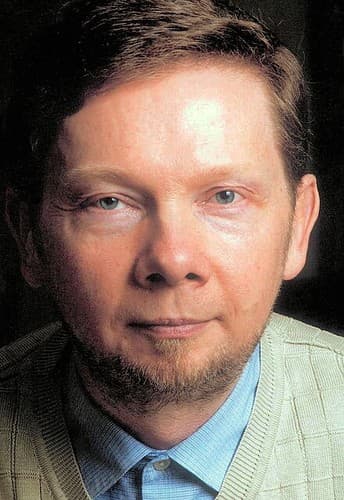
Eckhart Tolle

Eckhart Tolle is a spiritual teacher and author renowned for his profound insights into consciousness and personal transformation. His bestselling works, including "The Power of Now" and "A New Earth," have guided millions worldwide toward greater presence and inner peace. Tolle's teachings emphasize the importance of living in the present moment and transcending the ego for spiritual enlightenment.