BookBrief
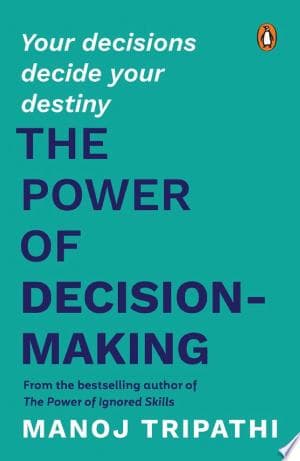
The Power of Decision-Making cover
Archivist's Choice

The Power of Decision-Making

Manoj Tripathi (2024)

Genre

Self-Help

Reading Time

12 Minutes

Key Themes

See below

Track Your Reading

Sign in to track this book

Core Idea

Manoj Tripathi's "The Power of Decision-Making" argues that the quality of one's life is directly proportional to the quality of their decisions. The book posits that effective decision-making is not an innate talent but a learnable skill, providing a comprehensive framework to cultivate this crucial ability. It emphasizes moving beyond impulsive choices and analysis paralysis to embrace a structured, confident, and values-driven approach to making choices that align with personal and professional goals. The central thesis is that by understanding cognitive biases, employing strategic thinking models, and developing emotional intelligence, individuals can consistently make better decisions, leading to greater success, fulfillment, and peace of mind. Tripathi illustrates how mastering decision-making can transform every aspect of life, from career progression and financial stability to relationships and personal well-being.
Difficulty
Medium

Core idea

The central argument and framework that powers the entire book.

Manoj Tripathi's "The Power of Decision-Making" argues that the quality of one's life is directly proportional to the quality of their decisions. The book posits that effective decision-making is not an innate talent but a learnable skill, providing a comprehensive framework to cultivate this crucial ability. It emphasizes moving beyond impulsive choices and analysis paralysis to embrace a structured, confident, and values-driven approach to making choices that align with personal and professional goals.

The central thesis is that by understanding cognitive biases, employing strategic thinking models, and developing emotional intelligence, individuals can consistently make better decisions, leading to greater success, fulfillment, and peace of mind. Tripathi illustrates how mastering decision-making can transform every aspect of life, from career progression and financial stability to relationships and personal well-being.

At a glance

Difficulty

Medium

Key Takeaways

1

Decisions as Destiny Sculptors

Your choices aren't just moments; they are the architects of your future.

Quote

Our decisions, therefore, determine our destiny.

Tripathi's main idea is simple yet strong: every choice, big or small, slowly shapes our life. This isn't about single events, but how consistent small decisions add up to a larger outcome. The book suggests that seeing this connection gives individuals control, moving them from feeling fated to actively directing their lives. This view helps anyone feeling lost by offering a way to take charge through thinking about the long-term impact of current choices. It asks us to see decision-making as a continuous act of creation, not just a ...

Supporting evidence

The book's foundational premise, repeated throughout, emphasizes the direct causal link between daily decisions and life outcomes.

Apply this

Before making a choice, pause and ask: 'How will this decision impact my desired future in the next 1, 5, or 10 years?' This foresight transforms impulsive reactions into strategic actions.


2

The Everyday Impact

Even seemingly insignificant choices contribute to your overall life tapestry.

Quote

We all make decisions, big or small, almost everyday, and each of the decisions we make impacts us in varying ways.

This takeaway challenges the common idea that only 'big' decisions matter. Tripathi argues that many 'small' decisions—what you eat, how you spend an hour, who you follow online—together shape habits, mindset, and success. This idea is strong because it makes decision-making less scary and more approachable. It suggests that steady, positive small decisions can have more effect than rare, grand gestures. The book gently encourages readers to see the power in their daily routines, creating an ongoing loop of intentional living.

Supporting evidence

The text explicitly states 'big or small, almost everyday' decisions have impact, highlighting the ubiquity and significance of all choices.

Apply this

Identify one small daily decision you can consistently make for the better (e.g., spending 15 minutes learning a new skill instead of scrolling). Track its cumulative positive effect over a month.

3

Learning from Success Stories

Emulating the decision-making patterns of successful individuals provides a practical roadmap.

Quote

The book includes stories and quotes from some of the most successful people, whose decisions have changed their lives for the better.

Tripathi uses stories and quotes from successful people as a teaching tool. By showing how notable figures handled important moments, the book gives clear examples of good decision-making. This approach inspires, but it can also simplify complex lives and downplay luck or existing advantages. However, its strength is in offering real models and showing that calculated risks, resilience, and vision are common among those who reach their goals. Its practical value comes from outlining common strategies, not from giving a strict formula.

Supporting evidence

The book's structure explicitly mentions the inclusion of 'stories and quotes from some of the most successful people'.

Apply this

When faced with a significant decision, research how a respected leader or mentor in a similar field approached a comparable challenge. Analyze their thought process and adapt relevant strategies to your context.

4

Intentionality Over Impulsivity

Conscious choice-making is the cornerstone of a well-directed life.

Quote

It will help you make decisions for the better to achieve lasting success in different walks of life.

This idea highlights a shift from reacting to decisions to making them more thoughtfully. The book suggests that better decisions don't happen by chance; they come from conscious effort and a way to evaluate options. This means pausing, thinking about choices, and understanding possible results instead of giving in to instant urges or outside pressure. The power here is in building a habit of intentionality, which slowly reduces regret and better aligns actions with personal values and long-term goals. It's about moving from simply ma...

Supporting evidence

The stated goal of the book is to 'help you make decisions for the better,' implying a methodology for improvement rather than just observation.

Apply this

Implement a '24-hour rule' for non-urgent significant decisions. Allow yourself a full day to reflect, gather information, and consider implications before committing.

5

The Optimistic Reframe

It's never too late to pivot and make choices that steer you towards a better future.

Quote

Your life is an outcome of your decisions and it is never too late to make the rights ones.

This is one of the book's most encouraging and important messages. It directly addresses the common feeling of being stuck or weighed down by past errors. Tripathi offers a strong solution to regret, stating that the power to make decisions is always available, no matter one's history. This reframing brings hope and agency, suggesting that life is not a set path but a series of ongoing chances to change course. This view empowers, moving beyond self-blame to active self-improvement, and reinforcing that every new moment is a fresh opp...

Supporting evidence

The concluding sentence of the summary, 'it is never too late to make the rights ones,' directly supports this optimistic reframe.

Apply this

Identify one area of your life where you feel regret about past decisions. Instead of dwelling, brainstorm three small, actionable steps you can take *today* to start making 'right' decisions in that area.

6

Decisions Drive Lasting Success

Consistent, well-considered choices are the foundation for enduring achievement.

Quote

It will help you make decisions for the better to achieve lasting success in different walks of life.

The book links effective decision-making directly to 'lasting success,' implying that short-term achievements often result from impulsive or poorly considered choices. This takeaway shows the difference between temporary gains and steady progress. Tripathi suggests that true success in career, relationships, and personal well-being is built on consistently sound decisions. This isn't about perfection, but about a general pattern of thoughtful engagement, learning from mistakes, and adapting strategies. The focus on 'lasting' success s...

Supporting evidence

The book explicitly aims to help readers 'achieve lasting success in different walks of life' through better decisions.

Apply this

For a long-term goal (e.g., career advancement, better health), map out the key decisions required over the next year. Regularly review these decisions to ensure they align with 'lasting success' rather than short-term expediency.

7

Self-Help as a Guide, Not a Dogma

The book offers tools for personal empowerment, not prescriptive answers.

Quote

Conceived as a self-help guide, the book includes stories and quotes...

Tripathi presents his work as a 'self-help guide,' which is an important point. This means that while it offers strong lessons and inspiring examples, the reader is ultimately responsible for using these ideas. The book does not offer a magic solution or a universal decision-making method, but rather a collection of principles and viewpoints meant to empower individual action. This approach acknowledges each person's unique life context and avoids the problems of overly strict self-help, which can sometimes make readers feel less capa...

Supporting evidence

The book's genre classification as a 'self-help guide' indicates its intended function and scope.

Apply this

Instead of blindly adopting a successful person's decision, analyze the underlying principles they used. Adapt those principles to your unique circumstances and values, rather than mimicking the exact action.

8

The Transformative Power of Choice

Making 'better' decisions is an active process that can fundamentally alter one's life.

Quote

The Power of Decision-Making is a collection of powerful learnings that will change the way you think about making choices.

This is the book's strongest insight, stressing the potential for deep personal change through conscious decision-making. It suggests that choosing is not just a transaction but a deeply transformative act, able to reshape one's mindset, habits, and identity. The 'powerful learnings' mentioned are those that shift perception, moving readers from a passive role to an active one in their own development. This is not just about reaching goals; it's about becoming a different, more capable person through the consistent use of deliberate c...

Supporting evidence

The book's title itself and the description 'powerful learnings that will change the way you think' highlight its transformative ambition.

Apply this

Reflect on a past decision that significantly changed your life for the better. Deconstruct the thought process, emotions, and external factors involved. Use these insights to inform future transformative decisions.

9

Beyond Simplistic Views

While 'life is a series of choices' is true, the book delves deeper into its implications.

Quote

As they say, 'Life is a series of choices'. It may sound too simplistic, but it really is true . . .

Tripathi recognizes the common saying 'Life is a series of choices' but then immediately tries to explain its deeper meaning and practical uses, moving past its apparent simplicity. This shows an awareness of the cliché and a commitment to providing real value. The book's strength here is in taking a widely accepted, but often not fully understood, truth and exploring its deep effects on personal agency and destiny. It explains why this truth matters and how to use it, rather than just stating it. This detailed approach helps grou...

Supporting evidence

The opening lines of the summary directly address and then elaborate on the 'simplistic' phrase, indicating the book's intent to add depth.

Apply this

When you hear a common truism, don't dismiss it. Instead, take a moment to reflect on its deeper, less obvious implications, much like Tripathi does with the 'series of choices' concept.

Critical analysis

Notable Quotes

Quiz

Test Your Knowledge

Ready to see how well you understood this book? Take our interactive quiz with 10 questions.

10
Questions
~5
Minutes
?
Best Score

Key Questions (FAQ)

This self-help book, 'The Power of Decision-Making' by Manoj Tripathi, explores how our everyday choices, big or small, shape our destiny. It provides insights and learnings to help readers make better decisions for lasting success.

About the author