BookBrief
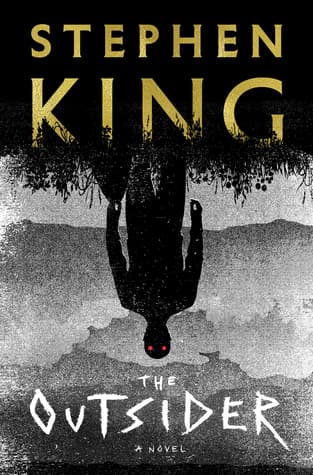
The Outsider cover
Archivist's Choice

The Outsider

Stephen King (2018)

Genre

Psychology / History / Philosophy

Reading Time

15-20 hours (based on 561 pages)

Key Themes

See below

Track Your Reading

Sign in to track this book

When a respected community member is linked to a horrific murder, a detective must face the terrifying idea that evil can wear a familiar face, defying logic and evidence.

Core Idea

Stephen King's 'The Outsider' examines the psychological and societal breakdown that occurs when solid physical evidence contradicts equally strong eyewitness accounts and the logical impossibilities of a crime. It explores the human struggle to accept absolute certainty while facing the truly inexplicable. This forces characters and readers to confront the limits of normal understanding and the deep fear of the unknown. The story shows how public trust erodes under such conflicting information, demonstrating the devastating impact of unproven accusations and the need to accept extraordinary truths when ordinary explanations fail. The book argues that evil can hide in plain sight, operating outside conventional law and requiring unusual alliances and flexible thinking to fight it. It highlights the immense burden on individuals caught between logical impossibilities and the weight of evidence. It also looks at the collective grief, anger, and trauma that spread through a community when it faces a monstrous, unseen force. Ultimately, 'The Outsider' suggests that courage often means challenging established ideas and accepting uncomfortable truths, even when they defy all rational explanation.
Reading time
15-20 hours (based on 561 pages)
Difficulty
Medium
✓ Read this if...
You enjoy psychological thrillers that blend crime procedural with supernatural horror, explore the breakdown of rational thought under extreme duress, and delve into themes of justice, trauma, and societal trust.
✗ Skip this if...
You prefer pure crime fiction without supernatural elements, are averse to graphic violence, or dislike narratives that challenge the boundaries of reality and logical explanation.

Core idea

The central argument and framework that powers the entire book.

Stephen King's 'The Outsider' examines the psychological and societal breakdown that occurs when solid physical evidence contradicts equally strong eyewitness accounts and the logical impossibilities of a crime. It explores the human struggle to accept absolute certainty while facing the truly inexplicable. This forces characters and readers to confront the limits of normal understanding and the deep fear of the unknown. The story shows how public trust erodes under such conflicting information, demonstrating the devastating impact of unproven accusations and the need to accept extraordinary truths when ordinary explanations fail.

The book argues that evil can hide in plain sight, operating outside conventional law and requiring unusual alliances and flexible thinking to fight it. It highlights the immense burden on individuals caught between logical impossibilities and the weight of evidence. It also looks at the collective grief, anger, and trauma that spread through a community when it faces a monstrous, unseen force. Ultimately, 'The Outsider' suggests that courage often means challenging established ideas and accepting uncomfortable truths, even when they defy all rational explanation.

At a glance

Reading time

15-20 hours (based on 561 pages)

Difficulty

Medium

Read this if...

You enjoy psychological thrillers that blend crime procedural with supernatural horror, explore the breakdown of rational thought under extreme duress, and delve into themes of justice, trauma, and societal trust.

Skip this if...

You prefer pure crime fiction without supernatural elements, are averse to graphic violence, or dislike narratives that challenge the boundaries of reality and logical explanation.

Key Takeaways

1

The Unbearable Burden of Ironclad Evidence

How seemingly undeniable proof can mask a terrifying, unseen truth.

Quote

The world spins, and sometimes it spins a little faster than we're ready for.

King shows how people tend to over-rely on initial, seemingly certain evidence, which can blind them to deeper, more sinister realities. The case against Terry Maitland initially seems 'ironclad' with multiple witnesses, fingerprints, and DNA evidence placing him at the crime scene. This overwhelming proof creates a strong psychological barrier for investigators, especially Detective Ralph Anderson, making them resist other explanations, even when Maitland has a solid alibi supported by video. The story makes us confront the uncomfort...

Supporting evidence

The initial investigation into Terry Maitland, where multiple eyewitnesses place him at the crime scene, his fingerprints are found, and DNA evidence points to him, despite his simultaneous presence at a conference documented by video footage and other witnesses.

Apply this

When evaluating complex situations, particularly those with high stakes, actively seek out and consider contradictory evidence, even if it seems absurd at first. Challenge the 'ironclad' nature of initial findings and cultivate a willingness to entertain explanations that lie outside conventional understanding before making definitive judgments.


cognitive-biasconfirmation-biasforensic-evidence
2

The Monstrous Power of the Unseen

Evil can manifest beyond human comprehension, defying logic and physical laws.

Quote

There are more things in heaven and earth, Horatio, than are dreamt of in your philosophy.

King introduces the 'Outsider,' a harmful entity that goes beyond human understanding of biology and physics. This creature, a shapeshifter that can perfectly mimic its victims, challenges the very basis of rational thought and criminal investigation. The novel suggests that some evils operate on a different level, making traditional detection and justice methods useless. The Outsider feeds on pain and sorrow, especially from children, showing a primal, almost cosmic, malevolence. This point emphasizes that not all threats are human, ...

Supporting evidence

The existence of 'El Cuco' or the 'Outsider,' a creature that can flawlessly assume the identity of others, leaving behind their fingerprints and DNA at crime scenes, while the real person is simultaneously elsewhere.

Apply this

While critical thinking is paramount, cultivate an open mind to possibilities that defy conventional wisdom, especially when confronted with inexplicable patterns or contradictions. Recognize that not every problem has a purely rational solution, and sometimes, the truth lies in the realm of the extraordinary, requiring a shift in perspective.

supernatural-horrorshapeshifter-mythexistential-dread
3

The Erosion of Trust in the Digital Age

When visual proof can be manipulated, the bedrock of truth crumbles.

Quote

In the old days, you could trust what you saw. Now, with deepfakes and all... it's a whole new ballgame.

The novel subtly touches on the growing distrust in visual evidence in the digital age, even before its supernatural elements fully appear. Terry Maitland's strong alibi, supported by video footage from a conference, directly contradicts the eyewitness accounts and forensic evidence placing him at the murder scene. This paradox raises a crucial question: which 'truth' do you believe? In an age of deepfakes and advanced image manipulation, the story shows how easily our perception of reality can be shattered. While King's explanation i...

Supporting evidence

The conflicting evidence of Terry Maitland being simultaneously present at the crime scene (eyewitnesses, DNA, fingerprints) and at an out-of-town conference (video footage, multiple witnesses).

Apply this

Develop a healthy skepticism towards all forms of media, including video and photographic evidence. Always seek corroborating sources and consider the context. Understand that even seemingly irrefutable digital proof can be subject to manipulation or, in this extreme case, supernatural mimicry, necessitating a multi-faceted approach to verifying information.

deepfakemedia-literacypost-truth
4

The Cost of Public Accusation

Even an innocent person can be destroyed by the court of public opinion.

Quote

Once the dirt is thrown, it sticks, no matter how much you try to wash it off.

Before the supernatural elements fully unfold, King powerfully illustrates the devastating impact of public accusation on an individual, regardless of guilt or innocence. Terry Maitland, a respected community figure, is immediately attacked and his life irrevocably destroyed by the very public and humiliating nature of his arrest. His reputation is ruined, his family targeted, and his future erased, all based on what appears to be undeniable evidence. The novel shows how quickly a community can turn on one of its own, fueled by shock,...

Supporting evidence

Terry Maitland's public arrest at a Little League game, the immediate media frenzy, the harassment of his family, and the community's swift condemnation, all prior to any trial or conclusive proof of his guilt.

Apply this

Exercise extreme caution and empathy when engaging in public discourse about alleged crimes or wrongdoings. Resist the urge to participate in 'trial by public opinion' and remember that an accusation, however seemingly credible, is not a conviction. Champion due process and protect the reputations of individuals until guilt is definitively proven.

mob-mentalitydue-processreputational-damage
5

The Power of Collective Grief and Anger

Raw emotion, while understandable, can fuel injustice and blind reason.

Quote

Grief is a tricky thing. It can make you do things you wouldn't normally do, see things that aren't there, or refuse to see what is.

The brutal murder of an innocent child understandably sparks a powerful wave of grief and anger in Flint City. King skillfully portrays how this collective sorrow, combined with a desire for quick justice, can override rational thought and fuel a dangerous desire for revenge. The community's anger becomes a powerful force, pushing investigators to speed up the case and solidifying their belief in Terry Maitland's guilt. This intense emotion makes it incredibly difficult for anyone to question the popular story, even when contradictory...

Supporting evidence

The immediate and widespread public outcry following Frankie Peterson's murder, the community's swift condemnation of Terry Maitland, and the pressure on law enforcement to secure a quick conviction.

Apply this

In situations of public tragedy and intense emotion, consciously step back and allow space for rational, evidence-based investigation. Recognize that while empathy is vital, allowing raw emotion to dictate judgment can lead to catastrophic errors. Advocate for calm and measured responses, even in the face of immense pain.

collective-traumajustice-systememotional-reasoning
6

The Unsung Heroism of Flexible Minds

Those willing to challenge their worldview are crucial in confronting the unknown.

Quote

Sometimes you have to look past what you know to see what is.

In a world where logical evidence is supreme, King supports characters who have the intellectual flexibility and courage to accept explanations beyond their normal understanding. Holly Gibney, with her unique blend of neurodivergent perception and an open mind to the unusual, becomes key to solving the true nature of the Outsider. While other, more 'rational' characters struggle to reconcile conflicting facts, Holly's willingness to consider the impossible allows her to connect different pieces of evidence and identify the supernatura...

Supporting evidence

Holly Gibney's pivotal role in connecting the dots between various inexplicable cases, her willingness to research and believe in 'El Cuco' folklore, and her ability to persuade the skeptical police officers to consider a supernatural explanation.

Apply this

Cultivate intellectual humility and an open mind. Actively seek out and value perspectives from individuals who think differently, as their insights may be crucial in solving problems that defy conventional approaches. Practice challenging your own assumptions and biases regularly.

critical-thinkingopen-mindednessneurodiversity
7

The Inadequacy of Law in the Face of True Evil

When the perpetrator is not human, the justice system is utterly helpless.

Quote

How do you put handcuffs on a ghost? How do you read a monster its rights?

The main conflict of 'The Outsider' clearly shows the limits of the human justice system when it faces a truly non-human enemy. Detectives and lawyers are trained to deal with human motives, human evidence, and human laws. The Outsider, however, operates entirely outside these boundaries, leaving behind 'evidence' that perfectly frames an innocent person while the real culprit remains untouchable by legal means. The story forces the characters to abandon their familiar legal frameworks and use extra-legal, even violent, methods to sto...

Supporting evidence

The initial investigation's complete failure to explain Terry Maitland's innocence despite overwhelming evidence, leading the team to realize they are dealing with something outside the realm of human crime, and their subsequent decision to hunt and kill the Outsider rather than prosecute it.

Apply this

Understand that not all problems can be solved by existing societal structures or legal frameworks. Recognize when a situation demands a radical shift in approach, even if it means operating outside established norms, especially when dealing with threats that defy conventional understanding. Be prepared to adapt strategies when facing unprecedented challenges.

legal-philosophyjustice-system-failureextra-legal-action
8

The Enduring Scars of Trauma

Even after the monster is defeated, the psychological wounds linger.

Quote

Some things, once seen, can never be unseen. And some wounds, once made, never truly heal.

King is skilled at showing the lasting psychological impact of horror, and 'The Outsider' is no exception. Even after the harmful entity is stopped, the characters are left with deep and often permanent emotional scars. Detective Ralph Anderson carries the weight of Terry Maitland's unjust public condemnation and death, dealing with guilt and the shattering of his rational worldview. Holly Gibney, while victorious, is deeply affected by her exposure to such profound evil. The novel emphasizes that confronting true horror leaves a last...

Supporting evidence

Ralph Anderson's ongoing guilt and emotional turmoil over Terry Maitland's fate, and the lingering psychological effects on the entire team who witnessed the Outsider's true form and its horrific actions.

Apply this

Acknowledge and respect the long-term impact of trauma, both on individuals and communities. Prioritize mental health support and create spaces for processing difficult experiences. Understand that 'closure' is often a complex and ongoing journey, not a singular event, especially after confronting profound adversity.

PTSDpsychological-traumagrief-process
9

The Mundane Mask of Evil

The most terrifying monsters often hide in plain sight, mimicking ordinary life.

Quote

The devil doesn't come dressed in a red cape and pointy horns. He comes as everything you've ever wished for.

One of the most unsettling aspects of 'The Outsider' is its premise: the monster does not hide in shadows but perfectly inhabits the body of a beloved community member — a Little League coach, an English teacher, a family man. This choice increases the horror, as it shows how evil can blend seamlessly into everyday life, making it nearly impossible to detect until it is too late. The Outsider's ability to perfectly mimic its victims, including their memories and mannerisms, blurs the lines between good and evil, trust and betrayal. It...

Supporting evidence

The Outsider's ability to assume the identity of Terry Maitland, a respected and well-liked member of the community, and later other individuals, making it indistinguishable from them to friends, family, and law enforcement.

Apply this

Cultivate discernment and critical observation, even in seemingly benign situations. While avoiding paranoia, be aware that appearances can be deceiving, and true threats may not conform to stereotypical villainous imagery. Focus on actions and patterns rather than solely on perceived character, and trust your instincts when something feels 'off.'

banality-of-evildoppelgangeridentity-theft
10

The Necessity of Unconventional Alliances

Extraordinary problems demand collaboration between disparate minds.

Quote

When the world goes sideways, you need all hands on deck, even the ones you never thought you'd trust.

To fight the unprecedented threat of the Outsider, the story forces a diverse group of people — a grieving detective, a skeptical lawyer, an experienced private investigator, and a uniquely perceptive, neurodivergent woman — to form an unlikely team. Each brings important, distinct skills and perspectives that, when combined, allow them to piece together the truth and make a plan. Their success depends on their ability to overcome personal biases, professional rivalries, and a basic disagreement about the nature of reality. This point...

Supporting evidence

The formation of the investigative team comprising Detective Ralph Anderson, lawyer Alec Pelley, PI Holly Gibney, and other supporting characters, each contributing their unique skills and perspectives to understand and confront the Outsider.

Apply this

Actively seek out and foster diverse teams when facing complex problems. Recognize that different backgrounds, expertise, and ways of thinking are assets, not liabilities. Practice active listening and empathy to bridge gaps between team members, understanding that collective strength often emerges from embracing individual differences.

interdisciplinary-collaborationteamworkdiversity-of-thought

Critical analysis

Notable Quotes

The past is a ghost, the future a dream, and all we ever have is now.

A reflection on time and presence.

Monsters are real. Ghosts are real too. They live inside us, and sometimes, they win.

A dark contemplation on human nature.

Sometimes you have to go a long way out of your way to come a short way correctly.

Reflecting on the indirect paths to truth.

The world is a vampire, and you are its blood.

A bleak view of societal exploitation.

It's hard to resist a story, even when you know it's a lie.

On the power of narrative and deception.

Fear is a funny thing. It can make you do things you never thought you’d do, or keep you from doing things you know you should.

An observation about the nature of fear.

History is a wheel, and it always turns.

A cyclical view of historical events.

The truth is a well. You can look into it, but it’s dark down there, and you can’t always see the bottom.

A metaphor for the elusive nature of truth.

There are no heroes, only people who sometimes do heroic things.

A pragmatic view of heroism.

Grief is a house that has been burgled. Everything is gone, and nothing is ever quite the same.

A poignant description of grief.

The greatest trick the devil ever pulled was convincing the world he didn't exist, but the second greatest was convincing people that evil was always obvious.

A thought on the subtlety of evil.

Every lie we tell plants a seed of chaos.

Contemplating the consequences of dishonesty.

Justice is a slow-moving river, but it always reaches the sea.

An optimistic take on the eventual triumph of justice.

Sometimes the only way to know what's real is to look at what's impossible.

A consideration of reality and the supernatural.

The past is never dead. It's not even past.

A reflection on the enduring influence of history.

Quiz

Test Your Knowledge

Ready to see how well you understood this book? Take our interactive quiz with 10 questions.

10
Questions
~5
Minutes
?
Best Score

Key Questions (FAQ)

The Outsider tells the story of an unspeakable crime committed against an eleven-year-old boy, with all evidence pointing to a beloved local coach. However, as the investigation unfolds, conflicting evidence emerges, leading to a confounding and horrifying truth that challenges conventional understanding.

About the author

Stephen King

Stephen Edwin King is an American author of horror, supernatural fiction, suspense, crime, science-fiction, and fantasy novels. Described as the "King of Horror", his books have sold more than 350 million copies as of 2006, and many have been adapted into films, television series, miniseries, and comic books. King has published over 65 novels/novellas, including seven under the pen name Richard Bachman, and five non-fiction books. He has also written approximately 200 short stories, most of which have been published in book collections.