“The thing about grief is that it’s not an illness to be cured. It’s a process to be felt.”
— Lucy reflects on her own grief and trying to 'fix' it.

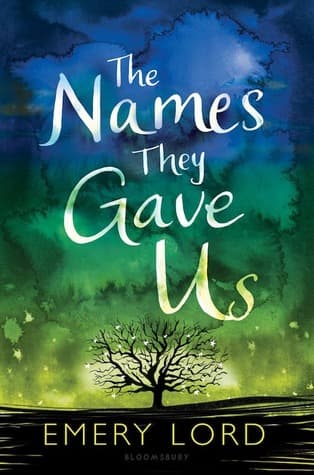
Emery Lord (2017)
Genre
Psychology / Spirituality / Young Adult / Romance
Reading Time
8 hr 30 min
Key Themes
See below
Sign in to track this book
When her mother's cancer shatters her perfect world, Lucy abandons her faith and comforts for a summer camp for troubled kids, only to discover secrets about her family, her beliefs, and the resilience of love.
Lucy Hansson's perfect life shatters when her mother's breast cancer, previously in remission, returns. This news sends Lucy into a spiral, making her doubt her faith and the constants in her life. Feeling suffocated by her well-meaning but pious boyfriend, Henry, Lucy abruptly breaks up with him, despite his attempts to comfort her with religious sayings. She also decides against returning to her usual summer job at Camp Hemlock, a church camp she's attended for years, seeking a complete change. Her parents, especially her mother, worry about her sudden shift.
Instead of Camp Hemlock, Lucy accepts a counselor position at Camp Daybreak, a summer camp for children who have experienced trauma, grief, or difficult home lives. The camp is across the lake from Hemlock, a physical and metaphorical distance from her past. Initially, Lucy feels completely out of her depth. The children's struggles – from abuse and neglect to the loss of loved ones – are overwhelming, and she struggles to connect with them or understand how to help. She feels isolated and longs for her parents, who are still across the lake, dealing with her mother's ongoing treatment. The camp's atmosphere is raw and emotionally charged, a stark contrast to the sheltered environment Lucy is used to.
Lucy slowly adjusts to Camp Daybreak, largely because of her fellow counselors. She meets Birdie, a compassionate girl with a difficult past who becomes her closest friend. There is also Emmett, a kind and observant boy who shares a cottage with Lucy's assigned campers and offers quiet support. Rounding out the group are Eleanor, a direct but deeply caring leader, and Will, the artistic son of the camp director, Mr. Henderson. These counselors, each with their own struggles and resilience, show a different kind of strength than Lucy has ever encountered. They are open about their pain and their coping methods, which both fascinates and intimidates Lucy.
Lucy is assigned a cabin with several young girls, each with significant emotional burdens. Among them is Poppy, a quiet girl who refuses to speak, and Lily, a boisterous child prone to outbursts. Lucy finds herself unprepared to handle their complex needs, often feeling overwhelmed and helpless. She sees firsthand the impact of trauma on children, which further shakes her belief system. Her initial attempts to apply her usual problem-solving methods fail, forcing her to confront her limitations and the inadequacy of simple solutions for deep pain. She often feels like a failure, comparing herself to the more experienced and seemingly more effective counselors.
While at Camp Daybreak, Lucy uncovers old photographs and documents that suggest a deeper connection between her family and the camp. She learns that her grandmother, a woman she barely knew and whose memory is rarely discussed, was one of the founding members of Camp Daybreak. This revelation is shocking, as her family has always presented a very different, more conservative image. Lucy feels betrayed by her parents' silence and begins to question the stories she's always been told about her family's history and values. This discovery adds another layer to her growing disillusionment and her search for truth.
Amidst the emotional chaos, Lucy is drawn to Will, the camp director's son. Will is artistic, thoughtful, and has a quiet intensity. He understands the complexities of grief and pain, having grown up around Camp Daybreak. Their relationship slowly develops, marked by shared conversations, late-night talks, and a mutual understanding. Will encourages Lucy to explore her doubts and feelings without judgment, offering a different kind of support than she's ever known. Their connection provides comfort and growth for Lucy, helping her to articulate her unspoken fears and desires.
Armed with her discoveries, Lucy confronts her parents about her grandmother's involvement with Camp Daybreak and why they kept it secret. Her parents, particularly her father, are initially resistant to discussing the past, but Lucy's persistence makes them open up. They reveal that her grandmother was a progressive and unconventional woman who believed in helping marginalized children, a belief that clashed with the family's more traditional religious views. This conflict led to a rift, and her grandmother's legacy was largely erased from family conversations. This conversation is painful but ultimately brings a new level of understanding and honesty to Lucy's relationship with her parents.
Throughout the summer, Lucy struggles to reach Poppy, the silent camper. After many attempts and moments of frustration, Lucy finally connects with Poppy by sharing a personal story about her own fears and vulnerabilities regarding her mother's illness. This act of empathy and self-disclosure creates a connection, and Poppy begins to speak, sharing her own painful experiences. This breakthrough is a key moment for Lucy, showing her growth as a counselor and her ability to connect with others on a deeper, more authentic level. It validates her presence at Camp Daybreak and her capacity for healing.
As the summer progresses, Lucy's understanding of faith transforms. She realizes that faith is not just about unwavering belief or rigid doctrines, but also about love, compassion, and presence in the face of suffering. The community at Camp Daybreak, with its acceptance of brokenness and its commitment to healing, shows her a different, more expansive form of spirituality. She finds solace not in answers, but in shared humanity and the courage to face uncertainty. Her conversations with Will, Birdie, and even her parents help her reconcile her doubts with a renewed sense of purpose and connection.
As the summer ends, Lucy reflects on the changes she has undergone. She has not only helped the campers but has also found healing and self-discovery. Her relationship with Will has deepened, and she has formed strong bonds with her fellow counselors. She returns home with a clearer understanding of her family's history, a more nuanced view of her faith, and a stronger sense of self. While her mother's battle with cancer is ongoing, Lucy feels better equipped to face the challenges ahead, armed with new perspectives, resilience, and a redefined sense of what it means to believe and belong.
The Protagonist
Lucy transforms from a sheltered, disillusioned girl into a compassionate, resilient young woman who embraces uncertainty and finds a deeper, more expansive understanding of faith and love.
The Supporting/Love Interest
Will remains a consistent and supportive presence, helping Lucy to navigate her emotional turmoil and offering a different perspective on life and faith.
The Supporting
Birdie provides consistent friendship and demonstrates the power of vulnerability and resilience, helping Lucy to open up and find her own strength.
The Supporting
Sarah moves from a position of guardedness about the family's past to one of openness and honesty, strengthening her bond with Lucy.
The Supporting
David transitions from a protective, traditional father to one who shares his vulnerabilities and family history with Lucy, fostering a more honest relationship.
The Supporting
Poppy moves from a state of silent withdrawal to finding her voice, symbolizing the possibility of healing from deep trauma.
The Mentioned
Henry serves as a static character, representing the past Lucy moves away from.
The Mentioned
Her character is revealed through Lucy's discoveries, providing a historical context for Lucy's own journey of re-evaluating faith and family.
The novel explores the complexities of faith, moving beyond a simple understanding to embrace doubt as part of spiritual growth. Lucy's initial belief is shattered by her mother's cancer, making her question everything. At Camp Daybreak, she sees a different kind of 'faith' – one rooted in compassion, vulnerability, and active service to others, regardless of traditional religious dogma. This is clear in the counselors who share their struggles, and in Lucy's discovery of her grandmother's progressive, inclusive vision for the camp, which differed from her family's more rigid religious views. The book suggests that true faith might be found not in certainty, but in the courage to love and connect amidst uncertainty and pain.
“Maybe faith wasn't about being sure of everything, but about being brave enough to live with the questions.”
A central theme is the power of genuine human connection and the courage to be vulnerable. Lucy initially tries to seem strong, but true healing begins only when she allows herself to be open about her fears and doubts – with Will, Birdie, and eventually her parents and even Poppy. The camp itself shows this, as children and counselors share their trauma stories and find comfort in a community that embraces their brokenness. Lucy's breakthrough with Poppy, achieved by sharing her own pain, shows how vulnerability creates connection and enables healing for both people.
“Sometimes, the bravest thing you can do is let someone else see you break.”
The novel highlights how family secrets, even those meant to protect, can create distance and distort one's identity. Lucy's discovery of her grandmother's hidden history and her connection to Camp Daybreak reveals a gap in her understanding of her family. This concealment, driven by her parents' discomfort with her grandmother's progressive views, makes Lucy feel betrayed and question the stories she's always accepted. The eventual confrontation and the sharing of these truths, though painful, lead to a more honest and profound connection between Lucy and her parents, allowing her to integrate this hidden part of her heritage into her own identity.
“The stories we tell ourselves about our families are rarely the whole truth. Sometimes, the parts we leave out are the most important.”
The book explores various forms of grief and trauma, not only through Lucy's experience with her mother's cancer but also through the diverse stories of the campers at Daybreak. It shows the messy, non-linear process of grieving and the resilience of the human spirit. Each camper represents a different facet of trauma – from silent withdrawal to angry outbursts – and the counselors also carry their own burdens. The camp provides a space where grief is acknowledged, not suppressed, and where individuals are supported in finding their own paths to coping and rebuilding. It emphasizes that resilience isn't about avoiding pain, but about finding strength and hope within it.
“Grief wasn't a journey with a clear path, but a tangled forest you had to navigate, sometimes getting lost, sometimes finding unexpected clearings.”
The contrast between Camp Hemlock and Camp Daybreak reflects Lucy's internal journey.
The two camps serve as powerful metaphors for Lucy's internal state and her journey of transformation. Camp Hemlock, the traditional church camp, represents her comfortable, structured, and somewhat naive past, where faith was clear-cut and problems had easy answers. Camp Daybreak, across the lake, is a place of raw emotion, trauma, and uncertainty, mirroring Lucy's disillusionment and the chaos within her. The physical distance between the camps symbolizes her emotional and spiritual distance from her old life, while the eventual blurring of lines (her parents' presence nearby, the discovery of her grandmother's connection) suggests a potential for integration and a more nuanced understanding of 'home' and 'faith'.
The revelation of Lucy's grandmother's past serves as a catalyst for Lucy's self-discovery.
The discovery of Lucy's grandmother's connection to Camp Daybreak and her progressive ideals is a crucial plot device. This hidden history not only provides a historical context for the camp but also forces Lucy to re-evaluate her family's identity and her own place within it. It acts as a catalyst for her to confront her parents about their secrets and prompts a deeper exploration of her own values. The grandmother's story mirrors Lucy's own journey of questioning traditional norms and finding a more authentic path, creating a powerful intergenerational connection that guides Lucy's growth.
Poppy's silence and eventual breakthrough mirror Lucy's own struggle with vulnerability and communication.
Poppy, the camper who refuses to speak, functions as a powerful symbolic device. Her silence represents the overwhelming nature of trauma and the difficulty of articulating deep pain. Lucy's persistent, often frustrating, attempts to connect with Poppy mirror her own internal struggle to voice her doubts and fears. Poppy's eventual breakthrough, prompted by Lucy's act of vulnerability, becomes a pivotal moment for Lucy. It validates her role as a counselor, signifies her growth in empathy and connection, and ultimately reflects her own ability to break through her emotional walls and find her voice.
Archival materials serve as clues to unravel family secrets.
Old letters, photographs, and documents found by Lucy at Camp Daybreak are crucial plot devices for uncovering the hidden family history. These physical artifacts provide tangible evidence of her grandmother's involvement with the camp, contradicting the narrative Lucy has always been given. They serve as concrete clues that propel Lucy's investigation, allowing her to piece together the past and confront her parents. These items are not just plot movers; they symbolize the echoes of the past that continue to shape the present, and the tangible connections that link generations, even when those connections have been deliberately obscured.
“The thing about grief is that it’s not an illness to be cured. It’s a process to be felt.”
— Lucy reflects on her own grief and trying to 'fix' it.
“Maybe the bravest thing you can do is let yourself be seen, even when you’re not sure you like what’s visible.”
— Lucy grapples with vulnerability and letting others see her true self.
“Love isn't a single thing, it's a thousand small things, woven together.”
— Lucy contemplates the multifaceted nature of love, beyond grand gestures.
“Sometimes the only way out is through the middle of the mess.”
— Lucy faces difficult situations and realizes avoidance isn't a solution.
“You can’t heal what you don’t acknowledge.”
— Lucy's journey of confronting her past traumas and emotions.
“The people who love you don’t want you to be perfect. They want you to be real.”
— Lucy learns to shed her perfectionist tendencies in her relationships.
“Hope is a quiet thing, sometimes. Not a shout, but a whisper.”
— Lucy finds subtle signs of hope amidst her struggles.
“It’s okay to not be okay. It’s even more okay to ask for help when you’re not.”
— Lucy's realization about the importance of seeking support.
“Every person is a story, and every story is worth knowing.”
— Lucy's work at the camp emphasizes the unique value of each individual.
“Forgiveness isn't about letting someone off the hook. It's about setting yourself free.”
— Lucy contemplates forgiving those who have hurt her, and herself.
“Sometimes the greatest acts of love are the ones that require you to let go.”
— Lucy faces difficult choices involving her relationships and personal growth.
“The past doesn't define you, but it sure does inform you.”
— Lucy comes to terms with her past experiences and their impact on her present.
“There's a difference between being strong and pretending to be strong.”
— Lucy learns the value of authentic strength over a facade of resilience.
“Healing isn't linear. It's a spiral, sometimes you come back to the same place, but you're a little different each time.”
— Lucy reflects on the non-linear process of her emotional recovery.
“The most beautiful things often grow out of the hardest ground.”
— Lucy observes beauty and resilience emerging from difficult circumstances.
Ready to see how well you understood this book? Take our interactive quiz with 10 questions.

Rhonda Byrne
4.3

Menno Henselmans
4.3

Sylvia Plath
4.3

Elliot Aronson
4.3

Joseph Campbell
4.3

Erich Fromm
4.3
Irvin D. Yalom
4.2

Lucy Strange
4.2