“Believe me, I am no charlatan. I am a man of God. I am a healer.”
— Ganesh Ramsay telling his first patient about his abilities.


V. S. Naipaul (2010)
Genre
General
Reading Time
420 min
Key Themes
See below
Sign in to track this book
In Trinidad, a failed schoolteacher becomes a respected mystic, entrepreneur, and politician, navigating a world of odd characters and social quirks with wit and charm.
Ganesh Ramsumair, a young man from a Trinidad village, returns home after failing teacher's training. People see him as educated, but he lacks practical skills or a clear path. His father, a pundit, encourages him to write, but Ganesh's early attempts fail. He marries Leela, the daughter of the rich and unpredictable shopkeeper Ramlogan. Leela, though educated, doubts Ganesh's lack of immediate prospects and his vague intellectual goals. Their marriage starts with tension due to Ganesh's laziness and Leela's criticism, as they live in Ramlogan's house, subject to his moods.
Frustrated by his lack of progress and Leela's constant complaints, Ganesh and Leela move to Fuente Grove, a small, remote village. There, Ganesh tries different things, including writing a book on Indian culture, but again finds little success. Due to a misunderstanding and the villagers' belief in his healing touch, Ganesh is convinced to become a masseur. He is hesitant at first and unsure of his skills, but he slowly accepts the role. He finds that simply rubbing and comforting people brings him respect and income, which pleases Leela's practical side.
Ganesh realizes his massage practice could make more money if he added a spiritual element. He begins to study Hindu scriptures, philosophy, and basic psychology, carefully building an image as a mystic. He adopts a more disciplined life, grows a beard, and starts offering consultations that mix physical massage with spiritual advice. He tells his patients to believe in his divine connection and their own faith. This change is planned, meant to increase his clients and reputation, which it does, drawing people from further away.
Building on his mystic image, Ganesh finishes his long-planned book, 'The Years of Guilt.' The book is a rambling mix of philosophy, autobiography, and spiritual advice, but its publication is timed with his growing fame. To Ganesh's surprise, and largely because of his reputation as a holy man, the book becomes a bestseller. Its success further solidifies his image as a deep thinker and spiritual guide, attracting more followers and patients, and bringing him much money.
With more money and popularity, Ganesh expands his work. He hires assistants to manage the many patients and followers, effectively creating a small business around his mystic identity. He sets up a 'school' or ashram-like place where he offers spiritual guidance and training, attracting young, impressionable students. Leela, who was skeptical at first, becomes a practical manager of his growing business, handling money and logistics. Ganesh's influence spreads beyond Fuente Grove, as people travel far to seek his advice and healing, making him a local celebrity.
Ganesh's ambitions go beyond spiritual healing and writing. He sees the power politicians have and decides to enter politics. He starts attending public meetings, dealing with local issues, and using his reputation and speaking skills to gain support. His followers, already sure of his wisdom and good nature, easily become his political base. He presents his political goals as a continuation of his service to the people, aiming to bring his mix of wisdom and common sense to government.
Ganesh starts a strong campaign for a seat in the Legislative Council. He travels across the district, giving speeches that blend spiritual ideas with promises to the public. He cleverly uses his 'mystic' image to appeal to those who are superstitious and hopeful, while also showing himself as a man of the people who understands their problems. His campaign combines real connection with voters and clever political moves. Leela plays a key role, managing his schedule and money, making sure the campaign runs well despite Ganesh's occasional mistakes.
Ganesh Ramsumair wins the election, surprising many established politicians. His victory marks a big change, proving his ability to adapt and succeed in different areas. After entering the Legislative Council, Ganesh, always the opportunist, decides to drop his 'mystic' image and fully embrace his new political identity. He changes his name to G. Ramsay Muir, showing a move away from his rural, Indian roots toward a more English, professional image. This reflects his fitting into the colonial political system.
As G. Ramsay Muir, Ganesh adapts to colonial politics. He learns to handle parliamentary procedures, debate, and form alliances. While he keeps a certain public image, he mostly leaves behind the obvious mysticism that defined his past career. His political career, though it had challenges, proves to be another success. He becomes a respected, if somewhat mysterious, figure in Trinidadian politics. He is known for his unique journey and his ability to connect with different groups of people. His journey from failed teacher to respected mystic to successful politician is complete.
The novel ends by looking back at Ganesh's journey and what it means for Trinidadian society. His story shows the possibilities and difficulties of post-colonial identity, where tradition and modern life, spirituality and practicality, often meet in unexpected ways. Ganesh, despite his planned changes, shows a certain strength and ability to adapt, which is typical of the island's diverse population. His ultimate success, moving from a humble village masseur to a national political figure, leaves a lasting, though somewhat unclear, legacy.
The Protagonist
Ganesh evolves from an aimless intellectual into a shrewd entrepreneur and influential public figure, shedding and adopting identities as he climbs the social ladder.
The Supporting
Leela transforms from a critical, long-suffering wife into a competent and supportive partner who manages Ganesh's affairs.
The Supporting
Ramlogan's initial disapproval of Ganesh mellows into a reluctant acceptance and pride as Ganesh achieves success.
The Supporting
Serves as a static character representing traditional beliefs and a catalyst for Ganesh's early practice.
The Mentioned
A static character who provides background for Ganesh's early intellectual aspirations.
The Supporting
Their collective belief and patronage enable Ganesh's transformation from a struggling masseur to a respected mystic.
The Mentioned
Serve as obstacles that Ganesh overcomes through his populist appeal and shrewd campaigning.
The novel shows how people create and change their identities based on what society expects and what they want. Ganesh Ramsumair constantly remakes himself—from a failed teacher to a masseur, then a mystic, an author, and finally a politician named G. Ramsay Muir. Each change is a deliberate act to gain status and respect, showing how identity can shift in post-colonial Trinidad. His journey questions if the self is real or if a persona is just useful, as when he grows a beard to look more 'mystic' or changes his name to sound more 'respectable' in politics.
“He knew that the mystic masseur had to be a man of sorrows, a man of profound spiritual insights, a man who had suffered much and was now ready to heal the sufferings of others.”
The story explores the power of belief, both real and made-up, and how common superstition is in rural Trinidadian society. Ganesh's success as a 'mystic' depends on the villagers' willingness to believe in his spiritual powers, even when he himself doubts them at first. Patients' problems, often mental or cultural, are 'cured' by Ganesh's massages and statements. This shows how faith and expectation can change what people think is real. This theme is clear in the many strange problems people bring to Ganesh, like the man followed by a bad cloud or those who love bicycles, all of which Ganesh handles with a mix of common sense and fake mysticism.
“He found that the people of Fuente Grove were simple folk, ready to believe anything, and he saw his opportunity.”
The novel closely examines ambition and the ways to move up in society in a colonial setting. Ganesh, despite starting poor and failing at first, deeply wants recognition and success. He cleverly navigates the social world, using education, spirituality, and eventually politics to move up. His journey from a poor village to the Legislative Council shows the possibilities, and often the compromises, involved in rising in society. This is especially clear in his planned decision to write a book and then enter politics, always looking for the next step up.
“He had always known that he was meant for something more than teaching, something more than massaging.”
The story indirectly explores how colonialism affected Trinidadian identity and culture. Ganesh's change into G. Ramsay Muir, an English name, shows the desire to fit into the main colonial culture for social and political gain. The mix of traditional Indian customs, local superstitions, and Western education shows the blended nature of post-colonial society. The political system Ganesh enters is a colonial creation, and his success within it highlights the complex relationship between the colonizer and the colonized, and how individuals adapt to gain power in such systems.
“He had shed his old name, his old self, like a snake shedding its skin. He was G. Ramsay Muir now, a name that sounded solid, respectable, British.”
The contrast between Ganesh's actual abilities and his perceived mystical powers.
Irony is a pervasive device in 'The Mystic Masseur.' Ganesh, who initially struggles as a teacher and only reluctantly becomes a masseur, achieves his greatest success by cultivating a persona of mystical wisdom, which he himself largely fabricates. The irony lies in the fact that his most profound impact comes not from genuine spiritual insight, but from his shrewd understanding of human psychology and his ability to exploit the villagers' credulity. His 'healing' often stems from the patients' belief rather than any inherent power, creating a humorous and critical commentary on the nature of belief and perception.
Leela's pragmatism contrasts with Ganesh's evolving personas.
Leela serves as a character foil to Ganesh. Her grounded, pragmatic, and often critical nature provides a stark contrast to Ganesh's intellectual pretenses and later, his mystic and political posturing. While Ganesh is concerned with image and ambition, Leela is focused on tangible results and financial stability. Her skepticism and common sense help to highlight the constructed nature of Ganesh's various identities and provide a voice of reason within the narrative. Their dynamic adds both humor and a sense of realism to Ganesh's often fantastical journey, grounding his aspirations in domestic reality.
Ganesh's change to G. Ramsay Muir symbolizes his assimilation and ambition.
Ganesh Ramsumair's decision to change his name to G. Ramsay Muir is a potent symbol of his complete transformation and assimilation into the colonial establishment. It represents his shedding of his traditional Indian identity and rural background in favor of a more Anglicized, 'respectable' persona suitable for politics. This act symbolizes not just personal ambition but also the broader societal pressures and aspirations within a post-colonial context, where 'progress' was often associated with adopting Western norms and shedding indigenous ones. The name change marks the culmination of his journey from an outsider to an insider.
The use of eccentric characters and situations to create comedic effect.
The novel employs a rich vein of humor, often derived from its 'Dickensian cast of rogues and eccentrics.' Characters like the volatile Ramlogan, the belching aunt, and patients with unusual ailments (e.g., amorous fascination with bicycles) contribute to a comic atmosphere. The humor also arises from the absurd situations Ganesh finds himself in and his often-pompous pronouncements. This lighthearted approach allows Naipaul to satirize societal flaws and human foibles without becoming overly didactic, making the social commentary more palatable and engaging for the reader.
“Believe me, I am no charlatan. I am a man of God. I am a healer.”
— Ganesh Ramsay telling his first patient about his abilities.
“The people wanted a pundit, and a pundit they got.”
— Narrator describing Ganesh's early success and the public's desire for spiritual guidance.
“What is wrong with being a masseur? It is an honourable profession.”
— Ganesh defending his initial profession before he became a mystic.
“He began to write his books. He wrote about everything.”
— Describing Ganesh's prolific writing career, which contributed to his fame.
“His fame grew, and with it, his responsibilities.”
— The narrator observing the consequences of Ganesh's increasing popularity.
“The truth was, Ganesh never really meant to be a pundit. He meant to be a writer.”
— A reflection on Ganesh's true aspirations versus the path he ended up taking.
“He knew that if he was to succeed, he had to give the people what they wanted.”
— Ganesh's pragmatic approach to building his career and reputation.
“The people believed in him, and that was all that mattered.”
— The narrator's insight into the power of belief in Ganesh's rise.
“He was a man who understood the psychology of the crowd.”
— Describing Ganesh's intuitive understanding of how to appeal to the masses.
“From masseur to mystic, from mystic to politician. It was a natural progression.”
— The narrator summarizing Ganesh's evolving career path.
“He had started as a simple man, and he had ended as a complicated one.”
— A poignant reflection on Ganesh's transformation over time.
“He had become a symbol, and symbols are hard to control.”
— Discussing the challenges Ganesh faced once his public image took on a life of its own.
“The world was full of men who wanted to be something else.”
— A general observation about human ambition and the desire for self-reinvention.
“He had given them what they wanted, and in doing so, he had found his own way.”
— A concluding thought on Ganesh's journey and how fulfilling others' desires led to his own fulfillment.
Ready to see how well you understood this book? Take our interactive quiz with 10 questions.
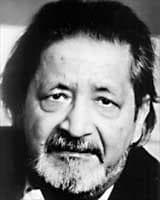
Sir Vidiadhar Surajprasad Naipaul was a Trinidadian-born British writer of works of fiction and nonfiction in English. He is known for his comic early novels set in Trinidad, his bleaker novels of alienation in the wider world, and his vigilant chronicles of life and travels. He wrote in prose that was widely admired, but his views sometimes aroused controversy. He published more than thirty books over fifty years.