The Peril of Reification
Treating abstract concepts like intelligence as concrete, measurable entities leads to scientific and social harm.
Quote
The error of reification—the conversion of an abstract concept into a thing—is the central fallacy of biological determinism.
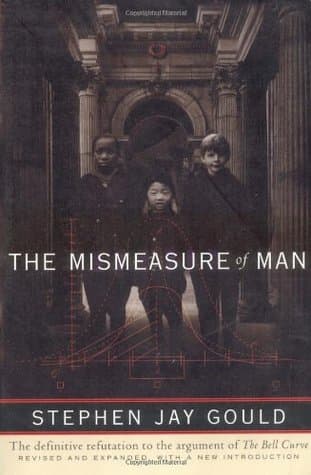
Gould argues that the main error in the history of intelligence measurement is treating 'intelligence' itself as a concrete thing. Instead of seeing intelligence as complex, varied, and tied to culture, early researchers (and many now) viewed it as a single, measurable 'thing' in the brain. This allowed them to assign numbers, create hierarchies, and justify social inequalities as objective science. This process hides the flexible, adaptable nature of human thinking and replaces it with a rigid, fixed framework that serves political a...
Supporting evidence
Gould details how early craniometrists like Paul Broca meticulously measured skull sizes, attempting to correlate them with intelligence, despite the inherent biases and inconsistencies in their methods and interpretations. The very act of measuring 'cranial capacity' as a proxy for intelligence is a prime example of reification.
Apply this
When encountering any 'objective' measure of a complex human trait (like leadership potential, creativity, or even happiness), question the underlying assumption that it is a singular, stable, and perfectly quantifiable entity. Always ask: 'What is being reified here, and why?'