BookBrief
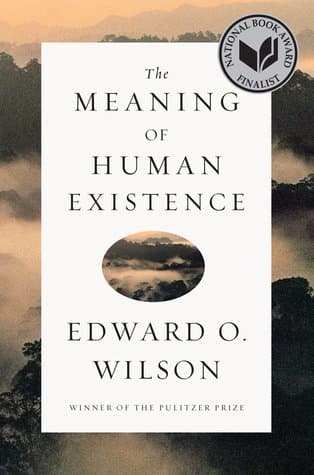
The Meaning of Human Existence cover
Archivist's Choice

The Meaning of Human Existence

Edward O. Wilson

Genre

Psychology / History / Spirituality / Science / Philosophy

Reading Time

180 min

Key Themes

See below

Track Your Reading

Sign in to track this book

Pulitzer Prize-winning biologist Edward O. Wilson explores humanity's origins, its place in the cosmos, and the challenges we face as we increasingly shape our own evolution.

Core Idea

Humanity's path is shaped by a tension between our creative and destructive impulses. Our intelligence has given us great control over the planet, but it has also brought us to the edge of environmental crisis, as seen in the Anthropocene. The book argues that understanding our biological roots, the nature of free will, and the evolutionary basis of our spiritual needs is key to navigating this crisis. By combining knowledge through science (consilience) and recognizing biodiversity as our greatest asset, we can find a wise way forward, guided by an ethic of stewardship, to ensure a meaningful and lasting future for ourselves and the planet.
Reading time
180 min
Difficulty
Medium
✓ Read this if...
You are a scientifically-minded individual grappling with humanity's place in the universe, the future of our species, and the conflict between scientific understanding and traditional philosophy/religion.
✗ Skip this if...
You are looking for a spiritual guide based on specific religious doctrines, or you prefer philosophical arguments that do not heavily rely on evolutionary biology and scientific materialism.

Core idea

The central argument and framework that powers the entire book.

Humanity's path is shaped by a tension between our creative and destructive impulses. Our intelligence has given us great control over the planet, but it has also brought us to the edge of environmental crisis, as seen in the Anthropocene. The book argues that understanding our biological roots, the nature of free will, and the evolutionary basis of our spiritual needs is key to navigating this crisis. By combining knowledge through science (consilience) and recognizing biodiversity as our greatest asset, we can find a wise way forward, guided by an ethic of stewardship, to ensure a meaningful and lasting future for ourselves and the planet.

At a glance

Reading time

180 min

Difficulty

Medium

Read this if...

You are a scientifically-minded individual grappling with humanity's place in the universe, the future of our species, and the conflict between scientific understanding and traditional philosophy/religion.

Skip this if...

You are looking for a spiritual guide based on specific religious doctrines, or you prefer philosophical arguments that do not heavily rely on evolutionary biology and scientific materialism.

Key Takeaways

1

The Self-Asphyxiation of the Anthropocene

Humanity's unchecked dominance threatens its own survival.

Quote

We have created a Star Wars civilization, with Stone Age emotions, medieval institutions, and godlike technology.

Wilson argues that humanity has entered a dangerous 'Anthropocene Epoch' where our technology has outpaced our collective wisdom. We are the dominant species, changing the planet in new ways, yet our tribalism and short-term thinking cause environmental harm and social instability. This imbalance, between our advanced abilities and our basic impulses, creates a cycle of self-destruction. Our rapid resource use and biodiversity loss are not just outside threats; they are signs of an internal conflict between our biological past and our...

Supporting evidence

Wilson repeatedly cites the rapid decline in biodiversity and the acceleration of climate change as direct consequences of human activity, framing them as existential threats that our current social and political structures are failing to address effectively.

Apply this

Recognize the inherent conflict between short-term self-interest and long-term planetary health. Advocate for policies and personal choices that prioritize ecological sustainability and global cooperation over immediate gratification or nationalistic concerns.


anthropoceneenvironmental-ethicshuman-impact
2

The Dual Nature of Human Existence

We are products of both biological evolution and cultural evolution, a constant tension.

Quote

The human mind is a product of genetic evolution, but human culture is a product of memetic evolution, and the two are often at odds.

Wilson suggests that human existence is defined by two main forces: the slow, deep currents of biological evolution that shaped our instincts and traits, and the fast, accelerating forces of cultural evolution that define our societies, technologies, and beliefs. Our 'Stone Age emotions' are a legacy of our biological past, suited for small-group survival, while our 'godlike technology' comes from our cultural ingenuity. This tension explains much of human behavior, from our capacity for kindness to our tendency for conflict. Understa...

Supporting evidence

He draws on sociobiology, explaining how behaviors like tribalism, kinship selection, and even certain aesthetic preferences have deep evolutionary roots, while simultaneously acknowledging the profound impact of language, tools, and shared narratives in shaping human societies.

Apply this

When analyzing human behavior or societal issues, consider both the deep biological predispositions and the powerful cultural overlays. Avoid simplistic explanations that attribute everything solely to 'nature' or 'nurture,' but rather seek the interaction between the two.

bio-cultural-evolutionnature-vs-nurturesociobiology
3

The Illusory Nature of Free Will

Our choices are constrained by a complex interplay of genetics and environment.

Quote

Free will, as it is commonly understood, is an illusion. We are not entirely free, but neither are we entirely determined.

Wilson questions the traditional idea of absolute free will, suggesting instead that our choices and behaviors come from a mix of genetic traits and environmental influences. While we feel like we make conscious decisions, these decisions are limited by our brain's biology, shaped by millions of years of evolution, and the specific cultural and social settings we live in. This does not completely deny individual responsibility, but it places it within a more deterministic framework. Understanding these limits can lead to greater empat...

Supporting evidence

He refers to findings in neuroscience and behavioral genetics that show how much of our personality, intelligence, and even predispositions to certain behaviors are influenced by our genes and early developmental experiences, long before conscious 'choice' comes into play.

Apply this

Cultivate a deeper understanding of the forces that shape your own and others' behaviors. Practice empathy by recognizing that people's actions are often a product of complex, interwoven factors rather than purely arbitrary choices. Focus on shaping environments and understanding underlying motivations rather than solely judging outcomes.

determinismneurosciencebehavioral-genetics
4

The Evolutionary Roots of Religion

Religion is a product of our need for meaning, community, and an understanding of the unknown.

Quote

The high priests of the future will be scientists, and the temples will be laboratories.

Wilson sees religion not as divine revelation, but as a powerful and widespread cultural phenomenon with deep evolutionary roots. He argues that the human tendency for storytelling, ritual, and belief in a higher power offered important advantages in early human societies. It fostered social unity, provided comfort in uncertain times, and enforced moral codes. While traditional religions may face challenges from science, the underlying human need for meaning and belonging remains. Wilson suggests that science itself, by offering a gra...

Supporting evidence

He discusses how religious practices often align with evolutionary strategies for group survival, such as shared myths reinforcing social bonds and rituals providing comfort and reducing anxiety, drawing parallels between ancient tribal religions and modern faiths.

Apply this

Approach discussions about religion with an understanding of its deep evolutionary and psychological functions, rather than solely as a question of literal truth. Seek meaning and connection through scientific understanding, community engagement, and a sense of wonder for the natural world, even if traditional religious frameworks don't resonate.

evolutionary-psychologyatheismmeaning-making
5

Biodiversity as the Ultimate Treasure

The richness of life is irreplaceable and fundamental to our survival and well-being.

Quote

The greatest gift of the Earth is the diversity of life.

Wilson strongly argues that biodiversity is not just an aesthetic preference but the basic foundation of all life, including human existence. Every species, no matter how small, plays a part in the complex web of ecosystems that give us clean air, water, food, and medicine. The increasing rate of species extinction, caused by human activity, means an irreversible loss of genetic information and ecological stability, threatening the planet's very life support systems. He stresses that preserving biodiversity is not charity, but self-pr...

Supporting evidence

He details various examples of how specific species contribute to ecosystem services, such as pollinators for crops, microbes for soil fertility, and diverse plant life for pharmaceutical discoveries. He also provides stark statistics on current extinction rates compared to historical averages.

Apply this

Support conservation efforts, choose sustainable products, reduce your ecological footprint, and educate others about the critical importance of biodiversity. View the natural world as an invaluable asset to be protected, not merely a resource to be exploited.

conservationecosystem-servicesextinction-crisis
6

The Promise and Peril of Genetic Engineering

Redesigning human nature presents humanity's greatest moral dilemma.

Quote

We are about to abandon natural selection by redesigning biology and human nature as we wish them.

Wilson identifies genetic engineering as the ultimate frontier and the most significant moral challenge humanity has ever faced. While it offers exciting possibilities for curing diseases and improving human abilities, it also presents an unprecedented risk of fundamentally changing what it means to be human. This could create new inequalities and unforeseen biological consequences. He warns against arrogance, reminding us that natural selection, though imperfect, has refined the human species over millions of years. Changing our basi...

Supporting evidence

He refers to the rapidly advancing fields of CRISPR and gene editing, discussing the potential to eliminate genetic diseases but also the slippery slope of 'designer babies' and altering human intelligence or physical traits without fully understanding the long-term implications.

Apply this

Engage in informed discussions about the ethics of genetic engineering. Advocate for robust ethical guidelines and public discourse to ensure that advancements in biotechnology are used responsibly and for the benefit of all humanity, not just a select few.

genetic-engineeringbioethicshuman-enhancement
7

The Unity of Knowledge (Consilience)

All fields of knowledge are ultimately interconnected and explainable through scientific inquiry.

Quote

The greatest enterprise of the mind has always been and always will be the attempt to connect the sciences with the humanities.

Wilson advocates for 'consilience,' the idea that all fields of knowledge, from natural sciences to humanities, are connected and can be unified under a scientific framework. He believes that subjects traditionally explored by philosophy, religion, or art can be understood through a scientific lens, revealing deeper truths about human nature and the universe. This unity of knowledge offers a more complete and accurate understanding of our existence, bridging artificial divides between disciplines and promoting a more holistic intellec...

Supporting evidence

He illustrates how understanding biology and evolutionary psychology can inform our understanding of art, morality, and social structures, thereby demonstrating how seemingly disparate fields can be linked through underlying scientific principles.

Apply this

Cultivate an interdisciplinary mindset. Seek connections between different fields of study and be open to applying scientific reasoning to areas traditionally considered outside its purview. Avoid intellectual silos and embrace a holistic approach to understanding the world.

consilienceinterdisciplinary-studyscientific-humanism
8

The Search for Meaning in a Material World

Meaning is not given, but discovered through understanding our origins and purpose.

Quote

We are a product of blind physical forces, yet we are capable of creating meaning and purpose.

Wilson addresses the question of 'meaning' in a universe he sees as material and governed by natural laws. He argues that meaning is not given to us by an external deity or destiny, but rather comes from our understanding of our evolutionary journey, our place in the cosmos, and our responsibility to the planet and future generations. The meaning of human existence lies in our unique capacity for self-awareness, our ability to explore the universe, and our moral duty to preserve life's diversity. This scientific worldview, far from be...

Supporting evidence

He contrasts traditional religious answers to 'why' with the scientific narrative of cosmic and biological evolution, arguing that the latter, while challenging to anthropocentric views, offers a deeper, more empirically verifiable form of meaning through knowledge and stewardship.

Apply this

Actively seek knowledge about the universe and humanity's place within it. Embrace a sense of stewardship for the planet and future generations as a core component of your personal purpose. Find meaning in contributing to the advancement of knowledge and the well-being of the biosphere.

existentialismsecular-humanismcosmic-perspective
9

Our Unique Place in the Cosmos

Humanity's intelligence and capacity for self-reflection are extraordinary, if not unique.

Quote

Humanity holds a special position in the known universe.

While emphasizing our biological origins and connection to all life, Wilson concludes that humanity holds a special, if not unique, position in the known universe. Our intelligence, capacity for abstract thought, complex language, and ability to reflect on our existence sets us apart. This uniqueness gives us great power and responsibility. We are the only species known to consciously ponder the 'meaning' of existence and to profoundly alter the planet's course. This 'specialness' is not a divine right, but an evolutionary gift that d...

Supporting evidence

He contrasts human cognitive abilities with those of even highly intelligent animals, highlighting our capacity for cumulative culture, scientific inquiry, and philosophical speculation as uniquely developed traits. He also touches on the Fermi Paradox and the lack of evidence for other intelligent life.

Apply this

Recognize the extraordinary privilege and responsibility that comes with human intelligence. Use your capacity for reason and empathy to contribute positively to the world, striving to understand and improve both human society and our relationship with the natural environment.

anthropic-principlehuman-exceptionalismcognitive-evolution
10

The Prudent Path Forward: A Call for Eremitic Ethics

We must embrace a long-term, ethical vision for humanity's future.

Quote

The greatest moral dilemma since God stayed the hand of Abraham is now upon us.

Wilson's main message is a call for humanity to adopt an 'eremitic ethic'—a long-term, carefully considered moral framework for guiding our future. Given our unprecedented power to reshape life and the planet, we face moral dilemmas far greater than those of past eras. Abandoning natural selection through genetic engineering, or irreversibly harming the biosphere, would be a betrayal of our evolutionary heritage and future generations. The wise path forward requires us to combine scientific knowledge with a deep sense of ethical respo...

Supporting evidence

He frames the choice to genetically engineer humanity or to allow mass extinction as a moral test equivalent to Abraham's sacrifice, underscoring the gravity of our current decisions and the need for profound ethical reflection.

Apply this

Adopt a long-term perspective in your decisions, considering the impact on future generations and the entire biosphere. Advocate for ethical governance in science and technology, and support leaders and policies that prioritize sustainability and responsible innovation.

future-ethicslongtermismenvironmental-stewardship

Critical analysis

Notable Quotes

We are a product of the laws of physics, to be sure, but also of the laws of biology. This is the grandest story ever told.

Introducing the fundamental premise of human existence within a scientific framework.

The brain is a machine, a glorious machine, but a machine nonetheless.

Discussing the biological basis of thought and consciousness.

Humanity has a time horizon, an expiration date. We are not immortal.

Reflecting on the finite nature of human civilization and the species.

The real problem of humanity is the following: We have Paleolithic emotions, medieval institutions and godlike technology.

Highlighting the dissonance between human nature, societal structures, and technological advancement.

To be human is to be a work in progress, a partially completed puzzle.

Emphasizing the ongoing evolutionary and developmental journey of humanity.

We are drowning in information while starving for wisdom.

Critiquing the modern information age and the lack of deeper understanding.

The greatest challenge to humanity is not economic or political, but rather the failure to understand our own biological nature.

Stressing the importance of self-knowledge through a scientific lens.

Biology is the key to human nature, and science is the only way to unlock it.

Advocating for a scientific approach to understanding human existence.

The human mind is a device for survival and reproduction, and reason is just one of its tools.

Presenting a functional view of the human intellect from an evolutionary perspective.

Our tribal instincts, once essential for survival, now threaten our very existence.

Discussing the double-edged sword of group identity in the modern world.

The meaning of human existence is not a matter of divine revelation, but of scientific understanding.

Challenging traditional spiritual explanations with a scientific worldview.

We are a species that invents stories to make sense of a universe that doesn't care.

Reflecting on the human tendency to create narratives for meaning in an indifferent cosmos.

The greatest danger to our planet is the belief that someone else will save it.

A call to action regarding environmental responsibility.

To understand ourselves, we must understand the world that made us.

Emphasizing the interconnectedness of human nature and the natural environment.

Quiz

Test Your Knowledge

Ready to see how well you understood this book? Take our interactive quiz with 10 questions.

10
Questions
~5
Minutes
?
Best Score

Key Questions (FAQ)

Wilson grapples with fundamental existential questions such as how humanity originated, why our species exists, and whether we have a special place or destiny in the universe. He aims to bridge science and philosophy to provide a systematic understanding of human existence.

About the author