The Language of Equus
Horses communicate through a universal, observable non-verbal language.
Quote
Horses communicate in a silent language, a complex ballet of ear flicks, head turns, and body postures that, once understood, unlocks their world to us.
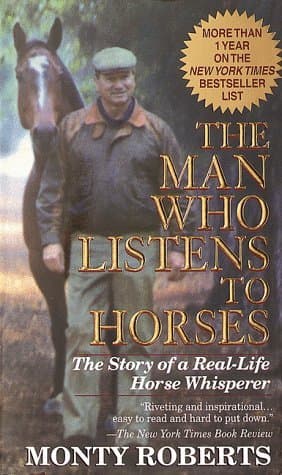
Roberts's main idea is that horses, like all prey animals, have a highly developed non-verbal communication system, which he calls 'Equus'. This language is the same for all horse breeds and humans can learn to understand it. It is a system of gestures, expressions, and movements that show intent, mood, and social rank. By watching mustangs in the wild, Roberts figured out this language, realizing that horses constantly signal their intentions and feelings. Understanding Equus lets humans talk to horses in a way that feels natural and...
Supporting evidence
Roberts spent countless hours observing wild mustangs in Nevada at age 13, meticulously documenting their interactions, their displays of submission, dominance, fear, and comfort. He learned to mimic their 'flight' and 'fight' signals, and more importantly, their 'join-up' sequence.
Apply this
Instead of forcing a horse, learn to 'speak' to it using its own language. Observe a horse's ears, eyes, and body posture to understand its current state. Respond with appropriate body language – for instance, avoiding direct eye contact and presenting a non-threatening profile to a fearful horse.