BookBrief
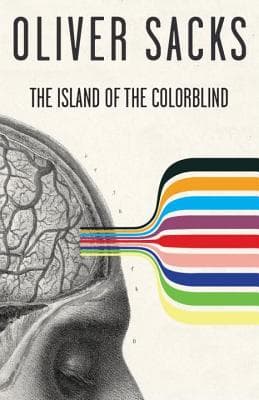
The Island of the Colorblind cover
Archivist's Choice

The Island of the Colorblind

Oliver Sacks (1996)

Genre

Psychology / Lifestyle / Health / Science

Reading Time

6-8 hours

Key Themes

See below

Track Your Reading

Sign in to track this book

Neurologist Oliver Sacks travels to a remote Pacific atoll where a community without color perception offers insights into how the human brain adapts and how culture and thought connect.

Core Idea

Oliver Sacks explores the unique adaptations of two isolated island communities in Micronesia: Pingelap and Mokil. Many people on these islands have achromatopsia, a complete form of colorblindness, along with other vision problems. This is due to a genetic bottleneck from a severe typhoon in the 18th century. Sacks details how these individuals see the world without color, showing their improved senses of smell, hearing, and touch. He describes their ability to navigate and live well in their environment, especially at night. The book covers the science behind this condition, the cultural practices that have developed around it, and the deep implications of experiencing reality through a different sensory lens.
Reading time
6-8 hours
Difficulty
Medium
✓ Read this if...
You are fascinated by the human brain's capacity for adaptation, sensory perception, and the intersection of biology, culture, and unique neurological conditions. Ideal for those interested in medical anthropology, neurology, and the subjective experience of reality.
✗ Skip this if...
You prefer practical self-help or business books, or if you are not interested in detailed scientific and anthropological explorations of specific medical conditions and isolated cultures.

Core idea

The central argument and framework that powers the entire book.

Oliver Sacks explores the unique adaptations of two isolated island communities in Micronesia: Pingelap and Mokil. Many people on these islands have achromatopsia, a complete form of colorblindness, along with other vision problems. This is due to a genetic bottleneck from a severe typhoon in the 18th century. Sacks details how these individuals see the world without color, showing their improved senses of smell, hearing, and touch. He describes their ability to navigate and live well in their environment, especially at night. The book covers the science behind this condition, the cultural practices that have developed around it, and the deep implications of experiencing reality through a different sensory lens.

At a glance

Reading time

6-8 hours

Difficulty

Medium

Read this if...

You are fascinated by the human brain's capacity for adaptation, sensory perception, and the intersection of biology, culture, and unique neurological conditions. Ideal for those interested in medical anthropology, neurology, and the subjective experience of reality.

Skip this if...

You prefer practical self-help or business books, or if you are not interested in detailed scientific and anthropological explorations of specific medical conditions and isolated cultures.

Key Takeaways

1

A World Without Color

Total achromatopsia reveals the profound impact of color on perception and cognition.

Quote

To be deprived of color is to be deprived of something fundamental to human experience, to lose a dimension of reality itself.

Sacks's trip to Pingelap and Pohnpei clearly shows the reality of total achromatopsia, a rare genetic condition causing complete color blindness. For the islanders, their world is in shades of grey, black, and white. This is not just a visual problem; it changes their connection to the environment, art, and even memory. They develop stronger senses of smell, hearing, and night vision, adapting to their monochromatic life. This shows that our perception of color is not just an aesthetic luxury but a key part of how we categorize, under...

Supporting evidence

The detailed accounts of the Pingelapese and Pohnpeian achromatopes, particularly their descriptions of seeing the world in 'shades of grey' and their superior night vision, are central. Sacks describes how they learn to distinguish objects by texture and luminance differences rather than hue.

Apply this

Reflect on how much information we glean from color daily. Try spending a day consciously ignoring color cues, focusing instead on shape, texture, and luminance to understand the world differently. This can enhance appreciation for the complexity of typical vision.

achromatopsiacolor-perceptionsensory-adaptation
2

The Price of Genetic Isolation

Island communities, while culturally rich, can amplify rare genetic conditions.

Quote

Genetic drift and founder effects, intensified by isolation, can make a rare condition common.

The high rate of achromatopsia on Pingelap is a clear example of a founder effect combined with genetic isolation. After a devastating typhoon in 1775, a small group of survivors, one of whom carried the achromatopsia gene, repopulated the island. Over generations of intermarriage within this closed community, the recessive gene became much more common, leading to a higher incidence of the condition than in the global population. This shows how geographical and social isolation, while preserving unique cultures, can also create geneti...

Supporting evidence

Sacks details the history of Pingelap, tracing the lineage back to the typhoon of 1775 and the subsequent genetic bottleneck. He discusses the specific recessive gene responsible for achromatopsia (CNGB3 gene mutation) and its high frequency among the islanders.

Apply this

Understand the importance of genetic diversity within populations and the implications of historical events on current health profiles. This can inform discussions around genetic counseling and the benefits of diverse gene pools for long-term population health.

founder-effectgenetic-isolationpopulation-genetics
3

Sensory Compensation and Adaptation

When one sense diminishes, others often sharpen to compensate.

Quote

The brain, deprived of one modality, often reorganizes itself to enhance others, demonstrating a remarkable plasticity.

The achromatopes of Pingelap show remarkable sensory compensation. Without color vision, they develop sharp acuity in their other senses, especially night vision, hearing, and smell. They can navigate their environment confidently in near-total darkness, notice subtle sounds others miss, and identify plants and animals by scent alone. This is not just about 'trying harder'; it suggests a neurological change where parts of the brain typically used for color processing are repurposed or given more weight to enhance other sensory inputs....

Supporting evidence

Sacks recounts numerous anecdotes of the islanders' superior night vision, their ability to identify fish by their sound in the water, and their acute sense of smell for plants. He cites neurological theories about cross-modal plasticity and brain reorganization.

Apply this

If one sense is impaired (temporarily or permanently), consciously try to engage and rely more on your other senses. For example, blindfold yourself for a short period and try to navigate a familiar room, focusing on sound, touch, and smell.

sensory-adaptationneuroplasticitycross-modal-perception
4

The Coconut Crab's Enigma

The unique ecosystem of an isolated island fosters unusual life forms and behaviors.

Quote

On these islands, evolution has taken its own peculiar turns, creating creatures exquisitely adapted to their insular worlds.

Beyond human achromatopsia, Sacks looks at the islands' unique natural history, focusing on the coconut crab (Birgus latro). These large land crabs, which can climb trees and crack coconuts with their strong claws, are an interesting example of insular gigantism and adaptation. Their nocturnal habits and reliance on smell are especially interesting given the context of achromatopsia on the islands. Sacks explores how specific environmental pressures and a lack of predators in isolated island ecosystems allow certain species to evolve ...

Supporting evidence

Sacks provides detailed descriptions of the coconut crab's behavior, size, diet, and its nocturnal nature. He discusses its evolutionary adaptations to an island environment, including its unique lung-like organs for breathing air.

Apply this

When visiting unique ecosystems, pay close attention to the specific adaptations of local flora and fauna. Consider how the environment (e.g., isolation, limited resources, specific predators) might have shaped their evolution.

insular-gigantismevolutionary-adaptationisland-ecology
5

Navigating a World Without Light

The blind and colorblind often develop exceptional navigational skills through other senses.

Quote

For those without sight or color, the world is mapped by sound, scent, and memory, creating an inner geography of astonishing detail.

Sacks observes that many achromatopes, despite their lack of color vision and often photophobia (extreme light sensitivity), show impressive navigational skills, especially at night. They rely heavily on sounds, the feel of the ground, subtle air currents, and an internal spatial map built from years of experience. This mirrors the sophisticated navigational skills often seen in blind individuals. It shows that 'seeing' the world is not just a visual thing but a complex combination of all sensory inputs, processed and represented inte...

Supporting evidence

Sacks recounts stories of achromatopes navigating the complex jungle paths and coral reefs at night with ease, often guiding sighted individuals. He discusses their use of echoes, the feel of the terrain, and their highly developed spatial memory.

Apply this

Practice navigating familiar spaces with your eyes closed or at night without artificial light. Focus on using sound, touch, and memory to build a stronger internal map of your surroundings. This can improve spatial awareness and memory.

spatial-navigationmulti-sensory-integrationcognitive-mapping
6

The Aesthetics of Achromatopsia

Even without color, art and beauty find unique expressions.

Quote

Beauty is not solely dependent on color; it can reside in form, texture, light, and the subtle interplay of luminance.

An interesting part of Sacks's exploration is how achromatopes perceive and create beauty. While their world lacks color, they develop a deep appreciation for form, texture, light, and shadow. Their art, if any, might focus on intricate patterns, contrasts, and the nuances of light and dark. Sacks describes their heightened sensitivity to the brightness of objects and the subtle shades of grey. This challenges the common idea that color is essential for aesthetic experience, showing that the human capacity for appreciating beauty is m...

Supporting evidence

Sacks notes the achromatopes' meticulous attention to detail, form, and texture in their observations of nature. He discusses their unique visual world, highlighting their appreciation for light and shadow rather than color.

Apply this

Engage in an art form (drawing, photography, sculpture) using only black, white, and shades of grey. Focus on composition, texture, light, and shadow to create a compelling piece. This can broaden your understanding of visual aesthetics.

aestheticsart-perceptionmonochromatic-vision
7

The Gift of the Night

Achromatopsia, while a deficit, can also confer unique advantages.

Quote

What appears a disability in one context may become an advantage in another.

While achromatopsia presents challenges, especially in bright daylight where severe photophobia can be debilitating, it also provides a unique advantage: superior night vision. The rods in their retinas, which are responsible for low-light vision, are highly developed and uninhibited by cone activity. This allows the Pingelapese achromatopes to navigate, fish, and hunt with skill in near-total darkness, a valuable skill in their traditional island life. Sacks points out that 'disability' often depends on context; what is a disadvantag...

Supporting evidence

The islanders' ability to fish at night, often catching more than their sighted counterparts, is a key example. Sacks explains the physiological basis of their enhanced rod function and the absence of cone interference.

Apply this

Consider how different environments or situations might alter the perceived 'advantage' or 'disadvantage' of certain traits. Challenge your own assumptions about what constitutes a 'normal' or 'ideal' human characteristic.

night-visionadaptive-traitsdisability-studies
8

The Anthropologist's Empathy

Sacks exemplifies profound empathy and respect in his scientific explorations.

Quote

To understand another's world, one must not only observe but also attempt, however imperfectly, to enter into their experience.

Throughout the book, Sacks's approach shows deep empathy and respect for the people he studies. He does not just present clinical case studies; he tries to understand the lived experience of achromatopsia from the islanders' perspective. He engages with their culture, their stories, and their unique adaptations, never reducing them to their condition. This humanistic approach, a hallmark of his work, turns scientific inquiry into a deep exploration of human existence. It reminds us that behind every rare condition or neurological anom...

Supporting evidence

Sacks's personal interactions with the islanders, his attempts to learn their language, his participation in their daily life, and his detailed descriptions of their individual personalities and coping mechanisms are central to this theme.

Apply this

When encountering individuals with different abilities or conditions, strive to understand their perspective and lived experience rather than imposing your own assumptions. Practice active listening and seek to learn from their unique adaptations.

medical-humanitiesempathypatient-narratives
9

Beyond the Five Senses

Our perception of reality is far more complex and malleable than commonly assumed.

Quote

The world as we know it is but one of countless possible worlds, each shaped by the unique constitution of our senses and our minds.

Sacks's journey to the 'Island of the Colorblind' is a deep reflection on the nature of perception itself. By placing us in a world without color, he makes us confront the arbitrary yet fundamental role our senses play in building our reality. The achromatopes' world is not 'lesser' but simply different, showing that there is not one objective reality, but multiple realities shaped by our sensory apparatus and neurological processing. This pushes us to question our assumptions about 'normal' perception and appreciate the vast range of...

Supporting evidence

The entire narrative serves as evidence, particularly the stark contrast between the islanders' monochromatic world and a sighted person's colorful experience. Sacks often reflects philosophically on the implications for understanding reality.

Apply this

Challenge your own sensory biases. Try to imagine how an animal (e.g., a bat, a bee) perceives the world. This exercise can expand your understanding of diverse forms of perception and the subjective nature of reality.

perceptionreality-constructionsensory-philosophy
10

The Resilience of Culture

Despite unique challenges, communities maintain distinct cultural identities.

Quote

Even in the face of profound biological difference, culture persists, adapts, and defines identity.

Despite the high rate of achromatopsia and its challenges, the Pingelapese and Pohnpeian communities maintain rich cultures. Their traditional fishing practices, social structures, and oral histories continue, often adapting to accommodate the unique abilities and needs of their achromatopic members. For instance, their superior night vision might be used for nocturnal activities important to the community. Sacks shows how culture is not fixed but changes and incorporates new realities, including genetic conditions, into its fabric. T...

Supporting evidence

Sacks describes the islanders' continued adherence to traditional fishing and farming methods, their social organization, and the way achromatopes are integrated into community life, often taking on roles where their abilities are an asset.

Apply this

When studying or interacting with different cultures, look beyond surface-level differences to understand the underlying values, adaptations, and resilience that define them. Appreciate how communities creatively respond to their unique circumstances.

cultural-adaptationcommunity-resilienceethnography

Critical analysis

Notable Quotes

One cannot go on indefinitely being an island. What makes us human is that we are part of the continent, part of the main.

Reflecting on the need for connection, even for those with unique conditions.

The most fundamental of all human needs is the need for meaning. And the only way to find meaning is to create it.

Discussing how individuals with rare conditions find purpose in their lives.

To be ourselves we must have a sense of our own past, our own history, and to have a good sense of our own history we must have a good sense of our own present.

Exploring the importance of memory and self-identity.

The human brain is a most extraordinary, indeed almost magical organ. It is a world of its own, a cosmos in miniature.

General reflection on the complexity and wonder of the brain.

We are all patients, or potential patients, and the line between health and disease is often blurred.

Emphasizing the universal vulnerability to illness and the continuum of health.

The capacity to wonder, to be amazed, is a precious gift, and one that we should never lose.

Reflecting on the author's own sense of wonder when observing unique phenomena.

Every life is a story, and every story is a life, full of its own unique joys and sorrows, triumphs and tragedies.

Considering the individual narratives of the people he encounters.

There are no 'normal' people, only people with different constitutions, different gifts, different challenges.

Challenging conventional notions of normalcy in the context of neurological diversity.

The islanders had developed an extraordinary adaptation, a way of living with and even thriving with their achromatopsia.

Describing the unique coping mechanisms of the colorblind inhabitants of Pingelap.

To understand a disease, one must understand the person who has it, not just the disease itself.

Highlighting the importance of a holistic approach to medicine and patient care.

The world of the achromatopes, though colorless, was not without its own richness and beauty, perceived through other senses.

Illustrating how the colorblind community compensated for their visual deficiency.

We are all, in a sense, on an island, isolated by our unique perceptions and experiences, yet yearning for connection.

A broader metaphorical interpretation of the book's title and themes.

The quest for knowledge is an endless journey, and every discovery opens up new vistas, new questions.

Reflecting on the ongoing nature of scientific inquiry and personal exploration.

Quiz

Test Your Knowledge

Ready to see how well you understood this book? Take our interactive quiz with 10 questions.

10
Questions
~5
Minutes
?
Best Score

Key Questions (FAQ)

Oliver Sacks's 'The Island of the Colorblind' chronicles his journey to Pingelap and Pohnpei, two remote Pacific islands where a significant portion of the population suffers from a rare form of complete colorblindness (achromatopsia), often accompanied by severe nearsightedness and nystagmus. Sacks explores the scientific and human aspects of living without color perception and other unique neurological conditions.

About the author