BookBrief
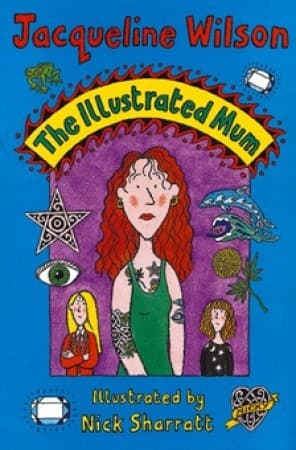
The Illustrated Mum cover
Archivist's Choice

The Illustrated Mum

Jacqueline Wilson (1999)

Genre

Psychology / Children's / Young Adult

Reading Time

2-3 hours

Key Themes

See below

Track Your Reading

Sign in to track this book

Two sisters navigate their artistic mother's world, where colorful tattoos and a flamboyant personality hide a mental illness that threatens their family.

Synopsis

Dolphin and Star live with their mother, Marigold, who has many tattoos and often dyes her hair bright colors. Dolphin loves Marigold's colorful, free nature, but Star, the older sister, worries about their mother's unpredictable behavior, temper, and mental health problems. Marigold's ups and downs shape the girls' lives, including a time when she brings home a baby, Micky, who is soon taken away. Marigold's mental health worsens, leading to a severe episode on Halloween, which puts the sisters in a difficult spot. Star, wanting stability, moves in with their father. Dolphin, loyal to her mother, stays with Marigold, experiencing isolation and the harsh reality of her illness alone. After Marigold is hospitalized, Star returns, and the sisters begin a more stable path as Marigold recovers. However, Marigold's struggles continue. The story ends with the sisters accepting their mother, finding strength in their bond, and looking to a future where they support each other, even if Marigold's life stays unconventional.
Reading time
2-3 hours
Difficulty
Easy
Pacing
Moderate
Mood
Heartbreaking, Hopeful, Realistic, Emotional
✓ Read this if...
You enjoy poignant, realistic stories about family, mental health, and sisterly bonds from a child's perspective.
✗ Skip this if...
You prefer light-hearted stories without serious themes of parental mental illness and neglect.

Plot Summary

A Colourful Home Life

Ten-year-old Dolphin loves her mother, Marigold, a woman with many tattoos, dyed hair, and a flamboyant personality. They live with Dolphin's older sister, Star, in a small flat. Marigold is often chaotic and unpredictable, but also loving and creative, often making up stories and games for Dolphin. Star, a more responsible teenager, often cares for both Dolphin and Marigold. Despite the problems, the sisters are loyal to their mother, who once lived a wild, punk life and still rejects conventional norms. Their lives combine fun, imaginative play with instability due to Marigold's behavior.

The Arrival of Micky

Marigold meets Micky, a man at a pub, and quickly falls for him. For a while, Micky brings calm to their home. He helps with chores, brings groceries, and encourages Marigold to be more responsible. Star is wary but hopeful Micky will be a good influence on her mother. Dolphin also likes Micky. This period offers a glimpse of 'normal' family life, with Marigold even trying to cook and keep a routine, surprising the girls.

Micky's Departure and Marigold's Decline

Micky's stability is short-lived. He suddenly leaves Marigold, causing her great heartbreak and a rapid decline. Marigold stops eating, sleeping, and caring for herself or her daughters. Her vibrant personality gives way to deep depression, and her erratic behavior worsens. She drinks heavily and neglects her responsibilities, often staying in bed or wandering off. Star is left to manage the household, care for Dolphin, and increasingly, care for Marigold, who becomes withdrawn, aggressive, and unpredictable, creating a stressful environment for the girls.

Star's Rebellion

Overwhelmed by Marigold's worsening condition and the burden of responsibility, Star's patience runs out. She resents having to care for her mother and protect Dolphin, feeling her own childhood slip away. Star decides she can no longer cope and seeks out her father, whom she hasn't seen in years. She finds him living a conventional life with a new family. Star hopes to find a stable home with him, a contrast to the chaos she has known, believing it is the only way to escape the cycle with Marigold.

Dolphin's Loyalty and Isolation

Despite Marigold's increasingly erratic and frightening behavior, Dolphin remains loyal to her mother. She tries to care for Marigold, bringing her food and trying to cheer her up, still seeing the 'fun' mother she once knew beneath the illness. When Star leaves to live with her father, Dolphin feels abandoned and isolated. She struggles to understand why Star would leave Marigold, seeing it as a betrayal. Dolphin is left alone to deal with Marigold's mood swings, hallucinations, and self-neglect, bearing the full weight of her mother's illness.

The Halloween Incident

Marigold's mental health reaches a critical point on Halloween. She insists on taking Dolphin trick-or-treating, despite being unwell and disoriented. She wears a bizarre costume, and her behavior becomes erratic in public. She argues with strangers, makes inappropriate comments, and struggles to tell reality from her delusions. Dolphin is embarrassed and frightened, witnessing her mother's public breakdown. This incident shows the severity of Marigold's illness and the danger she poses to herself and Dolphin, making it clear the situation is not sustainable.

Marigold's Hospitalization

The Halloween incident ends in a public confrontation where Marigold becomes aggressive and delusional. Concerned people and then authorities intervene. Marigold is taken to a psychiatric hospital, upsetting Dolphin. Dolphin is placed in temporary foster care, a confusing experience for her. She struggles to adapt to the new environment and misses her mother, despite the problems. This is a turning point, as the girls are separated from their mother and chaotic home, facing the reality of Marigold's illness.

Star's Return and Reconciliation

Star, despite her initial relief at escaping, finds that life with her father is not as good as she hoped. She feels like an outsider in his new family and misses Dolphin. Learning of Marigold's hospitalization and Dolphin's foster care, Star realizes she cannot abandon her sister or mother. She returns to London, overcoming her resentment, and takes on the responsibility of supporting Dolphin and visiting Marigold in the hospital. This shows Star's maturity, as she understands that family loyalty, even with its challenges, is important.

Marigold's Recovery and Relapse

In the hospital, Marigold receives treatment for her mental illness. She begins to stabilize, and the girls see glimpses of their old mother – lucid, humorous, and affectionate. They visit her regularly, hoping for a full recovery. However, mental illness is complex. After her release, Marigold struggles to maintain her medication and therapy. Despite her love for her daughters, she gradually slips back into her old habits, neglecting herself and becoming erratic again. This shows the cyclical nature of her illness and the ongoing challenge the family faces.

A New Beginning, Together

The sisters accept that Marigold's illness is part of who she is, and despite the challenges, their love for her remains. They understand that a 'normal' life might not be possible, but a life together, with love and support, is. Star, now more mature, takes on a permanent guardian role for Dolphin and supports Marigold, ensuring she takes her medication and receives care. Dolphin continues to love her mother, finding joy in her creative spirit despite her illness. The book ends with the sisters living with Marigold, having found a way to navigate their unique family dynamics with resilience and affection, embracing their unconventional life.

Principal Figures

Dolphin

The Protagonist

Dolphin moves from an idealized view of her mother to a more realistic, albeit still loving, acceptance of Marigold's mental illness, while maintaining her innate optimism.

Star

The Protagonist/Co-protagonist

Star evolves from a resentful caregiver seeking escape to a mature, accepting, and steadfast protector of her family.

Marigold

The Supporting/Central Figure

Marigold's arc is cyclical, showing periods of relative stability followed by severe relapses, highlighting the ongoing nature of mental illness rather than a linear recovery.

Micky

The Supporting/Mentioned

Micky serves as a catalyst, his brief presence and subsequent departure initiating Marigold's most severe breakdown and forcing the girls to confront their reality.

Star's Father

The Supporting

His presence highlights Star's yearning for normalcy and the eventual realization that 'normal' isn't necessarily better or where she belongs.

Themes & Insights

Mental Illness and its Impact on Family

The main theme is Marigold's severe mental illness and its effects on her daughters, Dolphin and Star. The story shows the unpredictable nature of the illness, from Marigold's creative periods to her delusions and self-neglect. It explores the burden on children, especially Star, who is forced into a parental role, and Dolphin, who struggles to understand her mother's illness. The story shows how mental illness can erode normalcy, create fear, and test love and loyalty, as seen in Marigold's hospitalization and the girls' struggles.

She was so beautiful, my mum. But sometimes she was so horrible too. And it was all mixed up inside her, the good bits and the bad bits, like her tattoos.

Dolphin (narrator)

Unconditional Love and Loyalty

Despite the challenges and heartbreak from Marigold's illness, the enduring love and loyalty within the family, especially between the sisters and their mother, is a strong theme. Dolphin's adoration and Star's return to support her family, even after seeking escape, highlight this. Their loyalty is not blind; they acknowledge Marigold's flaws and illness, but choose to stand by her. This theme is clear when Star returns to care for Dolphin and visit Marigold in the hospital, and when Dolphin finds joy in Marigold's creative spirit, showing that love can last even in difficult times.

I loved my mum so much, even when she was mad. Even when she was really, really mad.

Dolphin (narrator)

The Loss of Innocence and Forced Maturity

Both Dolphin and Star lose their innocence early due to their mother's illness. Star is forced into a maternal role, sacrificing her teenage years to care for her sister and mother, leading to resentment and a desire for a 'normal' life. Dolphin, though younger, also loses her carefree childhood as she sees her mother's decline and tries to keep Marigold happy. The Halloween incident, where Dolphin is scared by Marigold's public breakdown, is an example of this. The girls lose the protection and stability children usually have, forcing them to face harsh realities too soon.

I was only fifteen, but I felt like I was fifty. I was always having to be the grown-up.

Star

Family Identity and Unconventional Living

The book explores what makes a family and how identity is shaped by unconventional circumstances. Marigold's tattoos and punk style are central to her identity and, by extension, the family's unique identity. The girls initially like this, seeing their mother as special and exciting. However, as Marigold's illness worsens, this 'specialness' becomes a source of shame and difficulty. The theme questions societal norms of family life, suggesting that a family does not have to fit a conventional mold to be loving and strong, especially as the sisters choose to stay together and support their mother, defining their own version of family.

We weren't like other families. We were a bit mad, a bit wild, a bit… tattooed.

Dolphin (narrator)

Plot Devices & Literary Techniques

First-Person Narrative (Dolphin's Perspective)

The story is primarily told through the eyes of the younger daughter, Dolphin.

Telling the story from Dolphin's perspective allows the reader to experience the chaos and heartbreak of Marigold's illness through a child's innocent, often idealized, lens. This creates a powerful contrast between Dolphin's unwavering love and the increasingly disturbing reality. Her narration highlights the confusion and fear children feel when a parent is mentally ill, and her imaginative inner world provides a coping mechanism for the harsh external reality. It also allows the author to gradually reveal the severity of Marigold's condition as Dolphin slowly comes to understand it, rather than presenting it as a fully formed problem from the outset.

Symbolism of Tattoos

Marigold's tattoos symbolize her vibrant personality, individuality, and ultimately, her mental state.

Marigold's numerous, colorful tattoos are a powerful symbol throughout the novel. Initially, they represent her unique, artistic, and free-spirited personality, adored by Dolphin as markers of her 'specialness.' They embody her rejection of conventional norms and her vibrant, albeit chaotic, life. As Marigold's mental health deteriorates, the tattoos take on a darker symbolism, reflecting the 'muddled' and 'horrible' aspects of her illness. They become a visual representation of the internal turmoil and the inability to 'erase' her struggles, much like the permanence of the ink on her skin. They are a constant reminder of who she is, both good and bad.

Foreshadowing (Marigold's erratic behavior)

Early instances of Marigold's unpredictable behavior hint at her underlying mental illness.

From the beginning, Marigold's character is established as eccentric and unpredictable, but these early traits subtly foreshadow the severity of her mental illness. Her extreme mood swings, sudden bursts of creativity followed by periods of lethargy, and her sometimes inappropriate public behavior, initially perceived as just 'being Marigold,' gradually intensify. This foreshadowing builds tension and allows the reader, alongside Star, to recognize the escalating seriousness of the situation long before Dolphin fully grasps it. It prepares the reader for the eventual breakdown, making it a tragic culmination rather than a sudden, unexplained event.

Contrast (Star's vs. Dolphin's perspective)

The differing views of the sisters on their mother's condition highlight the complexities of mental illness.

The novel cleverly uses the contrasting perspectives of Star and Dolphin to explore the multifaceted impact of Marigold's mental illness. Dolphin, the younger and more innocent sister, initially sees her mother's eccentricities as charming and exciting, struggling to accept the harsh reality of her illness. Star, the older and more burdened sister, is acutely aware of the danger and instability, yearning for a normal life. This contrast illuminates how different ages and roles within a family perceive and cope with such a challenging situation, adding depth to the narrative and showcasing the varying emotional burdens each sister carries.

Critical analysis

Notable Quotes

My mum isn't like other mums. She's got tattoos and piercings and bright pink hair. She wears ripped tights and old army boots and a short denim skirt even in winter. She looks like a punk rocker.

Dolphin describing her mother, Marigold, at the beginning of the story.

I used to think my mum was the best mum in the whole wide world. She was always so much fun. She'd dance around the kitchen and sing at the top of her voice and make up silly stories just for us.

Dolphin reflecting on her mother's past behavior and their happier times.

It's like she's got two different sides to her, like a coin. One side is all sparkly and exciting and lovely, and the other side is dark and scary and makes me want to hide under my bed.

Dolphin trying to understand her mother's fluctuating moods and mental state.

Sometimes I wish she was just a normal mum, with normal hair and normal clothes and a normal job. But then I think, no, I wouldn't want her to be anyone else. She's my mum.

Dolphin's internal conflict about her mother's unconventional nature.

Star was always the pretty one, with her long blonde hair and her big blue eyes. Everyone always said she looked just like Mum, before Mum started getting all her tattoos.

Dolphin comparing herself to her older sister, Star, and their mother's past.

You can't choose your family, can you? You just get stuck with them. And sometimes, you get stuck with a really, really weird one.

Dolphin's resigned thoughts about her family situation.

I don't think Mum means to be mean. I think she just... forgets. Or she gets mixed up. Or she's just sad inside.

Dolphin trying to rationalize her mother's neglectful or erratic behavior.

Her tattoos aren't just pictures. They're like a map of her life. Every single one tells a story, she says.

Dolphin explaining the significance of her mother's tattoos.

I wish I could make her better. I wish I could just magic her back to how she used to be.

Dolphin expressing her desire to help her mother overcome her mental health struggles.

It's hard to be brave when your mum is the one who's supposed to be brave for you, and she's not.

Dolphin grappling with the role reversal and the burden of responsibility.

Sometimes you have to look after yourself, even if you're only little. Sometimes you have to be the grown-up.

Dolphin's internal monologue about self-reliance in difficult circumstances.

I always thought tattoos were cool. Now I just think they're a bit sad. Like Mum's trying to hide herself behind all the colours.

Dolphin's changing perception of her mother's tattoos as she understands more about her mental state.

Maybe being different isn't always a good thing. Maybe sometimes it just makes everything harder.

Dolphin questioning the value of individuality when it brings hardship.

I love her, even when she's mad. I love her even when she doesn't make sense. I just wish she was happy.

Dolphin's unwavering love for her mother despite her struggles.

It's like having a secret, a big, heavy secret that you can't tell anyone because they wouldn't understand.

Dolphin's feeling of isolation due to her family's unique situation.

Quiz

Test Your Knowledge

Ready to see how well you understood this book? Take our interactive quiz with 10 questions.

10
Questions
~5
Minutes
?
Best Score

Key Questions (FAQ)

The central conflict revolves around the two sisters, Dolphin and Star, navigating their mother Marigold's increasingly erratic behavior due to her undiagnosed mental illness, likely bipolar disorder. While Dolphin idealizes Marigold's vibrant personality, Star recognizes the instability and danger, leading to a struggle for the girls' safety and well-being.

About the author