BookBrief
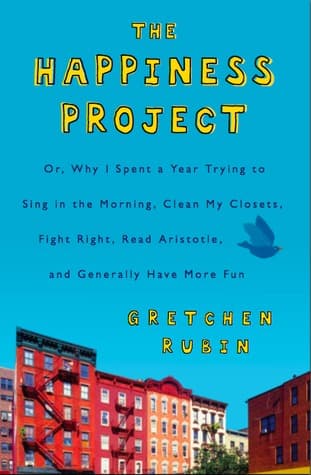
The Happiness Project: Or Why I Spent a Year Trying to Sing in the Morning, Clean My Closets, Fight Right, Read Aristotle, and Generally Have More Fun cover
Archivist's Choice

The Happiness Project: Or Why I Spent a Year Trying to Sing in the Morning, Clean My Closets, Fight Right, Read Aristotle, and Generally Have More Fun

Gretchen Rubin (2010)

Genre

Psychology / Biography / Memoir / Self-Help

Reading Time

12 Minutes

Key Themes

See below

Track Your Reading

Sign in to track this book

Core Idea

Gretchen Rubin embarks on a year-long experiment to boost her happiness, meticulously planning and executing a series of resolutions across various aspects of her life, from physical health and marriage to work and leisure. The book chronicles her journey, the strategies she employs, the insights she gains, and the challenges she faces, ultimately demonstrating that deliberate effort and small, consistent changes can significantly enhance one's overall well-being and life satisfaction. It's a testament to the power of self-experimentation and the idea that happiness is a project that can be actively worked on.
Difficulty
Easy

Core idea

The central argument and framework that powers the entire book.

Gretchen Rubin embarks on a year-long experiment to boost her happiness, meticulously planning and executing a series of resolutions across various aspects of her life, from physical health and marriage to work and leisure. The book chronicles her journey, the strategies she employs, the insights she gains, and the challenges she faces, ultimately demonstrating that deliberate effort and small, consistent changes can significantly enhance one's overall well-being and life satisfaction. It's a testament to the power of self-experimentation and the idea that happiness is a project that can be actively worked on.

At a glance

Difficulty

Easy

Key Takeaways

1

The Power of a Happiness Project

Conscious pursuit of happiness through structured experimentation yields tangible results.

Quote

The days are long, but the years are short.

Rubin's main idea is that happiness is not just a passive state but an active, ongoing effort. Her realization on a city bus—that time was passing quickly and she wasn't prioritizing what truly mattered—led to a year-long experiment. This structured approach, which included research, goal-setting, and consistent action in areas like work, relationships, and self-care, shows that intention drives well-being. By calling happiness a 'project,' she makes the pursuit practical instead of an elusive ideal. This framework encourages readers ...

Supporting evidence

Rubin's entire year-long narrative serves as evidence, particularly her monthly themes and the concrete changes she implemented (e.g., 'Boost Energy,' 'Make Time for Friends').

Apply this

Define your own 'happiness project' by setting specific, measurable goals related to aspects of your life you wish to improve. Break it down into monthly or weekly themes.


2

Outer Order, Inner Calm

Decluttering physical spaces significantly reduces mental clutter and stress.

Quote

For most people, outer order contributes to inner calm.

One of Rubin's most important ideas is the strong connection between our physical surroundings and our mental state. She spends a lot of time on 'making time for outer order,' understanding that a messy desk or closet is not just a visual problem; it constantly drains mental energy and causes subtle stress. Decluttering, organizing, and keeping a tidy space frees up mental resources, reduces decision fatigue, and creates a sense of control and calm. This is not about perfection, but about creating an environment that supports inner pe...

Supporting evidence

Rubin's personal experience with clearing out her closet, organizing her office, and the subsequent feeling of lightness and improved focus.

Apply this

Start with one small, persistently messy area in your home or workspace. Dedicate 15 minutes to decluttering and organizing it daily for a week, observing the impact on your mood.

3

Novelty and Challenge Boost Happiness

Engaging in new experiences and overcoming difficulties stimulates joy and growth.

Quote

Novelty and challenge are powerful sources of happiness.

Rubin finds that routines, while comfortable, can lead to stagnation. Actively seeking new experiences—learning a new skill, visiting a new place, trying a new hobby—adds excitement and fresh perspectives to life. Similarly, taking on challenges, even small ones, provides a sense of accomplishment and ability that boosts happiness. The brain thrives on learning and growth, and consciously stepping outside one's comfort zone, whether by singing in the morning or reading a difficult book, activates these reward pathways. This insight of...

Supporting evidence

Rubin's experiences trying new things like learning to sing, reading Aristotle, or exploring new neighborhoods, and the resulting feelings of engagement and pleasure.

Apply this

Identify one new skill you've always wanted to learn or a new experience you've been putting off. Commit to trying it for a month, regardless of initial proficiency.

4

The Importance of Small Changes

Incremental adjustments to daily habits can lead to significant long-term happiness.

Quote

The very smallest of changes can make the biggest difference.

Rubin emphasizes that a happiness project does not require major life changes. Instead, it is often the collection of small, consistent positive habits that creates the biggest effect. Whether it's making her bed every morning, giving a genuine compliment, or taking a few minutes to walk outside, these seemingly minor actions build momentum and reinforce a positive self-image. This approach makes pursuing happiness less daunting and more accessible. It encourages people to start immediately with achievable steps, rather than waiting f...

Supporting evidence

Rubin's numerous examples of minor habit shifts throughout the year, such as consistently going to bed earlier, exercising for short periods, or taking time for small acts of kindness.

Apply this

Choose one tiny habit you want to incorporate into your day (e.g., drink a glass of water first thing, read one page of a book). Stick to it for 30 days and observe its ripple effects.

5

Money Can Buy Happiness (When Spent Wisely)

Spending on experiences, others, and time-saving services enhances well-being more than material possessions.

Quote

Money can help buy happiness, when spent wisely.

Contrary to popular belief, Rubin finds that money can contribute to happiness, but how it's spent is key. Her observations match psychological research: spending on experiences (like vacations or concerts) creates lasting memories and strengthens relationships, while spending on others (gifts, donations) builds social connection and altruistic joy. Investing in time-saving services (like house cleaning or meal delivery) reduces daily stress and frees up time for more meaningful activities. This idea challenges the consumerist notion ...

Supporting evidence

Rubin's reflections on the joy derived from family trips, charitable giving, or hiring help to free up her time, contrasted with the fleeting satisfaction of material purchases.

Apply this

Before a significant purchase, consider if it's an experience, a gift for someone else, or a time-saving service. Prioritize these categories over pure material acquisition.

6

The Importance of Fighting Right

Constructive conflict resolution strengthens relationships and prevents bitterness.

Quote

The secret to a happy marriage is to fight right.

Rubin dedicates a month to 'fighting right' with her husband, understanding that conflict is unavoidable but managing it is essential for relationship happiness. She learns that airing grievances constructively, avoiding personal attacks, and focusing on solutions rather than blame prevents resentment. This involves active listening, validating the other person's feelings, and knowing when to let go of minor irritations. Her look into this often-overlooked aspect of relationships shows that true intimacy is not the absence of conflict...

Supporting evidence

Rubin's specific rules for fighting right with her husband, such as 'don't save up grievances,' 'don't expect praise or appreciation for doing something that needs to be done,' and 'don't make fun of other people's pleasures.'

Apply this

Establish 'fighting rules' with your partner or close family members. Agree to focus on the issue, not the person, and to seek understanding before resolution.

7

Cultivating an Atmosphere of Fun and Humor

Deliberately seeking out joy and laughter enriches daily life and reduces stress.

Quote

Fun is a feeling of carefree playfulness.

Rubin intentionally includes 'fun' in her happiness project, recognizing that it is often overlooked in adulthood. This is not about grand gestures, but about finding small, regular opportunities for lightheartedness, play, and humor. This might involve revisiting childhood hobbies, engaging in silly activities with family, or simply finding reasons to laugh. She observes that an atmosphere of fun reduces tension, encourages creativity, and strengthens social bonds. Her experience shows that fun is not a frivolous indulgence but a vit...

Supporting evidence

Rubin's efforts to 'sing in the morning,' engage in spontaneous play with her children, or deliberately seek out funny content, and the resulting boost in her mood.

Apply this

Schedule a weekly 'fun activity' – something purely for enjoyment, with no productive goal. This could be playing a board game, watching a comedy, or trying a new playful hobby.

8

The Importance of Self-Knowledge

Understanding one's own nature is crucial for designing an effective happiness strategy.

Quote

We can build our lives around our own nature, not around what we think we 'should' be doing.

A main theme throughout Rubin's project is the need for self-awareness. She learns what truly makes her happy, not what society or self-help books suggest. This involves recognizing her own tendencies (e.g., her love for order, her tendency to be an 'Upholder'), her natural inclinations, and her unique sources of joy and drain. Trying to force herself into an unfitting mold would be counterproductive. This insight is important because it highlights the personalized nature of happiness; what works for one person may not work for anot...

Supporting evidence

Rubin's reflections on her own personality traits, such as her 'Upholder' tendency (meeting both inner and outer expectations) and how understanding this helped her stick to her resolutions.

Apply this

Reflect on your own 'tendencies' (e.g., are you a 'Rebel,' 'Questioner,' 'Obliger,' or 'Upholder' as per Rubin's later work?). Use this self-knowledge to tailor happiness strategies that genuinely resonate with you.

9

The Role of Gratitude and Mindfulness

Appreciating the present moment and expressing thanks enhances overall well-being.

Quote

One of the best ways to make yourself happy is to make other people happy.

While not explicitly a 'mindfulness' book, Rubin's journey shows the power of appreciating the present and expressing gratitude. Her focus on small joys, connecting with loved ones, and savoring everyday moments shows the importance of being fully engaged in life rather than constantly striving for future happiness. Her efforts to make others happy, whether through acts of kindness or simply being a better friend, also show the reciprocal nature of well-being. This suggests that happiness is not just an internal state, but also a prod...

Supporting evidence

Rubin's monthly themes like 'Remember to Be Grateful' and 'Lighten Up' involve conscious efforts to notice positive aspects of her life and engage more fully with her surroundings and relationships.

Apply this

Keep a gratitude journal for a week, listing three new things you are grateful for each day. Practice savoring one everyday moment fully, without distraction.

10

No Perfect Solution, Just Ongoing Effort

Happiness is a continuous process of learning, adjusting, and recommitting.

Quote

I wasn't happy at all, but I wasn't unhappy either. I was just… not happy.

Rubin's year-long project is presented not as a definitive end-point to her happiness journey, but rather a starting point. She does not claim to have 'solved' happiness, but rather to have developed a strong framework and tools for its ongoing pursuit. This takeaway is crucial because it manages reader expectations, emphasizing that happiness is not a destination but a dynamic process. Life will always present challenges, and maintaining well-being requires continuous effort, self-reflection, and adaptation. The book advocates for re...

Supporting evidence

The cyclical nature of her monthly themes, and her concluding reflections that the project fundamentally changed her but didn't make her perpetually blissful, rather equipped her better for life.

Apply this

Instead of viewing happiness goals as one-time achievements, commit to regular 'check-ins' with yourself (e.g., quarterly) to assess your well-being and adjust your happiness strategies as needed.

Critical analysis

Notable Quotes

Quiz

Test Your Knowledge

Ready to see how well you understood this book? Take our interactive quiz with 10 questions.

10
Questions
~5
Minutes
?
Best Score

Key Questions (FAQ)

The Happiness Project is a memoir by Gretchen Rubin detailing her year-long experiment to become happier. She dedicates each month to a specific theme, like 'Boost Energy' or 'Simplify,' and tries various strategies to improve her well-being.

About the author