“My therapist says that I have a preoccupation with death and an overactive imagination. He says I should start a blog.”
— Main character Sam as he introduces himself and his situation.

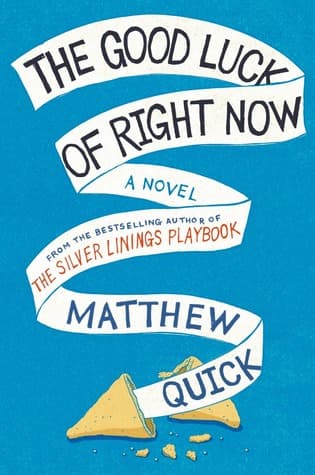
Matthew Quick (2014)
Genre
Psychology / Young Adult
Reading Time
6-7 hours
Key Themes
See below
Sign in to track this book
A grieving, socially awkward man goes on a road trip with an unlikely group to find belonging, prompted by a letter from Richard Gere and his mother's final words.
Bartholomew Neil, 38, has always lived with his mother. Their life together is a comforting routine of Saturday Mass, library visits, and quiet shared moments. When his mother gets cancer, Bartholomew struggles to understand she will die. Her death leaves him alone for the first time. He goes to grief counseling with Wendy, a redheaded counselor, who tells him to 'find his flock' and 'leave the nest.' Bartholomew feels great pressure to live in a world he has never truly experienced on his own. His grief is made worse by feeling lost and unable to process his new life.
While going through his mother's things, Bartholomew finds a 'Free Tibet' letter from Richard Gere in her underwear drawer. This discovery means a lot to him because his mother, in her last days, mistakenly called him 'Richard.' Bartholomew sees this as a cosmic sign, believing Richard Gere holds the key to his future or a deeper understanding of his mother's life. He starts writing very personal, unfiltered letters to the actor. He shares his life, his grief, and his growing thoughts on Jung, the Dalai Lama, alien abduction, and cat telepathy, all to connect and find guidance.
Bartholomew's grief counselor, Wendy, becomes an important, though sometimes frustrated, person in his life. She tries to help him through his grief and isolation, often challenged by his literal thinking and unique view of the world. At the same time, Bartholomew forms an unexpected bond with Father McNamee, a Catholic priest who is having his own crisis of faith and struggle with alcohol. Father McNamee, despite his own troubles, offers Bartholomew understanding and friendship. He recognizes a shared human vulnerability. These two people become Bartholomew's first, tentative links to the outside world, forming the start of his 'flock.'
Bartholomew continues his routine of visiting the library, a comforting and familiar place. There, he meets a librarian named Elizabeth. She first finds him odd but is slowly drawn to his genuine, if eccentric, nature. Elizabeth shares his love for books and has a quiet kindness. She introduces him to her brother, Max, a cat-loving man with a crude way of speaking. Max introduces Bartholomew to 'cat telepathy' and the 'Cat Parliament' in Canada, a group of people who believe they can talk to cats. This strange new world, though it seems outlandish, gives Bartholomew a sense of belonging and purpose. He becomes fascinated by the idea of understanding animal communication.
Wanting to find his biological father and drawn by the Cat Parliament, Bartholomew decides to go on a road trip to Canada. To his surprise, Wendy, Father McNamee, Elizabeth, and Max all agree to go with him. This unlikely group, each with their own problems and quirks, gets into a rented Ford Focus. The journey itself helps Bartholomew grow. It forces him out of his comfort zone and into constant interaction with others. The small space and shared adventure start to build stronger bonds among them, turning them from separate individuals into a new, supportive family.
As the group travels, they face various challenges and funny situations. These often come from Bartholomew's literal thinking and Max's unpredictable behavior. Wendy tries to keep the group grounded, while Father McNamee deals with his sobriety. During their trip, they share personal stories and weaknesses. Wendy talks about her past, and Father McNamee opens up about his crisis of faith. These revelations build trust and empathy among the travelers. They start to see past each other's surface quirks and connect on a deeper, human level. Bartholomew, in turn, slowly begins to express his deepest fears and desires.
The group eventually reaches the Cat Parliament in Canada, a community of people who believe they communicate with cats. While the experience might seem absurd to an outsider, for Bartholomew and Max, it is a place of real connection and understanding. Bartholomew, with his unique sensitivity, finds himself surprisingly good at connecting with the cats. The experience lets him process emotions in a non-traditional way, finding comfort and purpose in this unusual setting. For the others, it is a moment to see Bartholomew's unique gifts and accept his worldview, further strengthening their bond.
With his new friends' help, Bartholomew finds his biological father. The meeting is not what he might have imagined. His father is a complex person, and the encounter is filled with awkwardness, disappointment, and a fragile hope for understanding. Bartholomew grapples with the reality of this man, who is far from the ideal figure he might have imagined. His friends offer vital support during this emotional meeting. They help him navigate his past and the new, often messy, truths about his origins. This confrontation is a big step in Bartholomew's journey of self-discovery and acceptance.
As the road trip ends, Bartholomew thinks about his journey. He realizes that while meeting his biological father gave him some answers, the true discovery was the 'flock' he found in Wendy, Father McNamee, Elizabeth, and Max. They have become his new family, giving him the unconditional support, understanding, and friendship he desperately needed after his mother's death. The initial awkwardness and misunderstandings have turned into real affection and interdependence. Bartholomew's letters to Richard Gere, though a starting point, led to a deeper understanding of human connection and the power of chosen family.
With his new family, Bartholomew begins to build a life separate from his mother's memory. He continues to write his letters, now more as a way to reflect on himself and connect to his changing understanding of the world. He embraces the 'good luck of right now,' finding joy in small moments and trusting the connections he has made. While his unique perspective remains, he is no longer isolated. He learns to handle life's challenges with his friends' support, showing great growth from the grieving, lost man he was at the start of his journey. He finds his place in the world, not alone, but as part of a loving, unusual community.
The Protagonist
Bartholomew transforms from an isolated, grief-stricken man into someone capable of forming deep connections and finding a chosen family, learning to live independently while embracing his unique perspective.
The Supporting
Wendy evolves from a professional counselor to a genuine friend, finding her own form of connection and meaning through her journey with Bartholomew.
The Supporting
Father McNamee finds a path toward confronting his personal demons and reconnecting with his faith and purpose, not necessarily within the confines of the church, but through human connection.
The Supporting
Elizabeth finds a deeper sense of purpose and connection by becoming part of Bartholomew's unconventional family.
The Supporting
Max finds a new level of camaraderie and purpose by guiding Bartholomew on his quest, solidifying his role within their chosen family.
The Mentioned
Her death serves as the ultimate catalyst for Bartholomew's growth and journey of self-discovery.
The Mentioned
Not applicable, as he is a symbolic figure.
The novel explores Bartholomew's strong need to find a 'flock' after his mother, his only companion, dies. This theme appears in his letters to Richard Gere, where he expresses his desire for connection. It ends with the formation of his unusual road-trip family. The journey to find his biological father is less about blood ties and more about finding a sense of belonging and understanding his past. Ultimately, he learns that family comes from shared experiences and mutual support, not just genetics. The group's acceptance of each other's quirks shows that true belonging comes from unconditional acceptance. For example, when they all arrive at the Cat Parliament together, accepting Max's strange beliefs, their bond is clear.
“Grief counselor Wendy said I needed to find my flock and leave the nest. But how does a man whose whole life has been grounded in his mom, Saturday Mass, and the library learn how to fly?”
Bartholomew's journey is driven by his deep grief over his mother's death. The novel shows the confusion and loneliness that come with loss, especially for someone as dependent as Bartholomew. His unique ways of grieving—writing to Richard Gere, interpreting cosmic signs—are shown as his personal path to healing. The road trip itself becomes a form of grief therapy. Shared experiences and emotional talks with his new friends help him gradually face and deal with his loss. Healing is not about forgetting, but about learning to live with the absence and finding new sources of love and support, as seen when he finally expresses his feelings to his companions.
“I was thirty-eight years old and had never had a single thought that wasn't about my mother.”
The novel questions what 'normal' reality means, especially through Bartholomew's unique perspective. His belief in cat telepathy, cosmic connections, and the importance of seemingly random events challenges common perceptions. The inclusion of Jungian ideas and philosophical thoughts in his letters suggests a deeper look at subjective reality and the power of belief. The other characters, initially confused by Bartholomew's worldview, gradually accept or even find value in his way of seeing the world. The Cat Parliament, an seemingly absurd destination, becomes a place of real connection and insight, suggesting that truth can be found in unexpected places, beyond ordinary understanding.
“Sometimes the world is a strange and beautiful place, and sometimes it's just strange.”
Kindness, often shown by unlikely people, helps Bartholomew change. Wendy, Father McNamee, Elizabeth, and Max, each with their own flaws and quirks, show deep compassion and patience. They choose to engage with Bartholomew, despite his social awkwardness, and eventually go with him on his strange quest. This collective kindness creates an environment where Bartholomew can grow and heal. The love that grows among this diverse group is unusual—not romantic or traditional family love—but deeply genuine and supportive. It shows that love can appear in many forms, often in the most unexpected connections, offering comfort and strength. Wendy's decision to join the road trip, despite her initial doubts, is a significant act of kindness.
“It turned out that my flock was even stranger than I was.”
Bartholomew's confessional letters to Richard Gere serve as a primary narrative tool.
The letters Bartholomew writes to Richard Gere function as an intimate window into his inner world, allowing the reader direct access to his thoughts, grief, philosophical ponderings, and desires. This device provides a unique narrative voice, showcasing Bartholomew's literal interpretations, his unique logic, and his profound loneliness. It also serves as a coping mechanism for Bartholomew, a way to process his mother's death and articulate his nascent understanding of the world. As the story progresses, the content of the letters evolves, mirroring Bartholomew's growth and the development of his new 'flock,' eventually becoming more reflective than purely confessional.
The physical journey to Canada acts as a catalyst for emotional and personal growth.
The road trip is a classic literary device used to facilitate character development and bond disparate individuals. For Bartholomew, it forces him out of his isolated routine and into constant interaction with others, challenging his social anxieties. The confined space of the car and the shared experiences on the road accelerate the formation of his 'flock.' The journey itself, with its unexpected detours and challenges, mirrors Bartholomew's internal journey of self-discovery and his navigation of an unfamiliar world. It allows for revelations, conflicts, and resolutions among the group, solidifying their bonds and transforming them into a cohesive, supportive unit.
Seemingly random events are interpreted by Bartholomew as having deeper, cosmic significance.
The novel frequently employs the idea of cosmic coincidences and Jungian synchronicity, particularly through Bartholomew's perspective. The discovery of the Richard Gere letter after his mother called him 'Richard' is the initial catalyst. Bartholomew consistently looks for and finds deeper meaning in seemingly random events, such as alien abduction theories or cat telepathy. This device allows the author to explore themes of fate, belief, and the subjective nature of reality. While some events might be genuine coincidences, Bartholomew's interpretation imbues them with profound personal meaning, driving his actions and shaping his understanding of his place in the universe, ultimately leading him to his chosen family.
The 'Free Tibet' letter from Richard Gere acts as the initial, tangible catalyst for Bartholomew's quest.
The 'Free Tibet' letter from Richard Gere, found in Bartholomew's mother's underwear drawer, functions as a MacGuffin. It is an object that is vitally important to the plot, driving Bartholomew's initial actions and quest, but its specific content or true significance (beyond Bartholomew's interpretation) is less important than the journey it inspires. It provides a tangible, if peculiar, starting point for Bartholomew's search for meaning and connection, giving him a concrete 'clue' to follow when he is otherwise lost. The letter's purpose is to set Bartholomew in motion, leading him to discover far more meaningful connections than a celebrity endorsement.
“My therapist says that I have a preoccupation with death and an overactive imagination. He says I should start a blog.”
— Main character Sam as he introduces himself and his situation.
“Every person on the planet has their own brand of crazy. The only difference is whether you're good at hiding it or not.”
— Sam reflecting on the quirks and hidden struggles of people.
“Sometimes the only way out is through.”
— A recurring theme and piece of advice Sam receives or gives.
“Grief is a funny thing. It's like an ocean. It can be calm, and then out of nowhere, a wave can crash over you.”
— Sam contemplating his grief over his mother's death.
“I'm not crazy, I'm just living in a world that's slowly going insane.”
— Sam's internal justification for his unique perspective.
“The good luck of right now is that we're alive, and we have each other.”
— A moment of connection and appreciation between characters.
“Maybe the secret to being happy is to never stop searching for the next good thing.”
— Sam's evolving understanding of happiness.
“It's okay to not be okay, as long as you're trying to get there.”
— A supportive sentiment shared between characters.
“You can't choose your family, but you can choose your tribe.”
— Sam finding a new sense of belonging with his unconventional companions.
“Sometimes the most beautiful things are found in the most unexpected places.”
— Sam discovering beauty and meaning in his unusual circumstances.
“Fear is a powerful motivator, but so is hope.”
— A reflection on the contrasting forces that drive human action.
“The past is a story we tell ourselves, but the future is still unwritten.”
— Sam considering the impact of his past and the potential of his future.
“It's never too late to start over, to reinvent yourself.”
— A message of transformation and new beginnings.
“We're all just trying to figure things out, one day at a time.”
— A unifying thought about the human condition and the process of life.
Ready to see how well you understood this book? Take our interactive quiz with 10 questions.

Biography coming soon.

Rhonda Byrne
4.3

Menno Henselmans
4.3
Sylvia Plath
4.3
Elliot Aronson
4.3
Joseph Campbell
4.3
Erich Fromm
4.3
Irvin D. Yalom
4.2

Lucy Strange
4.2