BookBrief
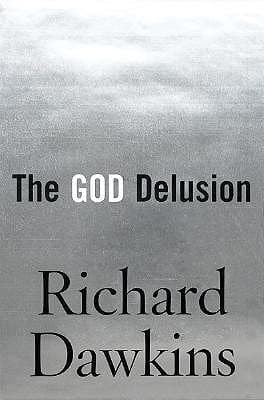
The God Delusion cover
Archivist's Choice

The God Delusion

Richard Dawkins (2006)

Genre

Psychology / Spirituality / Science / Philosophy

Reading Time

360 min

Key Themes

See below

Track Your Reading

Sign in to track this book

Richard Dawkins explains why belief in God is illogical and a dangerous delusion, showing how faith has fueled conflict and slowed human progress, while promoting the intellectual freedom of atheism.

Core Idea

Richard Dawkins says that belief in God is a delusion, a false belief held despite strong evidence. He argues that the 'God Hypothesis' is a scientific claim about the universe, testable and refutable, especially through evolutionary theory, which better explains complexity than a divine creator. Dawkins states that religion does not offer a unique basis for morality, often stops scientific progress, and can cause societal harm. He supports an atheistic view as intellectually freeing and inspiring, rooted in the wonders of the natural world.
Reading time
360 min
Difficulty
Medium
✓ Read this if...
You are questioning religious belief, are an atheist seeking intellectual reinforcement, or are interested in a scientific and philosophical critique of religion.
✗ Skip this if...
You are a devout believer unwilling to engage with strong critiques of faith, or prefer a more nuanced, less confrontational discussion of religion's role in society.

Core idea

The central argument and framework that powers the entire book.

Richard Dawkins says that belief in God is a delusion, a false belief held despite strong evidence. He argues that the 'God Hypothesis' is a scientific claim about the universe, testable and refutable, especially through evolutionary theory, which better explains complexity than a divine creator. Dawkins states that religion does not offer a unique basis for morality, often stops scientific progress, and can cause societal harm. He supports an atheistic view as intellectually freeing and inspiring, rooted in the wonders of the natural world.

At a glance

Reading time

360 min

Difficulty

Medium

Read this if...

You are questioning religious belief, are an atheist seeking intellectual reinforcement, or are interested in a scientific and philosophical critique of religion.

Skip this if...

You are a devout believer unwilling to engage with strong critiques of faith, or prefer a more nuanced, less confrontational discussion of religion's role in society.

Key Takeaways

1

The God Hypothesis is a Scientific Claim

Belief in a supernatural creator is testable, and demonstrably false, through scientific inquiry.

Quote

The existence of God is a scientific hypothesis like any other.

Dawkins argues that a supernatural creator is a testable idea, not something outside science. He believes that any claim about reality, including God's existence, can be studied scientifically. By looking at the universe's complexity and how science explains its existence and evolution, Dawkins concludes that the 'God hypothesis' is unnecessary and very unlikely. He challenges the idea that faith is a unique path to truth, stating that scientific methods offer a better way to understand the universe.

Supporting evidence

Dawkins points to the scientific understanding of abiogenesis, evolution by natural selection, and cosmology (e.g., the Big Bang) as providing naturalistic explanations that render a creator superfluous and less parsimonious.

Apply this

Approach claims about supernatural phenomena, including religious ones, with the same critical, evidence-based scrutiny applied to any scientific hypothesis. Demand empirical evidence and logical coherence.


scientific-hypothesisnaturalismparsimony
2

The Argument from Design is a Fallacy

The apparent complexity of life is a product of evolution, not intelligent design.

Quote

The universe we observe has precisely the properties we should expect if there is, at bottom, no design, no purpose, no evil and no good, nothing but blind, pitiless indifference.

The 'argument from design' is one of the oldest and most intuitive reasons given for God's existence, saying that the complex design of living things requires an intelligent creator. Dawkins carefully disproves this argument, showing that Charles Darwin's theory of evolution by natural selection explains biological complexity much better and has more scientific support. He emphasizes that evolution is a blind, automatic process that, over long periods, can create structures that appear designed without any guiding intelligence. The 'd...

Supporting evidence

The detailed mechanisms of natural selection, mutation, and genetic drift, as observed and documented across countless species, explain the development of complex organs like the eye or the bacterial flagellum, which are often cited by proponents of intelligent design.

Apply this

When confronted with claims of 'irreducible complexity' or 'fine-tuning,' seek naturalistic explanations that account for the phenomenon through gradual, cumulative processes. Recognize the power of simple rules to generate complex outcomes over time.

argument-from-designnatural-selectionirreducible-complexityevolution
3

The God of the Gaps is Shrinking

As scientific understanding expands, the need for a supernatural explanation diminishes.

Quote

Faith is the great cop-out, the great excuse to evade the truth and to avoid thinking and evaluating evidence. Faith is belief in spite of, even perhaps because of, the lack of evidence.

Dawkins points out that people have historically used God to explain things science could not yet understand—the 'God of the Gaps.' From lightning to disease to how life began, supernatural explanations have always faded as scientific knowledge grew. He argues that this pattern will continue, and that blaming God for things we do not yet understand is a temporary answer, not a real explanation. He believes this intellectual laziness stops curiosity and scientific progress, preventing people from finding real, natural answers to the un...

Supporting evidence

Historically, God was invoked for weather, illness, and the movement of planets. Science has since provided natural explanations for these. Similarly, the Big Bang and abiogenesis are areas where science continues to make progress, filling previous 'gaps' where God was once placed.

Apply this

Resist the temptation to attribute unexplained phenomena to supernatural forces. Instead, embrace uncertainty and the ongoing scientific quest for understanding. Support scientific research and critical thinking as the primary means of expanding human knowledge.

god-of-the-gapsscientific-progressepistemologyfaith-vs-reason
4

Religion as a 'Mind Virus'

Religious beliefs are memes that replicate and propagate through cultural transmission.

Quote

A cultural meme, in the sense I am using the word, is a unit of cultural transmission, or a unit of imitation. 'God' is a meme, and 'faith' is another.

Using his concept of memes from 'The Selfish Gene,' Dawkins suggests that religious beliefs act like very successful 'mind viruses.' These memes (ideas, beliefs, practices) are passed on culturally, often from parent to child, and have traits that help them survive and spread. These traits include creating fear of eternal damnation for not believing, promising rewards for following, and discouraging critical thinking. This idea explains why religion lasts and is widespread, not as proof of divine truth, but as evidence of how effectiv...

Supporting evidence

The commonality of religious indoctrination from childhood, the use of ritual and communal reinforcement, and the strong social pressures to conform within religious communities, all contribute to the successful replication of religious memes.

Apply this

Be critically aware of how ideas, especially deeply ingrained cultural ones, are transmitted and perpetuated. Question the origins and propagation mechanisms of your own beliefs and those around you, rather than accepting them as inherent truths.

memeticscultural-transmissionindoctrinationcritical-thinking
5

Morality Does Not Require God

Human ethics are evolved, not divinely commanded, and secular morality is superior.

Quote

The God of the Old Testament is arguably the most unpleasant character in all fiction: jealous and proud of it; a petty, unjust, unforgiving control-freak; a vindictive, bloodthirsty ethnic cleanser; a misogynistic, homophobic, racist, infanticidal, genocidal, filicidal, pestilential, megalomaniacal, sadomasochistic, capriciously malevolent bully.

A common argument for religion is that it is the only source of morality. Dawkins strongly disagrees, saying that human morality comes from evolution, based on empathy, working together, and social connection, which help groups survive. He notes that many 'divine' moral codes, especially in old texts, are cruel by modern standards (e.g., allowing slavery, stoning, genocide). He also argues that a morality based on fear of divine punishment or hope of heavenly reward is not true morality, but rather self-interested obedience. A secular...

Supporting evidence

Examples of altruism and empathy observed in non-human animals (e.g., primates), the Euthyphro dilemma (is something good because God wills it, or does God will it because it is good?), and the historical progression of moral standards in secular societies.

Apply this

Examine the foundations of your own moral compass. Strive for a morality based on rational principles, empathy, and the pursuit of human flourishing, rather than external divine commands or promises of reward/punishment.

evolutionary-ethicssecular-moralityeuthyphro-dilemmahumanism
6

Religion's Harmful Societal Impact

From war to child abuse, religion has a demonstrable negative influence on society.

Quote

The God of the Old Testament is a moral monster, and it is time for us to acknowledge that.

Beyond intellectual errors, Dawkins details the real harm religion causes individuals and society. He lists historical cruelties like the Crusades, witch hunts, and religious wars, and current problems like stopping science, homophobia, misogyny, and child abuse. He argues that blindly accepting faith, the group loyalty in many religious beliefs, and giving special treatment to religious belief (e.g., in education or law) create conditions for extremism and suffering. He especially focuses on the psychological harm done to children th...

Supporting evidence

Historical accounts of religious conflicts (e.g., 30 Years' War, Northern Ireland 'Troubles'), contemporary examples of religiously motivated violence (e.g., 9/11, abortion clinic bombings), and the prevalence of child sexual abuse within religious institutions and its cover-ups.

Apply this

Advocate for secular education and policies that protect individual rights and critical thought from religious interference. Challenge religious claims that promote discrimination, violence, or the suppression of scientific inquiry.

religious-violenceindoctrination-of-childrensecularismhuman-rights
7

Atheism is Liberating and Inspiring

Rejecting God opens the door to a truer, more profound appreciation of the universe.

Quote

The total amount of suffering per year in the natural world is beyond all decent contemplation. During the minute that it takes me to compose this sentence, thousands of animals are being eaten alive, many others are running for their lives, whimpering with fear, others are slowly being devoured from within by rasping parasites, thousands of all kinds are dying of starvation, thirst, and disease. It must be so. If God has a plan, it is an evil plan.

Dawkins argues that atheism is not bleak or without purpose; it offers a freeing and inspiring way to see the world. By letting go of strict rules and the fear of divine judgment, people are free to embrace reason, curiosity, and a deep appreciation for the true wonders of the universe. The scientific understanding of cosmic evolution, the intricate process of natural selection, and the sheer unlikeliness of our existence are, for Dawkins, more awe-inspiring than any creation story. Atheism encourages us to make the most of our single...

Supporting evidence

The incredible beauty and complexity revealed by astronomy, physics, and biology (e.g., the vastness of space, the intricate machinery of the cell, the diversity of life on Earth) without needing a supernatural explanation.

Apply this

Cultivate a sense of wonder and curiosity about the natural world, using scientific understanding as a lens. Seek meaning and purpose in human relationships, ethical action, and the pursuit of knowledge, rather than in supernatural promises.

secular-humanismawe-and-wondernihilismmeaning-of-life
8

The 'Ultimate Boeing 747' Argument

A designer for the universe would be more complex than the universe itself, creating an infinite regress.

Quote

A designer God, if he existed, would have to be at least as complex as the universe he was supposed to have designed. He would therefore be the Ultimate Boeing 747.

Dawkins introduces his 'Ultimate Boeing 747' argument to directly counter the argument from design. If complex things need a designer, then a God who could design the entire universe must be incredibly complex. This 'designer' would then need an even more complex designer, leading to an endless chain of creators, none of whom truly explain where complexity ultimately comes from. This argument shows the logical problem of suggesting a super-complex being to explain complexity; it just moves the problem back a step, and a bigger one at ...

Supporting evidence

The logical premise that a creator must be at least as complex as its creation. The example of a Boeing 747 (a complex machine) requiring a designer, and the logical extension that an even more complex divine designer would also require a designer.

Apply this

When faced with arguments for a supernatural creator based on complexity, question the complexity of the proposed creator itself. Demand a parsimonious explanation that doesn't introduce greater complexity than it solves.

infinite-regressargument-from-designparsimonyfirst-cause
9

The Dangers of Respect for Religion

Uncritical deference to religious belief stifles progress and enables harm.

Quote

The 'respect' accorded to religion is a major obstacle to critical thinking and societal progress.

Dawkins argues that society gives religion a unique, almost sacred, respect that it does not give to other belief systems. This 'respect' often means special legal benefits, tax breaks, and an unwillingness to critically examine or question religious claims, even when they go against scientific evidence or basic human rights. He believes this deference is not deserved and ultimately harmful, allowing irrationality, prejudice, and even abuse to continue under the guise of religious freedom. He calls for a society where religious belief...

Supporting evidence

Examples include religious exemptions from laws (e.g., vaccine mandates), public funding for religious schools, and the reluctance of politicians or media to criticize religious leaders, even when their statements are bigoted or anti-scientific.

Apply this

Challenge the notion that religious beliefs are inherently immune from criticism. Advocate for a level playing field where all ideas, religious or otherwise, are evaluated based on evidence, reason, and their impact on human well-being.

secularismfreedom-of-speechcritical-thinkingreligious-privilege
10

The Comfort of Reality Over Delusion

Embracing scientific truth, however challenging, is ultimately more comforting than clinging to comforting fictions.

Quote

We are going to die, and that makes us the lucky ones. Most people are never going to die because they are never going to be born. The potential people who could have been here in my place but who will in fact never see the light of day outnumber the sand grains of Arabia. Certainly those unborn ghosts include greater poets than Keats, scientists greater than Newton. We know this because the set of possible people allowed by our DNA so massively exceeds the set of actual people.

While religion often offers comfort through promises of an afterlife or divine help, Dawkins argues that this comfort comes at the cost of truth and real understanding. He believes that facing the universe as it truly is—vast, uncaring, and ruled by natural laws—is ultimately more empowering and fulfilling. Knowing our short, unlikely existence on a small planet in a huge universe can inspire deep gratitude and a strong desire to live meaningfully. This 'cold' reality, when accepted, creates a deeper appreciation for life, love, and t...

Supporting evidence

Dawkins' poetic descriptions of the natural world and the scientific understanding of cosmic and biological evolution evoke a sense of wonder that surpasses traditional religious narratives. He contrasts the fear of eternal damnation with the liberating acceptance of mortality.

Apply this

Seek truth and understanding, even when it challenges deeply held beliefs or offers less immediate comfort. Find solace and inspiration in the real, verifiable wonders of the universe and the human capacity for reason and connection.

existentialismtruth-vs-comfortscientific-wondermortality

Critical analysis

Notable Quotes

The God of the Old Testament is arguably the most unpleasant character in all fiction: jealous and proud of it; a petty, unjust, unforgiving control-freak; a vindictive, bloodthirsty ethnic cleanser; a misogynistic, homophobic, racist, infanticidal, genocidal, filicidal, pestilential, megalomaniacal, sadomasochistic, capriciously malevolent bully.

Critique of the Abrahamic God's portrayal in scripture.

We are all atheists about most of the gods that humanity has ever believed in. Some of us just go one god further.

Argument against the special status of major religions.

The universe we observe has precisely the properties we should expect if there is, at bottom, no design, no purpose, no evil and no good, nothing but blind, pitiless indifference.

Description of a naturalistic worldview without divine intervention.

Faith is the great cop-out, the great excuse to evade the need to think and evaluate evidence. Faith is belief in spite of, even perhaps because of, the lack of evidence.

Criticism of religious faith as irrational.

The feeling of awed wonder that science can give us is one of the highest experiences of which the human psyche is capable.

Celebration of scientific discovery as a source of meaning.

It is absolutely safe to say that if you meet somebody who claims not to believe in evolution, that person is ignorant, stupid or insane (or wicked, but I'd rather not consider that).

Defense of evolutionary theory against creationism.

The meme for blind faith secures its own perpetuation by the simple unconscious expedient of discouraging rational inquiry.

Application of meme theory to religious belief transmission.

What has 'theology' ever said that is of the smallest use to anybody? When has 'theology' ever said anything that is demonstrably true and is not obvious?

Dismissal of theology as a useless field of study.

We are going to die, and that makes us the lucky ones. Most people are never going to die because they are never going to be born.

Reflection on the rarity and value of existence in a vast universe.

The God Hypothesis is a scientific hypothesis about the universe, which should be analyzed as skeptically as any other.

Argument for treating religious claims as testable propositions.

Religion teaches the dangerous nonsense that death is not the end.

Critique of religious promises of an afterlife.

The selfish gene is not a single physical entity but a collection of specific DNA patterns, distributed over chromosomes.

Explanation of gene-centered evolution (referencing his earlier work).

There is something infantile in the presumption that somebody else has a responsibility to give your life meaning and point.

Criticism of seeking purpose from external sources like religion.

The God of the gaps is a diminishing entity as science advances.

Argument that divine explanations retreat before scientific progress.

Quiz

Test Your Knowledge

Ready to see how well you understood this book? Take our interactive quiz with 10 questions.

10
Questions
~5
Minutes
?
Best Score

Key Questions (FAQ)

'The God Delusion' is a book by Richard Dawkins that argues against belief in God, presenting atheism as a rational alternative. It critiques religious arguments, highlights historical harms caused by religion, and promotes scientific understanding of the universe.

About the author